Best Dual-Fuel Generators: Propane & Gasoline in 2026

Photo by Dima Solomin on Unsplash
Best Dual-Fuel Generators: Propane & Gasoline in 2026
Dual-fuel generators let you switch between propane and gasoline on the fly, giving you flexibility when one fuel becomes scarce or expensive. Propane burns cleaner, stores longer without degrading, and won’t gum up carburetors during off-season storage. Gasoline delivers higher output per gallon and is easier to source in most regions. The best dual-fuel models let you capitalize on both advantages without choosing.
This guide walks you through the key specs, fuel-switching mechanics, and real-world trade-offs so you can pick the right generator for your backup-power scenario.
Why Choose Dual-Fuel Over Single-Fuel?
A single-fuel generator locks you into one supply chain. If gas stations close during an extended outage, a gasoline-only unit becomes a paperweight. Propane-only generators avoid that trap, but propane refill locations are fewer, and you’ll pay a premium per watt.
Dual-fuel models split the difference:
- Propane advantage: Burns for 2–3× longer than gasoline on the same tank volume (example: a 20 lb propane tank runs a 5,000W generator 10–14 hours at half load, while a 5-gallon gasoline tank runs the same unit 4–6 hours). Stores indefinitely without degradation and produces less carbon monoxide per unit of energy.
- Gasoline advantage: Higher energy density, easier to locate and purchase, better for portable refueling mid-emergency.
- Flexibility in a crisis: If gas lines are long and propane trucks are overbooked, you have a backup plan.
Dual-fuel owners report feeling less anxious about fuel supply during hurricane season and multi-day outages. The switching mechanism is now standard and reliable on mid-tier and premium models.
Key Specs to Compare
Wattage and Runtime
Wattage rating tells you what you can run simultaneously. Most dual-fuel generators in the home-backup range deliver 4,000–7,500 running watts, with surge wattage 20–30% higher for a few seconds.
Runtime depends on tank size and load:
- Propane tank: A 20 lb cylinder (standard grill tank) runs most 5,000-watt generators for 8–12 hours at half load. At full load, expect 4–6 hours.
- Gasoline tank: Built-in tanks (3–8 gallons) last 4–10 hours at half load, sometimes less at full throttle.
For extended outages, propane wins: you can connect a larger external propane tank (30, 50, or 100 lb) to run the generator for days or weeks. Gasoline tanks are fixed, so you’re refueling frequently or running the generator at lower loads to stretch fuel.
Fuel-Switching Mechanism
Most modern dual-fuel generators use a manual switch (turn a dial or flip a lever to select propane or gasoline) rather than automatic switching. A few premium models offer automatic fuel-sensing, which switches to propane when gasoline runs out, but these cost more and add complexity.
Manual switching is simpler, more reliable, and lets you choose which fuel to burn based on availability and cost. Per manufacturer spec sheets, switching takes 10–30 seconds and requires a brief shutdown.
Noise Level
Dual-fuel inverter generators (with electronic regulation) run quieter than conventional models. Expect:
- Inverter models: 53–72 dB at half load (comparable to a lawn mower). The WEN 56203i runs at 53–58 dB, and the Westinghouse iGen4500 runs at around 64 dB.
- Conventional models: 68–82 dB at half load (louder, more intrusive). The Champion 7500-Watt runs at around 76 dB, and the DuroMax XP4500 runs at approximately 71 dB.
If you live in an apartment or have noise-sensitive neighbors, an inverter dual-fuel unit is worth the premium. See Quietest Portable Generator for Camping & Neighbors: Reviews for a deeper dive on noise trade-offs.
Fuel Tank Capacity and Connections
Gasoline tank: Built into the unit, typically 5–8 gallons. Larger tanks add weight and bulk.
Propane connection: Standard 1/4-inch NPT fitting accepts any propane regulator and hose. You can connect: - A 20 lb grill cylinder (portable, limited runtime) - A 30 or 50 lb residential tank (requires a hose and regulator) - A 100+ lb buried tank (permanent setup, weeks of runtime)
Check whether the generator includes a propane regulator and hose, or if you need to buy them separately. Most mid-tier and premium models ship with a basic regulator; budget models often don’t.
Top Picks by Scenario
Best for Whole-Home Backup During Extended Outages
Champion 7500-Watt Dual Fuel Generator
The Champion delivers 7,500 running watts and 9,000 surge watts—enough to run a central air unit, water heater, and essential circuits simultaneously. Per owner reports on Amazon, the propane runtime is exceptional: a 20 lb tank lasts 10–14 hours at half load, and users routinely connect larger external tanks for multi-day outages. The fuel-switching is manual but intuitive. Noise is moderate for a conventional (non-inverter) model at around 76 dB, so it’s not ideal for tight neighborhoods but acceptable for suburban or rural settings. The unit weighs around 170 lbs and requires a dolly or two people to move.
Best for Renters and Small Spaces
WEN 56203i Dual Fuel Inverter Generator
The WEN is compact (roughly 24 × 18 × 18 inches) and lightweight at 120 lbs, making it portable enough for apartment balconies or RV storage. It produces 4,500 running watts and 5,500 surge watts—sufficient for most household circuits, though not for simultaneous high-load appliances. The inverter design keeps noise to around 53–58 dB at half load, well within apartment-friendly thresholds. Propane runtime on a 20 lb tank is 6–8 hours at half load. Per owner reviews, the fuel switch is smooth, and the unit runs quietly enough not to trigger noise complaints. The lower wattage makes it less suitable for whole-home backup, but excellent for targeted circuits or RV use.
Best for Construction Sites and Heavy Loads
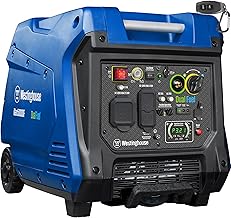
The Westinghouse iGen4500 combines 4,500 running watts with inverter technology and dual-fuel flexibility. It’s engineered for jobsites: robust frame, sealed fuel cap, and clean power output (low total harmonic distortion) suitable for sensitive electronics and power tools. The dual-fuel switching is reliable, and the unit handles 240V circuits with proper configuration. Noise is around 64 dB at quarter load, making it one of the quieter heavy-duty options. Propane runtime on a 20 lb tank is approximately 7–9 hours at half load. The main trade-off: at 4,500 watts, it’s below the threshold for simultaneous high-load appliances, so it’s better suited to construction or supplementary backup rather than whole-home coverage.
Best Budget-Tier Option
DuroMax XP4500 Dual Fuel Generator
The DuroMax XP4500 delivers dual-fuel capability at entry-level pricing. It produces 4,500 running watts and 5,500 surge watts, with a 7-gallon gasoline tank and standard propane connection. Per aggregated Amazon owner reviews, the fuel switch is reliable, and propane runtime on a 20 lb tank reaches 8–10 hours at half load. Noise is moderate at around 71 dB at half load—not as quiet as inverter models but acceptable for most residential settings. The unit weighs approximately 130 lbs and includes a wheel kit for portability. The trade-off: it’s a conventional (non-inverter) model, so power output is less stable for sensitive electronics, and noise is higher than premium options. For backup power to essential circuits or occasional use, it’s a solid value.
Propane vs. Gasoline: Which Fuel Should You Use?
When to Burn Propane
- Long outages (3+ days): Propane’s 2–3× longer runtime per gallon (example: a 20 lb propane tank on a 5,000W generator delivers 10–14 hours at half load, versus 4–6 hours from a 5-gallon gasoline tank on the same unit) makes extended operation economical.
- Off-season storage: Propane won’t degrade or gum up the carburetor if the generator sits idle for months.
- Fuel scarcity: If gas stations are closed or lines are long, propane cylinders are often available at hardware stores or propane suppliers.
- Environmental preference: Propane burns cleaner with lower emissions.
Drawback: Propane refill locations are less ubiquitous than gas stations, and you need a regulator and hose to connect larger tanks.
When to Burn Gasoline
- Short outages (under 8 hours): Gasoline’s higher energy density means fewer refueling stops.
- On-the-go refueling: Portable gasoline cans are easier to transport and refill at any gas station.
- Immediate availability: If you’re caught without fuel, gasoline is easier to source in most regions.
- Portable use: For camping or jobsite use where a propane connection isn’t practical, gasoline is simpler.
Drawback: Gasoline degrades over 3–6 months, and carburetor gumming is common if you store the generator with fuel in the tank.
See How to Maintain a Backup Generator: Fuel, Storage & Seasonal Care to learn the exact steps to prevent carburetor gumming and extend fuel shelf life.
Fuel-Switching and Setup
Manual Switching (Most Models)
Turn a valve or flip a switch to select propane or gasoline. Per manufacturer spec sheets, switching takes 10–30 seconds and requires a brief engine shutdown.
Setup: 1. Fill the gasoline tank and propane cylinder (or connect an external tank). 2. Turn the fuel selector to your chosen source. 3. Start the generator and let it run for 30 seconds to stabilize. 4. To switch, shut down the engine, flip the selector, and restart.
Automatic Switching (Premium Models)
A handful of high-end dual-fuel generators automatically sense fuel depletion and switch sources. This adds cost and electronic complexity but eliminates the need to manually restart.
Trade-off: Automatic switching is convenient but introduces more failure points. Most users and contractors prefer manual switching for its simplicity and reliability.
Installation and Safety Considerations
Propane Connection
Standard dual-fuel generators use a 1/4-inch NPT (national pipe thread) fitting. You’ll need:
- A propane regulator (usually included, but verify before purchase)
- A hose rated for propane (typically 12–25 feet)
- A shutoff valve on the external tank (standard on residential propane tanks)
Important: Propane connections must be airtight. Test with soapy water before operation. Always shut off the external propane tank when the generator is not in use to prevent leaks.
Gasoline Tank
Built-in tanks are sealed and require no special setup beyond filling at a gas station. Always use a fuel funnel and avoid overfilling, which can cause leaks and carburetor flooding.
Exhaust and Placement
All generators produce carbon monoxide (CO), a colorless, odorless gas that kills. Per EPA guidelines (https://www.epa.gov/indoor-air-quality-iaq/generators-and-carbon-monoxide):
- Never run a generator indoors, in a garage, basement, or enclosed space.
- Place the unit at least 20 feet away from doors, windows, and vents.
- Use a battery-powered CO detector in your home during generator operation.
Propane produces slightly less CO per unit of energy than gasoline, but the difference is negligible compared to placement and ventilation.
Maintenance and Seasonal Care
Propane Side
Propane requires minimal maintenance. The fuel itself doesn’t degrade, and the connection is simple. Inspect the regulator and hose annually for cracks or leaks.
Gasoline Side
Gasoline degrades over time, especially in warm climates. Best practices include:
- Add fuel stabilizer (such as Sta-Bil) to gasoline before storing the generator for more than 30 days.
- Run the generator on stabilized fuel for 5–10 minutes monthly to keep the carburetor clean.
- Drain the gasoline tank and run the engine dry before long-term storage (3+ months).
- Replace the spark plug annually and check the air filter every 50 hours of use.
See How to Maintain a Backup Generator: Fuel, Storage & Seasonal Care to learn the exact steps to prevent carburetor gumming and extend fuel shelf life.
Dual-Fuel vs. Single-Fuel
Single-fuel generators are simpler and often cheaper, but dual-fuel flexibility is worth the modest premium if you value fuel resilience. Most dual-fuel models cost 10–20% more than comparable single-fuel units. For backup power in unpredictable emergencies, the ability to switch fuels based on availability makes dual-fuel the better choice.
FAQ
Q: Can I switch fuels while the generator is running? A: No. Manual-switch dual-fuel generators require a shutdown, fuel-selector adjustment, and restart. Automatic-switch models (rare and expensive) can transition without stopping, but most users prefer manual switching for reliability.
Q: How long does propane last in a dual-fuel generator? A: On a standard 20 lb grill cylinder, propane typically lasts 8–14 hours at half load, depending on the generator’s wattage and efficiency. Larger external tanks (30–100 lbs) extend runtime proportionally. Per owner reports, connecting a residential propane tank enables weeks of continuous operation.
Q: Do I need a regulator to use propane? A: Yes. Propane cylinders contain liquid under pressure; a regulator reduces that pressure to a safe level for the generator. Most dual-fuel models include a basic regulator, but verify before purchase. External propane tanks (30+ lbs) typically have built-in regulators.
Q: Is propane or gasoline cheaper to run? A: Propane’s superior runtime (2–3× longer per gallon) makes it cheaper per hour of operation, but per-gallon pricing varies by region and season. Gasoline is often cheaper per gallon but burns faster. For long outages, propane wins economically.
Q: Can I use a dual-fuel generator indoors? A: No. All generators produce carbon monoxide, which is fatal indoors. Always run the unit outdoors, at least 20 feet from windows and vents.


