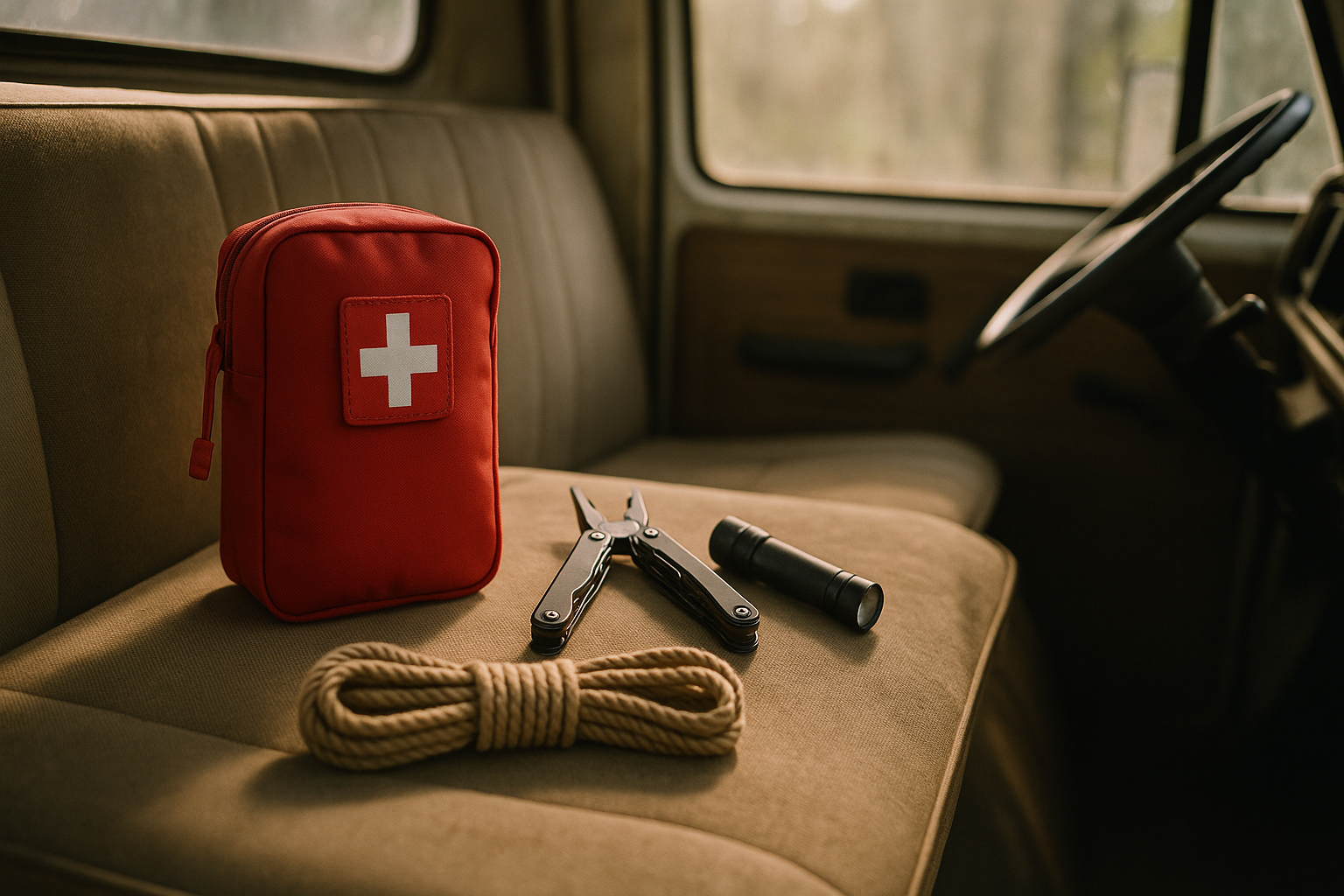
Emergency Gear Checklist for Camping: Power, Water & First Aid

Photo by Rahul Bhosale on Unsplash
Emergency Gear Checklist for Camping: Power, Water & First Aid Essentials
When you’re miles from the trailhead, a forgotten water filter or dead headlamp isn’t an inconvenience—it’s a crisis. This checklist walks you through the five categories of emergency gear every camper should pack: power, water, first aid, shelter, and navigation. Whether you’re car camping or backpacking into remote terrain, these essentials keep you safe when things go wrong.
Power & Lighting
Darkness falls fast in the backcountry, and a dead light source turns a minor delay into a dangerous situation. Reliable power and lighting aren’t luxuries; they’re survival tools.
Headlamp with backup batteries A quality LED headlamp frees both hands and lets you navigate, set up camp, or signal for help in the dark. Most headlamps rated for 50–100 lumens provide 15–30 hours of runtime on a fresh set of AAs. Pack two sets of backup batteries—one in your pack and one waterproofed separately in case the first set fails or leaks. Recommended models: Black Diamond Spot 400 (160g, ), Petzl Actik Core (80g rechargeable, ), or BioLite HeadLamp 425 (90g, ).
Portable power bank If you’re carrying a satellite communicator, GPS device, or smartphone for emergency calls, you need redundant charging. A compact, mid-tier power bank (5,000–10,000 mAh) weighs under a pound and tops off a phone multiple times. For backcountry trips where you’re relying on GPS or satellite communication, this is essential. Recommended models: Anker PowerCore 10000 (195g, ), Goal Zero Nomad 7 Plus with power bank (280g, ), or RAVPower 10000mAh (180g, ).
Backup power via solar A lightweight solar panel (10–20W) can trickle-charge a power bank or small battery over several hours, giving you indefinite charging capability if your trip extends beyond expected. This is especially valuable if weather delays your exit and you need to stay put longer than planned.
Water & Hydration
Dehydration clouds judgment and weakens your body when you need it most. Contaminated water can incapacitate you within hours. Redundant water solutions are non-negotiable.
Water filter or purification tablets Carry two separate methods—a lightweight squeeze filter plus chemical tablets (iodine or chlorine dioxide). Per CDC guidelines and manufacturer specifications, squeeze filters remove bacteria and protozoa but not viruses; tablets kill all three but take 30 minutes to work. Together, they cover every scenario and weigh almost nothing. Recommended filters: Sawyer Squeeze (56g, ), LifeStraw Personal (40g, ), or Platypus QuickDraw (85g, ). For tablets: Aquamira (chlorine dioxide, per bottle) or Potable Aqua (iodine, ).
Collapsible water containers A 3-liter collapsible bag takes up almost no pack space when empty but lets you carry extra water from a known safe source. In an emergency where you need to shelter in place, having the ability to haul water from a nearby stream is critical.
Electrolyte powder or salt tablets If you’re injured, stranded, or hiking out of an emergency situation, your body burns through electrolytes faster than plain water replaces them. A packet of electrolyte powder or a few salt tablets weigh ounces and restore your sodium balance, which stabilizes your heart rate and helps your body retain fluids.
First Aid & Injury Management
Most camping injuries are minor—blisters, cuts, sprains—but infection or delayed treatment can escalate them. A trauma-focused first aid kit beats a generic drugstore kit every time.
Blister prevention and treatment Blister tape or moleskin applied before a hot spot develops stops most foot problems. If a blister forms, carry a needle (sterilized in a small alcohol packet), antibiotic ointment, and sterile gauze to drain and dress it. Recommended products: Leukotape K (athletic tape, ), Engo Blister Prevention Patches (adhesive patches, ), or Compeed Advanced Blister Care ( for a pack).
Wound closure and infection control Pack butterfly bandages or adhesive wound strips (not just Band-Aids) for cuts. Include antibiotic ointment, sterile gauze pads, and medical tape. A small tube of hydrocortisone cream reduces swelling from insect bites or allergic reactions.
Pain and inflammation Ibuprofen or naproxen tablets address pain and reduce swelling from sprains or impacts. Include acetaminophen as a backup if someone has an NSAID allergy. Both weigh almost nothing and often prevent a minor injury from becoming a reason to abandon the trip.
Trauma supplies For trips into genuine wilderness (more than a 2-hour walk from help), add a tourniquet and a pressure dressing. These are specialized items—take a wilderness first aid course before packing them so you know how to use them correctly.
Medications Carry any personal prescriptions in their original containers plus a copy of the prescription itself. Include an antihistamine (for allergic reactions) and anti-diarrheal medication. If anyone in your group has a severe allergy, pack an epinephrine auto-injector and ensure at least two people know how to use it.
Shelter & Insulation
Unexpected overnight exposure is one of the fastest ways a camping trip becomes an emergency. Even summer trips can turn dangerous if weather shifts or an injury forces a shelter-in-place.
Emergency bivy sack or space blanket A lightweight emergency bivy (a minimal sleeping bag-like shelter) or a reflective space blanket takes up the space of a water bottle and can prevent hypothermia. Recommended options: SOL Emergency Bivy (100g, ), Survival Frog Emergency Bivy , or Mylar space blanket . Many experienced hikers carry both: the bivy for actual shelter and the space blanket as a backup or for signaling.
Repair kit for your tent or shelter Duct tape wrapped around a pencil (not a roll—it saves weight), a needle and thread, and a few feet of paracord can patch a torn tent, stake failure, or broken pole. A small patch kit designed for your specific shelter is lighter and more reliable than improvising.
Extra insulation layer Even on warm-weather trips, pack a lightweight fleece or down layer you weren’t planning to wear. If you’re stranded or injured and can’t keep moving, this single layer can mean the difference between discomfort and hypothermia.
Navigation & Communication
Getting lost or unable to signal for help turns a minor problem into a major one. Redundant navigation and communication tools are essential insurance.
Map and compass A waterproof topographic map of your area and a baseplate compass weigh almost nothing and never need batteries. Most people who get lost have a GPS but no map—when batteries die or the device fails, they’re helpless. Know how to navigate by map and compass before you rely on them in an emergency.
GPS device or satellite communicator A dedicated GPS unit (like a Garmin handheld) or a satellite messenger (like a Garmin inReach) lets you call for help even where cell service is nonexistent. These are premium-tier investments but invaluable for remote trips. For car camping or day hikes, a smartphone with offline maps downloaded (via apps like Maps.me or Gaia GPS) covers most scenarios.
Signal mirror and whistle A small signal mirror and a whistle weigh almost nothing and can alert rescuers from miles away. Three blasts of a whistle is the universal distress signal, and a mirror can be seen from much farther than shouting.
Headlamp for signaling Your headlamp isn’t just for navigation—in an emergency, flashing it at night can attract attention from rescuers or other campers. Make sure it has a strobe or SOS mode.
Scenario-Specific Additions
Multi-day backpacking trips Add a lightweight repair kit for your backpack (adhesive patches, thread, needle), extra food beyond your planned rations, and a small water treatment backup (iodine tablets if you’re already carrying a filter).
Winter or shoulder-season camping Include hand and foot warmers, extra insulation layers, and a larger emergency bivy rated for cold. Pack a backup heat source (chemical hand warmers or a small camp stove) in case you’re stranded overnight.
Car camping or base camping You have more weight capacity, so add a larger first aid kit, extra water containers, a portable camp stove and fuel, and a battery-powered radio. Consider a small portable power station to charge devices and run a fan or light.
Solo trips Pack a personal locator beacon (PLB) or satellite communicator—having a way to call for help when no one knows your location is critical. Also carry extra food and water, and leave a detailed itinerary with someone who knows when to alert authorities if you don’t check in.
Packing and Testing Your Kit
A checklist is only useful if you actually carry it and know how to use it.
- Distribute weight evenly. Don’t pack all emergency gear in one pocket—if that section of your pack is damaged or lost, you’re exposed. Spread critical items (water filter, first aid, headlamp, map) across different compartments.
- Test everything before the trip. Use your headlamp, filter, and stove at home. Know how long your power bank actually lasts. Verify that your map is current and your compass works.
- Practice navigation. Don’t wait for an emergency to learn how to use your map and compass. Spend an afternoon navigating by map alone (without GPS) in familiar terrain.
- Review with your group. If you’re camping with others, make sure at least one other person knows where your emergency kit is and how to use the critical items (first aid, water filter, communication device).
FAQ
What’s the minimum emergency kit for a day hike? Headlamp with extra batteries, water and a filter, basic first aid (blister supplies, pain relief, antibiotic ointment), a map and compass, and a whistle. Even a 2-hour hike can turn into an overnight emergency if you’re injured or lost.
How much should I spend on an emergency kit? A functional kit for backpacking (headlamp, filter, first aid, bivy, map/compass). Car camping allows you to add a power station and larger first aid kit for. Satellite communicators are premium investments at +. Start with basics and add items as your trips get longer or more remote.
Should I carry a satellite communicator on every camping trip? Not every trip, but yes for remote backcountry travel. For day hikes, car camping, or established campgrounds, a smartphone with offline maps and a power bank usually suffices. For trips more than a few hours’ walk from help, a satellite messenger or PLB is worth the investment.
How often should I replace emergency supplies? Check your kit every 6 months. Replace batteries if they show any corrosion, refresh first aid supplies (especially ointments and medications) annually, and rotate food items if you carry them. Water treatment tablets have an expiration date—note it and replace as needed.
Can I use my camping power bank for emergency communication? Yes, but only if you also have offline maps and a way to navigate without GPS. A power bank extends your phone’s usefulness, but it’s not a replacement for a dedicated communication device or map-and-compass navigation.
What’s the difference between a space blanket and a bivy sack? A space blanket is a thin, reflective emergency wrap that prevents heat loss through radiation. It’s lightweight and compact but offers no insulation from ground cold or wind. A bivy sack is a minimal sleeping bag-like shelter that covers your whole body and provides some insulation. For actual overnight shelter, a bivy is better; for backup insulation or signaling, a space blanket is lighter.
Summary
Emergency gear for camping isn’t about preparing for disaster—it’s about staying safe when small problems arise. A forgotten filter, dead headlamp, or unexpected weather delay can escalate quickly in the backcountry. By carrying redundant solutions for power, water, first aid, shelter, and navigation, you ensure that no single failure derails your trip or endangers your life.
Start with the basics (headlamp, water filter, first aid, map, whistle), test everything at home, and add scenario-specific items based on your trip length and terrain. The best emergency kit is the one you actually carry and know how to use. Pack it, test it, and review it before every trip.