Quiet Generators for Apartments: Noise Ratings Compared
Quiet Generators for Apartments: Noise Ratings Compared
Apartment living means you can’t run a standard contractor-grade generator without drawing complaints—or lease violations. The good news: inverter generators designed for quiet operation exist, and understanding decibel ratings and placement strategies makes the difference between a neighbor-friendly power backup and one that lands you in hot water.
This guide breaks down noise science, compares real-world decibel specs, and shows you how to pick and position a generator that won’t make you the building’s villain.
Understanding Decibel Ratings and What They Mean for Apartments
Noise is measured in decibels (dB), and the scale is logarithmic—meaning a 10 dB increase sounds roughly twice as loud to human ears. Apartment generators typically operate in the 49–75 dB range, depending on load and design.
Real-world reference points (per EPA noise reference guide): - 50 dB: quiet office, rainfall - 60 dB: normal conversation - 70 dB: busy traffic, lawnmower - 80+ dB: alarm clock, heavy machinery
Most apartment leases prohibit generators above 65 dB during daytime hours and 55 dB at night. Noise limits vary by jurisdiction; check your lease and local municipal codes before purchasing. Some cities ban gas generators outright in residential zones.
The key spec to hunt for is the quarter-load decibel rating. Generators are quietest when running at 25% of their rated power output. Manufacturers sometimes highlight full-load (75–100%) dB ratings to make their units look quieter than they are. Always compare apples to apples: quarter-load dB vs. quarter-load dB.
Inverter Generators vs. Standard Generators for Apartments
Inverter generators are the apartment dweller’s best friend. They use advanced electronics to produce clean, stable power and automatically throttle the engine speed to match demand—meaning the engine doesn’t roar at full RPM just because you’re charging a phone.
Why inverters win for apartments:
- Automatic load-matching: Engine speed adjusts to what you’re actually using, cutting fuel consumption and noise by 30–50% compared to fixed-speed generators.
- Cleaner power: Sensitive electronics (laptops, cameras, CPAP machines) run safely on inverter-supplied electricity.
- Lighter weight: Most inverters are portable enough to store in a closet or small balcony cabinet.
Standard (non-inverter) generators run at a fixed RPM regardless of load, meaning a 5-watt phone charger forces the engine to work as hard as a 5,000-watt demand. They’re also louder (typically 70–85 dB at quarter load) and heavier.
For apartments, inverter generators in the 2,000–3,500 watt range cover most backup scenarios without excessive noise or bulk.
Top Quiet Generator Models: Specs and Real-World Noise Data
WEN 56203i Super Quiet Inverter Generator
Per manufacturer spec sheet, this 2,350-watt inverter runs at 49 dB at quarter load—the lowest in its power class. It weighs 57 pounds, making it portable enough to store in a bedroom closet. Fuel capacity is 1.2 gallons, yielding roughly 10 hours of runtime at quarter load. User reports suggest consistent performance at normal operating loads with minimal audibility through apartment walls.
The trade-off: it’s a budget-tier inverter, so long-term durability reports (3+ years of regular use) are limited compared to established brands.
Honda EU2200i Inverter Generator
Honda’s 2,200-watt inverter is widely regarded as the gold standard for apartment backup. It runs at 49 dB at quarter load and has a 7.7-hour runtime on a single tank of fuel. The unit weighs 46 pounds and is compact enough to fit under a standard desk or in a storage closet.
User reports suggest the Honda EU2200i typically lasts 10+ years with annual maintenance. The premium-tier price tag reflects reliability and resale value.
Champion 3100-Watt Inverter Generator
Champion’s 3,100-watt inverter delivers more power than the WEN or Honda while staying reasonably quiet: 53 dB at quarter load. It runs for 8 hours at quarter load on a 1.6-gallon tank and weighs 64 pounds. User reports indicate the extra power is useful for simultaneous loads (e.g., refrigerator + laptop + lighting), and noise complaints from neighbors are rare at normal use.
The 53 dB rating is still apartment-friendly—roughly the volume of a normal conversation—but it’s noticeably louder than the 49 dB models if your walls are thin.
Westinghouse iGen2500 Portable Inverter Generator
Westinghouse’s 2,500-watt inverter hits 51 dB at quarter load and weighs 51 pounds. It offers a middle ground: more power than the WEN, quieter than the Champion, and a mid-tier price point. Runtime is 7.5 hours at quarter load. Per manufacturer spec sheet, it includes a parallel-ready design, allowing two units to be chained together for higher wattage without proportional noise increase—useful if you eventually move to an RV or cabin.
Placement and Soundproofing Strategies for Apartments
Even the quietest generator benefits from smart placement. Apartment-specific tactics:
1. Distance matters - Place the generator as far from shared walls as possible. Per the inverse square law, every doubling of distance reduces perceived loudness by roughly 6 dB. - If you have a balcony, position the unit in the far corner, away from your neighbor’s windows.
2. Barrier absorption - Surround the generator with acoustic foam panels (2–4 inches thick) on three sides, leaving the exhaust side open. - A plywood box with mineral-wool insulation inside can reduce noise by 3–6 dB. Leave ventilation gaps to prevent overheating. - Heavy blankets draped over the unit (not covering the exhaust) add modest damping.
3. Rubber isolation mounts - Generators vibrate against hard floors, transmitting sound through the building structure. Rubber isolation pads decouple the unit and reduce vibration transmission by 2–4 dB.
4. Exhaust mufflers - Aftermarket mufflers designed for generators can reduce exhaust noise by 3–5 dB. They add minimal backpressure if properly sized. - Do NOT block the exhaust or muffler; generators produce carbon monoxide and must vent to open air.
5. Runtime scheduling - Run the generator during daytime hours (typically 8 AM–8 PM per lease clauses) when ambient noise is higher and neighbors are less sensitive. - Battery backup systems offer silent alternatives for short outages without generator use.
Fuel Type and Runtime Considerations for Apartments
Gasoline generators are the most common. They’re affordable, widely available, and run for 4–10 hours per tank depending on load. The downside: fuel degrades in 3–6 months, so you’ll need to add stabilizer or drain the tank seasonally. Gasoline also produces noticeable odor, which can irritate neighbors.
Propane generators run quieter in some models and produce zero odor. Propane doesn’t degrade, so you can store fuel indefinitely. However, propane units are heavier, more expensive, and require a dedicated propane tank. For apartments, this is rarely practical unless you already have a propane grill.
Dual-fuel units run on both gasoline and propane, but they’re heavier and noisier than single-fuel inverters. They’re better suited to RVs or homes with outdoor storage.
For apartment use, stick with gasoline inverters and use fuel stabilizer (e.g., Stabil) if you’ll store the generator for more than a month.
Lease Compliance and Legal Considerations
Before buying, review your lease and local noise ordinances:
- Lease clauses: Most apartment leases prohibit generators above 65 dB during the day and 55 dB at night, or ban them outright. Violating this can result in fines or eviction.
- Municipal codes: Many cities classify generators as temporary emergency equipment only. Using one regularly (e.g., for power outages) may be permitted, but using one for recreational camping is not.
- HOA restrictions: If your building has a homeowners association, check their generator policy before purchase.
Best practice: Notify your building management or landlord in writing that you’re installing a backup generator, specify the model and decibel rating, and ask for written approval. This creates a paper trail and prevents surprise enforcement.
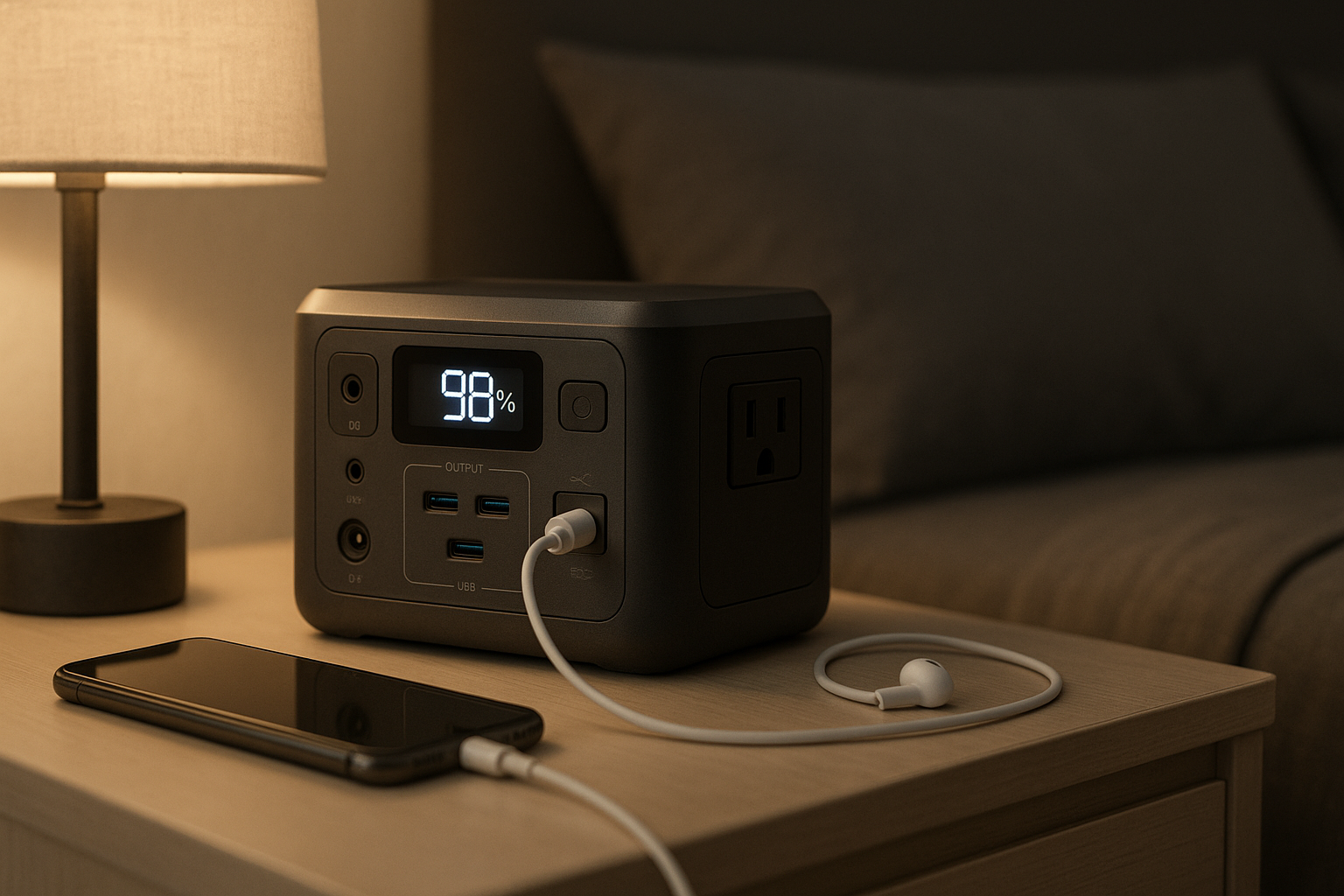
If your lease bans generators entirely, portable power stations or battery backup systems offer silent alternatives for short outages (4–12 hours).
Maintenance Tips to Keep Your Apartment Generator Quiet
A well-maintained generator stays quieter and lasts longer:
- Change the oil annually or every 50 hours of use. Dirty oil increases friction and noise.
- Clean or replace the air filter every 3–6 months. A clogged filter forces the engine to work harder.
- Inspect the muffler for rust or damage. A corroded muffler leaks sound and can fail.
- Run the generator monthly for 10–15 minutes under light load to keep the carburetor clean and prevent fuel varnish.
- Check spark plug gap annually. A worn plug increases ignition noise.
Per manufacturer spec sheets, most inverter generators require minimal maintenance compared to standard generators, but these basics extend lifespan and preserve the quiet operation you paid for.
FAQ
Q: Can I run a generator indoors or in my apartment? A: No. Generators produce carbon monoxide, a colorless, odorless gas that causes death in minutes. Always run generators outdoors, at least 20 feet from windows, doors, and vents. Indoor use (including garages, basements, and enclosed patios) is dangerous and illegal in most jurisdictions.
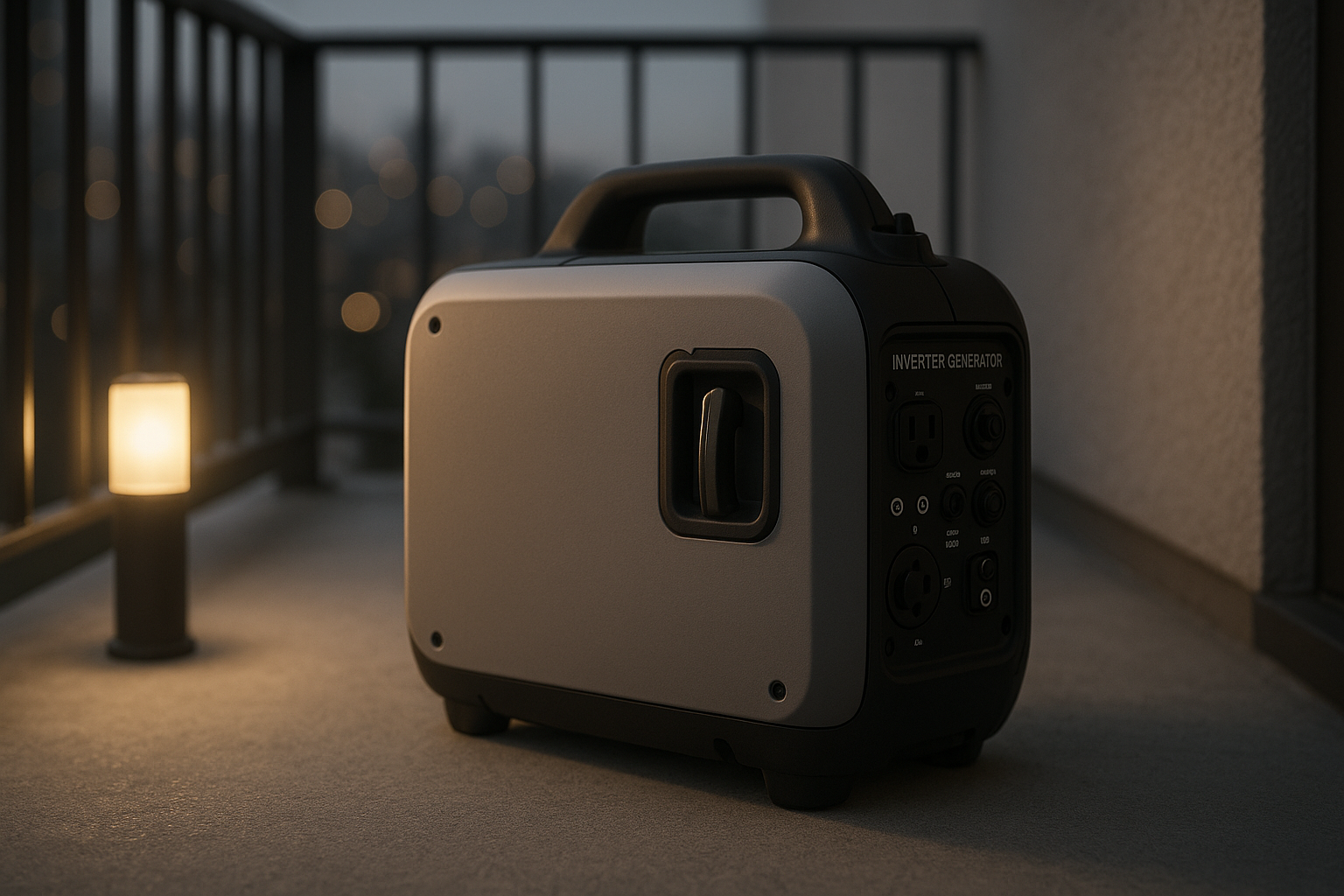
Q: Can I use a generator on a balcony? A: Yes, if your lease permits it. Position the unit in the far corner, away from your neighbor’s windows and doors. Ensure exhaust vents away from the building and neighboring units. Check your lease and local codes first—some buildings prohibit balcony generators outright.
Q: What’s the difference between dB at quarter load vs. full load? A: Quarter load (25% power output) produces the quietest operation because the engine runs at lower RPM. Full load (100% output) forces the engine to maximum speed, increasing noise by 5–15 dB depending on the model. Always compare quarter-load ratings when shopping for apartment generators.
Q: Will a quiet generator work in winter? A: Inverter generators work in cold, but fuel gets sluggish and the battery weakens. Most units operate safely down to 32°F (0°C), but you may need to preheat the fuel or use a cold-start kit. Check the manual for your specific model’s temperature range.
Q: Can I use a generator to power my air conditioner? A: Most window AC units draw 1,500–2,500 watts on startup, requiring a 3,500+ watt generator. A 2,200-watt inverter can’t handle the surge. If AC is critical, a 5,000-watt generator is more practical—but that’s too loud for most apartments. Consider a portable AC unit rated for inverter power, or rely on battery backup for essential loads only.
Q: How long do inverter generators last? A: Well-maintained inverter generators typically run 10–15 years with annual servicing. Budget-tier models often last 5–8 years before needing major repairs. Premium brands consistently exceed 10 years.
Wrapping Up
Apartment generators live in a tight constraint: quiet enough to avoid lease violations and neighbor complaints, powerful enough to handle a blackout. Inverter technology solves this by matching engine speed to actual demand, keeping noise low and fuel consumption minimal.
The quietest models (Honda EU2200i, WEN 56203i) hit 49 dB at quarter load—roughly the volume of a normal conversation—and weigh under 60 pounds for easy storage. Placement, soundproofing, and fuel maintenance extend both quiet operation and unit lifespan.
Before purchasing, verify your lease and local noise ordinances. If a generator isn’t permitted, portable power stations or battery backup systems offer silent alternatives for short outages.