Best Battery Backup Systems for Whole House Power Outages
Best Battery Backup Systems for Whole House Power Outages in 2026
During the 2023 California wildfires, homes with battery backup kept refrigerators running for 3+ days while neighbors lost food to spoilage. A whole-house battery backup system keeps your lights on, refrigerator running, and essential circuits powered without the noise, fumes, or ongoing fuel costs of a generator. Unlike portable power stations or uninterruptible power supplies (UPS) that handle individual devices or offices, whole-house batteries integrate with your electrical panel to power your entire home—or at least your critical loads—during an outage.
This guide compares the leading battery backup systems available in 2026, covering capacity, installation complexity, integration with solar, and real-world runtime expectations.
How Whole-House Battery Backup Works
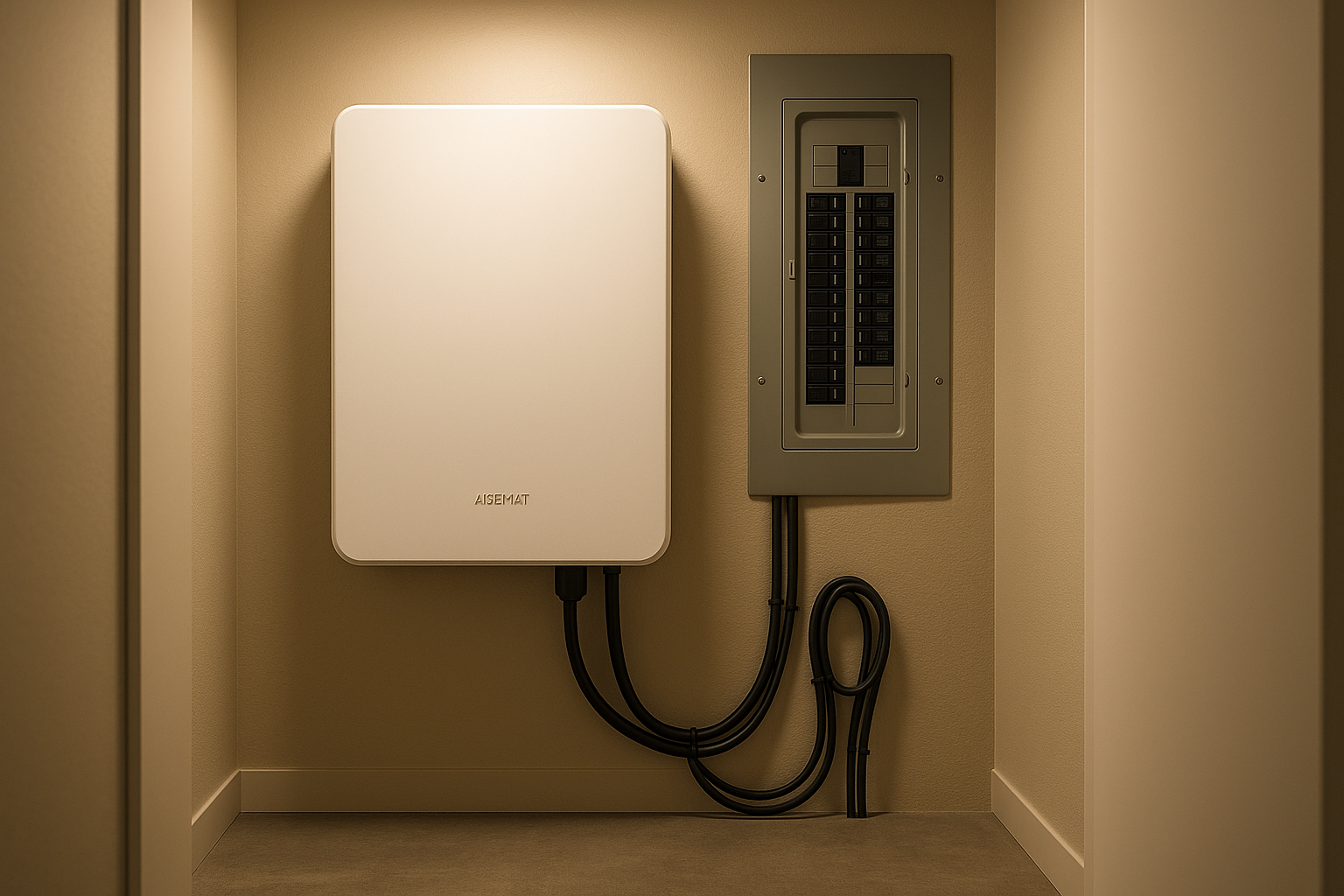
A whole-house battery system sits between your grid connection and your home’s electrical panel. When power is available, the system charges from the grid (or from rooftop solar). When the grid fails, an automatic transfer switch activates, and the battery supplies power to your home until it depletes or grid power returns.
Most modern systems use lithium-ion chemistry, which offers higher energy density, longer lifespan, and faster charging than older lead-acid batteries. The system includes:
- Battery module(s): The actual energy storage unit, measured in kilowatt-hours (kWh).
- Inverter: Converts stored DC power to AC power your appliances use.
- Automatic transfer switch: Detects outages and disconnects from grid, supplies battery power within milliseconds.
- Monitoring software: Tracks battery state, power flows, and lets you manage loads remotely.
Per manufacturer specifications and owner reports, most lithium systems retain 80–90% of their original capacity after 10 years of daily cycling.
Key Specs to Understand
Usable capacity is what matters. A 13.5 kWh battery might only let you draw 10 kWh safely; the rest is reserved to protect the chemistry. Check the spec sheet for usable (not nominal) capacity.
Power rating (in kilowatts) determines how many appliances run simultaneously. A 5 kW system can’t run your air conditioner, water heater, and oven at once. Most whole-house systems are rated 5–10 kW continuous output.
Depth of discharge (DoD) shows how much of the battery you can safely use before it needs recharging. Modern lithium systems often allow 90–95% DoD without degradation.
Round-trip efficiency measures energy lost during charge and discharge cycles. Lithium systems typically achieve 85–95% efficiency; anything below 80% wastes power and extends charging time.
Scalability matters if you want to add capacity later. Modular systems (like Generac PWRcell or Enphase IQ) let you stack additional batteries; monolithic designs (like Tesla Powerwall) require separate units.
Top Whole-House Battery Backup Systems
Tesla Powerwall
The Powerwall is the most widely installed home battery in the U.S., per aggregated installer data and owner forums. It offers 13.5 kWh usable capacity, 5 kW continuous output, and seamless integration with Tesla solar systems and third-party inverters.
Strengths: Fast response time (sub-millisecond switching), sleek wall-mounted form factor, mobile app control, and proven durability in real-world outages reported by thousands of owners. Works with existing solar installations if you add a compatible inverter.
Weaknesses: Premium pricing tier, requires a Tesla-certified installer (limits installer choice), and the single 13.5 kWh unit may not be enough for extended outages in larger homes. Stacking multiple units is possible but expensive.
Best for: Homeowners with or planning solar, who value integration simplicity and don’t mind premium pricing.
Generac PWRcell
The PWRcell is a modular lithium system designed by a company with 60+ years in backup power. You start with a base inverter and stack battery modules (each adds 3.6 kWh usable capacity) up to 18 kWh or more. Continuous output scales with the inverter: 7.6 kW is standard.
Strengths: True modularity—add capacity as your needs grow or budget allows. Integrates with Generac’s solar products and works with existing solar via compatible inverters. Whole-home or critical-loads-only wiring options. Excellent warranty (10 years, 70% capacity guarantee).
Weaknesses: Requires a licensed electrician for installation. Larger footprint than Powerwall (wall-mounted cabinet). Fewer owner reviews than Tesla, though early adopter reports are positive.
Best for: Homeowners wanting to expand capacity later, those with existing Generac generators, or properties where modular scaling fits the budget plan.
LG Chem RESU
LG’s RESU line offers high usable capacity (10–15 kWh depending on model) in a compact wall-mounted unit. The system pairs with LG’s hybrid inverter or third-party inverters, and stacks up to 3 units for 45+ kWh total.
Strengths: High energy density (compact form factor), excellent efficiency (92% round-trip per spec sheet), and proven reliability in European markets before U.S. rollout. Works well with solar and grid-charging scenarios. Good warranty terms.
Weaknesses: Less U.S. market penetration than Tesla, so fewer local installers in some regions. Requires compatible inverter purchase (not always bundled). Setup is more technical than turnkey systems.
Best for: Homeowners prioritizing capacity and efficiency, especially those in regions with strong LG installer networks.
Enphase IQ Battery
Enphase, known for microinverters, offers a modular battery system with 3.36 kWh per module (stackable to 13.5+ kWh). The IQ System Controller manages the whole setup and integrates with Enphase solar microinverters for seamless hybrid operation.
Strengths: Lower entry cost than Powerwall or PWRcell. Modular design lets you start small. Excellent integration if you already have Enphase solar. Fast software updates and strong mobile app. 10-year warranty.
Weaknesses: Smaller per-module capacity means more units needed for large homes. Fewer independent installer options than some competitors. Less real-world outage data than Tesla.
Best for: Budget-conscious homeowners, especially those with Enphase solar or considering a solar-plus-storage installation.
Victron LiFePO4 Smart Lithium
Victron is a professional-grade battery manufacturer used in RVs, boats, and off-grid homes. Their LiFePO4 batteries (available in 5.12–25.6 kWh modules) pair with Victron inverter-chargers for complete system control. No proprietary software; you own and manage the system directly.
Strengths: Industry-standard reliability, modular design, works with any compatible inverter, and excellent for off-grid or hybrid setups. Long cycle life (6,000+ cycles at 80% DoD per manufacturer spec). Open ecosystem—not locked into one brand.
Weaknesses: Requires more technical knowledge to configure (not plug-and-play). Fewer turnkey installation packages. Higher upfront cost per kWh than consumer-focused brands. Longer lead times in some regions.
Best for: Off-grid or remote properties, technically savvy homeowners, and those wanting maximum flexibility and future-proofing.
Installation and Permitting
Whole-house battery systems require:
- Licensed electrician: Most jurisdictions require a licensed electrician to install the system and integrate it with your electrical panel. Expect installation labor to be 40–60% of the total system cost.
- Permits and inspections: Your local building department will require permits and final inspection before the system operates. This typically adds 2–4 weeks to the timeline.
- Interconnection agreement (if grid-tied): Your utility may require an agreement to confirm the system won’t backfeed during grid maintenance. This is standard and usually straightforward.
- Solar integration (if applicable): If adding batteries to an existing solar system, your electrician will verify the inverter is compatible and reconfigure if needed.
Per multiple installer reports, a complete installation (battery, inverter, transfer switch, wiring, permits) typically takes 3–6 weeks from contract to operation.
Battery Backup vs. Generators: When to Choose Each
Battery backup is silent, requires no fuel, and works instantly. However, batteries degrade over time and require replacement after 10–15 years at a cost of. Runtime is limited by capacity, but you can recharge from solar during the day or grid power when it returns.
Generators run indefinitely on fuel (gasoline, propane, natural gas), but require ongoing fuel storage, emit noise and exhaust, and need regular maintenance. They’re ideal for extended multi-day outages if you have fuel supply.
Many homeowners use both: a battery system for immediate backup and essential loads, plus a generator for extended outages. See Home Power Outage Survival Guide: Backup Plans for Every Room for a detailed comparison of backup strategies.
Sizing Your System
Step 1: Identify critical loads. Which circuits must stay powered during an outage? Typically: refrigerator, freezer, well pump (if on well), HVAC, lights, outlets, and water heater. Avoid large heating/cooling loads if possible—they drain batteries quickly.
Step 2: Calculate daily energy use. Add up the wattage of critical appliances and multiply by daily hours of use. For accuracy, use a Kill-A-Watt meter to measure actual appliance draw or consult the appliance spec sheet. For example, refrigerators vary widely: older models draw 800W, newer ENERGY STAR models draw 150–300W. Don’t rely on generic estimates like “500W fridge × 24 hours = 12 kWh/day” without verifying your specific model’s consumption.
Step 3: Add buffer. Plan for 1.5–2× your calculated daily use to account for inefficiencies and ensure the battery doesn’t fully deplete daily (which shortens lifespan).
Step 4: Consider solar recharge. If you have or plan solar, a smaller battery works because it recharges during the day. Without solar, size for at least 1–2 days of autonomy.
Integration with Solar
If you have rooftop solar, a battery system multiplies its value. During the day, excess solar charges the battery. At night or during an outage, the battery supplies power. This reduces grid dependence and maximizes self-consumption.
Most modern batteries (Tesla, Generac, Enphase, LG) are designed for solar integration. Check that your inverter is compatible with your solar panels’ specifications. See whole home solar battery integration guide for detailed solar + battery integration principles.
Cost Expectations
Whole-house battery systems are a mid-to-premium investment. Here are typical installed costs per system based on installer quotes and manufacturer data:
- Tesla Powerwall: installed (single unit, 13.5 kWh usable)
- Generac PWRcell: for base system (3.6–7.2 kWh); add per additional module
- Enphase IQ Battery: for 3–4 modules (10–13.5 kWh usable)
- LG Chem RESU: for single unit (10–15 kWh usable)
- Victron LiFePO4: for battery plus inverter-charger (5–10 kWh); higher for larger systems
These estimates include hardware, inverter, installation labor, permits, and inspection. Financing options—loans, leases, or power-purchase agreements—are increasingly available. Check with your installer and local utilities for incentives; some regions offer rebates for battery installations as part of grid-resilience programs.
Maintenance and Lifespan
Modern lithium batteries require minimal maintenance:
- Firmware updates: Most systems push software updates automatically via Wi-Fi. These improve efficiency and add features.
- Monitoring: Check the mobile app monthly to confirm normal operation. Unusual readings (zero charge after days of sun, or rapid discharge) warrant a service call.
- Ventilation: Ensure the battery unit has adequate airflow (check installation manual). Most are designed for indoor installation in garages, basements, or utility rooms.
- Temperature: Lithium systems work best in 32–104°F (0–40°C). Extreme heat or cold reduces efficiency and lifespan.
Per manufacturer warranties and long-term owner reports, most lithium systems retain 80–90% of original capacity after 10 years and often operate well beyond that with minimal degradation.
FAQ
Q: Can I power my whole house with a battery system? A: Yes, if your home’s peak power demand is within the system’s rating (typically 5–10 kW) and you size the battery for your daily energy use. Most homes can run essential loads indefinitely with solar recharging, or 1–3 days without solar depending on battery size.
Q: Do I need solar to use a whole-house battery? A: No. A battery alone provides backup when the grid fails. Without solar, you rely on grid charging before the outage or a generator to recharge during extended outages. Solar maximizes the battery’s value by keeping it charged during the day.
Q: How long does installation take? A: Typically 3–6 weeks from contract to operation, including permitting and inspection. The actual installation labor takes 2–5 days, but permits and local building department review are the limiting factors in most regions.
Q: What’s the warranty on these systems? A: Most manufacturers offer 10-year warranties with capacity guarantees (typically 70–80% of original capacity). Tesla Powerwall covers 10 years or 70% capacity retention. Generac PWRcell guarantees 10 years with 70% capacity. Enphase IQ Battery covers 10 years. Check the fine print for coverage details and whether labor is included.
Q: Can I add more batteries later? A: Yes, if you choose a modular system (Generac PWRcell, Enphase IQ, LG RESU, Victron). Monolithic systems like Tesla Powerwall require purchasing and installing separate units, which is more expensive. Plan for future expansion when sizing your initial inverter.
Q: How do I choose between battery backup and a generator? A: Batteries are silent, instant, and fuel-free but limited by capacity and require replacement after 10–15 years (k–k). Generators run indefinitely on fuel but need maintenance, emit noise, and require fuel storage. Many homeowners use both for maximum resilience. See Home Power Outage Survival Guide: Backup Plans for Every Room for a comprehensive backup strategy.
Summary
A whole-house battery backup system is the most convenient way to keep your home powered during grid outages, especially if you pair it with solar. The Tesla Powerwall leads in market adoption and integration simplicity, while Generac PWRcell and Enphase IQ offer modularity and lower entry costs. LG RESU and Victron appeal to those prioritizing capacity and technical control.
Choose based on your home’s size, expected outage duration, budget, and whether you have or plan solar. Size your system conservatively using actual appliance measurements—it’s cheaper to add capacity later than to undersized and regret it during an outage. Work with a licensed installer in your area, and verify local incentives before committing.
For apartment dwellers or renters, see Power Outage Preparedness for Apartments: What You Can Actually Do for backup strategies that don’t require installation. For a broader home resilience plan, check Power Outage Preparedness Checklist for Homeowners 2026.