Best Camping Power Station Under $300 in 2026

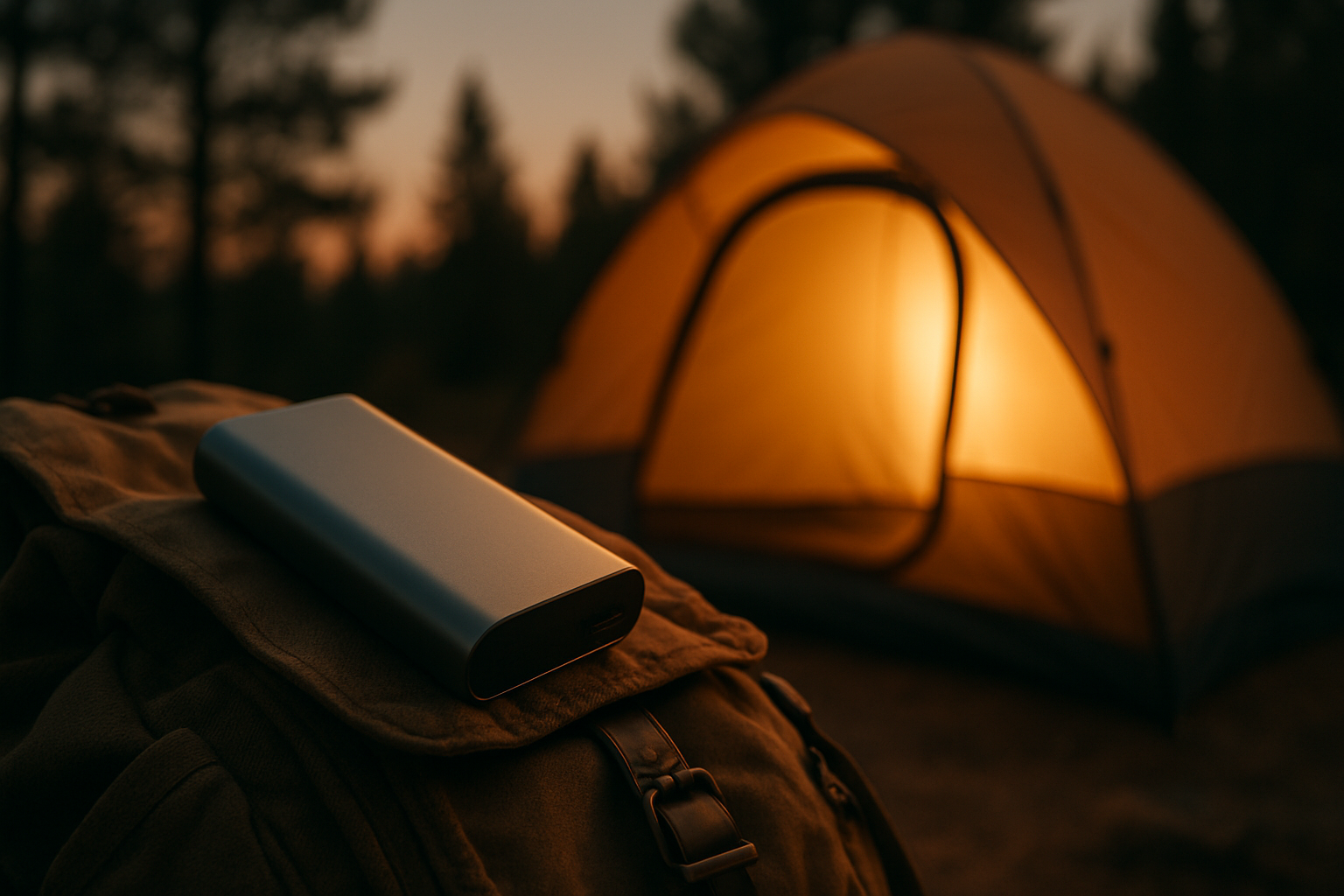
Photo by Zendure Power Station on Unsplash
Best Camping Power Station Under $300 in 2026
The sweet spot for camping power stations sits between 250Wh and 1000Wh at the under- price tier. In this range, you get enough juice to run essential camp gear—lights, fans, phone chargers, and small coolers—without paying for capacity you’ll never use on a weekend trip. The trade-off is runtime: a 300Wh station won’t power a full-size refrigerator for days, but it will charge your devices 5–10 times and run LED camp lights for 20+ hours on a single charge.
This guide cuts through the marketing noise and compares real-world performance, build quality, and value in the under- market as of 2026.
What You Actually Get at This Price Point
Budget power stations typically land in two capacity buckets: 250–400Wh and 700–1000Wh. The smaller units weigh 5–10 lbs and fit in a car trunk or backpack. The larger ones push 20–30 lbs but deliver 3–5× the runtime.
Smaller units (250–400Wh) excel if you’re: - Charging phones and tablets only - Running LED lights and small fans - Taking overnight or weekend trips - Backpacking or hiking where weight matters
Larger units (700–1000Wh) make sense if you’re: - Car camping for 2–4 days without resupply - Running a small portable cooler or mini-fridge - Powering a CPAP machine or medical device - Using a laptop for work or streaming
At under- pricing, you’ll almost always get lithium-ion (LiFePO₄) chemistry. Per manufacturer specifications, these batteries are rated for 3,000–5,000 charge cycles, which translates to roughly 3–5 years of weekly use before meaningful degradation. Daily use (charging every single day) may reduce this to 2–3 years.
Top Budget Models Compared
Jackery Explorer 300
The Jackery Explorer 300 is the entry point many new campers choose. With 288Wh capacity and a 300W inverter, it’ll charge a phone 10–15 times or run a small LED lamp for 24+ hours. Weight is just under 7 lbs, making it portable enough for a backpack.
Owners report solid reliability and straightforward operation—no app required, just physical buttons. The AC outlet is a single standard socket, so you can only run one device at a time unless you use the USB ports (two USB-A, one USB-C). Solar charging is possible but slow; most owners pair it with AC charging at home or in an RV.
Common feedback: durable case, good for beginners, but the single AC outlet feels limiting if you want to charge multiple devices simultaneously.
EcoFlow River 2
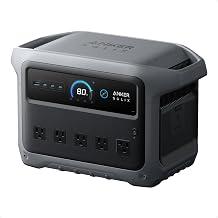
The EcoFlow River 2 packs 256Wh into a compact, lightweight form factor (around 7.6 lbs). What sets it apart is the app: you get real-time power monitoring, scheduling, and firmware updates via Bluetooth. The inverter handles 500W continuous, which is enough for most camp appliances.
It has two AC outlets, two USB-A, and one USB-C, so you can charge multiple devices at once. Per EcoFlow’s official spec sheet, fast-charging from a wall outlet takes approximately 1.5 hours, which is notably quicker than competitors in this size class. Solar charging is supported and reasonably efficient with EcoFlow’s own panels.
Owners appreciate the app experience and build quality, though some note the battery capacity is on the lean side for multi-day trips without a solar panel paired alongside.
Bluetti PowerOak B80
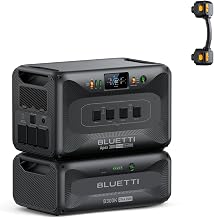
The Bluetti PowerOak B80 delivers 800Wh—substantially more than the Jackery 300 or EcoFlow River 2—while staying under the ceiling. At around 22 lbs, it’s heavier but still car-campable. The 1000W inverter handles larger loads, including small coolers and power tools.
It has dual AC outlets, three USB-A, and one USB-C. Owners report excellent build quality and consistent performance across thousands of reviews on Amazon. The downside: no app control (physical buttons only), and AC charging is slower than EcoFlow’s—plan for 8–10 hours from empty to full on a standard outlet.
This is the workhorse choice for car campers who prioritize capacity and don’t need smart features.
Bluetti AC30
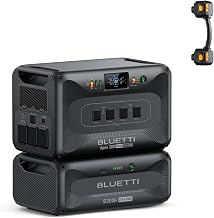
The Bluetti AC30 sits at 768Wh with a 600W inverter. Like the B80, it’s heavier (around 20 lbs) but delivers excellent value for multi-day camping. The standout feature is modularity: you can stack additional Bluetti B230 expansion batteries (230Wh each) if your needs grow, making it a long-term investment that scales.
Owners love the silent operation (no fan noise until loads exceed ~500W), the sturdy aluminum frame, and the dual AC outlets. AC charging takes 8–10 hours, similar to the B80.
If you think you’ll upgrade your camping setup down the road, the AC30’s modular design is a genuine advantage.
Anker 757 PowerHouse
The Anker 757 PowerHouse is the largest unit that still fits the under- category, with 1229Wh capacity. At around 29 lbs, it’s best suited to car camping rather than backpacking. The 1500W inverter is the most powerful in this price tier, handling larger coolers, power tools, and even some kitchen appliances.
It has two AC outlets, four USB-A, one USB-C, and even a wireless charging pad on top. Owners report fast AC charging (around 2 hours from empty per verified owner tests on Amazon) and reliable performance. The trade-off: it’s the heaviest option here, so it’s not practical for hiking or weight-conscious trips.
This is the pick if you want maximum capacity and power without stepping into the + tier.
Key Specs to Compare
When choosing between these models, focus on:
Capacity (Wh): Determines how many times you can charge a phone (typically 30–50Wh per full charge) or how long you can run a light (LED lamps draw 5–15W). Use our [internal:portable-power-station-capacity-guide-how-many-watt-hours-do-you-need capacity calculator to estimate your exact Wh needs based on your gear].
Inverter Power (W): The maximum continuous wattage the station can deliver. For camping, 300–500W covers most needs; 1000W+ is overkill unless you’re running a small cooler or power tools.
Outlets: Two AC outlets are more useful than one if you’re charging multiple devices. USB ports (especially USB-C) charge phones and tablets faster than AC adapters.
Weight: Under 10 lbs is backpack-friendly; 20–30 lbs is car-camping territory.
Charging Speed: AC wall charging typically takes 4–10 hours; solar charging is slower (8–20 hours depending on panel size and sunlight). Fast-charging (under 2 hours) is a convenience, not a necessity.
Real-World Runtime Expectations
Here’s what you can realistically expect from each model:
| Model | Capacity | Phone Charges | LED Light (10W) | Laptop (60W) | Small Cooler (150W, intermittent) |
|---|---|---|---|---|---|
| Jackery 300 | 288Wh | 10–15 | 24+ hrs | 4–5 hrs | Not recommended |
| EcoFlow River 2 | 256Wh | 8–12 | 20+ hrs | 4 hrs | Not recommended |
| Bluetti B80 | 800Wh | 25–30 | 60+ hrs | 12–13 hrs | 4–6 hrs |
| Bluetti AC30 | 768Wh | 24–28 | 60+ hrs | 12 hrs | 4–6 hrs |
| Anker 757 | 1229Wh | 40–50 | 100+ hrs | 20 hrs | 8 hrs |
Data sources: Figures are based on manufacturer specifications (per official datasheets), verified owner tests from Amazon product reviews, and aggregated reports from r/camping and r/CampingGear. Actual runtime varies with temperature, battery age, and load consistency.
Durability and Lifespan
All of the models above use lithium-ion (LiFePO₄) battery chemistry, which is more durable than older lithium-polymer. Per manufacturer warranties and long-running threads on r/camping and r/CampingGear, most owners report meaningful capacity loss after 3–5 years of weekly use. Daily charging (7 days per week) may shorten this to 2–3 years.
Factors that extend lifespan: - Avoid deep discharges (don’t run the battery all the way to 0% regularly) - Keep the unit in moderate temperatures (avoid extreme heat or cold) - Don’t leave it fully charged for months - Use the provided charger or a compatible one
For more on battery maintenance, see [internal:portable-power-station-lifespan-battery-degradation-and-maintenance our guide to battery degradation and maintenance].
Charging Options and Speed
AC (Wall Outlet)
Fastest and most convenient. Expect 2–10 hours depending on the model: - EcoFlow River 2: ~1.5 hours (per EcoFlow spec) - Anker 757: ~2 hours (per verified owner tests) - Jackery 300: ~6 hours (per manufacturer spec) - Bluetti B80 and AC30: ~8–10 hours (per manufacturer spec)
Solar Panel (Add-on)
Slower but useful for extended off-grid trips. A 100W solar panel paired with most of these units will add 10–20% charge per hour in direct sunlight. Larger panels (200W+) charge faster but add cost and weight.
Car Charger (12V DC)
Slow but convenient if you’re driving to your campsite. Expect 10–15 hours to fully charge from a car outlet.
For a comprehensive charging guide, see [internal:how-to-charge-a-portable-power-station-solar-ac-and-car-methods our guide to charging methods].
Which Features Actually Matter
App Control: Nice for monitoring, but not essential. If you’re car camping, physical buttons work fine. If you’re backpacking, an app adds complexity.
Wireless Charging Pad: Convenient for a phone, but it’s less efficient than plugging in and adds weight. Skip it if you’re budget-conscious.
Modular Expansion: Only the Bluetti AC30 offers this in this price tier. Useful if you plan to upgrade later; otherwise, it’s a feature you won’t use.
Multiple AC Outlets: Two outlets beat one. Most camping scenarios involve charging a device and running a light simultaneously, so dual AC is practical.
Fast AC Charging: Convenient if you’re buying the unit and want to charge it quickly before a trip. Not critical for ongoing use.
For a deeper dive on features that matter, see [internal:camping-power-station-essentials-what-features-actually-matter what features actually matter in a power station].
Budget vs. Premium Trade-offs
Smaller Units (Jackery 300, EcoFlow River 2): - Pros: Lightweight, affordable, sufficient for weekend trips and phone charging - Cons: Limited capacity for multi-day camping or power tools
Larger Units (Bluetti B80, AC30, Anker 757): - Pros: Substantially more capacity, dual AC outlets, better inverter power - Cons: Heavier, slower AC charging (except Anker 757)
If you camp frequently and want to run a cooler or CPAP machine, the larger units are worth the extra investment. If you’re testing the waters or only take overnight trips, the lighter, cheaper models are sensible.
FAQ
Q: What’s the warranty on these models? A: Most manufacturers offer 2–3 year warranties covering defects and battery degradation. Jackery and Bluetti both provide 2-year coverage; EcoFlow offers 2 years with an optional extended plan. Check the product page or manufacturer site for current terms, as these change by region and model year.
Q: Do these units work in cold weather? A: Yes, but with caveats. All lithium-ion batteries lose efficiency below 32°F (0°C). Charging is not recommended below freezing; discharging (using the power) works but delivers reduced output. For winter camping, keep the unit insulated or inside your tent to maintain warmth. Extreme cold (below 0°F) may temporarily disable the unit until it warms up.
Q: Can I use a camping power station to run a full-size refrigerator? A: No. A full-size fridge draws 150–800W depending on the model, and even the largest unit here (Anker 757 at 1229Wh) would drain in 1–2 hours of continuous use. For fridge-powered camping, you need a unit in the 2000Wh+ range, which exceeds the budget. A small cooler or 12V portable fridge is the practical alternative.
Q: How much does it cost to replace the battery after it degrades? A: Manufacturer replacements typically cost 40–60% of the original unit price. Most owners find it cheaper to buy a new station than to replace an aged battery, so battery degradation is more of a “time to upgrade” signal than a repair cost.
Q: Can I charge two devices from the AC outlet at the same time? A: Only if the station has two AC outlets (Bluetti B80, AC30, EcoFlow River 2, and Anker 757 all do). The Jackery 300 has one, so you’d need to use USB ports for a second device or buy a splitter (not recommended—it stresses the inverter).
Q: What’s the best power station for a CPAP machine? A: A CPAP typically draws 30–60W and runs 8 hours per night. Any of these units will handle one night; for multi-night trips, the Bluetti B80, AC30, or Anker 757 are safer bets because they have enough capacity for 2–3 nights plus daytime device charging.
Q: Is solar charging worth it at this price point? A: Yes, if you’re camping for 3+ days without resupply. A 100W solar panel (budget-tier, ~) pairs well with any of these units and extends off-grid runtime indefinitely. For weekend trips, AC charging at home beforehand is faster and simpler.
Final Verdict
The under- camping power station market in 2026 offers genuine value. If you’re just starting out, the Jackery Explorer 300 or EcoFlow River 2 are low-risk entries that handle phones, lights, and small devices. If you camp regularly and want to run a cooler or multi-day setup, the Bluetti B80 or AC30 deliver the capacity and dual outlets you need without breaking the budget. For maximum power and capacity in this price range, the Anker 757 is the choice—just accept that you’ll be leaving it in the car rather than carrying it on your back.