Best Inverter Generators Under $1000 in 2026

Photo by Zendure Power Station on Unsplash
Best Inverter Generators Under $1000 in 2026
This guide compares 5 inverter generators ranked by wattage, noise level, runtime, warranty coverage, and real-world availability. Inverter generators produce stable electricity that won’t damage sensitive electronics like phones, laptops, or medical devices—unlike conventional generators, which output raw, fluctuating current. In the sub- market, you get models with 2000–4500 watts of output, quiet operation (49–68 dB), and runtimes of 8–12 hours at half load.
Why Inverter Generators Matter
Conventional generators produce raw alternating current (AC) that fluctuates wildly—often between 110 and 140 volts. Inverter generators use electronic circuits to regulate voltage to a steady 120V, making them safe for phones, chargers, and computers. You won’t damage your laptop or lose data if the power dips.
The tradeoff: inverters cost more upfront and weigh slightly more than conventional generators of the same wattage. In the sub- space, that premium has shrunk considerably.
Key Specs to Compare
Wattage (Running vs. Starting)
Running wattage is what the generator sustains continuously. Starting wattage (or surge wattage) is the peak it can handle for a few seconds when you first fire up a high-demand appliance like an air conditioner or power tool.
- 2000–2500W: Lights, phone chargers, small appliances, one or two devices at once.
- 3000–3500W: Add a microwave, small fridge, or TV. Good for camping and light RV use.
- 4000–4500W: Multiple appliances running simultaneously, small window AC units, basic home backup.
For camping, 2000–3000W is usually plenty. For RV full-time living or home backup, aim for 3500W or higher.
Runtime and Fuel Tank
Runtime depends on load and fuel capacity. Per manufacturer spec sheets, most mid-range inverters deliver:
- Half load: 8–12 hours
- Full load: 4–6 hours
Dual-fuel models (propane + gasoline) extend runtime significantly because propane burns cleaner and lasts longer in storage—a major advantage for emergency backup.
Noise Level (Decibels)
Measured in decibels at quarter load and 23 feet away, noise is a real concern at campgrounds. Most inverters in this price range run 49–70 dB. For context:
- Under 60 dB: Quiet enough for most campgrounds (normal conversation level).
- 60–70 dB: Noticeably louder; some campgrounds enforce a 70 dB limit.
- Over 70 dB: Loud; check local noise ordinances before buying.
Fuel Type
Gasoline is the standard. It’s readily available, but fuel degrades in storage (stale gas clogs carburetors). If buying for emergency backup, add fuel stabilizer or drain the tank before long storage.
Propane (dual-fuel models) doesn’t degrade, runs cleaner, and produces less maintenance headache. Dual-fuel options are increasingly common in this price range.
Natural gas models are less common and typically more expensive.
Top Recommendations
Champion 3100-Watt Inverter Generator
Champion 3100-Watt Inverter Generator
Price: ~ | Warranty: 3 years (limited) | Availability: Wide (Home Depot, Amazon, Lowe’s)
At 3100W running / 3750W starting, the Champion 3100 handles most camping rigs and small RVs. The EPA-certified engine is fuel-efficient; owner reports on Amazon and r/camping consistently cite 10–11 hours of runtime at half load. Weighs around 57 pounds. Noise runs approximately 64 dB at quarter load—acceptable for most campgrounds. The inverter is stable and reliable; long-running threads on r/RVing report multi-year lifespans with routine maintenance. Oil changes required every 50 hours; uses standard 10W-30 motor oil. Sealed carburetor design means no fuel draining necessary if using fuel stabilizer.
WEN 56203i 2350-Watt Inverter Generator
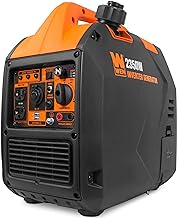
Price: ~ | Warranty: 2 years (limited) | Availability: Amazon, Walmart, some Home Depot locations
The WEN 56203i is ideal for van life, small RVs, and car camping. At 2350W, it’s lighter on power but dual-fuel capable (propane + gasoline), meaning you can switch fuels depending on availability. Runtime at half load stretches to 12+ hours on gasoline, even longer on propane. Weighs only 48 pounds—one of the lightest in this tier. Noise is around 68 dB, slightly higher than premium brands but within campground limits. Owner reports on Amazon confirm stable inverter output safe for electronics. Oil changes every 50 hours; propane option eliminates seasonal fuel draining. Customer service is responsive per multiple reviews, though parts availability can be slower than Champion or Honda.
Westinghouse iGen4500 4500-Watt Inverter Generator
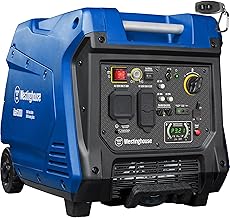
Price: ~ | Warranty: 3 years (limited) | Availability: Home Depot, Amazon, Lowe’s
The Westinghouse iGen4500 delivers serious power. At 4500W running / 5600W starting, it runs a small window AC, multiple appliances, and power tools simultaneously. Runtime at half load: approximately 9–10 hours. Weighs around 99 pounds. Noise is impressively low for its wattage—roughly 64 dB at quarter load. YouTube teardown reviews confirm solid build quality and reasonable fuel consumption. Oil changes every 50 hours; standard maintenance applies. This is the best choice for home backup without exceeding the ceiling. Westinghouse customer service is reliable; parts are widely available.
DuroMax XP4500 4500-Watt Inverter Generator
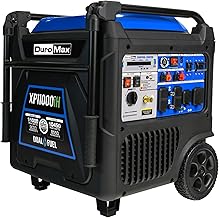
Price: ~ | Warranty: 1 year (limited) | Availability: Amazon, Walmart, some specialty retailers
The DuroMax XP4500 delivers 4500W at a mid-tier price. Nearly identical specs to the Westinghouse: 4500W running, ~9–10 hour half-load runtime, around 64 dB noise. Weighs approximately 99 pounds. The inverter is reliable and safe for electronics, though some owner reports note variable customer service responsiveness. For pure power-per-dollar, it’s competitive. Oil changes every 50 hours; no sealed carburetor, so fuel draining is recommended for storage longer than 30 days. Warranty is shorter than competitors, so factor in potential out-of-pocket repairs after year one.
Honda EU2200i 2200-Watt Inverter Generator
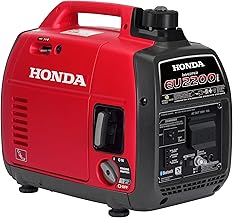
Price: ~ | Warranty: 3 years (limited) | Availability: Home Depot, specialized dealers, Amazon**
Honda is the gold standard for quiet inverter generators. At just 49 dB at quarter load, it’s the quietest model in this roundup—ideal for noise-sensitive campgrounds. At 2200W, it’s lighter on power (good for van life and small RVs), but the inverter is exceptionally clean and stable. Runtime at quarter load: approximately 10 hours on a single tank. Weighs 46 pounds. Build quality is exceptional per multiple owner reports; Honda generators often outlast competitors by years. Oil changes every 50 hours; sealed carburetor design eliminates fuel draining if stabilizer is used. Customer service and parts availability are industry-leading. This is a premium pick if noise and longevity matter more than raw wattage.
Camping vs. RV vs. Home Backup: Which Size?
Camping (Car Camping, Tent, Small Trailer)
You need 2000–2500W. Run lights, a small fridge, phone chargers, and maybe a laptop. The Champion 3100 or WEN 56203i are overkill but not wasteful; the Honda EU2200i is the sweet spot if noise is a concern.
RV and Van Life
For a small travel trailer or van: 2500–3500W handles essentials (fridge, water heater, microwave, AC if needed). For a larger RV or full-time living: 3500–4500W lets you run multiple systems. The Champion 3100 is solid for small rigs; the Westinghouse or DuroMax 4500 is better for larger setups.
Home Backup During Outages
You want 4000W+ to run a fridge, furnace, well pump, and lights simultaneously. The Westinghouse iGen4500 and DuroMax XP4500 are the minimum. If you need to power an AC unit, consider models at 5000W+, which exceed the threshold.
Fuel, Maintenance, and Storage
Gasoline Models (Champion 3100, Westinghouse iGen4500, DuroMax XP4500)
- Use fresh fuel and add a fuel stabilizer (ethanol-free gas is ideal).
- Champion 3100: Sealed carburetor; no draining required if using stabilizer. Change oil every 50 hours.
- Westinghouse iGen4500: Standard carburetor; drain fuel tank completely before storage longer than 30 days. Change oil every 50 hours.
- DuroMax XP4500: Standard carburetor; drain fuel tank before long-term storage. Change oil every 50 hours.
Dual-Fuel Models (WEN 56203i)
- Propane doesn’t degrade, so it’s safer for emergency backup.
- Switch to propane if you expect storage longer than 30 days.
- Change oil every 50 hours regardless of fuel type.
- Consult the manual for carburetor draining procedures when switching between fuels.
Honda EU2200i
- Sealed carburetor; no draining required if using fuel stabilizer.
- Change oil every 50 hours.
- Propane conversion kits are available aftermarket but not factory-standard.
General Maintenance (All Models)
- Keep the air filter clean; check monthly.
- Don’t run the generator indoors or in enclosed spaces (carbon monoxide risk).
- Let it cool before refueling.
- Store in a dry location; cover to prevent dust accumulation.
Noise Comparison: Inverters vs. Conventional Generators
Inverter generators are quieter than conventional models because the inverter circuit regulates engine speed—the engine doesn’t have to run at full RPM all the time. Most inverters in this price range operate at 49–70 dB, while conventional generators of the same wattage run 75–90 dB.
FAQ
Q: Can I run an air conditioner on a 3000W inverter generator? A: A typical window AC unit draws 3000–5000W starting wattage. A 3000W generator will struggle or fail. You need at least 4500W running / 5600W starting. The Westinghouse iGen4500 or DuroMax XP4500 can handle it, though you won’t be able to run other high-draw appliances simultaneously.
Q: Is it safe to use an inverter generator indoors? A: No. All fuel-burning generators produce carbon monoxide, which is odorless and deadly. Always run the generator outdoors, at least 20 feet away from windows, doors, and vents. Never run it in a garage, tent, or RV while sleeping inside.
Q: How often do I need to maintain my inverter generator? A: Change the oil every 50 hours of operation (roughly every 1–2 months if you use it weekly). Check the air filter monthly and clean or replace as needed. If storing for more than a month, drain the fuel tank or add stabilizer (check your model’s manual for carburetor type). Run it for 15–20 minutes monthly if it’s in storage to keep the engine healthy.
Q: Can I parallel two inverter generators for more power? A: Some models support parallel operation via a special cable, effectively doubling the output. The Champion 3100 and Honda EU2200i support this. Check the manual before buying if you think you might need it later.
Q: What’s the warranty on these models, and what does it cover? A: Champion 3100 and Westinghouse iGen4500 offer 3-year limited warranties covering defects in materials and workmanship. WEN 56203i offers 2 years. DuroMax XP4500 offers only 1 year, making it riskier for long-term use. Honda EU2200i offers 3 years with industry-leading customer service. Warranties typically exclude wear items (spark plugs, air filters, oil) and damage from improper maintenance or fuel issues.
Q: Are these generators available in stock, or do I need to special-order? A: Champion and Westinghouse models are widely stocked at Home Depot, Lowe’s, and Amazon with 2–3 day shipping. Honda EU2200i may require ordering from specialized dealers; expect 1–2 week lead times. WEN and DuroMax are primarily Amazon-based; stock varies by season. Check local inventory before buying if you need the generator immediately.
Q: Can I use a generator in my apartment or condo? A: Check your lease and local ordinances. Most apartments prohibit generators due to noise and carbon monoxide risk. Some allow them on balconies if noise is under 60 dB (Honda EU2200i qualifies). Portable power stations are a safer alternative for apartment dwellers.
Final Verdict
The sub- inverter generator market in 2026 is mature and competitive. You’re not sacrificing quality or reliability by staying under budget. The Champion 3100 (~) is the best all-rounder for camping and light RV use. The Westinghouse iGen4500 (~) or DuroMax XP4500 (~) are the smartest picks for home backup or larger RV setups. And if noise is your top priority, the Honda EU2200i (~) is worth stretching toward, even at the upper end of your budget.
Start by identifying your wattage needs, then prioritize noise level, runtime, and warranty length. Most owners report 5–10 years of reliable service from mid-tier inverter generators when maintained properly. Buy from a dealer with a solid warranty and return policy—and don’t skimp on fuel stabilizer and regular maintenance. Your generator will repay the care.


