Portable Generator for Van Life: Compact & Reliable 2026

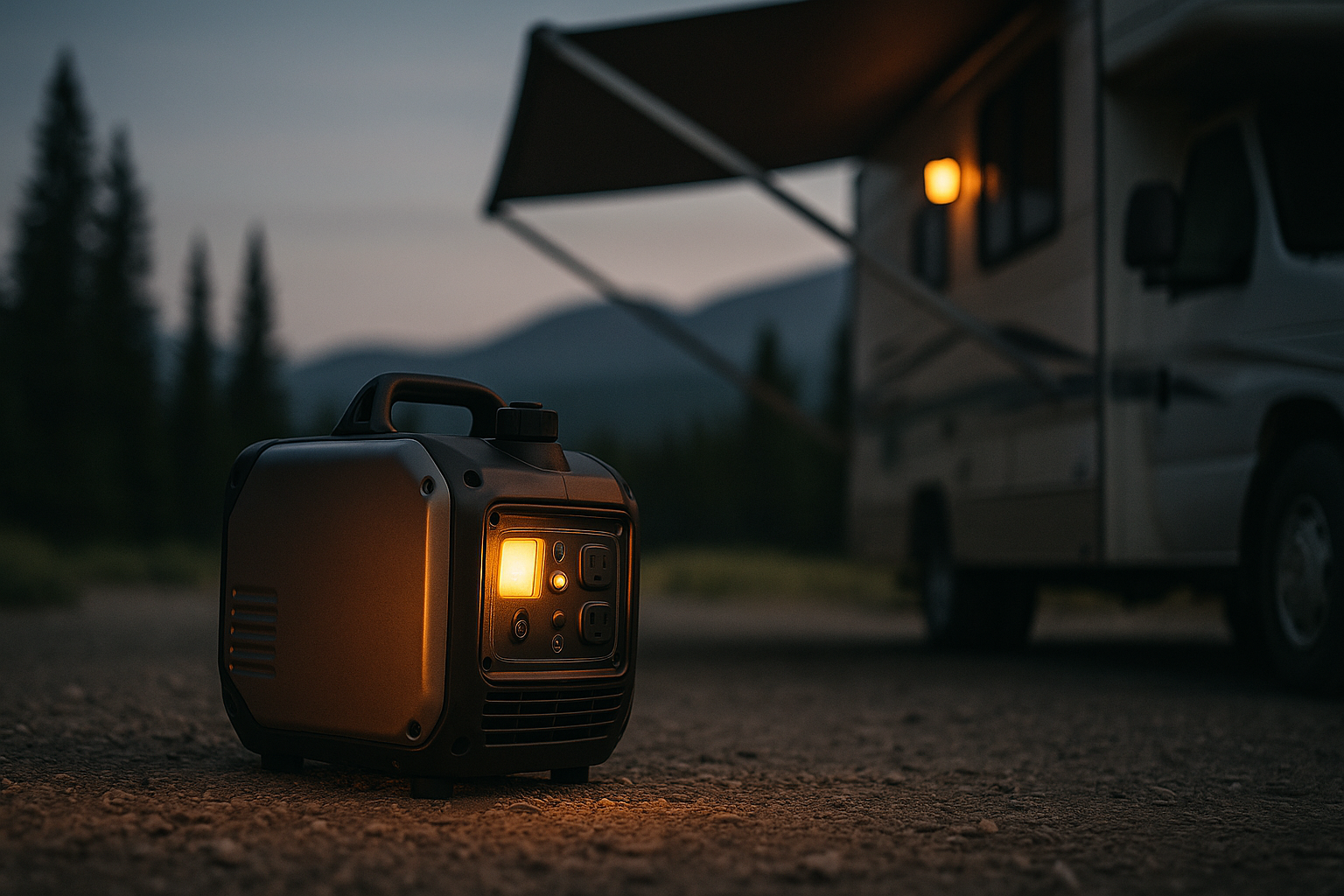
Photo by Zendure Power Station on Unsplash
Portable Generators for Van Life: What Actually Works on the Road
A remote worker living out of a 2024 Sprinter typically pulls 1,000–1,200 Wh/day between a laptop, 12V fridge, lights, and fans. For that load, a solar-charged power station beats a gas generator about 90% of the time — quieter, no fumes, runs inside the van. The exceptions are specific and worth knowing: induction cooking, rooftop AC in hot climates, welding for on-the-road builds, and multi-week cloudy stretches in places like the Pacific Northwest. Below are the picks, sizing math, and charging setups that hold up under those real loads.
Gas Generator or Solar Power Station?
Ten years ago this was a real debate. In 2026 it mostly isn’t — for most van setups, a battery-based “solar generator” wins on noise, fumes, and the simple fact that you can run it inside the van. But it’s not universal.
Pick a battery/solar power station if you:
- Spend most nights stealth-parked or in campgrounds where generator hours are restricted
- Run laptops, lights, a 12V fridge, fans, a CPAP, and occasional small appliances
- Want to charge while driving via alternator or DC input
- Don’t want to store gasoline inside or strapped to your van
Pick a gas inverter generator if you:
- Cook with induction or run a microwave daily
- Use a rooftop AC unit in hot climates
- Travel through the Pacific Northwest or similar long-cloud regions where solar input drops for weeks
- Need to power tools (circular saw, table saw, welder) for builds on the road
A lot of full-timers end up with both — a power station for daily use and a small inverter generator that lives in a vented exterior box for the bad weeks. For a deeper comparison, see Portable Power Station vs Gas Generator: Which Should You Buy?.
Sizing the System for a Van
The mistake most first-time van builders make is sizing by peak watts instead of daily watt-hours. Peak matters for whether something will turn on; watt-hours determine how long you can run it before recharging.
A realistic daily load for a remote-work van looks roughly like this, based on aggregated 2025–2026 build logs:
- 12V compressor fridge: 300-500 Wh/day
- Laptop + monitor (8 hours): 200-400 Wh
- Lights, fans, phone charging: 100-200 Wh
- Water pump, vent fan, misc: 50-100 Wh
- Total: ~700-1,200 Wh/day
That means a 1,000-1,500 Wh power station gets you through one full cloudy day with margin, and a 2,000+ Wh unit gets you two. Add an induction cooktop or a hair dryer and your daily total can double — those are the loads that push people toward 2 kWh+ stations or a gas backup.
What “Portable” Actually Means in a Van
Manufacturer spec sheets call almost everything “portable.” In a van, portable means three specific things:
- It fits. Under a bench, in a gear garage, or strapped to a slide-out. Anything wider than ~16 inches starts eating real cabinet space.
- You can lift it solo. Past about 45 lb, getting a unit out of a van without scratching the floor or your back becomes a chore.
- It tolerates motion and temperature swings. LiFePO4 chemistry handles vibration and heat better than older NMC lithium — see teardowns from Will Prowse (DIY Solar Power) and HoboTech on YouTube, and the cycle-life and thermal specs published in EcoFlow’s and Bluetti’s LiFePO4 datasheets.
Gas inverter generators in the 2,000-2,500W class typically weigh 45-60 lb and need to live outside the van while running. Battery stations in the 1-2 kWh class run 25-50 lb and live inside.
Top Picks for Van Life in 2026
EcoFlow Delta 2 Max — Best All-Rounder
Around 2 kWh of LiFePO4 capacity, 2,400W continuous output, ~50 lb, ~. Solar input tops out at 1,000W per the spec sheet. Owner reports on r/EcoFlow consistently note solar recharge from 20% to 100% in a sunny afternoon with a 400W panel array. It’s the unit I’d point most full-time van lifers at if they’re starting from scratch — capacity for a workday and overnight, output high enough to occasionally run a kettle or microwave, and a footprint that fits under a typical 36-inch bench.
The X-Boost mode is useful but read the fine print: it works by reducing voltage to resistive loads, so it won’t help with motors or precision electronics, per the manufacturer documentation.
Jackery Explorer 1000 v2 — Best Lightweight Option
1,070 Wh, 1,500W output, under 25 lb, ~. This is the unit for people in Promaster City, Transit Connect, or minivan builds where every cubic foot matters. It won’t run an induction cooktop comfortably and the solar input ceiling is lower than the EcoFlow’s, but for a fridge, electronics, and lights it’s plenty. Aggregated Amazon owner reviews flag the Jackery’s display and app as a step behind EcoFlow/Bluetti, but the build quality and warranty service get consistently positive notes.
Pair it with a folding panel from Best Portable Solar Panels for Camping: Reviews & Comparison for a complete sub-50-lb power kit.
Bluetti AC200L — Best for Cold Climates and Heavy Loads
~2 kWh expandable, 2,400W continuous, LiFePO4, ~62 lb, ~. Where this one earns its spot is cold-weather performance — LiFePO4 holds up to discharge in cold temps better than NMC, and the AC200L’s BMS allows operation down to roughly -4°F per the spec sheet (charging is more restricted; you generally can’t charge below freezing without warming the battery). For van lifers chasing winter in the mountains or running a diesel heater overnight, this matters.
Heavier than the EcoFlow, so factor in where it’ll live in the build.
Honda EU2200i — Best Gas Backup
2,200W peak, 1,800W continuous, ~47 lb, ~. If you need a gas generator, this is still the one, full stop. Honda’s reputation for the EU2200i is based on roughly a decade of consistent owner reports: 8-10 years of reliable use is common, parts are easy to source, and the noise level (mid-50 dB at quarter load per Honda’s spec sheet) is genuinely livable in a campground. Run it for induction cooking, AC, or a multi-day cloudy stretch, then put it away. Don’t make it your daily driver in a van — gas storage and CO risk aren’t worth it.
For RV-specific gas options at lower price points, see Best Quiet Generators for RVs Under $1000.
Anker SOLIX C1000 — Best Budget All-in-One
1,056 Wh, 1,800W output, ~28 lb, ~ with a fast-recharge feature that hits 80% in roughly 40 minutes from AC per the manufacturer spec. For weekend van lifers or people just adding power to a stealth build, it’s the strongest value in the mid-tier category. LiFePO4, reasonable weight, and Anker’s customer service has a better reputation than most newer entrants, based on aggregated owner reviews.
Charging on the Road: Solar, Alternator, Shore Power
The generator is half the system. How you put energy back into it determines whether it’s actually useful.
Solar is the default. A 200-400W rooftop or portable panel array refills a 1-2 kWh station in a typical sunny day. Flexible panels glue to high-top roofs; rigid panels mount to a roof rack and last longer. For a van-specific solar walkthrough, How to Set Up Solar Power for RV Camping covers the wiring and controller choices.
Alternator charging via a DC-to-DC charger pulls 20-50A while you drive. The Renogy DCC50S is a 50A unit popular in DIY van builds; the Victron Orion-Tr Smart 12/12-30 is the 30A reference for cleaner installs and better app integration. For people who move every day or two, alternator charging often outpaces solar. Most modern power stations also accept 12V/24V car input directly; check the spec sheet for max input wattage.
Shore power at campgrounds tops everything off in a couple of hours. Most stations charge faster than they discharge under normal use.
The combination matters more than any single source. A van that drives 3-4 days a week and parks under trees the rest of the time leans on alternator charging; a stationary boondocker leans on solar.
If weight is your top constraint, Lightweight Solar Generator for Van Life: Compact Options focuses specifically on the under-30-lb category.
Things to Skip
A few common recommendations that don’t hold up in actual van use:
- Open-frame contractor generators. Loud, heavy, not inverter-quality power. Fine for a job site, miserable in a campground.
- Cheap no-name 1,500W gas generators. Aggregated Amazon reviews from 2023–2025 and r/vandwellers threads from the same period repeatedly flag carburetor failures after a season or two of irregular use. The fuel sits, the carb gums up, and the unit becomes a paperweight.
- Lead-acid “generators.” Sealed lead-acid power stations still exist at the bottom of the market. Skip them — half the usable capacity per pound versus LiFePO4, and they hate deep discharge.
- Anything without a real BMS. If the spec sheet doesn’t mention battery management, low-temp protection, and over-current protection, move on.
Safety: The Stuff That Actually Matters
A few non-negotiables, distilled from owner-reported incidents and manufacturer warnings:
- Never run a gas generator inside or near an open van window. CO is invisible, odorless, and lethal. A working CO detector inside the van is mandatory regardless.
- Vent power stations during heavy charging or high-output use. LiFePO4 is stable, but BMS boards and inverters dump real heat under 1,500W+ loads. Don’t bury a unit inside a sealed cabinet while it’s working hard.
- Keep gasoline outside the living space. Store fuel in a vented exterior box or rear bumper-mounted holder, never in the cab or cabin.
- Use the manufacturer’s charge cables and solar connectors. Off-brand MC4 adapters and undersized DC cables are a recurring cause of melted connectors in owner reports.
- Don’t charge LiFePO4 below freezing. Discharge is fine; charging without a heated battery damages cells. Most quality