Portable Power Station vs Gas Generator: Which to Buy in 2026

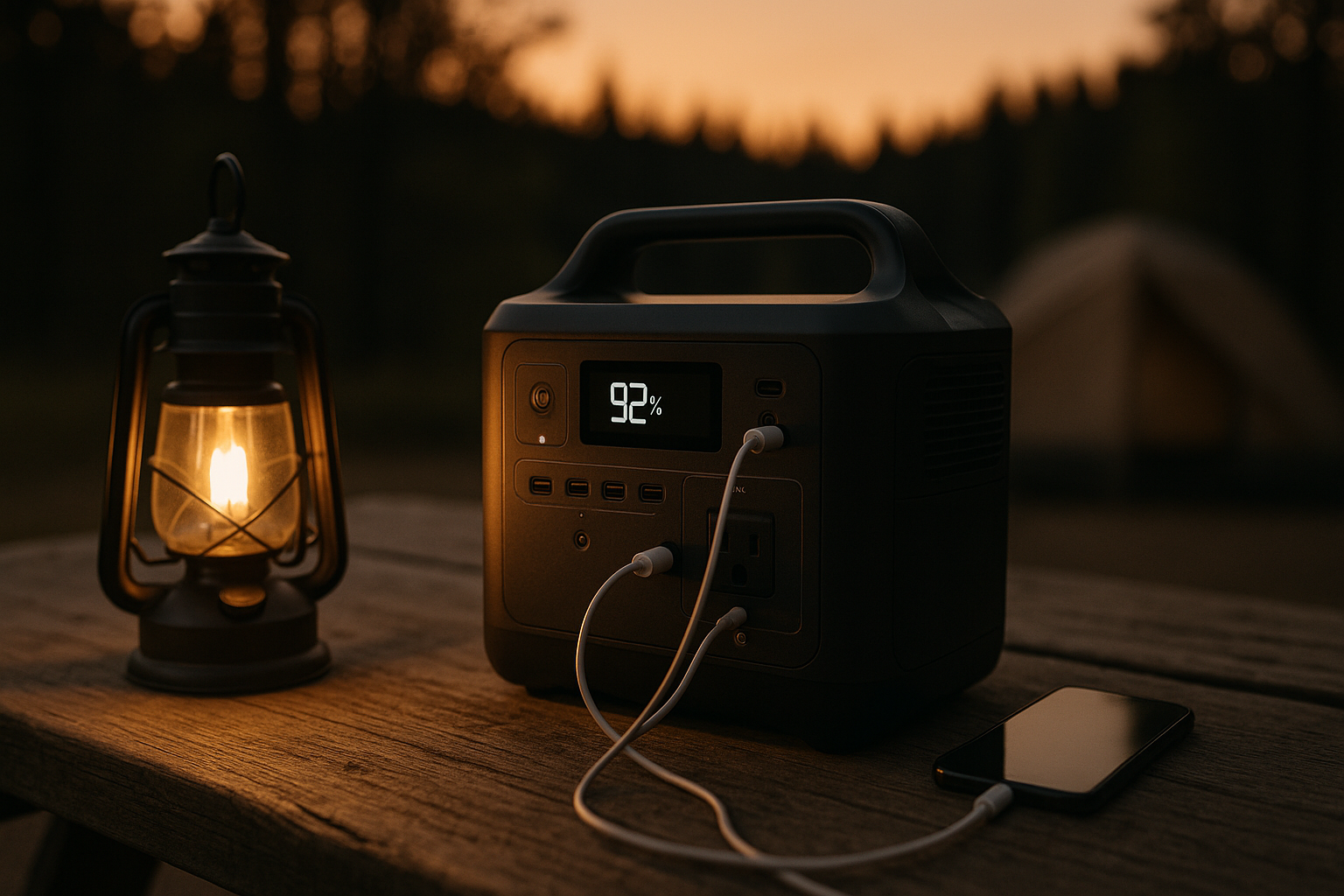
Photo by Zendure Power Station on Unsplash
Portable Power Station vs Gas Generator: Which Should You Buy?
The choice between a portable power station and a gas generator comes down to your use case, budget, and tolerance for noise and maintenance. Both solve the backup-power problem, but they work in fundamentally different ways—and the right pick depends on whether you’re camping for a weekend, weathering a multi-day outage, or running a remote workspace.
This guide walks you through the real trade-offs: runtime, refueling, noise, upfront cost, and long-term durability.
Key Differences at a Glance
Portable Power Stations are rechargeable lithium or lead-acid batteries in a box. They store energy and release it through AC outlets, USB ports, and DC connectors. No fuel required once charged.
Gas Generators burn gasoline (or propane) to produce electricity on demand. They run as long as you have fuel, but generate noise and emissions.
The fundamental trade-off: power stations offer silence and zero maintenance; generators offer unlimited runtime if you keep fuel on hand.
Runtime & Refueling
Portable Power Stations
A mid-tier power station (3–5 kWh capacity) runs a laptop, phone chargers, and small appliances for 8–24 hours before needing a recharge, assuming a 300–500 W average draw. Recharging takes 4–10 hours from a wall outlet, or 1–3 days if paired with solar panels.
For extended outages, you’ll need to plug in or add solar. There’s no “just buy more fuel” option—you’re limited by the battery size and your ability to recharge.
Best for: predictable, shorter outages (under 24 hours) or situations where you can recharge daily.
Gas Generators
A 5–7 kW inverter generator runs 8–12 hours on a single tank, depending on load. Refueling takes 5 minutes. If you stockpile fuel, you can run indefinitely—a critical advantage during multi-day outages or off-grid living.
Best for: prolonged outages, remote sites, or anywhere grid power is unreliable for weeks.
Noise & Neighborhood Relations
Portable Power Stations
Silent operation. Zero noise, zero emissions. You can run one in your bedroom, RV, or tent without disturbing anyone.
This is a decisive advantage for campgrounds with quiet hours, apartment dwellers, and anyone who values peace.
Gas Generators
Typically 70–90 dB at 25 feet—roughly as loud as a lawnmower or busy traffic. Some premium inverter generators drop to 60–70 dB, but they’re still audible and annoying.
Many campgrounds, HOAs, and municipalities restrict generator use during certain hours or require permits. If you’re in a dense area, a generator may be a non-starter.
Upfront Cost & Total Cost of Ownership
Portable Power Stations
Entry-level (500 Wh–1 kWh):. Examples: Anker 521 (PowerHouse 256 Wh, ~), EcoFlow River 2 (256 Wh, ~). Good for phones and laptops.
Mid-tier (3–5 kWh):. Examples: Jackery Explorer 3000 Pro (3 kWh, ~), EcoFlow Delta Pro (3.6 kWh, ~). Covers most household appliances for a few hours.
Premium (10+ kWh): +. Examples: EcoFlow Delta Pro XL (10.8 kWh, ~), Bluetti AC500 (modular up to 18 kWh, ~ base). Rivals whole-home backup systems.
No fuel costs, no oil changes, no spark plug replacements. After the initial purchase, ongoing costs are minimal—just electricity to recharge.
Gas Generators
Entry-level (2–4 kW):. Examples: Champion 3100W (3100W, ~), DuroMax XP4500 (4500W, ~). Often cheaper upfront than a comparable power station.
Mid-tier (5–7 kW):. Examples: Westinghouse iGen6500 (6500W, ~), Honda EU7000is (7000W, ~). Covers a whole house during an outage.
Premium (10+ kW): +. Examples: Generac iQ3500 (3500W portable, ~), Westinghouse iGen8500 (8500W, ~). Permanent installation options available.
Fuel costs add up fast: a 5 kW generator burns 0.5–1 gallon per hour under load. Gasoline at current prices makes multi-day operation expensive. Add oil changes every 50–100 hours, spark plug replacements, carburetor cleaning, and seasonal maintenance.
Long-term: if you run a generator frequently, fuel and maintenance can exceed the cost of a power station within 3–5 years.
Maintenance & Reliability
Portable Power Stations
Lithium-ion models degrade over time—expect 80–90% capacity after 10 years of regular use, per manufacturer specs. Lead-acid versions last 3–5 years.
No moving parts, no oil, no spark plugs. Occasionally wipe dust from vents. Avoid extreme heat and cold.
Reliability is high: if it charges, it works. Battery management systems protect against overcharge and short circuits.
Gas Generators
Require regular maintenance to stay reliable: - Oil changes every 50–100 hours - Fuel stabilizer or drain-and-refill before storage (every 3–6 months) - Spark plug replacement every 1–2 years - Carburetor cleaning if fuel sits too long - Air filter cleaning
Neglect these tasks and the generator won’t start when you need it—a real problem in an emergency. Many users report generators failing to restart after months of storage due to fuel degradation.
Load Capacity & What You Can Run
Portable Power Stations
Wattage limits are strict. For example, the Jackery Explorer 3000 Pro offers 3000 W continuous output. That’s enough for: - Laptop + chargers - Refrigerator (runs on 600–800 W, intermittently) - LED lights, phone chargers, small fans
It’s NOT enough for: - Air conditioning (5000+ W startup surge) - Electric water heater - Simultaneous high-draw appliances
Check the specs carefully—starting surge watts differ from continuous watts.
Gas Generators
A 5–7 kW inverter generator handles most household loads simultaneously: refrigerator, microwave, lights, chargers, and a window AC unit (though not a central AC system).
The flexibility is real—you’re not rationing power or unplugging devices to plug in others.
Environmental & Health Considerations
Portable Power Stations
Zero emissions. No carbon monoxide risk, no air pollution, no fuel odor.
Lithium mining and battery production have environmental costs, but modern batteries are recyclable, and their long lifespan amortizes that impact over 10+ years.
Gas Generators
Produce carbon monoxide (deadly indoors), nitrogen oxides, particulates, and greenhouse gas emissions.
Never run a generator indoors or in enclosed spaces—it kills. Even outside, exhaust odor and fumes drift to neighbors.
For health-conscious or environmentally minded users, this is a significant drawback.
Practical Scenarios: When to Choose Each
Best for Weekend Camping Trips
Choose a portable power station if you camp frequently and value silence. Entry-level models (500 Wh–1 kWh) handle phones, laptops, and LED lights for 2–3 days.
Best for Apartment Dwellers in Noise-Restricted Areas
Choose a portable power station. HOAs and landlords often prohibit generators. A mid-tier station (3–5 kWh) provides silent backup for 12–24 hours without disturbing neighbors.
Best for Multi-Day Outages in Remote Areas
Choose a gas generator. If grid power is unreliable for weeks, unlimited fuel runtime is essential. A 5–7 kW model covers most household loads indefinitely.
Best for Off-Grid Living
Choose a gas generator as your primary backup. Pair it with a power station and solar panels for daily use and fuel savings. The generator handles high-load appliances and extended periods without sun.
Best for Occasional Home Backup (12–24 Hours)
Choose a mid-tier portable power station (3–5 kWh). It covers refrigerator, lights, chargers, and WiFi with zero maintenance and silent operation.
Hybrid Approach: Power Station + Solar
Many experienced preppers use both: a portable power station for daily use and silent operation, paired with solar panels for recharging. For extended outages, a smaller gas generator tops up the battery when solar isn’t available.
This setup costs more upfront but offers flexibility: silent operation most of the time, unlimited runtime if needed, and minimal fuel consumption.
FAQ
What’s the difference between continuous watts and surge watts? Continuous watts is the steady power a device can supply indefinitely. Surge watts is the peak power during startup (e.g., a refrigerator compressor draws 800 W continuous but 2000+ W at startup). Always check both specs—a power station rated 2000 W continuous might not start a refrigerator if the surge exceeds its capacity.
Can I use a power station indoors? Yes. Portable power stations produce zero emissions and are completely safe indoors. Gas generators must never run indoors—they produce carbon monoxide, which is odorless and lethal.
How long does a portable power station hold a charge if I don’t use it? Lithium batteries self-discharge at ~1–2% per month. Lead-acid discharges faster (~5% per month). After 6 months of storage, a lithium station retains ~90% capacity; a lead-acid might drop to 70%.
What size power station do I need for my home? Calculate your essential loads (refrigerator, lights, chargers, WiFi router). A 3–5 kWh station covers 12–24 hours of essential use assuming 300–500 W average draw.
Can I run solar panels on a power station year-round? Yes, but winter output is 30–50% lower due to shorter days and lower sun angle. In cloudy climates, solar alone won’t fully recharge a large station; you’ll need grid power as backup.
Final Verdict
Portable power stations win on silence, convenience, and low maintenance—ideal for camping, apartments, and short outages.
Gas generators win on runtime, load capacity, and off-grid reliability—essential for remote properties and prolonged emergencies.
The best choice depends on your outage duration, noise tolerance, and whether you need unlimited fuel or silent operation. Many people find a mid-tier power station (3–5 kWh) covers 90% of real-world backup needs, with a small gas generator as a secondary option for edge cases.