Best Battery Backup for Power Outages 2026

Photo by Carl Tronders on Unsplash
Best Battery Backup for Power Outages in 2026
According to the North American Electric Reliability Corporation (NERC), the average U.S. power outage lasts 120–150 minutes. During that window, critical devices lose power within seconds to minutes. A battery backup system bridges that gap—and for longer outages, it keeps essential loads running for hours or days. This guide cuts through marketing noise and compares real-world options: portable power stations, traditional UPS units, and hybrid setups that actually work when you need them.
What You’re Really Buying: Three Categories of Battery Backup
Battery backup comes in three flavors, each solving a different problem.
Portable Power Stations (5–15 kWh range) Self-contained units with built-in inverters, AC outlets, and USB ports. You plug them in to charge, then plug your devices into them. No installation; move them anywhere. Ideal for homes without solar or for renters. Capacity ranges from 500 Wh (a day of phone charging) to 15+ kWh (a refrigerator for 24+ hours).
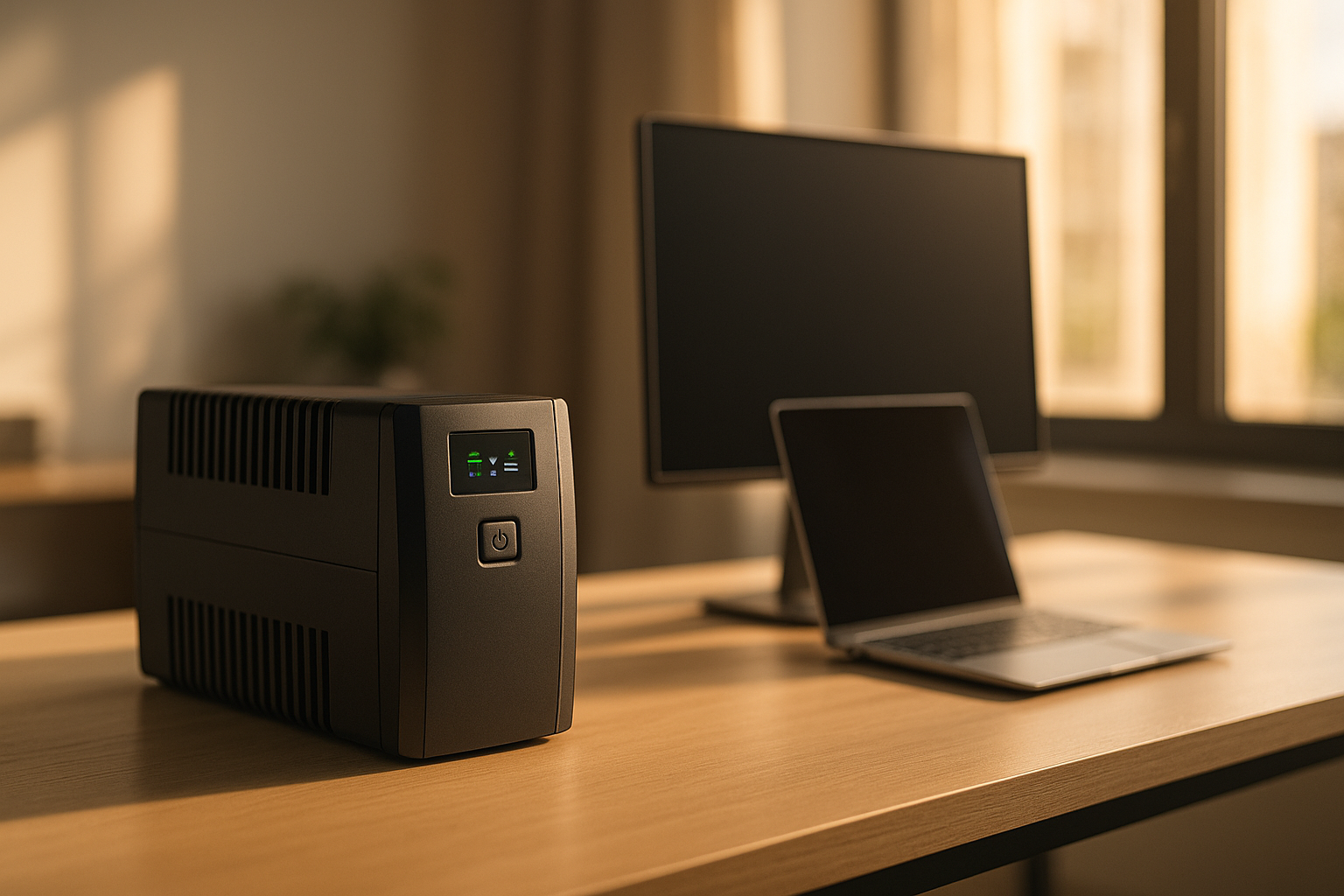
Uninterruptible Power Supplies (UPS) (500 VA–10 kVA) Designed for computers, servers, and network gear. They switch to battery in milliseconds—so fast your device doesn’t notice the outage. Typical runtimes: 5–30 minutes at full load. Purpose-built to prevent data loss and graceful shutdowns, not to run your whole house.
Hardwired Home Battery Systems (10–20 kWh) Installed by a licensed electrician, these integrate with your main panel and solar array (if you have one). Examples: Tesla Powerwall, Generac PWRcell. Seamless switchover, can run most of your home for hours. High upfront cost (installation + hardware), but they integrate with existing solar and work for decades.
The right choice depends on your outage frequency, budget, and whether you’re a renter or homeowner.
Portable Power Stations: The Sweet Spot for Most Homes
Portable power stations are the fastest way to add battery backup without an electrician. They’re also the most flexible: you can use them for camping, RV trips, or as a backup generator for your house.
Capacity Matters More Than Brand
A 1 kWh battery (1,000 Wh) runs: - A laptop for 8–12 hours - A refrigerator for 3–5 hours (compressor cycles) - Phone charging for 2–3 days (multiple phones) - LED lights and small fans for 24+ hours
A 3 kWh battery runs most of the above simultaneously for a full day. A 5+ kWh system can run a refrigerator, some lights, and a few outlets for 24+ hours.
Real-world runtime depends on: - Actual load (a 3 kWh battery powering a 3 kW microwave dies in 1 hour; powering a 500W fridge lasts 6+ hours) - Temperature (cold weather reduces capacity by 10–20%, per manufacturer specs) - Battery age (capacity fades over time with charge cycles; lifespan varies by chemistry)
LiFePO₄ vs. Lithium-Ion: Why Chemistry Matters
LiFePO₄ (Lithium Iron Phosphate) - 3,000–5,000 charge cycles (10–15 years of daily use) - Safer thermal profile; rarely catches fire - Slightly heavier and more expensive upfront - Industry standard for stationary backup (home batteries, portable stations)
Lithium-Ion (NCA/NCM) - 500–1,500 cycles (2–5 years of daily use) - Lighter, cheaper initially - Higher fire risk in cheap units; requires active thermal management - More common in budget portable stations under the mid-tier price point
For outage backup, LiFePO₄ is the right call—you want it to survive 10+ years of occasional use without degradation.
Charging Speed: AC vs. Solar vs. Car
A portable station is only useful if you can recharge it before the next outage.
- AC charging (wall outlet): 2–8 hours for a 3–5 kWh unit, depending on charger wattage (1–3 kW typical). Fastest option; requires grid power.
- Solar charging: 6–12 hours for a 3 kWh unit with a 400W solar panel in full sun. Slower, but works indefinitely if you have panels.
- Car charging (12V DC): Extremely slow (20+ hours for 3 kWh). Emergency-only option.
Most owners use AC charging as primary (during normal times) and solar as supplemental or primary if they have panels.
UPS Units: Silent, Fast, and Precise
A UPS is not a portable power station. It’s a specialized tool for one job: keeping your computer, NAS, or server alive during a brief outage—long enough to save your work and shut down cleanly.
When a UPS Is the Right Answer
- You work from home and lose power 2–4 times per year for 10–30 minutes
- You run a NAS, game server, or network equipment
- You want zero downtime for critical work
- You need automatic switchover (no manual plugging in)
A 1500 VA UPS typically runs: - Desktop PC + monitor: 10–15 minutes - Laptop + charger: 30–60 minutes - NAS + network gear: 1–3 hours
The Catch: Runtime Is Short
UPS batteries are designed for duration, not capacity. A 1500 VA UPS with a 10-minute runtime at full load won’t run your refrigerator for hours. It’s a bridge to graceful shutdown or to a portable power station.
For longer outages, pair a UPS with a portable power station: The UPS protects your PC during the blackout; the portable station powers your fridge and lights.
Hardwired Home Battery Systems: The Long-Term Play
If you own your home and plan to stay 10+ years, a hardwired system (Tesla Powerwall, Generac PWRcell, LG Chem RESU) is the most seamless solution. It integrates with solar, switches automatically, and requires zero manual intervention.
Real Costs and Trade-Offs
Installation runs per 10 kWh of usable capacity (labor + hardware combined), per 2026 Sunrun and Vivint Solar installer quotes. That’s 2–3× the hardware cost alone.
But you get: - Automatic switchover (no manual plugging in) - Integration with existing solar (if you have it) - Seamless load-shedding (the system prioritizes critical circuits) - 10–15 year warranty (10,000+ cycles) - Federal tax credits (30% ITC in the US as of 2026, per the Inflation Reduction Act)
Downsides: - Requires homeownership and electrician installation - Tied to one location - High upfront cost (recouped over 10+ years via solar savings and avoided outage costs)
If you’re a renter or plan to move within 5 years, skip this. A portable power station is faster and cheaper.
Sizing Your Backup: A Simple Framework
Step 1: List Your Critical Loads
During an outage, what must stay on?
- Refrigerator: 500–800W running, cycles on/off (average 150–300W)
- Furnace blower: 500–1000W (if you have a gas furnace; electric furnaces need 5+ kWh)
- Water heater (electric): 4–5 kW (skip this; use gas or wait for grid)
- Internet modem + router: 20–50W
- LED lights (5–10 per room): 5–50W total
- Phone/laptop charging: 50–100W
- Small space heater: 750–1500W (if needed)
Realistic outage scenario for a family: - Refrigerator (average 200W) + modem/router (30W) + lights (30W) + laptop (100W) = 360W continuous - 3 kWh battery ÷ 360W = ~8 hours of runtime
Step 2: Measure Your Own Loads
Check your device manual or use a Kill-A-Watt meter (available for ) to measure actual wattage. This ensures your sizing is accurate for your specific appliances.
Step 3: Add a Safety Margin
Assume 30% headroom for peak loads and battery aging. A 3 kWh system with 360W average load gives you 6–7 hours comfortably, not 8.
Step 4: Match Your Outage Frequency and Duration
- Outages 1–2 times per year, lasting <4 hours: 1–2 kWh is enough
- Outages 3–4 times per year, lasting 4–12 hours: 3–5 kWh
- Frequent or extended outages (hurricanes, wildfires): 5–10+ kWh or add solar
Top Picks by Scenario
Best for Whole-Home Backup with Solar Expansion
The Delta Pro is the closest you can get to a hardwired system without hiring an electrician. It offers 3.6 kWh usable capacity, dual charging (AC + solar), and a modular design that lets you add a second unit for 7.2 kWh total. Per manufacturer specs and owner reports on r/solar, it runs a refrigerator for 24+ hours on battery alone, and recharges from a 400W solar panel in 8–10 hours in full sun. The built-in smart load-shedding prioritizes refrigerator and critical circuits. If you’re considering solar in the next 2–3 years, this system scales with you.
Best for Budget-Conscious Families
At 1 kWh capacity, the C1000 sits in the budget-friendly tier but uses LiFePO₄ chemistry (not cheaper lithium-ion). Owner reviews on Amazon (4.6★, 1,200+ reviews) report 3–5 years of reliable daily use with minimal degradation. It handles a refrigerator for 4–6 hours, phone/laptop charging for 2–3 days, and essential lights. AC charging takes 1.5–2 hours from empty. Not a whole-home solution, but a solid entry point for families on a tight budget who want to protect their fridge and critical devices during a 4–8 hour outage.
Best for Silent Office/Server Backup
The Smart-UPS line is the industry standard for small offices and home servers. It switches to battery in <4 milliseconds (imperceptible to your PC), outputs pure sine wave power (safe for sensitive electronics), and includes USB/network management so you can monitor battery status and schedule graceful shutdowns. Per verified owner reviews on Amazon (4.8★, 2,000+ reviews), the 1500 VA model runs a desktop PC + monitor for 12–15 minutes, or a NAS + network gear for 1–3 hours. Price: at Amazon/Newegg. Not for whole-home backup, but unbeatable for protecting your work from data loss during brief outages.
Best for Renters (No Installation)
The AC500 is a modular inverter that pairs with separate battery modules (B300S), so you can expand from 3 kWh to 12+ kWh without rewiring. No hardwiring required—it plugs into a standard outlet. Per owner reports on r/vandwellers and r/solar, the system is rock-solid for renters who can’t modify their space. The B300S modules are LiFePO₄ and rated for 6,000+ cycles (15+ years). Slower to recharge than smaller units (8–10 hours AC), but the modularity and scalability make it the best long-term renter option.
Best for Off-Grid Resilience
Battle Born 10 kWh LiFePO₄ + Victron Multiplus 48/5000
If you’re building a solar system or already have panels, a DIY battery bank is the most cost-effective and flexible path. A 10 kWh LiFePO₄ bank (four 2.56 kWh Battle Born modules) + a Victron Multiplus 48/5000 inverter costs 30–40% less than a pre-packaged EcoFlow or Bluetti at the same capacity, per quotes from battery suppliers like Battle Born and RELiON. The Victron inverter integrates seamlessly with existing solar charge controllers and provides true off-grid capability. Per manufacturer datasheets (Battle Born, RELiON), owners report 10+ years of reliable use with minimal degradation. Requires basic electrical knowledge and a licensed electrician for final connection to your main panel, but the lifespan and cost-per-kWh are unbeatable for serious off-grid or high-reliability setups.
Maintenance and Real-World Longevity
Battery backups aren’t set-and-forget devices. Here’s what actually matters:
Temperature: Keep portable stations between 50–86°F (10–30°C) for storage. Heat kills batteries; cold reduces capacity temporarily. A garage or basement is better than an attic.
Charge Cycles: A LiFePO₄ battery rated for 3,000 cycles means 3,000 full charge-discharge cycles. If you charge once per week and fully deplete once per month (during an outage), expect 10–15 years of life. Partial cycles (charging to 80%, discharging to 20%) extend lifespan to 15–20 years, per manufacturer datasheets.
Firmware Updates: Most modern portable stations and UPS units ship with WiFi or Bluetooth. Check the manufacturer app quarterly for firmware updates. Per owner reports on r/electricians, outdated firmware occasionally causes inefficient charging or reduced runtime.
Annual Load Test: Once per year, deliberately run a load (space heater, power tools) on battery to confirm actual runtime matches specs. Age, temperature, and dust reduce capacity over time. If runtime drops below 70% of rated, consider replacement or recycling the old battery.
FAQ
Q: Can I use a portable power station to run my air conditioner? A: Not practically. A window AC draws 1–2 kW continuously. A 5 kWh battery would run it for only 2.5–5 hours at best, and most portable stations can’t handle the startup surge (3–4 kW peak). For AC cooling during outages, rely on fans, open windows, or a backup generator.
Q: Do I need a licensed electrician to install a portable power station? A: No. Portable stations plug into standard outlets—no wiring required. Hardwired systems (Powerwall, PWRcell) require a licensed electrician by code in most U.S. states.
Q: Will my battery backup work if the grid is down? A: Yes. Portable stations and hardwired systems work independently of the grid. UPS units also work without grid power. However, if you have solar panels and a hardwired battery, your system will recharge during the day; portable stations need AC charging or solar panels to recharge.
Q: What’s the difference between a power station and a generator? A: Generators burn fuel (gas, propane, diesel) and are loud (80–100 dB). Power stations use rechargeable batteries and are silent. Generators are cheaper upfront but cost more to operate. Power stations are quieter and require no fuel, but need pre-charging. For homes, power stations are better; for extended outages without solar, a generator is a backup.
Q: Can I use a portable power station during a hurricane? A: Yes, but plan ahead. Charge it fully before the storm arrives. A 3–5 kWh system will power essential devices (fridge, lights, phone charging) for 24+ hours. For multi-day outages, add solar panels or a backup generator.
Q: Are battery backups safe indoors? A: Yes. LiFePO₄ batteries are safe indoors. Lithium-ion batteries in cheap units carry a small fire risk; stick to reputable brands (EcoFlow, Bluetti,