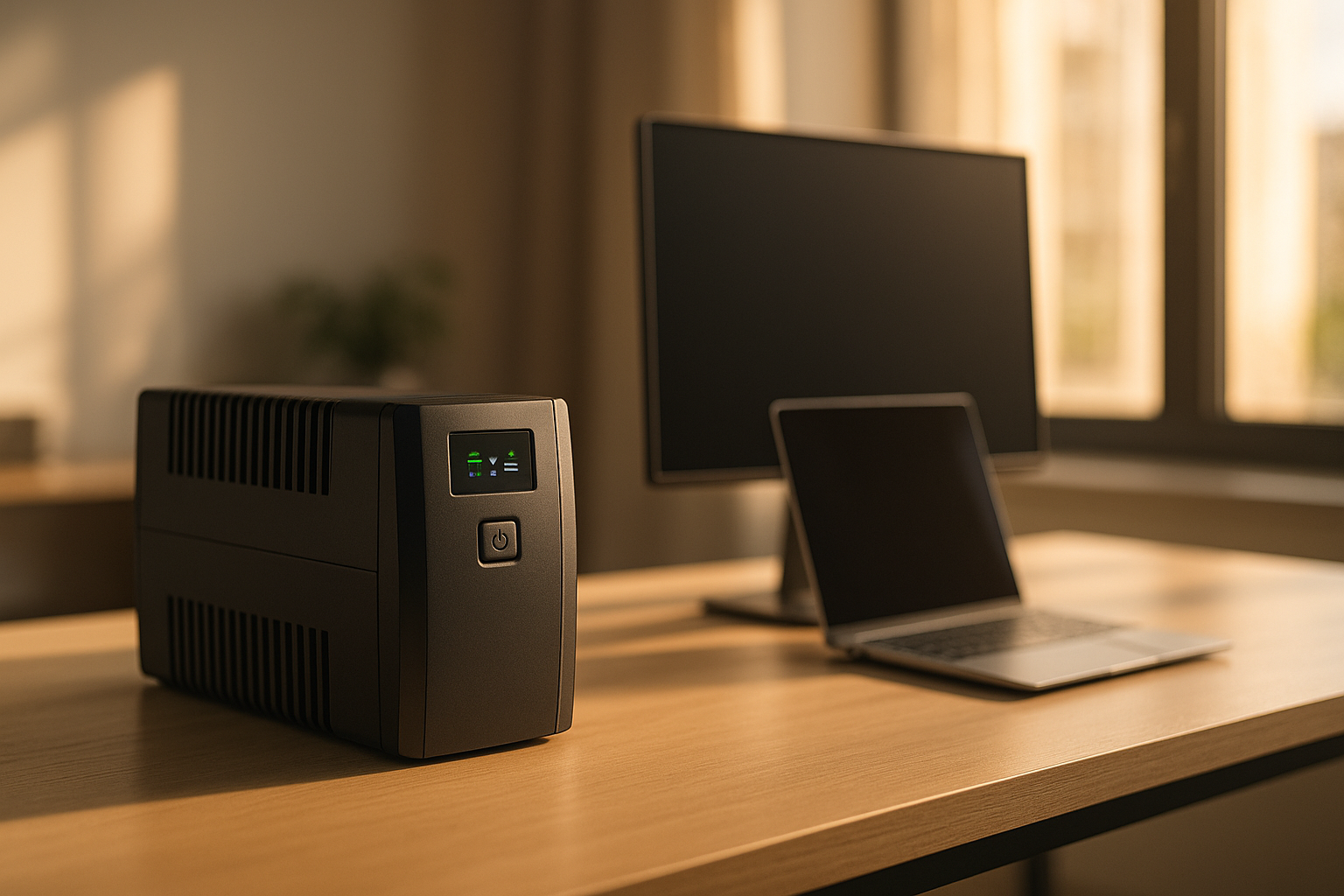
Best Battery Backup for Power Outages 2026

Photo by Zendure Power Station on Unsplash
Best Battery Backup for Power Outages in 2026
Power outages hit without warning—and if you work from home or rely on refrigeration, the stakes climb fast. A battery backup system keeps your essentials running until the grid returns, without the noise, fumes, or maintenance of a gas generator. This guide walks you through capacity needs, runtime math, and the specific models that handle real outages.
Price Comparison Table
| Model | Capacity | Price Range | Best For |
|---|---|---|---|
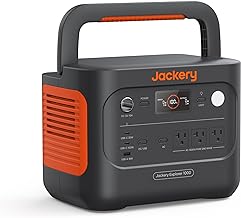
| Jackery Explorer 1000 Pro | 1024 Wh | Budget-conscious, home office | |
| EcoFlow Delta 2 | 1024 Wh | Fast recharge, home office | |
| Anker 757 PowerHouse | 1229 Wh | Portability, tight spaces | |
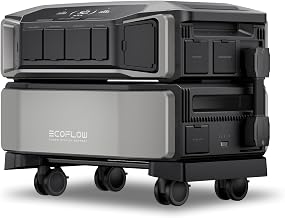
| EcoFlow Delta Pro Ultra | 4096 Wh (expandable to 10 kWh) | Solar integration, multi-day backup | |
| Bluetti AC500 + B300S | 3000+ Wh base (expandable to 12,288 Wh) | Refrigerator protection, expandability |
Why Battery Backup Beats Gas Generators for Home Use
Gas generators are loud (80–95 dB), require fuel storage and maintenance, and emit carbon monoxide—a hazard indoors. Battery backup systems run silent, need no fuel, and store indefinitely without degradation. For home offices where focus matters and for indoor-adjacent appliances like refrigerators in garages, a lithium battery backup is the practical choice.
The trade-off: battery capacity is finite. A gas generator can run as long as you feed it fuel; a battery backup runs until depleted, then must recharge. That’s why sizing matters. How Long Does a Portable Power Station Last? Runtime Guide covers the math in depth, but the short version: calculate your peak wattage draw, then pick a battery with 2–3× that capacity to avoid draining it to zero.
Understanding Capacity and Runtime
Watt-hours (Wh) measure total energy. A 1024 Wh battery is a standard mid-tier size for home office backup. To estimate runtime, divide capacity by your load wattage:
- Home office (laptop + monitor + router): typically 100–150 W → 1024 Wh ÷ 125 W ≈ 8 hours
- Refrigerator (compressor cycles): typically 150–300 W (peaks higher) → 1024 Wh ÷ 200 W ≈ 5 hours
- Both together: 250–400 W → 1024 Wh ÷ 325 W ≈ 3 hours
These are rough estimates; actual runtime depends on inverter efficiency (typically 85–95%, per manufacturer spec sheets) and battery age. Most modern lithium units (LiFePO₄) retain 80%+ capacity after 5–10 years of daily cycling.
For refrigerator-specific sizing, Portable Power Station for Refrigerator: Runtime & Sizing Guide digs into compressor loads and strategies to extend runtime. The key insight: a fridge’s compressor doesn’t run continuously—it cycles on/off to maintain temperature. A 2000+ Wh battery can keep a standard fridge alive for 12–24 hours if you minimize door opens and keep it in a cool space.
Key Features to Compare
Recharge Speed
A battery that takes 12 hours to recharge from a wall outlet is useless if the power comes back in 4 hours. Look for fast-charging models that accept 1000+ W input:
- 80 minutes via 1000W wall outlet (EcoFlow Delta 2): 1024 Wh fully recharged. Ideal for frequent, short outages.
- 2–3 hours via standard 500–750W wall outlet (mid-tier models): Standard for most 1000+ Wh units. Acceptable if outages last 4+ hours.
- 6+ hours via 200–300W wall outlet or solar panels (budget models): Slower wall-charge. Practical if you also have solar panels (which recharge in 4–6 hours in good sun).
Inverter Quality and Surge Capacity
The inverter converts stored DC power to AC (the 120V your appliances use). Cheap inverters produce noisy sine-wave output that can damage sensitive electronics. Quality units produce pure sine-wave output, which is essential for:
- Computer equipment (laptops, monitors, routers)
- Refrigerators and small appliances
- Medical devices
Also check surge capacity—the peak wattage the unit can deliver for a few seconds. Refrigerator compressors draw 2–3× their running wattage on startup. A unit rated 2000 W continuous but only 3000 W surge may shut down when a fridge kicks on. Per manufacturer spec sheets, reputable brands (EcoFlow, Bluetti, Jackery) publish both continuous and surge ratings; budget brands often omit surge specs, which is a red flag.
Expandability
If you’re unsure of future needs, expandable systems let you add battery modules later without replacing the whole unit. EcoFlow Delta Pro and Bluetti AC500 both support stacking additional batteries—useful if you later add a second fridge or need 48-hour backup.
Top Picks by Scenario
For Home Office Workers (4–8 Hour Backup)
EcoFlow Delta 2 is purpose-built for this use case. Its 1024 Wh capacity powers a laptop, dual monitors, and router for a full workday. The standout feature: 80-minute recharge via 1000W wall outlet means you can top up during lunch and be ready for a second outage by evening. Per owner reports on Reddit’s r/powerstation, users consistently report 8–10 hours of mixed office work before hitting 20% battery. The unit weighs 13 lbs and fits under a desk.
Anker 757 PowerHouse is a lighter alternative at 1229 Wh and under 30 lbs. Recharge takes ~2 hours via standard 500W wall outlet, slightly slower than EcoFlow but still practical. Based on aggregated Amazon owner reviews, users praise its compact size and quiet operation—important if you’re running it in the same room where you work.
For Refrigerator Protection (12–24 Hour Backup)
Refrigerators are deceptive loads. A standard refrigerator draws 300W when the compressor runs, but cycles on for only ~30% of the time (depending on ambient temperature and door opens). A 2000+ Wh battery can stretch to 12–24 hours if you:
- Keep the fridge at 35–37°F before the outage (not super-cold)
- Minimize door openings
- Fill gaps with ice or frozen water bottles to act as thermal mass
Bluetti AC500 + B300S is the gold standard for multi-day fridge backup. The AC500 (3000 W inverter) pairs with stackable B300S modules (3072 Wh each). One module gives 3000+ Wh; two modules = 6000+ Wh. Per Bluetti spec sheets, the AC500 + single B300S (3072 Wh total) can run a standard refrigerator (300W average draw, 30% duty cycle = 90W effective load) for 34+ hours on a single charge. Expandable to 12,288 Wh if you add more modules later. The trade-off: this is premium-tier pricing and requires floor space (roughly 2 ft × 1.5 ft for the base unit).
For Tight Spaces and Portability
Not everyone has a garage or basement. If you live in an apartment or small home, Best Portable Generator for Apartment Dwellers in 2026 covers generator alternatives, but for battery backup in tight quarters:
Anker 757 PowerHouse again wins here—1229 Wh in a 13-inch cube, under 30 lbs. Fits in a closet, under a bed, or on a shelf. Recharges fast (~2 hours via 500W wall outlet), and the handle is genuinely comfortable for moving it between rooms. Based on Amazon owner reviews, renters specifically praise it because it requires no installation or modifications.
For Budget-Conscious Households
If you want solid backup without premium pricing:
Comparing to UPS Systems
An Uninterruptible Power Supply (UPS) is a different beast—it’s designed for instant switchover (no gap) and typically handles 500–1500 W for 5–15 minutes, per typical UPS spec sheets. A UPS is perfect for preventing data loss during brief outages, but it’s not a replacement for a portable power station. Uninterruptible Power Supply for Home Office: 2026 Buyer's Guide explains the distinction in detail. For true long-term backup (hours, not minutes), a battery backup system is the right tool.
Recharge Options: Wall, Car, Solar
Wall Outlet (AC)
Fastest recharge, but requires grid power—only useful if the outage is short or you’re preparing for the next one. Most modern units recharge in 1–4 hours via 500–1500W wall outlets.
12V Car Outlet (DC)
Slow (6–12 hours for a full charge via standard 12V car outlet), but useful if you’re stranded or in a vehicle. Practical as a backup recharge method, not primary.
Solar Panels
Recharge in 4–6 hours in good sunlight via 100–400W solar panel input, with no grid dependency. If you want true resilience (multi-day outages), pairing a battery backup with a small solar array makes sense. Best Budget Solar Panel Kit for Cabin & Off-Grid Use and Portable Solar Panels for Camping: Reviews & Buying Guide cover solar options in detail.
Maintenance and Longevity
Modern lithium batteries (LiFePO₄) are nearly maintenance-free:
- Store at 20–80% charge if not using for months (extends lifespan)
- Keep cool (avoid direct sunlight or hot vehicles)
- Recharge every 3–6 months if stored long-term (prevents deep discharge)
Per EcoFlow, Bluetti, and Jackery spec sheets, most units are rated for 3000–5000 charge cycles (10–15 years of daily use). Real-world degradation is slow—expect 80% capacity after 5 years of daily cycling, based on aggregated owner reports.
FAQ
Q: What’s the difference between Wh and Ah? A: Watt-hours (Wh) measure total energy; Amp-hours (Ah) measure charge capacity. Wh is more useful for estimating runtime because it accounts for voltage. A 1024 Wh battery at 48V = 21.3 Ah; the same Wh at 12V = 85 Ah. Always compare Wh, not Ah.
Q: Do I need a UPS or a power station? A: A UPS is for instant switchover (no gap) during brief outages—ideal for computers and servers. A power station is for extended backup (hours) and portability. If you need both, use a UPS for critical electronics and a power station for appliances and lights.
Q: Can I run a space heater or air conditioner on battery backup? A: Space heaters draw 750–1500 W continuously; a 1024 Wh battery would last 40 minutes to 1.5 hours. AC units draw even more. These appliances are impractical for battery backup. Focus on essentials: fridge, lights, router, laptop.
Q: What if I want backup for multiple days? A: Stack expandable units or buy a larger base model (3000+ Wh). Pair with solar panels for indefinite runtime. Best Home Emergency Power Kit for 2026: Complete Setup covers multi-day kit design.
Q: Is a battery backup safe to use indoors? A: Yes. Lithium batteries produce no fumes, carbon monoxide, or combustion. They’re designed for indoor use. Keep them in a cool, dry space away from moisture.
Closing Thoughts
The best battery backup for your situation depends on what you’re protecting and for how long. A home office worker needs 1000–1500 Wh and fast recharge; a household protecting a refrigerator needs 2000+ Wh and longer runtime. Start by calculating your peak load in watts, estimate how many hours of backup you need, and pick a unit with 2–3× that capacity to keep the battery from draining to zero (which shortens lifespan).
Battery technology has matured—today’s lithium units are reliable, efficient, and durable. Compare recharge speed, inverter quality, and expandability, then invest in the size that matches your actual needs. A battery backup won’t run forever, but it buys you time to fuel a generator, wait out a brief outage, or safely shut down equipment. For most homes, that’s peace of mind worth the investment.