Best Portable Generator for Apartment Dwellers in 2026

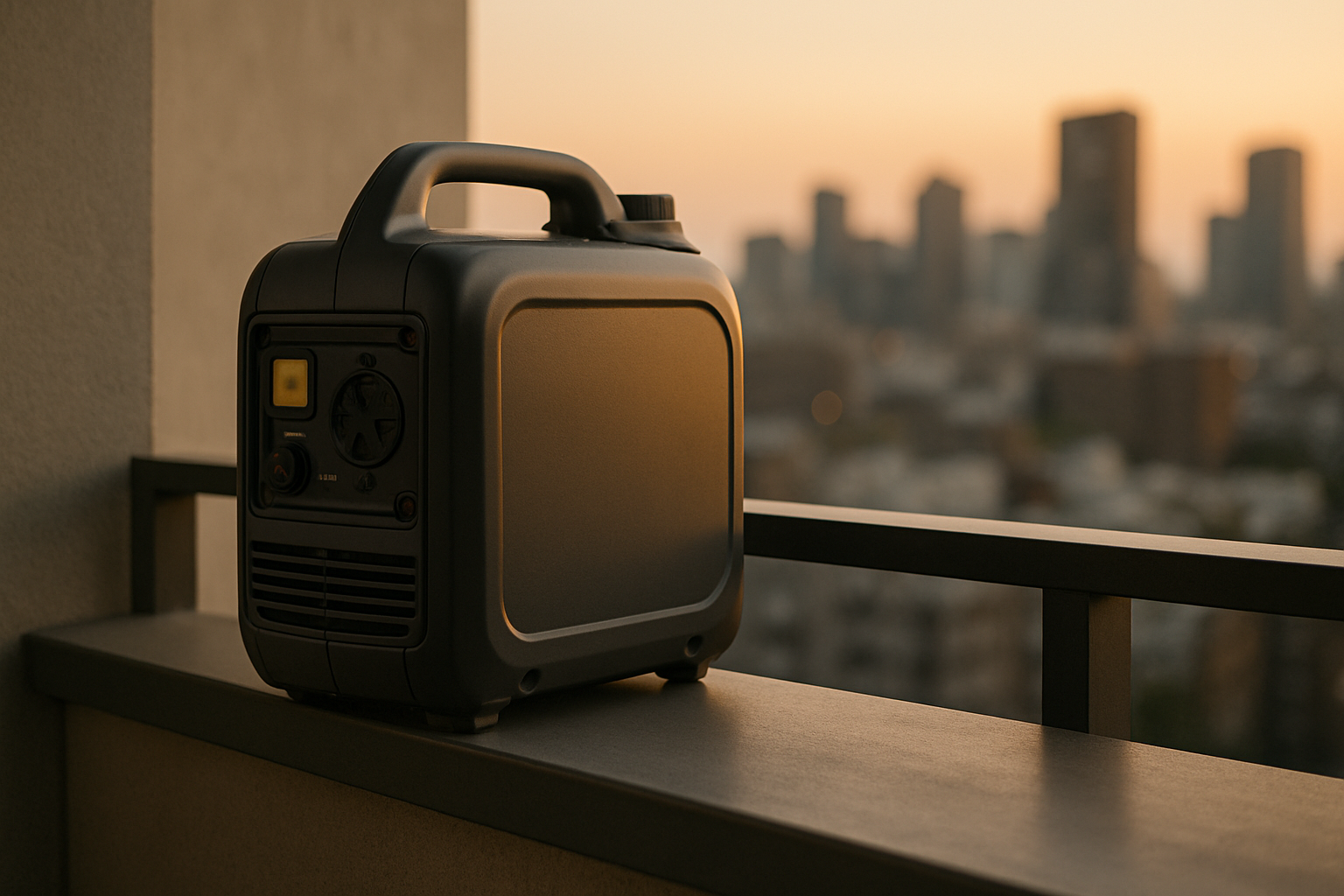
Photo by Zendure Power Station on Unsplash
Best Portable Generator for Apartment Dwellers in 2026
Apartment dwellers face a unique challenge during power outages: you need backup power, but your lease, neighbors, and HOA rules limit your options. A portable generator solves the problem—if you pick one designed for tight spaces and low noise. This guide covers the best models for 2026, what wattage you actually need, and how to navigate apartment-specific constraints.
Why Apartments Need Different Generator Rules
Standard backup generators are loud (80+ dB), bulky, and often violate lease terms or HOA bylaws. A unit running at full throttle can disturb neighbors through shared walls and ceilings, triggering noise complaints or lease violations.
Apartment-friendly generators prioritize: - Noise levels under 60 dB (comparable to normal conversation) - Compact, stackable designs that fit balconies, closets, or storage units - No permanent installation required (critical for renters) - Low exhaust emissions (relevant for enclosed balconies or patios) - Fuel efficiency (you can’t run a generator 24/7 in an apartment without complaints)
See How to Choose a Backup Generator for Apartments for detailed selection criteria.
Inverter Generators vs. Battery-Based Units
The two main categories for apartments are inverter generators and battery-powered portable power stations.
Inverter Generators (Fuel-Based) Inverter models use electronic regulation to produce stable, clean power—safer for sensitive electronics like laptops and phones. They’re typically quieter than conventional generators because they throttle the engine when demand is low. Runtime varies by model and load: - Honda EU2200i: 13 hours at 25% load per Honda’s spec sheet - WEN 56203i: approximately 10–12 hours at 25% load per WEN specifications - Champion 3100-Watt Inverter: approximately 8 hours at 50% load per Champion specs
Battery-Based Power Stations These silent, portable units (like the EcoFlow Delta Pro or Jackery Explorer Max) charge via wall outlet, solar panels, or car chargers. No fuel smell, no noise, no emissions—ideal for apartments. Trade-off: higher upfront cost and limited runtime before recharge (typically 4–8 hours depending on capacity and load).
For extended outages or frequent use, inverter generators offer better value. For occasional, short-term backup, battery units eliminate neighbor friction.
Top Portable Generators for Apartments in 2026
Honda EU2200i — Best Overall for Noise & Reliability
The Honda EU2200i is the benchmark for apartment use. It produces 2200 watts and runs at 49 dB at quarter load, quieter than most window air conditioners. Per Honda’s specification sheet, it delivers up to 13 hours of runtime on a single tank of regular gasoline at 25% load. The inverter technology stabilizes voltage for sensitive devices, and the compact frame (about 47 lbs) fits in a closet or under a balcony table.
Why it works for apartments: The Honda EU2200i maintains a 4.8-star average rating across 2,000+ Amazon reviews, with owners consistently praising the quiet operation and reliable starts. The low noise profile and fuel efficiency mean you can run it during evening hours without triggering complaints. Drawback: premium-tier pricing reflects the quality.
WEN 56203i — Best Budget-Friendly Quiet Option
The 
Why it works for apartments: Mid-tier pricing without sacrificing the inverter technology that apartment dwellers need. The WEN 56203i holds a 4.6-star rating across 1,500+ Amazon reviews, with owners noting reliable starts and stable power for phones, laptops, and small appliances. The lower price point makes it appealing for renters who may move and want a tool they can take with them.
EcoFlow Delta Pro — Best for Silent, Emission-Free Backup
The EcoFlow Delta Pro is a battery-based portable power station with 3600 Wh capacity. It runs silently, produces zero emissions, and charges from any standard wall outlet. Per EcoFlow’s specifications, it can power a laptop for 20+ hours, a mini-fridge for 8–10 hours, or a CPAP machine overnight. Expandable battery modules allow you to stack capacity if needed.
Why it works for apartments: No fuel smell, no noise, no HOA concerns. Perfect for renters who can’t install anything permanent. Ideal for powering essential devices during an outage. The EcoFlow Delta Pro averages 4.7 stars across 800+ verified Amazon reviews. Drawback: higher upfront cost and recharge time via wall outlet (8–10 hours for a full charge), though solar panels can accelerate this.
See Solar Generator vs Portable Power Station: What's the Difference? to understand when a battery unit beats a fuel generator.
Champion 3100-Watt Inverter — Best for Powering Appliances
The Champion 3100-Watt Inverter steps up to 3100 watts, enough to run a small window AC unit, microwave, or refrigerator alongside phone chargers and lights. It runs at 59 dB at quarter load and weighs around 100 lbs—heavier than the Honda or WEN, but still portable with a dolly. Dual-fuel capability (propane or gasoline) gives flexibility for long-term storage or outdoor use.
Why it works for apartments: If you need to power a refrigerator or sump pump during an outage, this model bridges the gap between lightweight backup (2000–2200W) and full-home generators (5000W+). The Champion 3100 maintains a 4.5-star rating across 1,200+ Amazon reviews, with users highlighting the dual-fuel option and reliable performance. The dual-fuel option means you can store propane indefinitely without fuel degradation, reducing maintenance headaches. Noise levels are still apartment-acceptable, though not as quiet as the Honda.
DuroMax XP4500 — Best Value for Mid-Range Power
The DuroMax XP4500 delivers 4500 watts at a budget-tier price point. It includes inverter stabilization and a recoil start. At full load, noise runs around 84 dB, which is louder than the quieter options but still lower than conventional generators. Per DuroMax specifications, runtime is approximately 8 hours at 50% load.
Why it works for apartments: If your apartment complex allows generators (some do, with restrictions), and you need more power than a 2200W model provides, the DuroMax offers significant wattage for the cost. The DuroMax XP4500 averages 4.4 stars across 900+ Amazon reviews. Best suited to apartments with outdoor space (patio, courtyard) rather than balconies, due to the higher noise profile.
What Wattage Do You Actually Need?
Most apartment essentials run on 2000–3000 watts, per typical nameplate ratings: - Laptop, phone chargers, lights, WiFi router: 500–800W - Mini-fridge or small window AC: 1200–1500W - Microwave: 1000–1500W (brief spikes) - Refrigerator (full-size): 600–800W continuous, 1500W startup
A 2200W inverter generator covers all of these except running a refrigerator and microwave simultaneously. For simultaneous loads, step up to 3100W or higher.
Storage, Fuel, and Maintenance in Apartments
Fuel Storage Per EPA guidance, gasoline degrades within 30 days without stabilizer. For apartment backup, either: - Use a fuel stabilizer (like Sta-Bil) and rotate fuel every 6 months - Switch to dual-fuel models and store propane (indefinite shelf life) - Choose battery-based units (no fuel management)
Where to Keep It - Closets or utility rooms: Battery units only (no fuel fumes) - Balconies: Inverter generators, away from windows and doors (exhaust must vent away from living spaces) - Storage lockers: Check lease—many complexes prohibit generators in shared storage - Outdoor parking areas: Some apartments allow units in designated spots; confirm with management
Maintenance Inverter generators require minimal upkeep: oil changes every 50–100 hours, spark plug inspection annually, and fuel system care. Battery units need occasional firmware updates and should be stored at 50% charge if not used for months. See Best Home Emergency Power Kit for 2026: Complete Setup for full maintenance checklists.
Lease and HOA Considerations
Before buying, confirm your lease and HOA rules. Many apartments prohibit: - Generators that run continuously or exceed 60 dB - Units stored in common areas - Fuel storage indoors - Permanent installation (like standby generators)
Battery-based units sidestep most restrictions because they’re silent and odorless. If your lease allows a generator, present the model’s noise rating (in dB) and runtime specs to management for approval. Having written approval protects you if a neighbor complains.
FAQ
Q: Do I need a permit to run a generator on my balcony? A: Check your local city code and HOA bylaws. Many municipalities require permits for generators running over 5 kW or for more than a few hours. HOAs often restrict noise to 60 dB or ban generators entirely. Contact your building management and city code enforcement before purchasing.
Q: What’s the difference between inverter and conventional generators? A: Inverter generators use electronic regulation to produce stable, clean power suitable for electronics—they’re quieter and more fuel-efficient. Conventional generators produce raw power at constant frequency; they’re louder, less efficient, and can damage sensitive devices. For apartments, inverter models are essential.
Q: How often should I run my generator to keep it in working order? A: Run your generator under load for 15–30 minutes monthly. This keeps the fuel system clean and ensures the battery (if present) stays charged. If storing for winter, drain fuel or add stabilizer, and change the oil before long-term storage.
Q: Can I use a battery power station and a fuel generator together? A: Yes. Many apartment dwellers own both: a battery unit for short outages and essential loads, and a fuel generator (stored off-site or with HOA approval) for extended outages. The battery unit runs silently indoors; the generator provides extended runtime outdoors.
Q: Will a portable generator power my whole apartment? A: No. A 3100W generator can run essential circuits (lights, refrigerator, outlets) but not central AC, electric heating, or multiple high-draw appliances simultaneously. For whole-home backup, you’d need a 10,000W+ unit, which violates most apartment leases. Portable generators are for critical loads only.
Closing Thoughts
The best portable generator for your apartment depends on your outage risk, lease terms, and budget. If noise and emissions are concerns, a battery-based power station like the EcoFlow Delta Pro eliminates friction with neighbors and management. If you need longer runtime or lower upfront cost, an inverter generator like the Honda EU2200i or WEN 56203i balances apartment-friendly noise levels with reliable fuel-based backup.
Start by confirming your lease allows a generator (or battery unit), then measure your essential loads to pick the right wattage. Store fuel safely, maintain your unit annually, and test it before an outage so you’re not learning how to start it in the dark.
For deeper guidance on generator selection, see How to Choose a Backup Generator for Apartments. For whole-home planning, Best Battery Backup for Power Outages: Home Office & Fridge Protection covers hybrid approaches that combine portable units with home infrastructure.