How to Choose a Backup Generator for Apartments
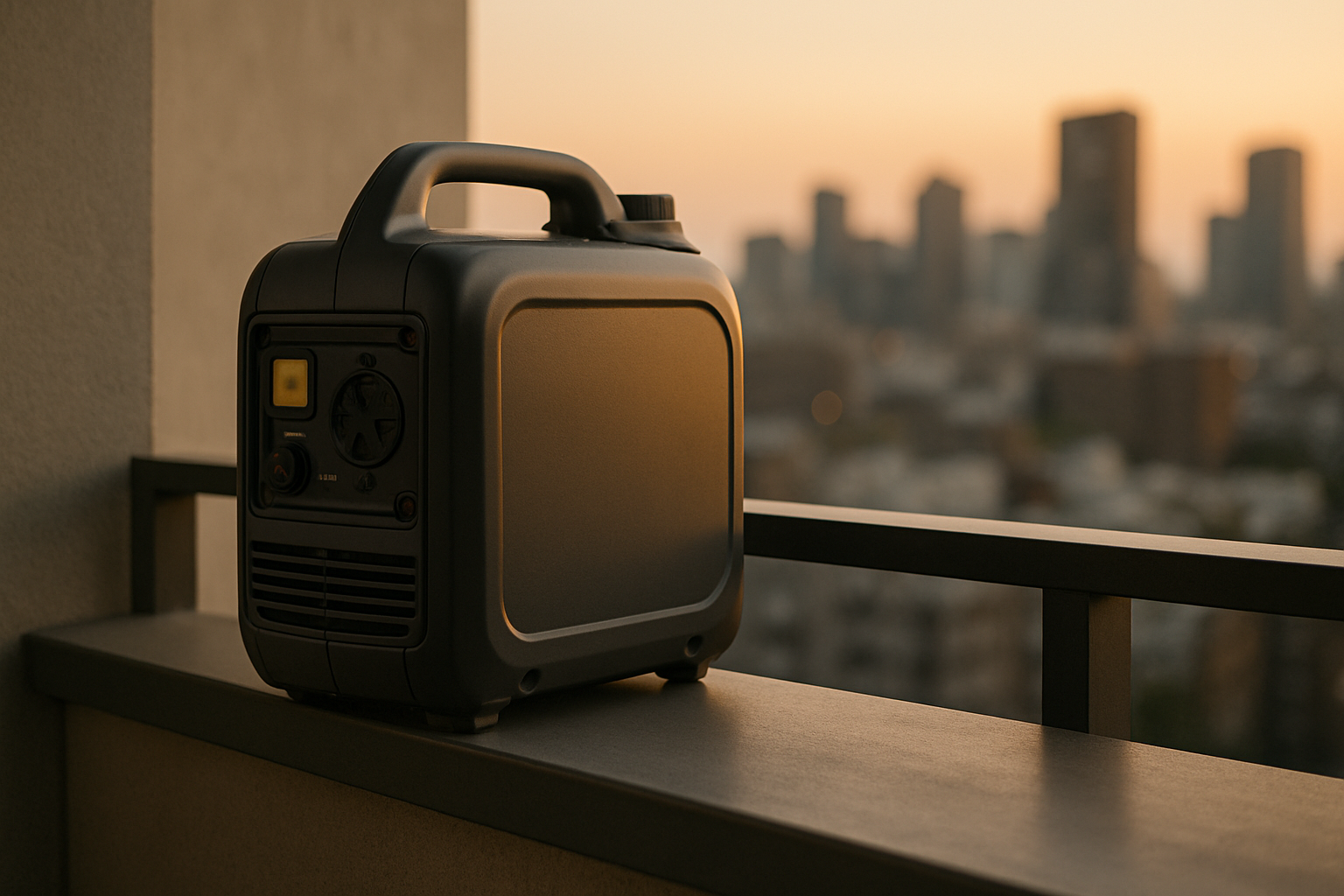
How to Choose a Backup Generator for Apartments
Apartment dwellers face unique constraints when selecting backup power: noise ordinances, limited outdoor space, fuel storage rules, and lease restrictions. Unlike homeowners with yards and basements, apartment residents must balance emergency preparedness with neighbor relations and building codes.
You’ll learn which noise limits apply to your city, how to size wattage for essential loads, whether a generator or battery system fits your lease, and how to navigate landlord approval without triggering lease violations.
Why Apartments Need Different Generator Criteria
Standard home generators (5–10 kW portable or standby units) often violate apartment noise codes, require permanent installation that leases forbid, or need fuel storage that building management won’t allow.
Apartment backup power has three realistic paths:
- Portable generators (quiet, compact, fuel-flexible) — best for renters and small spaces.
- Battery backup systems (silent, no emissions, no fuel) — ideal if you want zero neighbor friction.
- Hybrid setups (battery + small generator for extended outages) — balances runtime and stealth.
Most apartment dwellers end up choosing portable generators or battery systems because they’re legal to own, store, and operate without landlord pre-approval. Standby generators almost never work in apartments due to noise and installation requirements.
Understanding Apartment Noise Restrictions
Noise limits are the biggest barrier to apartment generators. Daytime noise ordinances typically cap generator operation at 65–75 decibels at 23 feet, with stricter limits (55–65 dB) after 10 p.m. Check your specific city or county zoning code for exact limits, as rules vary significantly by municipality.
What that means in practice: - A standard mid-size portable generator (5 kW) produces 80–90 dB at 23 feet—loud enough to violate codes and anger neighbors. - Inverter generators (quieter models) run 60–75 dB at the same distance, often compliant during daylight hours. - Battery systems produce 0 dB and sidestep noise rules entirely.
Check your specific ordinance by contacting your city’s building department or zoning office. Rules vary by municipality, and some apartment complexes enforce stricter internal rules than the city code allows.
Tenants who run loud generators during outages often face neighbor complaints, lease violations, or eviction notices—even if the generator is technically legal under city code.
Space and Storage Constraints
Apartments typically have limited outdoor space: a small balcony, patio, or shared courtyard. You’ll need to assess:
Footprint and weight: - Compact inverter generators weigh 50–80 lbs and fit in a closet or under a deck. - Larger portables (5 kW) weigh 150–250 lbs and need a dedicated corner or storage shed. - Battery backup systems are roughly the size of a large suitcase and fit in a closet.
Ventilation and exhaust: - Gasoline and propane generators produce carbon monoxide and must run outdoors, at least 20 feet from windows and doors. - Battery systems produce no fumes and can sit on a balcony or in a garage (though heat management matters).
Fuel storage: - Most leases allow 1–2 cans of gasoline (typically 5–10 gallons total) in a locked cabinet, away from living areas. - Propane tanks (30–100 lbs) may violate lease terms or building codes; check before buying. - Battery systems need no fuel storage, eliminating a major lease-compliance headache.
If your apartment has no balcony and a shared courtyard, a portable generator becomes much harder to operate safely and legally. In that case, a battery backup system is often the only realistic option.
Fuel Type Trade-Offs for Apartments
Gasoline: - Pros: cheap, widely available, high power density. - Cons: smelly, volatile, degrades in storage (stale fuel clogs carburetors), lease-unfriendly fuel storage. - Apartment fit: acceptable if you have a locked outdoor cabinet and rotate fuel every 6 months.
Propane: - Pros: cleaner exhaust, longer shelf life, quieter operation in some models. - Cons: heavy tanks, many leases prohibit large propane storage, harder to refill in emergencies. - Apartment fit: risky; check your lease and building code first.
Dual-fuel (gasoline + propane): - Pros: flexibility, propane as a backup if gas runs out. - Cons: more complex, slightly more expensive. - Apartment fit: only if your lease allows propane storage.
Battery (lithium or lead-acid): - Pros: zero emissions, zero noise, no fuel to store or manage, silent operation. - Cons: higher upfront cost, limited runtime without solar or wall charging, slower recharge times. - Apartment fit: best option if you have AC power and can recharge between outages.
Most apartment dwellers default to gasoline portables because they’re cheap and familiar—but propane or battery systems often make more sense legally and practically.
Wattage and Runtime Sizing
Apartment backup power rarely needs to run your whole unit. Instead, focus on essential loads: refrigerator, lights, phone charger, laptop, and heating/cooling.
Typical essential loads: - Refrigerator: 600–800 W running, 1200–2000 W startup. - LED lights (5–6 bulbs): 50–75 W. - Phone/laptop charger: 50–100 W combined. - Space heater or small AC: 750–1500 W (pick one, not both).
Total continuous: 1000–2000 W for refrigerator + lights + charging. Peak (with startup surge): 2500–3500 W.
A 3000–4000 W inverter generator or battery system covers most apartment emergencies. Smaller units (2000 W) work if you’re willing to stagger loads (run the fridge, then charge devices, then turn on lights).
Runtime depends on fuel and load: - A Honda EU3000 inverter generator running at 50% load (1500 W) lasts roughly 8–12 hours on a full 5.1-gallon tank. - A Jackery Explorer 2000 battery system (2 kWh capacity) runs 1–2 hours at 1500 W continuous draw, or 8+ hours at 250 W (lights + charging only).
For outages longer than 12 hours, you’ll need either a second fuel tank or the ability to recharge the battery via solar panels or wall AC (if power is restored).
Lease and Legal Considerations
Before buying any generator, review your lease and check local codes:
Lease review: - Most leases prohibit standby generators (permanent installation). - Portable generators are usually allowed if they’re used outdoors only and stored in approved locations. - Fuel storage limits are often stated (e.g., “up to two 5-gallon cans in a locked cabinet”). - Check for noise complaints—even if a generator is legal, repeated neighbor complaints can trigger lease violations.
Local codes: - Call your city’s building or zoning department to confirm noise limits, fuel storage rules, and any permits required. - Some jurisdictions require a permit for any generator over 5 kW; others have no restrictions. - A few cities prohibit portable generators in multi-unit buildings entirely (rare, but it happens).
HOA or building management: - If your building has an HOA or management company, ask for written approval before purchasing. - Some buildings require generators to be stored in a specific location or require liability insurance.
Tenants who skip this step often face surprise denials, lease violations, or forced removal of equipment. A 10-minute call to your building manager and city zoning office saves months of headaches.
Quiet Generators vs. Battery Backup: Which Fits Apartments Better?
Quiet inverter generators (60–75 dB at 23 feet): - Cost range:. - Best for: outages under 12 hours, renters with outdoor space, people who want affordable insurance against extended blackouts. - Tradeoffs: still audible to neighbors, requires fuel management, produces emissions. - Examples: Westinghouse iGen2500 , Honda EU2200i .
Battery backup systems (silent, zero emissions): - Cost range: +. - Best for: renters who want zero neighbor friction, people with limited outdoor space, apartments in noise-sensitive areas. - Tradeoffs: higher upfront cost, limited runtime without recharge, slower to recharge than refueling a generator. - Examples: Jackery Explorer 1000 , EcoFlow Delta Pro (+).
Hybrid approach (small battery + portable generator): - Run the battery system first for the first 4–8 hours (silent, no neighbor friction). - If outage persists, fire up the quiet generator at night only (when you really need it), or during the day when noise codes are more lenient. - Best for: long outages in apartments where you want to minimize generator runtime.
The best choice depends on your outage history. If your area has frequent short outages (2–6 hours), a battery system alone might suffice. If outages regularly last 12+ hours, a quiet generator or hybrid setup is more practical.
FAQ
Q: Will my generator trip a circuit breaker? A: Not if you’re running it outdoors and using extension cords to power specific devices. However, if you’re backfeeding power into your apartment’s electrical panel (connecting the generator directly to your breaker box), you risk overloading circuits or damaging appliances. Never backfeed without a licensed electrician installing a proper transfer switch—most apartment leases prohibit this anyway.
Q: Can I run a generator in the rain? A: No. Generators produce electricity and water conducts current; running a wet generator risks electrocution and equipment damage. Most generators have rain covers or can be placed under a canopy, but the fuel inlet and exhaust must stay dry. If you’re in a heavy rain event, keep the generator indoors or under shelter, but always ensure exhaust vents away from windows and doors (carbon monoxide risk).
Q: What’s the quietest apartment-safe generator? A: Inverter generators in the 2000–4000 W range typically run 60–70 dB at 23 feet, often compliant with daytime noise codes. The Westinghouse iGen2500 runs at 64 dB and. Battery backup systems produce zero noise and sidestep the issue entirely. For battery-only solutions, see Best Battery Backup for Power Outages: Home Office & Fridge Protection.
Q: Do I need permission from my landlord to buy a generator? A: Check your lease first. Most leases allow portable generators if they’re used outdoors and stored safely. Standby generators almost always require landlord approval (and usually aren’t permitted). Always ask your building manager in writing before purchasing to avoid lease violations.
Q: How long can I run a portable generator in an apartment? A: Gasoline portables typically run 8–12 hours per tank at 50% load (e.g., a Honda EU3000 at 1500 W). Battery systems last 3–6 hours at similar loads. For longer outages, you’ll need additional fuel or the ability to recharge the battery via solar or wall AC.
Q: What’s the difference between a portable generator and a battery backup system? A: Portable generators burn fuel (gasoline, propane, or dual-fuel) and are louder but cheaper upfront and run longer per refuel. Battery systems are silent, produce zero emissions, and fit in small spaces—but cost more (+) and have shorter runtime without recharge. For a detailed breakdown, see Solar Generator vs Portable Power Station: What's the Difference?.
Recommended Setup by Apartment Type
Studio or small 1-bedroom with balcony: - Best choice: Westinghouse iGen2500 (2500 W, 64 dB, ) or Jackery Explorer 240 (240 Wh battery, ). - Why: limited storage, noise sensitivity, simple load management. The iGen2500 handles essential loads quietly; the Explorer 240 covers phone/laptop charging for 8+ hours. - Cost comparison: Generator + fuel ( + /year) vs. battery system ( upfront, no fuel).
Larger apartment with outdoor patio: - Best choice: Honda EU2200i (2200 W, 49 dB, ) or EcoFlow Delta (1260 Wh, ). - Why: more space to store fuel and equipment, can run larger loads. The EU2200i is one of the quietest portables available; the Delta handles 8+ hours of essential loads. - Cost comparison: Generator ( + /year fuel) vs. battery ( upfront, rechargeable).
Apartment with no outdoor space or strict HOA: - Best choice: Jackery Explorer 1000 (1002 Wh, ) or EcoFlow River Pro (720 Wh, ). - Why: zero noise, zero emissions, no fuel storage, no lease friction. Both fit in a closet and recharge via wall AC. - Cost: upfront; no ongoing fuel costs.
Renter with frequent outages (4+ per year): - Best choice: Westinghouse iGen2500 + Jackery Explorer 240 hybrid ( + = total). - Why: battery handles short outages silently; generator kicks in for extended blackouts. Minimizes neighbor friction while ensuring 24+ hour coverage. - Cost: upfront + /year fuel.
The Bottom Line
Apartment backup power is a constraint-solving puzzle, not a simple “buy the biggest generator” decision. Noise codes, lease rules, and neighbor relations matter as much as wattage and runtime.
Start by checking your lease and local noise ordinance—those two steps eliminate 90% of the wrong choices. Then size your wattage to essential loads (fridge, lights, charging) rather than whole-unit coverage. Finally, choose between a quiet portable generator or battery system based on your outage history and tolerance for noise.
If you want the easiest path with zero neighbor friction, a battery backup system is worth the premium. If you’re comfortable with occasional generator use and have outdoor space, a quiet inverter generator is more affordable and runs longer. Either way, apartment backup power is achievable—you just need to plan within your constraints.


