As an affiliate, we may earn from qualifying purchases. This doesn't affect which products we recommend.
Best Home Emergency Power Kit for 2026: Complete Setup
During a summer heat wave in Texas, a 6-hour grid failure can spoil + of groceries and leave elderly residents without AC. A home emergency power kit bridges that gap—keeping your refrigerator running, phones charged, medical devices powered, and heating or cooling operational until utility power returns or you activate a backup generator. This guide walks you through the components of a real emergency setup, the math behind sizing, and the specific products that deliver reliability under pressure.
Why You Need a Layered Power Strategy
Most households assume a single solution will handle emergencies. It won’t. A portable power station alone runs out of charge in 12–36 hours based on a 2000 Wh station powering a 100 W refrigerator. A gas generator requires fuel storage, makes noise, and produces carbon monoxide indoors. A solar panel system depends on daylight. The most resilient setups combine fast-deploy battery backup (for the first 24–48 hours), solar recharge capability (to extend runtime without fuel), and a backup generator (for cloudy stretches or heavy loads).
This layered approach means:
- Hour 1–24: Portable power station carries you through the critical window.
- Day 2–5: Solar panels recharge the battery during daylight; generator handles nighttime or cloudy days.
- Day 5+: If the outage extends, your generator runs on a manageable fuel reserve while solar tops up the battery.
Component 1: The Core Battery (Portable Power Station)
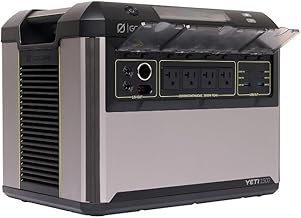
A portable power station is the foundation of any emergency kit. It’s a large lithium battery with built-in inverter, outlets, and charging ports. No fuel, no fumes, no noise.
Capacity and Runtime: The Math
Power stations are rated in watt-hours (Wh). A 1000 Wh unit stores 1 kilowatt-hour—enough to run a 100-watt load for 10 hours, or a 500-watt load for 2 hours. Emergency loads typically include:
Refrigerator: 150–600 watts (per EnergyStar data; compressor cycles on/off, so average draw is lower)
Laptop: 50–100 watts
LED lighting: 10–20 watts per fixture
Phone chargers: 5–30 watts
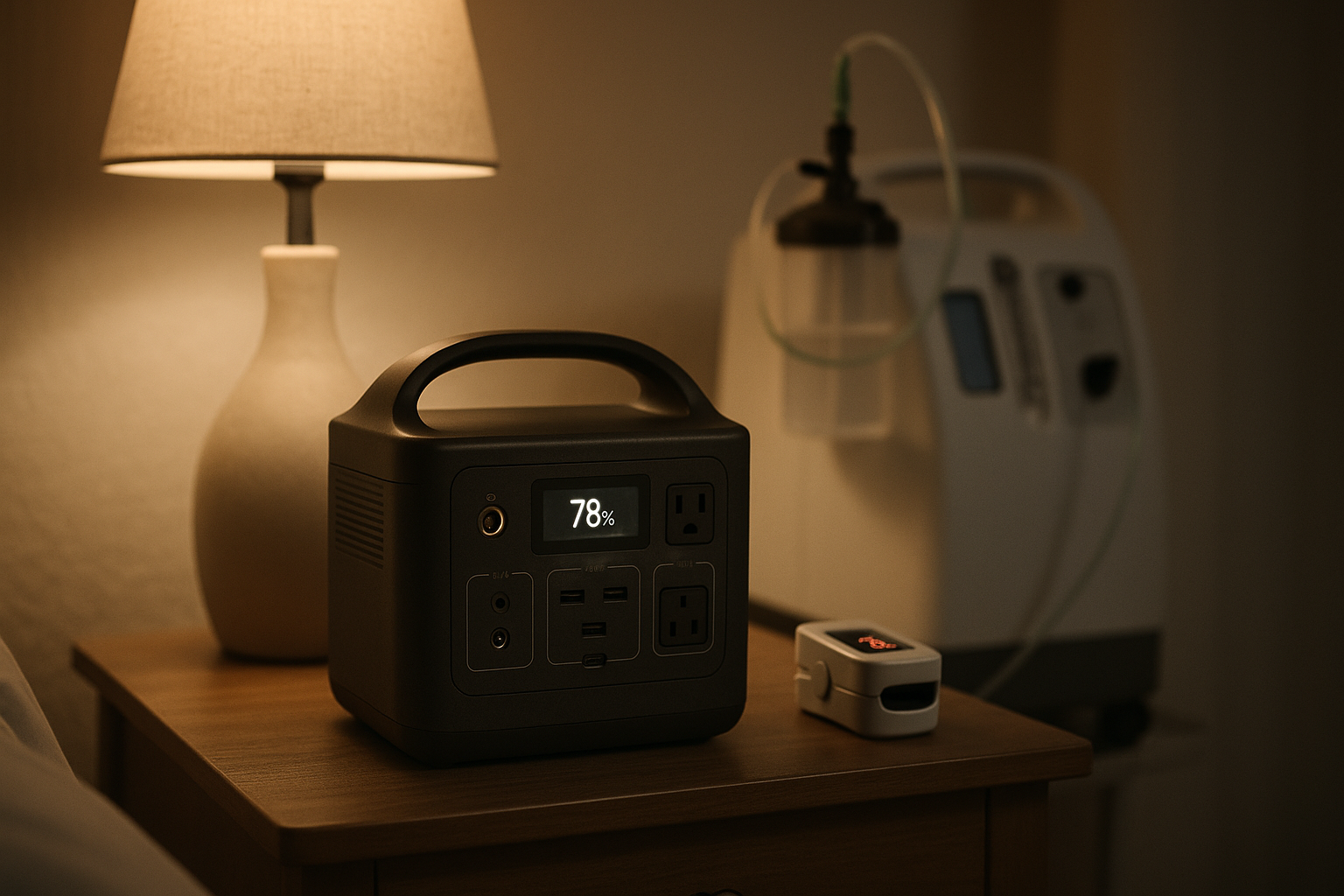
Medical device (CPAP, oxygen): 40–200 watts
Small space heater: 750–1500 watts (very power-hungry; not practical on battery alone)
For a typical household emergency, a 2000–3000 Wh capacity keeps a refrigerator, lights, and devices running for 24–36 hours. If you have a medical device or want to run a small heater, aim for 3000–5000 Wh.
Key Specs to Compare
Usable capacity: Some units reserve 10–20% for battery health; the advertised figure may be higher than what you can actually draw. Manufacturer spec sheets clarify this.
Continuous inverter output: This is the maximum wattage the unit can supply at once. A 3000 Wh station with a 2000 W inverter can’t run a 3000 W load, even briefly. Check the spec sheet for continuous output, not just peak.
Recharge speed: How fast can solar or AC mains refill the battery? Faster recharge means less downtime between uses. Most portable stations recharge from empty in 4–8 hours on AC; solar recharge depends on panel wattage and sunlight.
Expandability: Some models like the EcoFlow Delta Pro let you stack extra batteries to double or triple capacity without buying a new unit.
Per manufacturer spec sheets and aggregated owner reviews, lithium LiFePO₄ chemistry (used in most mid-to-premium units) lasts 10+ years and survives 3000+ charge cycles, making it the standard for emergency kits. Cheaper lithium-ion units degrade faster.
Component 2: Solar Recharge (Portable Solar Panels)
Once your power station is deployed, solar panels keep it topped up during daylight—critical if the outage lasts multiple days.
Wattage and Output
Solar panels are rated in watts (the peak output under ideal sun). A 100 W panel generates roughly 100 W on a clear noon; on a cloudy day, it might produce 20–30 W. In winter or at high latitude, output drops further.
For emergency use, 200–400 W of solar panels is practical:
- 200 W recharges a 2000 Wh station in roughly 6–8 hours of good sunlight (accounting for inverter losses and angle inefficiency).
- 400 W does the same in 3–4 hours, or can simultaneously power small loads while charging.
Most portable solar kits ship with kickstands and MC4 connectors that plug directly into a power station’s solar input. Per teardown reviews and user reports, foldable designs (200–400 W in 4–6 lbs) are easier to deploy than rigid panels during an emergency.
Integration with Your Kit
The best solar panels for emergency use match your power station’s input voltage and connector type. Mismatched gear means you can’t charge. EcoFlow Delta Pro accepts 60V input via Anderson connectors; Goal Zero Yeti 3000X accepts 200V via Anderson connectors. Check your power station manual before buying panels to ensure compatibility.
A portable gas generator is insurance for multi-day outages when solar can’t keep up or the weather turns cloudy. It’s loud, requires fuel storage, and shouldn’t run indoors (carbon monoxide risk), but it’s the only practical way to run heavy loads (well pump, air conditioning, electric heater) or maintain power during a week-long outage.
Wattage and Fuel Type
Rated wattage: The maximum output the generator can produce. A 7000 W generator runs a 240 V well pump (typically 2000–3000 W); a 3000 W unit handles smaller loads like furnace fans or space heaters.
Fuel type: Gasoline (portable, widely available, but volatile and degrades over months) or propane (cleaner, longer storage life, less portable). For emergency kits, propane is preferable if you can store a 20–30 lb tank safely.
For home emergencies, a 5000–7000 W generator is the sweet spot—enough to run essential circuits or a well pump, but not so heavy that it’s impractical to move or refuel.
Noise and Placement
Generators produce 80–100 dB at full load—loud enough to damage hearing and disturb neighbors. Inverter generators (which regulate output frequency for cleaner power) are quieter (70–80 dB) and cost more but are worth it in residential areas. Per owner reports on outdoor forums, placing the unit 20+ feet from windows and pointing the exhaust away from living spaces reduces noise intrusion by 10–15 dB.
Building Your Emergency Kit: The Checklist
A complete home emergency power kit includes:
Portable power station (2000–3000 Wh minimum; 3000–5000 Wh for medical devices or extended outages)
Solar panel array (200–400 W; foldable for easy deployment)
Solar charging cable (included with most stations; verify compatibility)
Generator fuel (20–30 lb propane tank or 5–10 gallons of stabilized gasoline in approved containers)
Heavy-duty extension cords (rated for outdoor use and the generator’s full amperage)
Transfer switch or manual breaker (allows safe handoff between utility and generator power; prevents backfeed to the grid)
Surge protector or power strip (for the power station, to protect plugged-in devices)
Charging cables (USB-C, USB-A, car chargers for phones and devices)
Backup power for critical circuits (optional but recommended: a whole-home battery system that auto-switches during outages)
Sizing Your Kit: Real-World Scenarios
Scenario 1: Apartment Dweller, 24-Hour Outage
Power station:Anker 757 PowerHouse (1229 Wh) — runs refrigerator, lights, and devices for 24 hours; compact enough to store in a closet.
Solar panels:Anker 625 Solar Panel (100 W) — recharges the station in 10–12 hours of good sunlight if a second day of outage occurs.
Generator: Not practical in an apartment; rely on the power station and building-level backup systems.
Total cost tier: Budget-friendly to mid-range.
Scenario 2: House with Refrigerator and Medical Device, 3-Day Outage
Power station:EcoFlow Delta Pro (3600 Wh) — runs refrigerator (average 300 W), CPAP (150 W), and lights (50 W) for 8 hours per day, or 3 days with solar recharge.
Solar panels:EcoFlow 400 W Solar Panel (400 W) — recharges the station fully in 4–5 hours of good sunlight.
Generator:Champion 7000 Watt Portable Generator (7000 W) — backs up the system on cloudy days or runs the refrigerator directly while the power station charges overnight.
Total cost tier: Mid-range to premium.
Scenario 3: Off-Grid or Remote Property, Unlimited Outage Duration
Additional battery:Bluetti B500 Expansion Battery (5120 Wh) — stacks with the Yeti to handle multi-day cloudy stretches.
Total cost tier: Premium.
Maintenance and Testing
An emergency kit only works if it’s ready when you need it. Per manufacturer guidance and user reports:
Test the power station monthly: Charge it fully, then draw a small load (lamp, fan) for 1–2 hours to confirm it powers on and holds charge.
Cycle the generator quarterly: Run it under load (using the power station’s AC outlet) for 15–20 minutes to keep the carburetor clean and fuel system active. Per Champion’s generator manual and r/preppers consensus, this prevents starting failures during emergencies.
Check solar panel connections twice yearly: Ensure MC4 connectors are clean and tight; debris or corrosion blocks charging.
Inspect cords and plugs annually for damage, especially if stored outdoors.
Refresh fuel annually: Drain old gasoline from the generator or replace with fresh fuel to prevent starting failures.
FAQ
Q: What’s the difference between LiFePO₄ and lithium-ion batteries?
A: LiFePO₄ (lithium iron phosphate) batteries last 10–15 years and survive 3000–5000 full charge cycles. Lithium-ion batteries degrade faster, typically lasting 5–7 years with 1000–2000 cycles. LiFePO₄ is safer (lower fire risk) and the standard in quality emergency power stations. Lithium-ion is cheaper but less reliable for long-term emergency backup.
Q: How do I safely connect a generator to my home’s electrical panel?
A: Never plug a generator directly into a wall outlet or connect it to your panel without a transfer switch. A transfer switch prevents backfeed (sending power back to the grid, which can electrocute utility workers). Have a licensed electrician install a manual or automatic transfer switch rated for your generator’s output. This is a code requirement in most jurisdictions.
Q: Can I run my air conditioner on a portable power station?
A: Most AC units draw 3000–5000 W at startup, which exceeds the inverter output of all portable stations. A 5000+ W generator can run a window unit, but not a central system. For cooling, focus on fans, dehumidifiers, and passive cooling (opening windows at night, closing blinds during the day).
Q: How often should I recharge my power station if I’m not using it?
A: Lithium batteries self-discharge slowly (1–3% per month per manufacturer specs). For a kit you’re not actively using, recharge every 3–6 months to keep the battery healthy and ensure readiness. Store in a cool, dry place.
Q: Is a generator necessary if I have a large power station and solar panels?
A: For outages under 3 days in sunny weather, no. For outages longer than 3 days or in winter/cloudy regions, a generator is critical backup. It’s insurance—you may never need it, but when you do, it’s invaluable.
Q: Can I use a power station and generator together?
A: Yes, many power stations have an AC input that lets a generator charge the battery while the station simultaneously powers other outlets. This extends runtime and reduces fuel consumption compared to running the generator alone.
Decision Tree: What Kit Do You Need?
Use this checklist to size your setup:
If you live in a region with 200+ sunny days per year: Prioritize solar capacity (400+ W). You can rely on solar recharge for 3–5 day outages.
If you’re in the Pacific Northwest, Northeast, or other cloudy regions: Add a larger generator (7000+ W) and reduce reliance on solar. Budget for fuel storage.
If you have medical devices (CPAP, oxygen, dialysis): Start with 3000+ Wh capacity and test runtime with your specific device before an emergency.
If you’re in an apartment or rental: Choose a compact, portable station (1000–2000 Wh) and skip the generator. Focus on fast recharge via solar or AC outlets.
If you want to scale over time: Pick an expandable system like EcoFlow Delta Pro or Goal Zero Yeti 3000X. Start with the core unit, add batteries and panels as budget allows.
If you have a well pump or heavy loads: You need a 7000+ W generator. A power station alone won’t run these; the generator is non-negotiable.
Start with a portable power station sized to your critical loads, add solar panels for recharge resilience, and layer in a generator for extended outages or heavy equipment. Test it quarterly, maintain it annually, and you’ll sleep better knowing your home is protected when the grid fails.