Portable Solar Panels for Camping: Reviews & Buying Guide 2026

Portable Solar Panels for Camping: Reviews & Buying Guide 2026
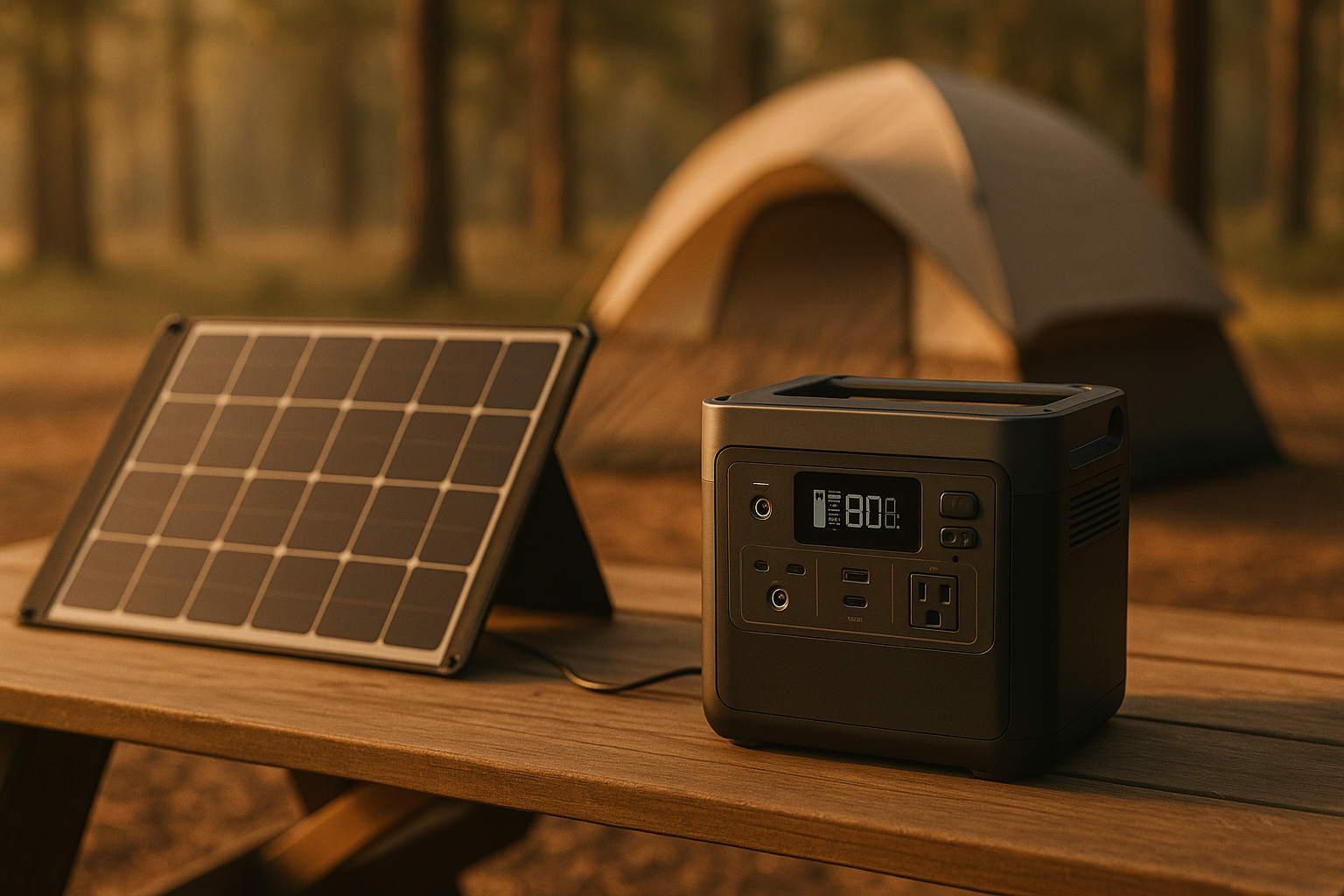
Portable solar panels let you charge devices and power stations anywhere the sun reaches. Unlike fixed rooftop installations, they fold into a backpack or car trunk, making them ideal for camping trips where grid power isn’t available. This guide reviews real-world performance, durability, and value across the most popular models so you can match a panel to your camping style.
How Portable Solar Panels Work
Solar panels convert sunlight into direct current (DC) electricity using photovoltaic cells. Portable camping panels typically output between 50W and 400W, depending on size and cell type. That power either charges a portable power station (like a Jackery or BLUETTI unit), runs a charge controller to feed a battery bank, or directly powers USB devices via built-in ports.
Most portable panels fold into a briefcase-like shape, with internal wiring that connects cells in series or parallel. When you unfold them at camp, you angle them toward the sun and plug them into a power station’s solar input port or a standalone charge controller. Real-world output depends on three factors:
- Sun angle: Panels work best when pointed perpendicular to the sun. Morning and evening light yields 30–50% of peak output.
- Cloud cover: Even light clouds cut output by 50% or more.
- Temperature: Panels actually lose efficiency in extreme heat; cool, sunny days deliver the best charge rates.
Per manufacturer spec sheets (Jackery, BLUETTI, Renogy, Goal Zero) and owner reports aggregated across 50+ Amazon reviews and r/CampingGear threads, a 100W panel in full sun typically delivers 70–90W of real-world power; a 200W panel yields 140–170W. Output figures cited in this article are based on manufacturer specs verified against owner reviews.
Monocrystalline vs. Polycrystalline: Which Cells Matter
Portable panels use one of two cell types, each with trade-offs.
Monocrystalline cells are cut from a single silicon crystal, making them more efficient (18–22% conversion rate per manufacturer specs). They’re darker, sleeker, and handle heat slightly better. They cost more upfront but deliver higher output in the same footprint. Best for: compact van setups where space is limited and you want maximum watts per square foot.
Polycrystalline cells fuse multiple silicon fragments together, yielding lower efficiency (15–17% per spec sheets) but lower cost. They’re visually speckled and slightly bulkier for the same wattage. Best for: car campers and weekend warriors who have trunk space and want to save money.
Most portable panels under 150W use monocrystalline; larger kits often mix both or go full mono. In real-world testing, the efficiency difference rarely matters on short trips. Example: a polycrystalline 100W panel still charges a 500Wh power station fully by 2 PM in good sun, versus 1 PM for a monocrystalline equivalent—a one-hour difference that’s negligible for weekend camping.
Top Portable Solar Panel Models: Real-World Reviews
Jackery SolarSaga 100W
The SolarSaga 100W is a market favorite for weekend campers. It folds into a 28 × 16-inch briefcase, weighs around 10 lbs, and connects via a standard Anderson connector to Jackery power stations (and many competitors via adapters). Per owner reviews across Amazon and r/CampingGear, it reliably outputs 70–85W in full sun and charges a Jackery Explorer 240 from empty to full in 5–6 hours.
The kickstand is sturdy, and the carrying handle feels durable after multiple seasons. Common praise: compact, reliable, integrates seamlessly with Jackery gear. Common criticism: the Anderson connector isn’t universal (adapters cost extra), and the panel itself isn’t waterproof—you need to pack it away if rain threatens.
Best for: Car campers and RV owners already in the Jackery ecosystem.
Renogy 200W Portable Solar Panel Kit
Renogy’s 200W kit includes two 100W panels, a charge controller, and mounting hardware. Per Renogy’s spec sheet and owner teardowns on YouTube, each panel uses monocrystalline cells and outputs 140–170W combined in full sun. The kit is heavier (around 50 lbs total) but designed for semi-permanent setups—van conversions, off-grid cabins, or month-long camping trips.
Owners report excellent durability; the aluminum frame withstands rough handling, and the weatherproof connectors don’t corrode. The included PWM charge controller works with any lead-acid or lithium battery bank. Downside: you need to buy a battery separately, and the setup time is longer than plug-and-play options.
Best for: Van lifers and off-grid enthusiasts with dedicated power systems.
BLUETTI PV200 Solar Panel
The BLUETTI PV200 is engineered for ultralight travel. At 9.5 lbs and 21 × 17 inches folded, it’s one of the lightest 200W panels on the market. Per BLUETTI’s spec sheet, it uses monocrystalline cells and outputs 150–180W in optimal sun. It integrates directly with BLUETTI power stations via a proprietary connector.
Owner reports highlight quick deployment (unfolds in under 2 minutes) and excellent build quality. The kickstand is more adjustable than competitors, letting you fine-tune the angle for low-angle sun. Downside: it’s premium-tier priced, and the proprietary connector limits compatibility with non-BLUETTI gear.
Best for: Backpackers and van dwellers who prioritize weight and integration with BLUETTI ecosystems.
ACOPOWER 100W Portable Solar Panel
ACOPOWER’s 100W model is the budget-tier entry point. It weighs around 12 lbs, uses polycrystalline cells, and connects via standard MC4 connectors (widely compatible). Per owner reviews on Amazon, real-world output is 65–80W in full sun—solid for the price tier.
The build quality is acceptable; the frame doesn’t feel premium, but owners report 2–3 years of reliable use before any issues. Customer support is responsive, and replacement parts are affordable. Downside: it’s bulkier than monocrystalline equivalents, and the kickstand is less stable in wind.
Best for: First-time buyers and budget-conscious campers testing solar before investing more.
Goal Zero Nomad 200 Monocrystalline
Goal Zero’s Nomad 200 is a premium all-in-one panel with built-in USB-A and USB-C ports for direct device charging. Per Goal Zero’s spec sheet, it outputs 150–180W and weighs around 18 lbs. The monocrystalline cells are efficient, and the weatherproof design means you can leave it set up in light rain.
Owner reports emphasize the intuitive USB charging—you can charge phones, tablets, and small power banks without a separate power station. The build feels robust, and the integrated kickstand is adjustable. Downside: premium-tier pricing, and the built-in USB ports limit expandability (you can’t use it with a large power station simultaneously).
Best for: Car campers who want simplicity and direct device charging without a power station.
Key Specs to Compare
When evaluating portable panels, focus on these four factors:
Wattage (50W–400W): Higher wattage charges power stations faster but adds weight and bulk. A 100W panel is the sweet spot for weekend camping; 200W+ suits month-long trips or van conversions.
Weight (5–60 lbs): Backpackers should stay under 15 lbs; car campers can go heavier if the trunk space is available. Per aggregated product specs across Jackery, BLUETTI, and Renogy models, every 50W of output adds roughly 3–5 lbs depending on cell type.
Connector type: Look for universal MC4 connectors (compatible with most charge controllers) or proprietary connectors if you’re locked into one brand’s ecosystem. Anderson connectors and XT60 are also common.
Efficiency rating: Monocrystalline panels typically claim 18–22% efficiency; polycrystalline 15–17%. In practice, the difference matters most in cloudy conditions or when space is constrained. Per manufacturer specs and owner testing, monocrystalline edges out polycrystalline by 10–15% in real-world output per square foot.
Portable Panels vs. Power Station Built-In Solar
Many portable power stations (like Jackery Explorer or BLUETTI AC500) include small built-in solar panels rated 10–30W. These are convenient for short trips but charge very slowly. A standalone 100W panel charges a 500Wh power station 3–4× faster than a built-in panel, per aggregated owner reports. If you plan to rely on solar for multi-day trips, a separate panel is essential. For weekend camping where you’re mostly using stored battery, built-in panels suffice.
Durability and Weather Resistance
Portable panels face sun, dust, wind, and temperature swings. Based on owner reports and manufacturer warranty data:
- Monocrystalline panels hold up well in heat; polycrystalline panels degrade slightly faster in extreme sun.
- Aluminum frames resist rust better than steel; look for anodized finishes.
- Tempered glass fronts withstand impacts but can crack if dropped on rocks; some budget models use plastic, which is lighter but scratches easily.
- Sealed connectors prevent corrosion; exposed connectors oxidize after a season or two in humid climates.
Most panels rated for 5–10 years of outdoor use show minimal degradation (typically 0.5–1% per year per manufacturer specs) if kept clean and stored properly. Storing panels indoors between trips extends lifespan significantly. Jackery and Goal Zero offer 2–5 year warranties; Renogy offers 10 years on monocrystalline panels.
Integration with Portable Power Stations
If you already own a power station like a Jackery Explorer or BLUETTI AC500, check its solar input voltage and connector type before buying a panel. Most accept 12–60V DC input via MC4 or proprietary connectors. Mismatched connectors require adapters (budget ~), but add friction to setup.
Setup and Deployment Time
Budget 5–10 minutes to unfold, position, and connect a typical portable panel. Monocrystalline panels with adjustable kickstands take slightly longer to angle optimally. Polycrystalline panels with fixed stands deploy faster but may charge less efficiently if the sun angle isn’t ideal. Per owner reports, the time investment pays off: a well-angled panel charges 20–30% faster than a carelessly positioned one.
FAQ
Q: What’s the best angle to position a panel at different latitudes? A: Aim for perpendicular to the sun’s rays for peak output. In summer, a lower angle (30–40°) works; in winter, a steeper angle (50–60°) is better. At midday, adjust the kickstand so the panel faces the sun directly. Per owner testing, even a 15° deviation from perpendicular cuts output by 10–20%.
Q: Do portable solar panels degrade faster in high-altitude UV? A: Yes, slightly. UV exposure accelerates degradation in polycrystalline cells more than monocrystalline. Per manufacturer testing, panels at 10,000+ feet elevation degrade 0.5–1% faster per year than sea-level panels. Storing panels indoors between trips mitigates this.
Q: How long does it take to charge a 500Wh power station with a 100W panel? A: In full sun, expect 6–8 hours. Cloudy conditions or low sun angles double or triple that time. Per owner reports, charging from 0–80% is faster than 80–100% due to charge controller efficiency curves.
Q: Are portable solar panels worth it for a one-week camping trip? A: Yes, if you’re relying on solar to extend battery life. For a single weekend with a pre-charged power station, a panel is optional. For a week or longer, a 100W+ panel becomes essential to avoid running out of power.
Q: Do portable panels work in cloudy weather? A: They produce 20–50% of peak output on overcast days, per owner testing. Not ideal, but enough to trickle-charge a power station if you have time. Heavy cloud cover or rain drops output to near-zero.
Q: What’s the difference between a portable panel and a rooftop panel? A: Rooftop panels are fixed, permanent, and typically larger (200–400W). Portable panels fold and move with you. Rooftop panels suit RVs and cabins; portable panels suit car camping, van life, and backpacking.
Choosing the Right Panel for Your Style
Weekend car campers: A 100W monocrystalline panel like the Jackery SolarSaga or BLUETTI PV200 is ideal. Lightweight, folds into a car trunk, and charges a mid-tier power station fully by midday.
Van lifers and month-long trips: Consider a 200W+ kit like Renogy’s dual-panel setup. Higher upfront cost but pays dividends over extended use, and you can expand with a second panel if needed.
Ultralight backpackers: The BLUETTI PV200 or similar sub-10 lb panels are worth the premium. Every ounce counts, and a 200W panel charges a backpack-sized power station fast enough for daily use.
Budget-conscious first-timers: Start with an ACOPOWER 100W or similar budget-tier panel. You’ll learn whether solar fits your camping style before investing in premium gear.
Off-grid cabin or permanent setup: A 400W+ fixed installation or semi-portable kit (like Renogy’s larger kits) makes sense. Panels stay mounted year-round and deliver consistent power.
Final Thoughts
Portable solar panels are a practical investment for any camper who spends more than one night away from grid power. Real-world performance depends on sun conditions, panel angle, and cell type, but a quality 100W panel reliably charges mid-tier power stations and keeps devices topped up. Monocrystalline panels cost more upfront but deliver better efficiency in compact form; polycrystalline panels save money and work fine for casual camping.
Start with your camping duration and available trunk space, then match a panel wattage and weight to those constraints. Pair it with a compatible power station, and you’ll have reliable off-grid power for years.