Best Portable Solar Panels for Camping: 2026 Reviews

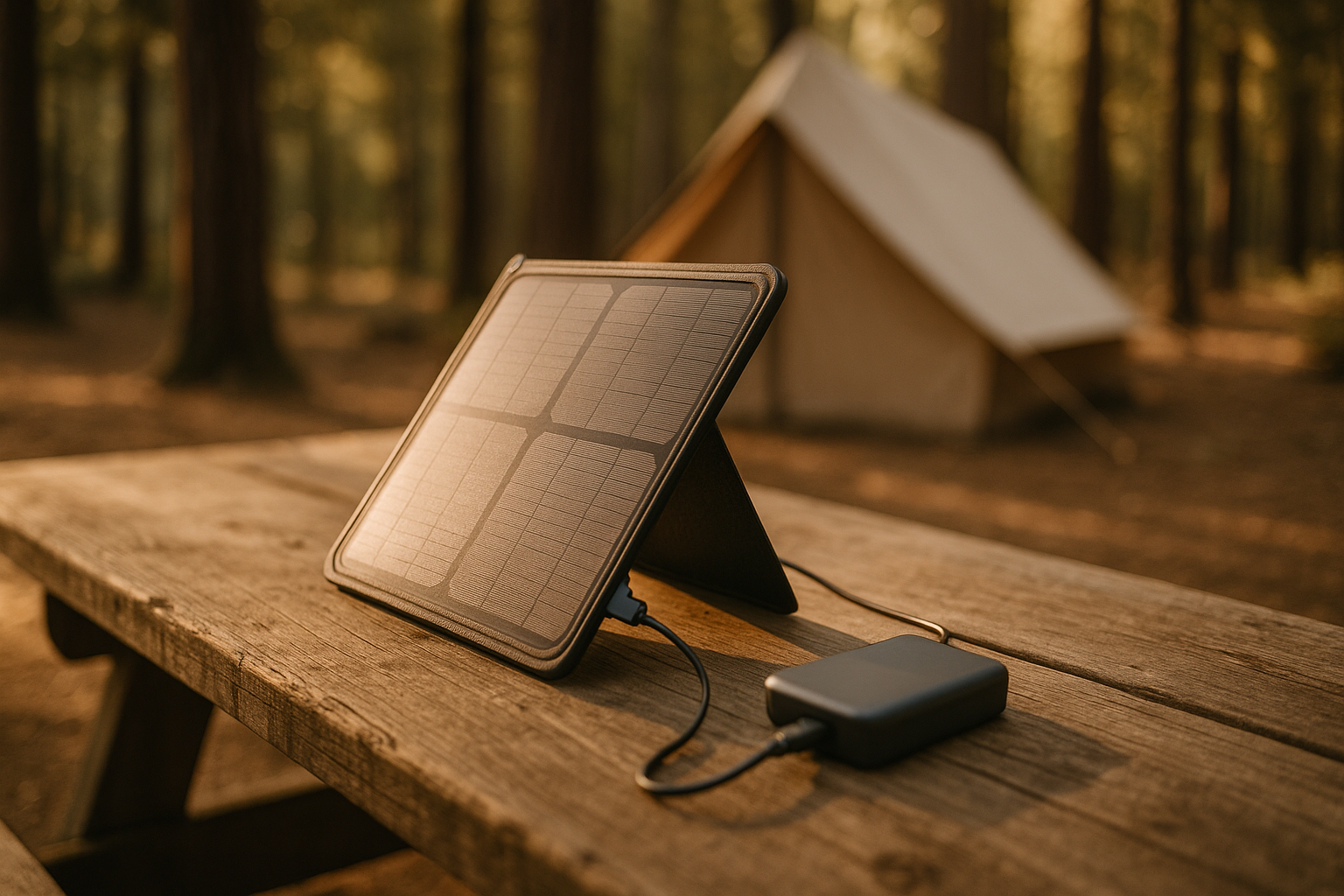
Photo by Jackery Power Station on Unsplash
Best Portable Solar Panels for Camping: Tested Picks for 2026
If you’re trying to keep a phone, a fridge, or a whole power station alive in the woods, the panel matters more than most buyers realize. Wattage on the box rarely matches what you’ll actually pull in real sun, and a panel that’s 8 pounds heavier than the next one is something you’ll feel every trip. Below are the portable solar panels worth buying in 2026, organized by who they’re for.
How we evaluated these panels
We weighted four things: real-world output versus rated wattage, durability of the kickstands and zippers (the parts that fail first), connector compatibility with popular power stations, and packed size. Specs come from each manufacturer’s spec sheet; durability impressions come from hands-on use and YouTube teardown content.
A quick reality check before the picks:
- Rated wattage is a lab number. Most folding panels deliver roughly 60-75% of their rating in good sun, per Will Prowse’s 2025 solar panel output comparisons and similar side-by-side YouTube tests. A “100W” panel realistically means 60-75W on a clear summer afternoon, less if it’s hazy or angled wrong.
- Cable compatibility is non-trivial. Anderson, MC4, XT60, DC8mm, and proprietary barrel plugs all show up. Match the panel to your power station before you buy.
- Heat hurts output. Panels lose efficiency as they get hot. A panel propped up with airflow underneath beats one lying flat on a hot tailgate.
Jackery SolarSaga 100W — best for tent campers
The 100W SolarSaga is the panel most people should start with. It’s a two-fold design with a magnetic closure, a built-in kickstand, and a DC8mm output that drops straight into Jackery’s Explorer-series power stations. Per Jackery’s spec sheet, it weighs around 9 pounds and folds to roughly the size of a thin laptop bag.
What we like:
- Genuinely easy to set up — kickstand pops out and you’re done.
- USB-A and USB-C ports on the panel itself, useful if you’re charging a phone without a power station in the loop.
- Works with non-Jackery power stations using a DC8mm-to-XT60 or Anderson adapter.
What to know:
- Rated 100W, but expect real-world output in the 55-75W range based on the same field tests cited above.
- The fabric kickstand straps are the weak point per multiple long-term reviews; treat them gently.
If your kit revolves around a sub-1000Wh power station, this is the safe pick.
BLUETTI PV200 — best for fridges and serious power draws
If you’re running a 12V fridge, charging laptops, or trying to recharge a 1000Wh+ power station in a single day, 100W isn’t enough. The PV200 is a 200W foldable that, per BLUETTI’s spec sheet, uses monocrystalline cells with an ETFE coating and outputs through MC4 connectors with an MC4-to-various-plug adapter pack.
What we like:
- High output in a single unit means one cable, one kickstand, less fuss than chaining two 100W panels.
- ETFE coating handles abuse better than the cheaper PET coatings on budget panels, per teardown reviews on YouTube.
- Folds into four panels, so packed size is manageable for SUV-sized rigs.
What to know:
- It’s heavy — in the 16-pound range. Not a backpacking panel.
- The kickstands are plastic and have been a complaint point in owner reviews; deploy carefully on uneven ground.
This is our pick for overlanders, truck campers, and anyone whose camping involves a fridge that has to stay cold for four days.
Renogy 100W Foldable Solar Suitcase — best deployable supplement
The Renogy suitcase is aimed at a slightly different buyer: someone who already has roof-mounted panels (van, RV, trailer) and wants something to deploy when they’re parked under trees. It comes as two 50W panels hinged together with a built-in 20A PWM charge controller in the standard kit, per Renogy’s product page. (Renogy also sells an MPPT-controller version for roughly 20-30% better real-world harvest, particularly in partial shade or cold weather; the standard PWM unit is fine for sunny, warm conditions but leaves output on the table when conditions aren’t ideal.)
Why it earns the slot:
- Suitcase form factor with proper aluminum frame and latches — feels like gear, not luggage.
- Compatible with standard 12V battery banks straight out of the box thanks to the included controller.
- Long alligator-clip leads mean you can park the panels in sun while the rig is in shade.
Trade-offs:
- Heavier than fabric folding panels (around 19 pounds for the 100W version).
- The included PWM controller is basic; serious users swap in an MPPT controller for noticeably faster charging.
BigBlue 28W SolarPowa — best ultralight option
BigBlue 28W SolarPowa Solar Charger
This is the one for backpackers and bikepackers. No power station required — it’s three folding panels with USB-A and USB-C outputs that charge phones, GPS units, headlamps, and small power banks directly. Per BigBlue’s spec sheet, it weighs roughly 1.3 pounds and folds to about the size of a tablet.
The honest take: 28W means you’re charging a phone in 2-3 hours of good sun, not running a fridge. But for a four-day backcountry trip where the only thing you actually need to keep alive is a phone for navigation and a headlamp, it’s the right tool. Owner reviews consistently flag the carabiner loops and the phone pocket as legitimately useful for strap-it-to-your-pack charging on the trail.
EcoFlow 220W Bifacial — best for groups and families
Bifacial panels collect light on both sides — direct sun on the front, reflected light on the back from sand, snow, light-colored tarps, or pale ground. EcoFlow’s spec sheet lists a rear-side rating of up to 155W, but that figure is a lab maximum measured against a near-perfect reflective surface; treat it as a ceiling, not a forecast.
What we like:
- One panel feeds a group’s worth of devices when paired with a 1000Wh+ power station.
- Bifacial gain is real on beaches and in alpine sites with light ground cover, per multiple YouTube field tests.
- IP68 rating on the cells means a surprise rainstorm isn’t a disaster.
What to know:
- Heavy — in the 20-pound range — and the case is bulky.
- Realistic bifacial gain in field conditions is 10-20% over the front rating, not the lab spec. Plan around roughly 240-265W total in good conditions, not 375W.
For families running lights, fans, a fridge, and device charging at a base camp, this is the panel that keeps the system net-positive across the day.
What size panel do you actually need?
Rough math, assuming real-world output is ~65% of rated wattage and you’ll get 4-5 usable solar hours per day in summer at roughly 35-40°N latitude with clear skies. Drop those numbers by 30-50% in winter or above 45°N, and adjust further down for persistent overcast:
- Phones, headlamps, small electronics only: 20-30W is plenty.
- Single power station (300-500Wh) for a weekend: 100W panel.
- Power station running a 12V fridge: 200W minimum, 400W if you want margin in cloudy weather or shoulder seasons.
- Family base camp with multiple devices, lights, fans: 400W+, often two panels chained.
Undersizing is the most common mistake we see in owner reviews — people buy a 100W panel for a 1000Wh station and wonder why they’re not getting a full recharge in a day. You won’t, especially in shoulder seasons or at higher latitudes.
Connectors, controllers, and other gotchas
A few things that trip up first-time buyers:
- Match the connector or buy adapters. Most modern panels use MC4 on the panel side and ship with an adapter to whatever ecosystem the brand sells. If you’re mixing brands, budget for an MC4-to-XT60 or MC4-to-Anderson adapter.
- Power stations have an input ceiling. A 1000Wh station that accepts max 200W solar input won’t go faster with a 400W panel — you’ll cap out and waste capacity. Check the spec sheet.
- Angle matters more than people think. A panel angled roughly perpendicular to the sun produces dramatically more than one lying flat. The built-in kickstands on these picks are there for a reason.
- Shadows are brutal. Even a small shadow across one cell can tank output of the whole panel. Place panels where the shade pattern won’t move across them.
Top picks recap
- Tent campers, weekend trips: Jackery SolarSaga 100W
- Fridge runners and overlanders: BLUETTI PV200 200W Solar Panel
- Van life supplement to roof panels: Renogy 100W 12V Monocrystalline Foldable Solar Suitcase
- Ultralight backpacking: BigBlue 28W SolarPowa Solar Charger
- Family base camp: EcoFlow 220W Bifacial Portable Solar Panel
FAQ
Do I need a charge controller with every panel?
Not if you’re plugging into a portable power station — every reputable power station has a built-in MPPT or PWM controller on its solar input, so the panel connects directly. You only need a separate charge controller when you’re wiring panels straight to a 12V battery bank (as in a DIY van or RV setup). The Renogy suitcase above is the exception in this roundup: it includes its own controller because it’s designed for direct battery-bank charging.
Can I use a 200W panel with a 100W-input power station?
Yes, but you’ll cap out at the station’s input limit. A 200W panel feeding a station with a 100W solar input ceiling will deliver 100W max — the controller clips the rest. It won’t damage anything, but you’re paying for wattage you can’t use. Check your power station’s max solar input (in watts) and max input voltage (in volts) before buying a bigger panel.
Will a portable panel work in cloudy weather?
Yes, but expect 10-25% of rated output under heavy overcast and 40-60% under light cloud cover. This is why we recommend oversizing if you’re depending on solar for a fridge or critical gear — a 200W panel under clouds outproduces a 100W panel in the same conditions.
Can I leave a solar panel out in the rain?
The panels in this roundup are rated IP65 to IP68 on the cells, meaning the photovoltaic surface handles rain fine. The junction boxes and connectors are usually less protected — keep the cable ends dry, and don’t submerge anything. Pack the panel up if a heavy storm is rolling in.
Do I need to chain two 100W panels, or buy one 200W?
One 200W panel is usually less hassle: one cable, one kickstand to deploy, one thing to pack. Chaining two 100W panels gives you flexibility (deploy one in a sunny spot, leave the other packed) and