Lightweight Solar Generator for Van Life: Compact Picks

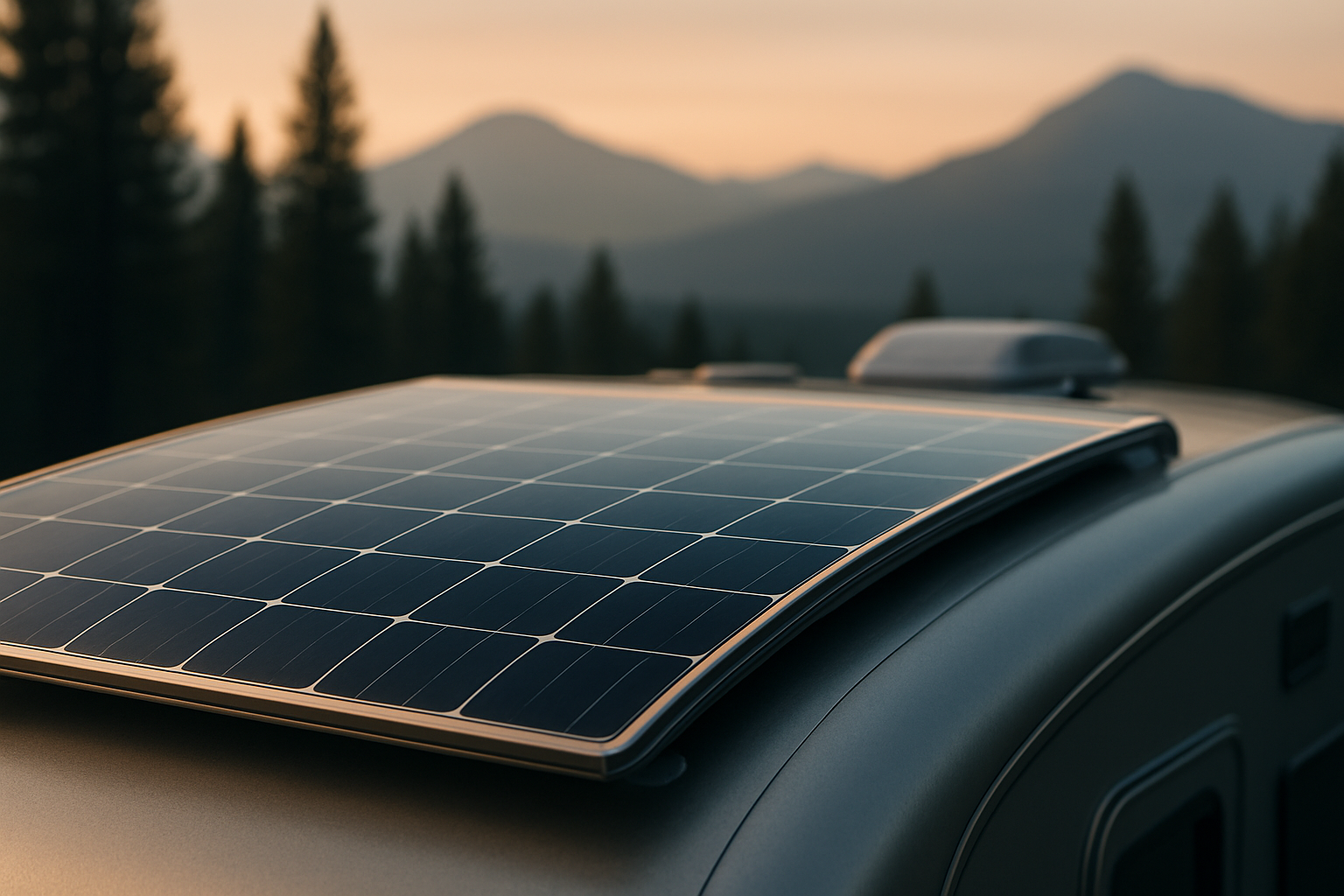
Photo by Jackery Power Station on Unsplash
Lightweight Solar Generator for Van Life: Compact Picks That Don’t Wreck Your Payload
Van life punishes every extra pound. A solar generator that weighs as much as a spare tire is a non-starter when you’re already over GVWR with water, gear, and a partner. The sweet spot for most converted Sprinters, Transits, and Promasters sits around 1,000–1,500Wh of LiFePO4 capacity in a package under 30 lb — enough to run a 12V fridge overnight, top off laptops, and recharge from a 200W roof panel without parking on a south-facing slope for six hours.
What “lightweight” actually means in a van
Manufacturers throw the word around loosely. For van life, I draw the line at three weight tiers based on what one person can lift into an upper cabinet without throwing out their back:
- Ultralight (under 10 lb): 250–400Wh range. Phones, laptops, fans, LED lights, CPAP for a night or two.
- Mid-weight (10–25 lb): 500–1,200Wh. The realistic sweet spot — fridge plus electronics for 1–2 cloudy days.
- Heavy-but-portable (25–35 lb): 1,500–2,000Wh. Borderline. You probably want it bolted in, not lifted daily.
Anything over 35 lb stops being a “portable” solar generator and starts being a fixed install with handles. Per manufacturer datasheets (EcoFlow, Bluetti, Anker) and independent cycle-life testing, LiFePO4 chemistry now dominates this space because cells are rated for 3,000+ cycles to 80% capacity, versus roughly 500 cycles for the older NMC packs still used in some Jackery units — meaning a daily-cycle vanlifer gets 8+ years instead of 18 months.
If you’re still deciding between solar and a gas inverter generator, the noise, fuel, and ventilation trade-offs matter more than the upfront price; I’ve broken those down in a separate piece on Portable Power Station vs Gas Generator: Which Should You Buy?.
Sizing: how much capacity do you actually need?
Most van builds I’ve seen overshoot. Run the math before you buy.
A typical 12V compressor fridge (Dometic CFX, Iceco, Alpicool) draws roughly 35–45Wh per hour averaged across a cool day, though this varies significantly by model, ambient temperature, how often you open the lid, and target setpoint — expect 25Wh/hr in 60°F shade and 60Wh/hr+ in a 90°F parked van. Across 24 hours, plan on 800–1,200Wh just for the fridge. Add:
- Laptop: 50–60Wh per full charge
- Phone: 15–20Wh
- LED lights (4 hours): 20–30Wh
- Roof fan on medium (8 hours overnight): 80–120Wh
- Starlink Mini (4 hours of work): 100–140Wh
Realistic daily draw for a working vanlifer lands around 1,100–1,400Wh. A 1kWh generator paired with a 200W solar panel covers it in any decent weather. Going bigger only helps if you’re consistently parked under trees or running an induction cooktop.
Top picks for lightweight van-life solar generators
EcoFlow Delta 2
The Delta 2 is the unit I recommend most often when someone asks for “the one that just works.” 1,024Wh of LiFePO4, 1,800W AC output (with X-Boost claimed up to 2,200W per the manufacturer spec sheet), and it weighs in around 27 lb — heavy for a daypack, light for what it does. Solar input maxes at 500W, which means a 400W portable array fully refills it in roughly 2 hours of strong sun.
The killer feature for van life: the modular battery port. If your build grows, you can bolt on an extension battery without replacing the main unit. Per long-running threads on r/EcoFlowCommunity, the firmware has matured a lot since launch — early units had a phantom-drain bug that’s now patched.
Drawbacks: the fan kicks on under heavy load and is audible at night. Not a dealbreaker, but if you’re sleeping next to it, leave a foot of clearance.
Jackery Explorer 500
Older chemistry (NMC, not LiFePO4), but at under 15 lb it remains the easiest “throw it in the van for the weekend” option. 518Wh, 500W pure sine inverter, simple two-button interface. Build quality has been consistent across years of owner reviews.
Buy it if: you’re a weekender, you don’t run a fridge full-time, and you want something your non-technical partner can operate without a manual. Skip it if: you plan to cycle daily for years — NMC cells are typically rated for ~500 cycles to 80% capacity per the cell manufacturer datasheets Jackery has historically used, so a unit cycled daily will show noticeable capacity loss inside 2 years. That matches what’s reported in long-running threads on r/Jackery and the Explorer 500 reviews on Amazon dating back to 2020, though I haven’t seen a controlled long-term test.
Bluetti AC180
1,152Wh LiFePO4, 1,800W inverter, around 35 lb — it’s at the upper edge of “lightweight” but earns its place because of the inverter headroom. Most 1kWh-class units cap at 1,000–1,200W AC, which means no induction cooktop, no hair dryer, no electric kettle. The AC180 handles all three for short bursts.
Turbocharge mode pulls 1,440W from a wall outlet and refills it in about an hour, per the manufacturer spec sheet. Useful when you’ve got 45 minutes at a coffee shop and a dead battery.
Anker SOLIX C1000
Direct competitor to the Delta 2 — 1,056Wh LiFePO4, 1,800W output, around 28 lb. What sets it apart is the UPS-grade switchover (claimed under 20ms per Anker’s spec sheet), which matters if you’re running a CPAP or a desktop workstation off it. Solar input handles up to 600W, the highest in this weight class.
Per teardown reviews on YouTube, the internal cell quality looks solid and the BMS is conservative — meaning the unit prioritizes pack longevity over peak performance numbers. That’s the right choice for a daily-cycle van setup.
Jackery Explorer 300 Plus
For minivans, Promaster City builds, and people who genuinely don’t need a fridge: 288Wh, under 9 lb, fits in a glove box. LiFePO4 (unlike the older 500), so cycle life is no longer a concern. Pair it with a 100W folding panel and you’ve got infinite power for laptops, lights, and a roof fan.
This is also the unit I recommend for emergency kits — it doubles as a power-outage bag for home use.
Where to actually put it in the van
A 27–35 lb unit becomes a projectile in a hard stop or a sharp turn if it isn’t secured. A few practical rules:
- Mount low and centered. Under the bed platform or inside a base cabinet keeps the center of gravity down and reduces sway. Avoid upper cabinets — that’s the worst place to lift it daily and the worst place for it to be in a rollover.
- Strap it down. Two ratchet straps through D-rings bolted into the floor frame (not the plywood) will hold a 30 lb unit through anything short of a crash. Velcro alone won’t.
- Leave 4–6 inches of clearance on the vented sides for fan exhaust. The Delta 2 and AC180 both pull air through the side faces; boxing them in causes thermal throttling.
- Keep it accessible to AC ports and the solar input without unstrapping. A small access panel or a cabinet with a louvered door beats pulling the unit out every time you need to plug in.
- Weight balance: if your water tank is on the driver side, put the generator on the passenger side. A 30 lb unit plus 30 lb of batteries adds up fast on one rail.
Pairing with solar panels
A solar generator without panels is just a battery you have to drive somewhere to charge. For van life, you’ve got two real options:
- Roof-mounted rigid or semi-flexible panels (200–400W) wired to the generator via an MC4-to-XT60/Anderson adapter. Hands-off, charges while you drive or park.
- Folding portable panels (100–200W) that you set on the dirt next to the van. More flexible for parking in shade, but a theft target and a daily setup chore.
Most full-time vans I’ve seen run a hybrid: 200W on the roof for passive trickle-charging, plus a 100W folding panel that comes out when boondocking for multiple days.
What to skip
A few things I’d avoid in this category:
- Generators with NMC chemistry sold as “long-term” solutions. Per the cell datasheets used by major brands, NMC is rated around 500 cycles to 80% capacity versus 3,000+ for LiFePO4 — roughly a 6x difference in usable life under daily cycling. Fine for weekenders, wrong for daily use.
- Anything over 35 lb marketed as portable. It isn’t. Either commit to a fixed install or stay under that threshold.
- Generators without a 12V regulated output. A surprising number of 1kWh+ units only deliver 12V through a cigarette-lighter port that’s unregulated and drops to 11V under load — bad news for fridges, which will shut off on low-voltage protection.
- Off-brand units with no clear BMS spec sheet. Per multiple owner reports across Amazon and Reddit, the failure mode tends to be sudden and warranty-resistant.
Real-world charging expectations
Manufacturers publish solar input maximums under perfect lab conditions: panel angle, cool ambient temp, no clouds, midday sun. Reality cuts that by 30–50%.
Concrete numbers depend heavily on season, latitude, and panel orientation. As a baseline, a 200W flat-mounted rooftop panel at ~35°N latitude (think Albuquerque, Nashville, Flagstaff) on a clear June day will harvest roughly 800–1,000Wh across the day. The same panel and location in December drops to 350–500Wh because of shorter days and a lower sun angle hitting a flat panel. Tilting the panel to roughly your latitude in winter recovers most of that loss but isn’t practical on a moving van. At 45°N (Portland, Minneapolis) in winter, expect 200–350Wh