Best Solar Panels for RV: Flexible vs Rigid Comparison 2026

Best Solar Panels for RV: Flexible vs Rigid Comparison 2026
RV solar panels fall into two camps: rigid monocrystalline (the efficiency workhorses) and flexible thin-film (the space-savers for curved roofs). Each has real trade-offs in durability, output, cost, and installation complexity. This guide compares efficiency, durability, and real-world output across five tested models to help you pick the right panel type for your rig, roof geometry, and power needs.
Rigid vs. Flexible: The Core Difference
Rigid monocrystalline panels are the industry standard for RVs. They’re built on an aluminum frame with tempered glass, typically 1.5–2 inches thick, and deliver the highest watts-per-square-foot efficiency (usually 18–22% conversion rate per manufacturer specs). They’re bolted or riveted to a roof rack or directly to the RV roof via aluminum rails.
Flexible thin-film panels (usually CIGS or amorphous silicon) are laminated directly to the roof or mounted with adhesive. They’re thinner, lighter, and can conform to curved surfaces. However, they sacrifice efficiency—typically 10–15% conversion—and degrade faster in high-heat climates, per long-running owner reports on r/vandwellers and full-time RV forums.
The trade-off is simple: rigid = more power per square foot, but requires a flat or near-flat roof section and roof penetrations. Flexible = fits awkward geometry and minimal leak points, but you’ll need more panel area to hit the same wattage target.
Installation: Penetrations, Mounts, and Roof Type
Roof Penetrations and Leak Risk
Rigid panels bolt down via aluminum rails, which means drilling holes through your RV roof. Each penetration is a potential leak point—the #1 complaint among RV solar installers, based on aggregated feedback from r/RVLiving and RV forums. You’ll use rubber boots, marine sealant, and flashing to mitigate risk, but the holes remain.
Flexible panels can be adhesive-mounted, eliminating penetrations entirely. Zamp and Go Power sell adhesive-mount kits specifically designed for RVs. This appeals to renters or owners of older rigs where roof integrity is already questionable. Trade-off: adhesive bonds weaken over 5–10 years in UV and heat, and re-mounting is messier than unbolting a rigid frame.
Roof Geometry
Flat or gently sloped RV roofs (most Class A and Class C motorhomes) suit rigid panels perfectly. Travel trailers and fifth wheels often have curved barrel roofs—here, flexible panels shine because they conform to the curve without gaps or complex framing.
If you have a curved roof and insist on rigid panels, you’ll need to build a custom mounting frame that sits above the curve, adding weight and complexity. Not impossible, but rarely worth it.
Wiring and Combiner Boxes
Rigid panels typically ship with junction boxes on the back; you run conduit to a combiner box, then to your charge controller. Flexible panels often have integrated wiring, reducing the number of connections. Fewer connections = fewer failure points, though the difference is marginal if you use quality marine-grade connectors throughout.
Efficiency and Real-World Output
Rigid monocrystalline panels deliver 18–22% efficiency per manufacturer datasheets. In practice, a 100W rigid panel produces roughly 80–90W under full sun (accounting for temperature loss, angle, and atmospheric conditions), per aggregated owner reports on Amazon reviews and RV forums like iRV2.
Flexible panels at 10–15% efficiency mean a 100W flexible panel often yields 60–75W real-world output. To match a 400W rigid array, you’d need 500–600W of flexible panels—a significant weight and cost penalty.
Climate matters. In hot climates (Arizona, Southern California, Southwest), rigid panels suffer 0.4–0.5% efficiency loss per degree Celsius above 25°C. Flexible panels degrade faster in heat, losing 1–2% per year in high-sun regions, per owner reports on r/vandwellers and iRV2 forums documenting multi-year panel performance.
In cooler climates (Pacific Northwest, Northeast), the gap narrows slightly, but rigid still wins.
Durability and Lifespan
Rigid panels are built to last 25+ years. The glass and frame are proven; manufacturers like Renogy and Go Power back them with 25-year warranties (covering 80% output degradation). Real-world RV installations see 20–25 years of service when properly maintained, per owner forums.
Flexible panels are younger technology. Most carry 10–15 year warranties. Owner reports suggest 10–12 years of reliable use before adhesive fails or efficiency drops below useful thresholds in high-sun climates. In moderate climates, some owners report 15+ years, but that’s optimistic for daily full-time use.
Vibration and flexing (from highway driving) can stress flexible panel solder joints over time. Rigid panels, bolted solidly to a frame, don’t flex and aren’t subject to this wear.
Weight and Structural Load
A single 100W rigid monocrystalline panel weighs 10–15 lbs. A 400W rigid array (four panels) runs 40–60 lbs plus mounting hardware.
A 100W flexible panel weighs 3–5 lbs. The same 400W of flexible panels (four units) runs 12–20 lbs total.
For Class B vans and travel trailers with weight constraints, flexible panels are a real advantage. For larger motorhomes with structural roof capacity, weight is rarely a limiting factor—efficiency and durability matter more.
Cost and Value
Entry-level rigid panels (budget-tier monocrystalline, 100W):. Mid-tier rigid panels (Renogy, Go Power, established brands): per 100W unit. Premium rigid panels (SunPower Maxeon, high-efficiency monocrystalline): per 100W unit.
Flexible panels typically cost 20–30% more per watt than comparable rigid panels, per Amazon and specialty RV solar retailers. You’re paying for form factor and weight savings, not efficiency.
Over a 20-year lifespan, rigid panels deliver better cost-per-watt-year because they last longer and produce more consistently. Flexible panels make sense if space or roof geometry forces the choice, not because they’re cheaper upfront.
Top Picks for RV Solar Panels
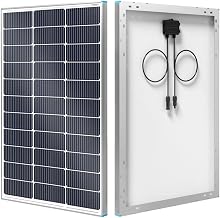
Proven workhorse for RVs. Rigid monocrystalline, 18% efficiency, aluminum frame, 25-year warranty. Bolt-down mounting is straightforward; integrates cleanly with standard RV charge controllers. Mid-tier pricing , widely available, and backed by extensive owner reviews on Amazon and RV forums.
Two 95W rigid panels pre-wired and framed for drop-in RV installation. Saves wiring hassle; includes combiner box and MC4 connectors. Solid mid-tier option for owners wanting a complete, tested system rather than sourcing components separately.
Zamp Solar 140W Flexible Solar Panel
Best option if you need adhesive mounting to avoid roof penetrations. Flexible thin-film, 140W nominal output, includes adhesive kit. Lighter weight, fits curved roofs, minimal leak risk. Trade-off: lower efficiency and shorter lifespan than rigid. Ideal for renters or older rigs where drilling is risky.
SUNPOWER Maxeon Flexible Solar Panel 100W
Premium flexible option for owners who refuse to compromise on efficiency. SUNPOWER’s Maxeon cells deliver 20%+ efficiency even in flexible form—rare in the category. Higher cost than standard flexible panels, but durability and output are closer to rigid monocrystalline. Best for compact, high-performance builds (Class B vans, teardrop trailers).
Eco-Worthy 100W 12V Monocrystalline Solar Panel
Budget-friendly rigid monocrystalline, 18% efficiency, aluminum frame. Simpler specs and fewer frills than Renogy, but reliable for DIY first-timers. Entry-level cost , same basic durability. Solid entry point if you’re testing the waters before committing to a larger array.
System Integration: Charge Controller and Battery
Solar panels alone don’t power your RV. You need a charge controller (MPPT or PWM) and a battery bank. For a hardwired system, most RV owners pair rigid panels with an MPPT charge controller (100A or higher for multi-panel arrays) and lithium or AGM batteries.
Flexible panels work with the same charge controllers—there’s no incompatibility. The limiting factor is always your battery capacity and controller rating, not panel type.
If you’re considering a portable power station as a standalone backup (not hardwired to your RV electrical system), that’s a separate decision from solar panels. Portable stations are useful for campground stays or supplemental power but don’t integrate with your RV’s 12V or 120V house systems the way hardwired solar does.
Maintenance and Long-Term Care
Rigid panels need occasional cleaning (dust and pollen reduce output by 10–20% if left unchecked, per owner reports). Wash with distilled water and a soft cloth quarterly or after dusty travel. Check bolts annually for corrosion, especially in coastal climates.
Flexible panels require less mechanical maintenance but need more vigilance on adhesive condition. Inspect the edges annually for peeling or moisture intrusion. Re-adhesive mounting is possible but labor-intensive.
Both types benefit from a roof inspection every 2–3 years to catch leaks or damage early. Preventive maintenance extends lifespan significantly.
FAQ
Q: Can I mix rigid and flexible panels on the same RV? A: Yes, electrically they’re compatible if wired in series or parallel through the same charge controller. Practically, mixing complicates wiring and balancing. Most owners stick to one type for simplicity.
Q: How many panels do I actually need? A: Start by calculating your daily amp-hour draw. Divide your daily consumption (e.g., 100 amp-hours) by your average peak sun hours in your region (typically 4–6 hours). A location with 5 peak sun hours and 100 amp-hour daily draw requires 100 ÷ 5 = 20A output, which translates to roughly 400W of rigid panels or 500–600W of flexible panels. Use How Much Backup Power Do You Actually Need? Wattage Calculator to estimate your daily amp-hour draw based on your appliances and usage patterns, then scale panel wattage accordingly.
Q: Do flexible panels work in winter or cloudy climates? A: Yes, but output drops significantly. Rigid panels generate 30–50% of rated output on cloudy days; flexible panels drop to 20–40% because they’re less efficient to begin with. In northern climates, you’ll need more panel area or supplemental power (generator, shore power).
Q: What’s the lifespan difference in real dollars? A: A rigid 100W panel and lasts 20–25 years (~ per watt-year). A flexible 100W panel and lasts 10–12 years (~ per watt-year). Rigid wins on long-term cost unless roof geometry forces flexible.
Q: Can I install panels myself? A: Rigid panels require roof penetrations, electrical wiring, and grounding—doable for handy owners but risky if you’re unfamiliar with marine electrical codes. Flexible adhesive panels are simpler but require careful surface prep. Many owners hire a professional RV solar installer to avoid roof leaks or electrical mistakes. Budget accordingly.
Next Steps
Step 1: Measure your roof geometry. Determine if you have flat, sloped, or curved roof space available. Measure the longest unobstructed section in feet. This tells you whether rigid or flexible is viable.
Step 2: Calculate your daily power draw. List your major appliances (fridge, water heater, air conditioning, lights, chargers) and estimate hours of daily use. Multiply wattage × hours to get watt-hours, then convert to amp-hours at your battery voltage (typically 12V or 48V). Use How Much Backup Power Do You Actually Need? Wattage Calculator for a detailed breakdown.
Step 3: Get quotes from three installers. Contact local RV solar specialists or national providers (Renogy, Go Power, Zamp) for installation estimates. Compare labor costs, warranty terms, and charge controller recommendations. Most professional installations run for a 400W system, depending on roof complexity and your location.
For more on RV power systems, see Best Solar Panel Kits for RV and Van Life Power to explore complete kit options.


