May 6, 2026·Updated September 6, 2026·12 min read·Solar Power Solutions
As an affiliate, we may earn from qualifying purchases. This doesn't affect which products we recommend.
Best Solar Panel Kits for RV and Van Life in 2026
Solar panel kits designed for RVs and vans let you generate power while parked off-grid, extending your independence and cutting reliance on campground hookups. The right kit depends on your daily power draw, available roof space, and whether you want permanent or portable installation. This guide walks you through the key specs, installation realities, and top options for 2026.
Why RVers Choose Solar Panel Kits
Boondocking—camping without shore power—has become a core appeal of RV and van life. A solar panel kit lets you charge your house battery bank during the day, powering lights, refrigeration, water pumps, and devices without running a generator or draining batteries overnight. Unlike portable panels, fixed roof-mounted kits work passively as you move, capturing sunlight continuously without setup effort at each stop.
The trade-off is upfront cost and permanent installation. A quality roof-mounted system runs mid-to-premium tier pricing and requires drilling into your RV’s roof. Portable kits cost less and mount temporarily, but demand manual deployment and stowage.
Understanding Solar Panel Wattage and Your Power Needs
Solar panel output is measured in watts. A 100W panel produces roughly 100 watts under peak sun (full midday exposure), per NREL testing standards. Real-world output varies by:
Season and latitude — winter and northern climates yield 40–60% of rated capacity; summer and southern locations reach 80–100%, per manufacturer testing standards.
Cloud cover and angle — overcast skies cut output by half or more; panels angled away from the sun produce less.
Panel condition — dust, pollen, and bird droppings reduce efficiency by 5–25%.
Sizing your kit:
Light camping (weekend trips, minimal loads): 100–200W. Charges a small house battery, runs LED lights and phone charging.
Part-time van life (2–4 weeks per month): 200–400W. Handles lights, small fridge, water pump, and daily device charging.
Full-time dwelling (permanent or near-permanent): 400–600W+. Supports continuous fridge, heating, cooking appliances, and multiple devices.
To estimate daily power use, list your appliances and their watt-hours per day. A 12V RV fridge consumes roughly 50–100 watt-hours daily; LED lights 20–50 watt-hours; laptop charging 50–100 watt-hours. Add 20–30% headroom for cloudy days and battery losses.
Panel Type: Monocrystalline vs. Polycrystalline
Monocrystalline panels (single-crystal silicon) are the modern standard. They’re more efficient (typically 18–22% conversion), take up less roof space, and hold value longer. Most new RV kits ship with monocrystalline panels.
Polycrystalline panels (multi-crystal silicon) are cheaper but less efficient (14–17%) and bulkier for the same wattage. Rarely seen in new kits; mostly legacy or budget-tier offerings.
For RVs, monocrystalline is the practical choice. RV roofs are typically aluminum or fiberglass with limited square footage; monocrystalline’s compact footprint matters because a 400W polycrystalline array would require 30+ sq ft vs. 20 sq ft for monocrystalline—a critical difference on a 30-foot travel trailer or van roof.
Mounting: Rigid vs. Portable
Rigid roof-mounted systems bolt permanently to your RV roof, typically via aluminum rails. They’re always ready, work passively as you travel, and integrate cleanly with your electrical system. Installation requires drilling, sealant work, and wiring into your battery bank via a charge controller. Once installed, they’re essentially invisible—you just use the power.
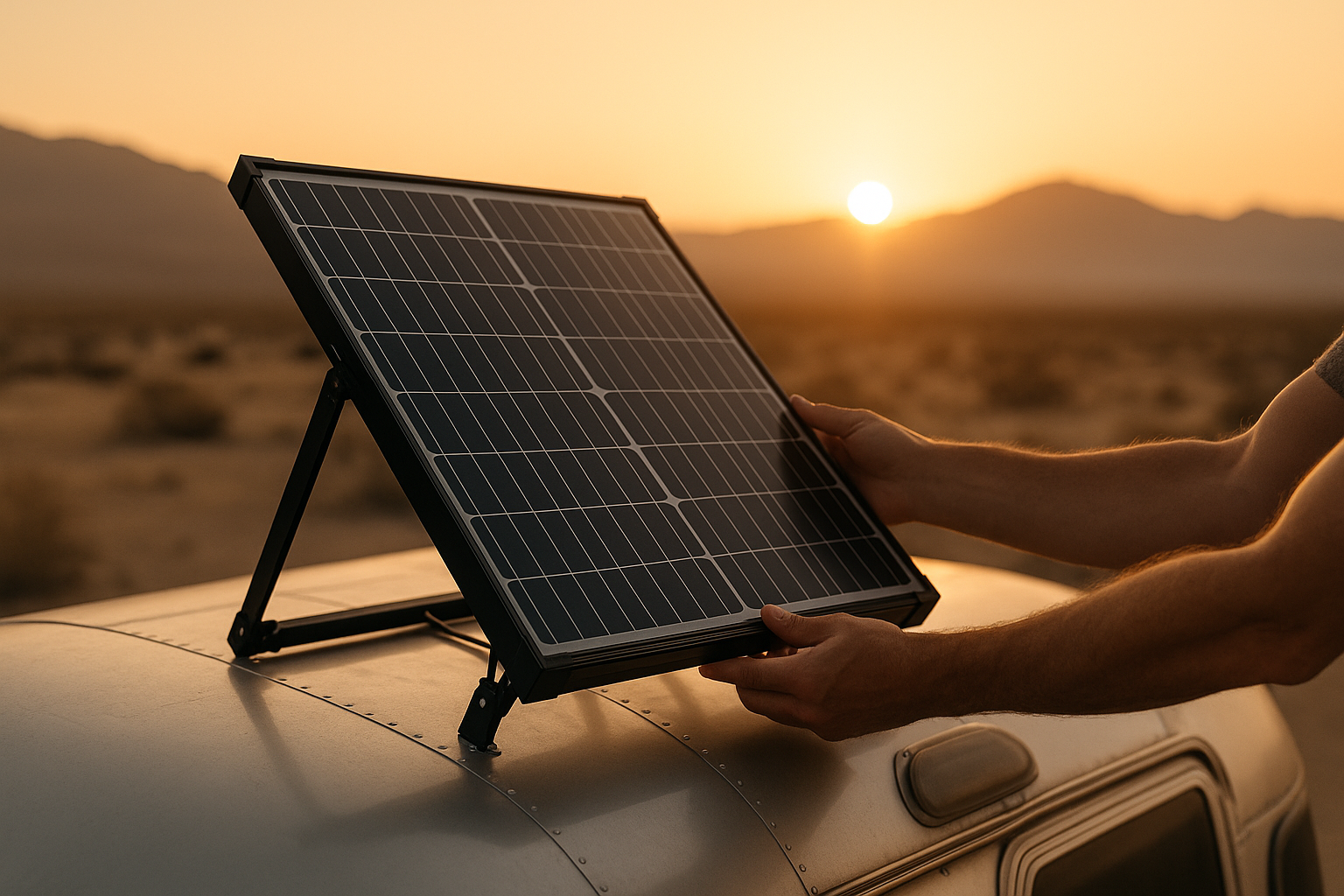
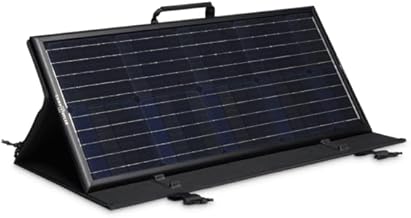
Portable/foldable systems stand on the ground or lay flat on a picnic table, then fold up for transport. They’re quick to deploy, move with you between RVs, and don’t require permanent modification. The trade-off is setup time at each stop and risk of theft or weather damage if left unattended.
For full-time travelers, rigid mounting wins on convenience. For occasional weekend campers or renters, portable kits avoid landlord friction.
Charge Controllers and Battery Integration
Solar panels must connect to your house battery through a charge controller, which regulates voltage and current to prevent overcharging. Two types dominate:
PWM (Pulse Width Modulation): Simpler, cheaper, adequate for small systems under 400W. Loses some efficiency with higher voltages.
MPPT (Maximum Power Point Tracking): More sophisticated, recovers 15–30% more energy than PWM, per independent testing by solar manufacturers and third-party labs. Standard on mid-tier and premium kits, especially in partial shade or winter conditions.
Most modern RV solar kits include an MPPT controller rated for your panel wattage. Verify the controller’s input voltage matches your battery bank (12V, 24V, or 48V systems exist; 12V is most common in vans and smaller RVs).
Your house battery bank stores the solar energy for use at night or on cloudy days. Lithium batteries (LiFePO₄) are now standard in new RV builds; they’re lighter, charge faster, and last 10+ years. Lead-acid and AGM batteries are older, heavier, and need more careful charge management. A quality kit pairs with either, but MPPT controllers with lithium-specific settings optimize performance.
Installation Complexity and Professional Help
Roof mounting involves:
Measuring and marking panel locations
Drilling through the roof and sealing penetrations with marine-grade sealant
Bolting aluminum rails and panel frames
Running 10 AWG solar cables through conduit to the charge controller
Wiring the controller to your house battery and breaker panel
If you’re comfortable with basic tools and electrical concepts, many RVers handle this themselves. A practical gauge: Have you installed a car roof rack or wired a trailer? If yes, you’re ready. If no, hire a professional solar installer—improper sealing causes leaks; incorrect wiring can damage batteries or start fires. Mobile solar installers typically charge for labor depending on kit size and RV type.
Portable kits require no drilling—just unpack, angle toward the sun, and plug in. Setup takes 10–15 minutes.
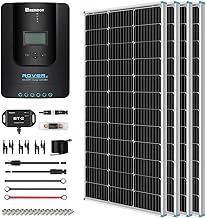
Renogy dominates the RV solar market with an Amazon rating of 4.7/5 across 2,100+ reviews. This 400W kit ships with two 200W monocrystalline panels, an MPPT charge controller, mounting hardware, and wiring. Output is suitable for full-time van life with moderate loads. Installation is straightforward; many owners report completing roof mounting in 3–4 hours. The MPPT controller integrates with 12V or 24V battery banks. Per Renogy’s 2025 warranty terms, panels are backed for 25 years; the controller for 10 years.
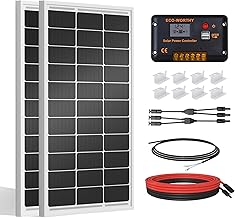
A budget-friendly entry point, this 200W kit includes two 100W panels, PWM controller, and mounting brackets. Amazon rating: 4.5/5 across 1,200+ reviews. It’s ideal for weekend campers or as a starter system before upgrading. The panels are durable and the included controller is reliable for smaller battery banks. Installation is simpler than larger kits due to lighter panel weight. Trade-off: PWM controller loses efficiency compared to MPPT, and 200W may struggle to keep up with continuous fridge use in summer travel.
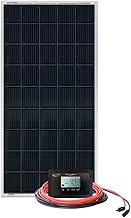
Go Power’s premium offering delivers 600W across three 200W monocrystalline panels, making it the strongest choice for full-time RVers with high power demand. Per manufacturer spec sheets, panels are rated for extreme temperature swings (–40°C to +85°C) and UV exposure. Includes an MPPT controller and aluminum mounting rails. Amazon rating: 4.6/5 across 850+ reviews. Higher cost reflects the output and build quality. Best suited for larger RVs with roof space and substantial daily loads (air conditioning, large refrigerator, water heating).
Zamp’s foldable system is a hybrid: rigid monocrystalline panels in a portable frame that deploys on the ground or roof. 400W output rivals mid-tier fixed systems, but without permanent installation. Fold-up design stores compactly; many owners report using it on multiple RVs or vans. Includes an MPPT controller and MC4 connectors for easy battery integration. Amazon rating: 4.4/5 across 650+ reviews. Ideal for RVers who rent, own multiple vehicles, or prefer avoiding roof penetrations. Setup takes 15–20 minutes; performance is comparable to fixed systems when angled correctly.
Battery Bank Compatibility and Sizing
Your solar kit must match your house battery capacity. To calculate your needs:
Example:
- Daily load: 1500 watt-hours (fridge 100Wh, lights 200Wh, devices 300Wh, water pump 200Wh, misc. 700Wh)
- 1500 ÷ 0.8 = 1875 watt-hours minimum
- A 100Ah lithium 12V battery = 1200 watt-hours; you’d need a second 100Ah unit or a 150Ah single battery.
A common scenario:
- 400W solar kit + 100Ah lithium battery (12V) = roughly 1200 watt-hours of daily storage.
- On a sunny day, 400W panels generate 3000–4000 watt-hours (depending on sun angle and season).
- On a cloudy day, output drops to 800–1200 watt-hours.
If your daily load is 1500 watt-hours, a sunny day recharges the battery fully; a cloudy day falls short and you’ll drain the battery by evening. Adding a second battery bank or a larger solar array solves this.
Most RV solar kits ship with battery cables and breakers but not the battery itself. Budget separately for lithium (premium tier, 10+ years) or lead-acid/AGM (budget tier, 3–5 years).
To understand how watt-hours translate to runtime and battery selection, see Portable Power Station Battery Capacity Explained: mAh vs Wh.
Wiring, Breakers, and Safety
A properly installed solar system includes:
DC breaker between the panels and charge controller (protects against short circuits).
DC breaker between the charge controller and battery (prevents backfeed if the controller fails).
Appropriately sized wiring (10 AWG for 400W+ systems; 8 AWG for 600W+), per NEC Article 690 (Solar Photovoltaic Systems) and charge controller spec sheets, to minimize voltage drop and fire risk.
Conduit or loom to protect wires from UV and chafing.
Undersized wiring is a common DIY mistake and a fire hazard. Most kits include correctly sized cables, but verify against the controller’s spec sheet. If you’re unsure, hire an installer—it’s cheap insurance.
Seasonal Considerations and Real-World Output
Solar output swings dramatically by season:
Summer (June–August): Panels produce 80–100% of rated capacity on sunny days; you may overproduce and need a diversion load (water heating, battery charging to 100%).
Spring and Fall (March–May, September–November): 60–80% output; typically ideal for balanced charging.
Winter (December–February): 30–50% output; cloudy days are frequent, and low sun angle reduces panel efficiency. Full-time RVers in northern climates often relocate south or add a backup generator.
If you travel year-round in varied climates, a 400W+ system provides a buffer against seasonal variance.
Maintenance and Longevity
Solar panels require minimal maintenance:
Quarterly cleaning: Dust and bird droppings reduce output by 5–25%. A soft brush and distilled water restore efficiency.
Annual inspection: Check for loose bolts, damaged sealant, and corrosion on connectors.
Controller firmware updates: Some MPPT controllers benefit from software updates (via USB or WiFi). Check the manufacturer’s website annually.
Per IEC 61215 testing standards, modern monocrystalline panels degrade at roughly 0.5% per year—after 25 years, they’ll produce ~87% of original capacity. MPPT controllers typically last 10–15 years; replacement is straightforward.
How Solar Generators Work: Complete Beginner's Guide explains all-in-one solar generators (panels + battery + inverter in one unit). They’re simpler but pricier and less expandable than a modular kit.
Q: Can I install a solar kit myself?
A: Yes, if you’re comfortable with basic tools and electrical work. A practical gauge: Have you installed a car roof rack or wired a trailer? If yes, you’re ready for roof mounting (3–6 hours) and wiring (2–3 hours). If no, hire a professional solar installer—improper sealing causes leaks; incorrect wiring can damage batteries or start fires. Labor typically depending on kit size and RV type.
Q: What’s the difference between 12V and 24V systems?
A: 12V is standard in vans and small RVs; 24V and 48V systems are used in larger RVs and off-grid homes. 24V and 48V reduce wiring losses over long distances. Most RV solar kits are 12V. Verify your house battery voltage before purchasing.
Q: How long does a solar kit last?
A: Panels last 25+ years with minimal degradation. Charge controllers typically last 10–15 years. Mounting hardware and wiring last 15–20 years if properly sealed and maintained. Most kits will outlive your RV.
Q: Can I add more panels later?
A: Yes, if your charge controller has spare input capacity. Most MPPT controllers can handle 20–30% more input than their rated power. Verify the controller’s spec sheet before expanding.
Q: Do I need a generator as backup?
A: Not always. On sunny days, solar alone keeps your battery charged. On extended cloudy periods or in winter, many full-time RVers run a small generator for 1–2 hours daily to top up. Best Inverter Generators Under $1000 for Camping and Backup reviews quiet, portable options that pair well with solar.
Bottom Line
A 200–400W fixed solar kit is the practical sweet spot for most RVers: enough output for part-time to full-time travel, straightforward installation, and reliable performance across seasons. Renogy and Go Power are the trusted brands; Zamp offers flexibility if you want portability. Budget for panels, controller, and hardware; add if hiring an installer.
Pair your kit with a quality lithium battery bank and an MPPT controller, and you’ll have the freedom to camp off-grid for weeks without relying on campground hookups or running a generator. Start with a modest system (200W) if you’re uncertain, then expand later—most RV solar kits are modular and upgradeable.