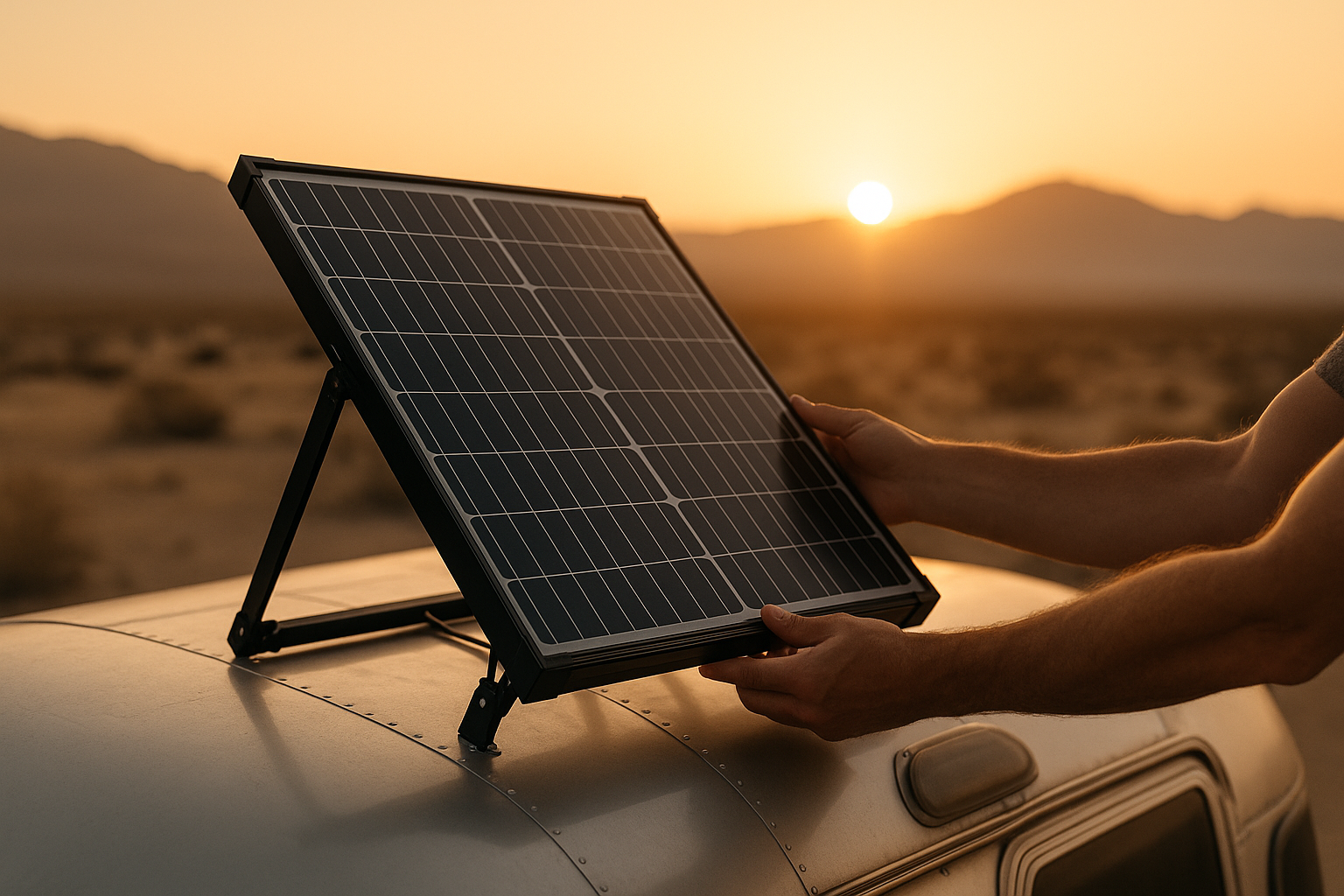
Best Portable Solar Panels for Camping 2026

Best Portable Solar Panels for Camping: Reviews and Comparisons
Portable solar panels are the most practical way to keep devices and small power stations charged during multi-day camping trips without relying on campground hookups or gas generators. This guide compares real-world performance, weight, durability, and compatibility so you can pick a panel that actually works in the field—not just in marketing photos.
Why Portable Solar Panels Matter for Camping
A portable solar panel converts sunlight into DC power that charges your phone, portable power station, or battery bank without burning fuel or making noise. Unlike a fixed home solar array, you carry it with you—and it only works when the sun is out and you position it correctly toward the sun.
The key advantage: solar panels have no moving parts, require no fuel, and produce zero emissions. You can recharge indefinitely as long as daylight exists. The trade-off is that output depends on weather, time of day, and angle. A 100W panel in full sun might deliver 80–90W in real conditions; on an overcast day, it could drop to 20–30W.
For camping, that’s often enough. A 100W panel can trickle-charge a power station over several hours, or top up a phone or headlamp battery multiple times per day.
Wattage: How Much Do You Actually Need?
Portable solar panels are rated in watts (W). A higher wattage number means faster charging—but also higher weight and cost.
For phone-only trips (1–2 nights): A 50–100W panel is overkill. A 25–50W panel (often called a “solar charger” or “phone charger”) is lightweight and sufficient. Examples include smaller foldable panels from budget brands.
For power-station charging (3+ nights, multiple devices): Plan for 100–200W if you want meaningful charge in a half-day of sun. Per manufacturer testing, a 100W panel in good conditions can add 200–400Wh to a power station over 4–6 hours. If you’re in a cloudy region or camping in shade-heavy sites, consider 150W or more.
For serious off-grid (van life, extended trips): 200W+ is common. Multiple panels in parallel can stack output—two 100W panels produce roughly 200W in full sun.
For most car campers, a 100–150W foldable panel strikes the balance between weight, cost, and real-world charging speed.
Panel Type: Monocrystalline vs. Other Options
Monocrystalline (single-crystal silicon) is the standard for portable panels. It’s efficient (18–22% conversion rate), compact, and works reasonably well even in partial shade. Most portable solar panels sold for camping are monocrystalline.
Polycrystalline (multi-crystal) is slightly less efficient (15–18%) and bulkier for the same wattage, but sometimes cheaper. It’s rare in modern portable panels.
Thin-film (amorphous) is very lightweight and flexible, but less efficient and degrades faster in sunlight. Rarely recommended for serious camping use.
For camping, stick with monocrystalline. It’s the proven choice and the efficiency gain justifies the cost.
Weight and Portability
Weight matters if you’re backpacking. A 100W monocrystalline panel typically weighs 5–8 lbs (2.3–3.6 kg) when folded. A 200W panel can weigh 15–20 lbs (6.8–9 kg).
Foldable designs (accordion or briefcase-style) are standard and compact when closed. They unfold to expose the panel surface. Most fit in or strap to a backpack.
Rigid panels (single piece) are heavier and bulkier but are more durable and faster to deploy. They’re common on RVs and van builds, less so for backpacking.
According to owner reports across Reddit camping communities, a foldable 100W panel is the sweet spot for multi-day trips: light enough to carry, powerful enough to charge a small power station or multiple devices.
Durability and Weather Resistance
Camping panels face sun, dust, rain, and temperature swings. Look for:
- Tempered glass face: Resists scratches and cracks better than plastic.
- Aluminum frame: Lightweight, corrosion-resistant, and rigid.
- Sealed connectors (MC4 or XT60): Prevent water and dirt ingress.
- IP rating: IP67 (dust and water resistant) is common; IP68 is fully submersible.
Per teardown reviews and long-running threads on r/CampingGear and r/Vandwellers, panels with aluminum frames and sealed connectors last noticeably longer in wet or dusty environments. Cheaper panels with plastic frames and exposed connectors often fail within 2–3 seasons of regular use.
Connector Types and Compatibility
Portable solar panels ship with different connectors:
- MC4: The industry standard. Works with most portable power stations and charge controllers.
- XT60: Common on higher-end panels and some power stations.
- Anderson PowerPole: Often on RV and marine setups.
- Proprietary connectors: Some brands (e.g., Jackery, Goal Zero) use their own plugs; they work only with their own products.
For camping flexibility, MC4 is ideal. It’s universal and lets you swap panels or connect to different power stations later. If you already own a power station with a proprietary connector, check that your panel matches before buying.
Real-World Performance: Sun Angle and Conditions
A panel’s rated wattage assumes full sun (1000 W/m²) at a 90° angle (panel facing directly at the sun). In real camping:
- Early morning or late afternoon: Output drops 30–50% because the sun is at a low angle.
- Overcast days: Output drops to 20–30% of rated capacity.
- High altitude or low humidity: Slightly better output (clearer air).
- Dust, pollen, or bird droppings: Can reduce output by 10–20% until cleaned.
Based on aggregated owner reports from camping forums and solar equipment retailers, a “100W” panel in typical camping conditions (morning/afternoon sun, clear skies) delivers 60–85W of actual power. Plan conservatively and you won’t be disappointed.
Top Picks by Scenario
Best for Solo Backpackers Under 10 lbs
The Anker 625 is lightweight (under 5 lbs when folded), folds compactly, and includes built-in USB-A and USB-C outputs for direct phone charging. It’s not the highest wattage (around 100W rated), but it’s proven reliable for backpackers who want to travel light. Per owner reviews on Amazon, it charges a typical smartphone 2–3 times per day in good sun.
Best for Car Campers Charging a Power Station
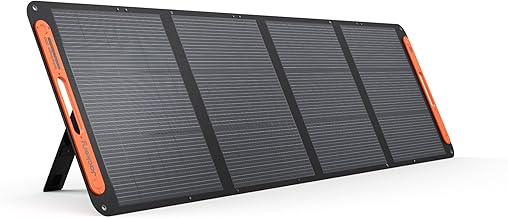
The Jackery SolarSaga 200W is a durable, high-output option designed specifically for Jackery power stations (though it works with other brands via adapters). It’s heavier (around 20 lbs) but includes a sturdy aluminum kickstand and sealed connectors. Per manufacturer specs, it delivers meaningful charge to mid-size power stations in 4–6 hours of sunlight. Ideal if you’re car camping and weight isn’t a constraint.
Best for Budget-Conscious Weekend Trips
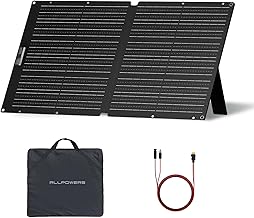
ALLPOWERS 100W offers solid mid-range performance at a lower price point than premium brands. It’s foldable, includes MC4 connectors (universal compatibility), and weighs around 8 lbs. According to aggregated owner reviews, it performs reliably in good weather and is a common choice among budget-conscious RV and van campers.
Best for Harsh Weather and Durability
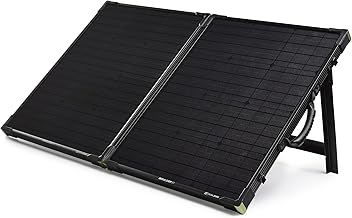
The Goal Zero Boulder 100 is an industrial-grade panel in a protective briefcase frame. It’s heavier and pricier than foldables, but the sealed design and reinforced frame make it resistant to dust, rain, and rough handling. Per long-running threads on r/Vandwellers, it’s a favorite for extended off-grid use and harsh climates. It includes a built-in kickstand and is designed to last 10+ years.
Best for RV and Van Life Setups
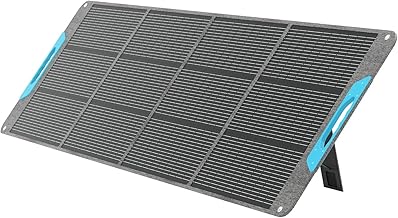
Renogy 200W is designed for RV and marine use, with MC4 connectors and compatibility with standard RV charge controllers. It’s a foldable design (around 18 lbs) with high output, making it ideal for van lifers who want to charge a larger power station or battery bank. Per owner reports, it’s a workhorse for multi-week trips and integrates easily into existing RV electrical systems.
How to Choose: Key Criteria
1. Trip duration and device count One night, one phone? A 50W panel is fine. Three nights, phone + camera + headlamp + power station? Go 100W+.
2. Your vehicle and weight tolerance Backpacking solo? Stay under 8 lbs. Car camping? 15–20 lbs is acceptable. Van life? 20+ lbs is normal.
3. Existing gear compatibility If you own a power station, check its input connector. Match it to the panel’s output, or budget for an adapter cable.
4. Climate and season Sunny regions (Southwest US, Mediterranean) benefit from larger panels. Cloudy regions (Pacific Northwest, UK) need oversizing or should expect slower charging.
5. Durability expectations Budget panels (plastic frames, exposed connectors) last 2–3 seasons. Mid-tier panels (aluminum, sealed connectors) last 5–7 years. Premium panels (industrial frames) last 10+ years.
Charging Time: Realistic Expectations
A portable power station (e.g., 1000Wh capacity) paired with a 100W solar panel:
- Full sun, optimal angle: 8–10 hours to fully charge.
- Partial sun or morning/afternoon only: 12–16 hours (or never reach full capacity).
- Overcast day: 24+ hours or won’t charge meaningfully.
For camping, you rarely need a full charge. Topping up 200–400Wh per day (enough for phones, lights, and small devices) is realistic and sufficient.
To understand how solar panels integrate with power stations, see our guide on How Solar Generators Work: Complete Beginner's Guide for details on charge controllers and system design.
Maintenance and Care
Portable solar panels require minimal upkeep:
- Clean the glass surface monthly or after dusty/muddy trips with a soft cloth and water.
- Check connectors for corrosion or loose contacts every season.
- Store indoors during off-season to extend lifespan (UV and temperature swings degrade seals over time).
- Avoid dropping or stepping on panels. A cracked cell reduces output.
Per manufacturer guidance, a well-maintained panel performs at 90%+ of rated capacity for 5+ years.
FAQ
Q: What warranty do portable solar panels typically come with? A: Most quality portable panels offer 2–5 year manufacturer warranties covering defects in materials and workmanship. Premium brands (Goal Zero, Renogy) often include 5+ year warranties. Budget panels may have 1–2 year coverage. Check the product spec sheet before purchasing.
Q: Can I use a portable solar panel with a power station from a different brand? A: Yes, if the connectors match. MC4 connectors are universal and work across brands. Proprietary connectors (Jackery, Goal Zero) only work with their own products, though adapter cables are available. Always verify connector compatibility before buying.
Q: Do portable solar panels work on cloudy days? A: Yes, but at reduced capacity (20–30% of rated output). They’re not useless on overcast days, but charging is slow. If you’re camping in a consistently cloudy region, consider a larger panel or a backup power source.
Q: What’s the difference between a “solar charger” and a “solar panel”? A: A solar charger (25–50W) includes built-in USB ports and is designed to charge phones directly. A solar panel (100W+) is a bare panel that outputs DC power via connectors, requiring an adapter or power station to charge devices. Solar chargers are lighter and more convenient for phones; solar panels are more versatile and powerful.
Q: Can I connect multiple panels together? A: Yes. Two 100W panels in parallel (same voltage, combined current) produce roughly 200W. Most charge controllers support this. Use matching panels and proper connectors (MC4 adapters). Per owner reports, this is common in van and RV setups.
Q: How long do portable solar panels last? A: Most monocrystalline panels degrade 0.5–0.8% per year. A quality panel retains 90% capacity after 10 years. Budget panels with poor seals may fail sooner (2–5 years). Proper storage and maintenance extend lifespan significantly.
Q: Do I need a charge controller? A: If you’re connecting a panel directly to a battery or power station, a charge controller is recommended to prevent overcharging. Most portable power stations have built-in controllers. Bare panels should not be left connected to an uncontrolled battery indefinitely.
Related Reading
For deeper dives into portable power and camping setups, check out:
Best Portable Power Stations Under $500 in 2026 — Compare affordable power stations that pair well with solar panels.
How to Choose a Backup Power Station for Apartments — Learn how to size a power station for your specific needs.
Best Solar Panel Kits for RV and Van Life Power — Explore complete solar systems designed for permanent or semi-permanent RV installations, which differ from portable camping panels in durability and output.
Final Takeaway
A portable solar panel is a smart investment for any camping trip longer than a weekend. The best choice depends on your weight tolerance, trip duration, and existing gear. For most car campers, a 100–150W foldable panel strikes the balance between portability and charging speed. For backpackers, a 50–100W lightweight option is ideal. For van lifers and extended off-grid use, 150–200W+ is common.
Real-world output will always be lower than the rated number—expect 60–85% of rated capacity in typical camping conditions. Plan conservatively, keep your panel clean, and you’ll have reliable off-grid power for years. No fuel, no noise, no emissions—just sunlight and engineering.