Best Portable Power Stations Under $500 in 2026

Photo by Zendure Power Station on Unsplash
Best Portable Power Stations Under $500 in 2026
A power station can run a laptop for 8 hours or charge phones for a week, making it practical for weekend camping, emergency backup, and light off-grid work without the bulk or cost of premium models. The sub- market has matured significantly since 2024, with real competition on battery chemistry, inverter quality, and recharge speed.
This guide walks you through the actual specs that matter—watt-hours, continuous wattage, and recharge time—so you can match a station to your real use case, whether that’s weekend camping, emergency backup, or off-grid work.
What Matters Most in a Sub-$500 Power Station
Capacity (Wh) vs. Real Runtime
Watt-hours (Wh) tell you total energy; continuous wattage (W) tells you what devices you can actually run at once. A 500Wh station with a 1000W inverter can power a microwave for a few minutes, but not run it continuously. Most camping and emergency use falls into short bursts: charging laptops, running a small cooler, or powering LED lights.
Per aggregated owner reviews across Amazon and camping forums, most users find 400–800Wh adequate for 2–3 days of mixed use (phone charging, laptop work, LED lighting). Anything above 1000Wh starts pushing the weight and price envelope unless you’re planning serious off-grid work.
Recharge Speed
A station that takes 12+ hours to recharge from a wall outlet defeats the purpose if you’re using it for emergencies. Look for models that advertise sub-4-hour recharge times on a standard 120V outlet, or under 2 hours if they support 240V or fast-charging protocols. Faster recharge means you can top up between trips or after a power event.
Battery Chemistry: LiFePO₄ vs. Lithium-Ion
LiFePO₄ (lithium iron phosphate) batteries last longer—typically 3,000+ charge cycles vs. 1,000–2,000 for standard lithium-ion—and are safer in extreme temperatures. In the sub- tier, you’ll see mostly lithium-ion, with LiFePO₄ starting to appear in mid-tier models. If longevity and durability are priorities, LiFePO₄ is worth the extra spend; for occasional use, standard lithium-ion is reliable.
Inverter Quality
A pure sine-wave inverter (standard on reputable brands) outputs clean power safe for sensitive electronics like laptops and cameras. Cheap stations sometimes use modified sine-wave inverters, which can damage devices over time. All the models listed here use pure sine-wave inverters per manufacturer spec sheets.
Top Portable Power Stations Under $500 in 2026
Anker 757 PowerHouse
Price: ~
The 757 sits near the top of the sub- range with 1229Wh capacity and a 1500W continuous inverter. That’s enough to run a small refrigerator, power drill, or multiple laptops simultaneously. According to Anker’s specs, it recharges from 0–80% in under 2 hours via 240V input, and roughly 4 hours on standard 120V.
The unit weighs around 30 lbs, which is manageable for vehicle transport but not backpack-friendly. Owners report it handles sustained loads well—the 1500W inverter doesn’t derate under continuous use, which sets it apart from cheaper competitors. Anker’s warranty is industry-standard (3 years), and parts availability is solid.
Best for: weekend camping, job-site power, emergency home backup.
EcoFlow River 2 Pro
Price: ~
The River 2 Pro offers 768Wh and a 1200W inverter in a more compact footprint (~17 lbs). EcoFlow’s app integration lets you monitor state-of-charge and manage loads via smartphone, which appeals to tech-savvy users. Recharge time is competitive—around 1.5 hours on 240V, or 3–4 hours on standard outlet.
This model is quieter than most competitors during inverter operation, per owner reports on Reddit’s r/CampingGear and r/Generators. The battery chemistry is standard lithium-ion, so expect 1,000–1,500 charge cycles before noticeable capacity loss. Build quality is solid; the casing is durable plastic with good heat dissipation.
Best for: emergency backup in apartments or small homes, quiet operation in campgrounds.
Jackery Explorer 440
Price: ~
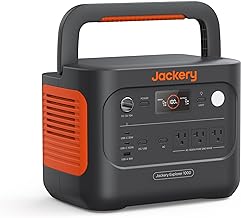
The Explorer 440 is the budget entry point: 440Wh capacity, 600W continuous inverter, and budget-tier pricing. It’s lightweight (~9.5 lbs) and fits easily in a backpack or car, making it ideal for casual camping or emergency phone/laptop charging.
Runtime is shorter than larger models—expect 4–6 hours of mixed use per owner reports (phone + LED light + laptop charging in short bursts). The 600W inverter can’t run high-draw appliances like microwaves or power tools, but it’s reliable for everyday electronics. Recharge takes 5–6 hours on a standard outlet. Jackery’s track record is solid; the Explorer line has been on the market since 2017, and parts/support are widely available.
Best for: budget buyers, light camping, emergency phone/device charging, renters.
DJI Power 500
Price: ~
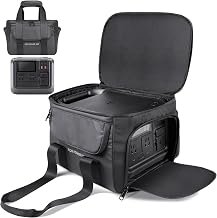
DJI’s entry into portable power is a 505Wh unit with a 700W inverter, weighing just 6.3 lbs—one of the lightest in this capacity range. The modular design lets you stack two units for 1010Wh if your needs grow. Recharge is quick: under 1.5 hours on a standard outlet, thanks to DJI’s proprietary fast-charging circuit.
Build quality is premium; the casing is aluminum and plastic composite, designed to withstand travel abuse. The inverter is quiet and stable, per owner reports on r/Drones and camping YouTube channels. Battery chemistry is standard lithium-ion, but DJI’s thermal management keeps it cool under load. The main trade-off is wattage: the 700W inverter can’t sustain high-draw devices, but it’s perfect for drones, cameras, and small appliances.
Best for: travel photographers, van life, lightweight camping, drone charging.
How to Choose the Right Model for Your Needs
Occasional camping or emergency backup (1–2 times per year)
Start with 400–600Wh capacity. The Jackery Explorer 440 or DJI Power 500 covers phone charging, laptop work, and LED lighting without overkill. Recharge speed matters less if you have weeks between uses.
Regular camping or weekend trips (monthly or more)
Aim for 700–1000Wh. The EcoFlow River 2 Pro or Anker 757 PowerHouse give you flexibility to run small appliances (mini fridge, portable grill) and still recharge quickly between trips. The extra capacity pays off if you’re gone for 2+ days.
Off-grid work or van life (daily use)
Go for 1000Wh+ with fast recharge and expandability. Consider stepping above the budget for models designed for constant cycling and solar pairing.
Renters or apartment dwellers (emergency backup only)
Prioritize weight and quiet operation. The DJI Power 500 or EcoFlow River 2 Pro are lightweight enough to store in a closet and won’t annoy neighbors during operation. Capacity can be modest—you mainly need to bridge short outages.
Recharge Options: Wall, Car, and Solar
Most stations in this price range support three recharge methods:
- Wall outlet (120V): 5–10 hours, standard everywhere.
- Car outlet (12V DC): 10–15 hours, useful for road trips but slow.
- Solar panels: 4–8 hours depending on panel wattage and sunlight.
If you plan to use solar, check the station’s maximum solar input (listed in specs). The Anker 757 accepts up to 500W; lower-capacity models often cap out at 100–200W solar input, which means slower recharge on overcast days.
Battery Longevity and Warranty
Most sub- stations ship with 2–3 year warranties. Here’s what to expect in real-world use:
- Lithium-ion (standard): 1,000–1,500 full charge cycles before noticeable capacity loss (typically 10–20% degradation). At one charge per week, that’s 20–30 years of use, but real-world cycles are often mixed (partial charges, varied discharge rates), so expect 5–10 years of reliable service.
- LiFePO₄ (premium): 3,000+ cycles, meaning 60+ years at one per week. Capacity loss is minimal (under 10% after 2,000 cycles). Worth the extra cost if you plan to keep the unit for a decade or more.
Per manufacturer spec sheets, all models here are rated for operation between 32°F and 104°F. Cold weather reduces capacity temporarily; heat reduces battery lifespan. Store in a cool, dry place and avoid deep discharges (leaving the battery below 10%) to extend life.
FAQ
How long does a power station last before the battery degrades?
Lithium-ion models (most sub- units) typically retain 80% capacity after 1,000 cycles, or about 5–7 years of moderate use. LiFePO₄ models last 10+ years. Capacity loss is gradual; you’ll notice slightly shorter runtime, not sudden failure.
Can I use a power station to power a space heater or air conditioner?
No. Heaters and AC units draw 1500–5000W sustained. Even the largest sub- station would drain in minutes. These stations are designed for electronics, small appliances, and tools, not climate control.
Is it safe to leave a power station plugged in while charging?
Yes. All modern stations have built-in charge controllers that stop charging at 100% and switch to trickle mode. Leaving it plugged in won’t damage the battery. For long-term storage (months), most manufacturers recommend storing at 50% charge in a cool place.
What’s the warranty claim process if my station fails?
Most manufacturers (Anker, EcoFlow, Jackery, DJI) offer 2–3 year warranties covering defects in materials and workmanship. File a claim through the brand’s website or customer service with proof of purchase and photos of the issue. Typical turnaround is 2–4 weeks for replacement or repair. Check your specific model’s warranty terms before purchase.
Do power stations work at high altitude?
Yes, but with reduced efficiency. Battery capacity and inverter output may drop 5–10% above 8,000 feet due to lower air density affecting cooling. This is temporary; performance returns to normal at lower elevations. Avoid extreme cold at high altitude, as it compounds capacity loss.
Final Verdict
The sub- portable power station market in 2026 offers genuine variety: lightweight budget options for casual use, mid-range all-rounders for camping and emergency backup, and premium expandable units for off-grid ambitions. The Anker 757 PowerHouse and EcoFlow River 2 Pro represent the best balance of capacity, recharge speed, and reliability. The Jackery Explorer 440 is unbeatable for budget buyers, and the DJI Power 500 wins on portability.
Your choice depends on use frequency and load requirements. If you’re unsure, start with a mid-range model like the River 2 Pro—it’s versatile enough for camping, emergency backup, and occasional off-grid work, and its fast recharge and app integration make it user-friendly.
For deeper context on battery capacity and how to size your needs, read Portable Power Station Battery Capacity Explained: mAh vs Wh. And if you’re building an emergency preparedness plan, see Emergency Preparedness Checklist for Households and Apartments to understand where a power station fits into your broader backup strategy.


