Emergency Backup Power for Medical Equipment at Home
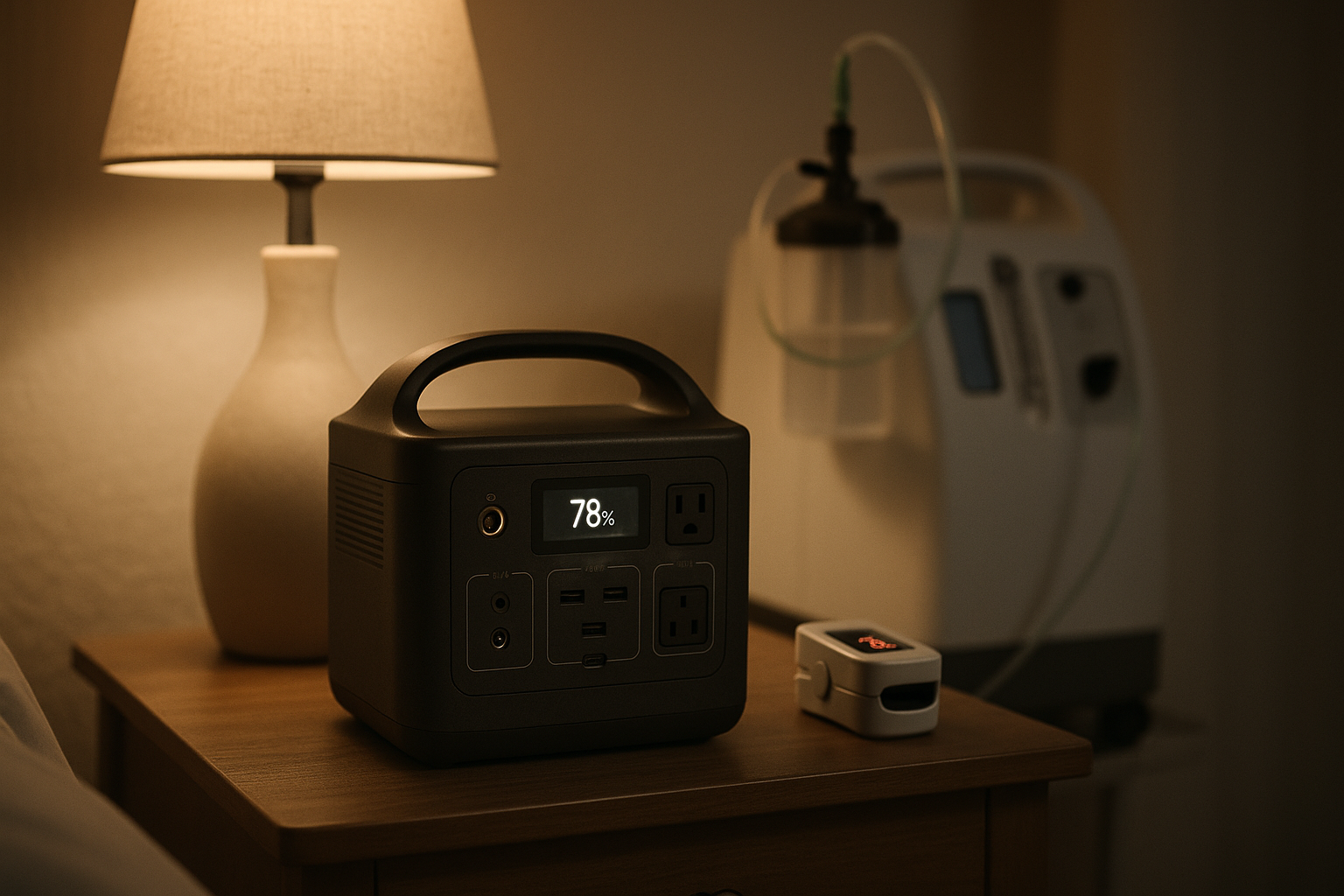
Emergency Backup Power for Medical Equipment at Home
Medical equipment doesn’t pause during a power outage—and neither should your backup plan. Whether you depend on a CPAP machine, oxygen concentrator, dialysis equipment, or an electric wheelchair, losing power isn’t an inconvenience; it’s a health crisis. This guide walks you through sizing, selecting, and deploying backup power systems that keep your medical devices running reliably when the grid goes down.
Why Medical Equipment Needs Dedicated Backup Power
Standard emergency generators and power banks aren’t always suitable for medical devices. Many medical machines—especially oxygen concentrators, ventilators, and dialysis pumps—require pure sine wave AC output, not the modified or square-wave approximations that cheap inverters produce. Dirty power can damage sensitive electronics, trigger false alarms, or shut down the device entirely.
Additionally, medical equipment often runs continuously or on unpredictable schedules. A CPAP user needs 8 hours of uninterrupted power every night; a dialysis patient may need 4–5 hours of pump operation during treatment. Unlike camping or emergency lighting (where you can ration power), medical backup must be always-on and oversized to handle unexpected outages.
Finally, medical equipment is often irreplaceable mid-crisis. You cannot “wait out” a power failure if you’re on a ventilator or oxygen concentrator. This means your backup system must be tested, reliable, and ready to switch over in seconds—not hours.
Understanding Power Requirements for Common Medical Devices
Before buying backup power, you need to know your equipment’s wattage draw and runtime requirement.
Continuous vs. Peak Power: Medical devices list two power figures. The continuous (running) wattage is what the device draws during normal operation; the peak (startup) wattage is the surge when the motor or compressor first kicks on. Your backup power system must handle both.
Common medical device power draws (per manufacturer spec sheets and user reports):
| Device | Continuous Wattage | Peak Startup Wattage |
|---|---|---|
| CPAP machine | 30–60W | 80–120W |
| BiPAP (bilevel positive airway pressure) | 40–80W | 100–150W |
| Oxygen concentrator (5L/min) | 300–500W | 600–800W |
| Electric hospital bed | 100–200W | 300–500W |
| Dialysis pump | 150–300W | 400–600W |
| Feeding pump | 20–50W | 60–100W |
| Ventilator (portable) | 200–400W | 600–1000W |
| Electric wheelchair (charging) | 500–1000W | 800–1200W |
| Refrigerated medications (small medical fridge) | 100–150W | 300–400W |
Sources: ResMed AirSense 10 manual, Inogen One G5 specifications, Fresenius 5008S dialysis machine manual.
Finding Your Exact Numbers: Check your device’s nameplate (usually on the back or bottom), the user manual’s power specifications, or contact the manufacturer. Do not estimate; undersizing your backup power is the #1 cause of mid-outage failure.
Backup Power Technology: Battery vs. Generator vs. Hybrid
Battery-Based Systems (Portable Power Stations)
Pros: - Silent operation (critical if you live in an apartment or noise-sensitive area) - Instant switchover (no startup delay) - Pure sine wave output (safe for medical equipment) - Scalable (stack multiple units or add battery modules) - Low maintenance (no fuel, no oil changes)
Cons: - Finite capacity (you’re limited to stored energy; runtime depends on battery size) - Recharge time (6–24 hours to fully charge, depending on capacity and charger) - Higher upfront cost per watt-hour
Best for: CPAP, BiPAP, feeding pumps, dialysis equipment, and any equipment where silent operation or instant switchover is critical. Also ideal for apartments or homes where a gas generator isn’t permitted.
Gas Generators
Pros: - High power output (can run multiple devices simultaneously) - Extended runtime (fuel tank can last 8–24+ hours depending on load and tank size) - Lower cost per watt for large capacities
Cons: - Noise (70–100 dB, depending on model—problematic in apartments or at night) - Startup delay (5–15 seconds, unacceptable for some medical devices) - Requires outdoor space and regular fuel storage - Not all generators produce pure sine wave output (cheap models can damage electronics) - Maintenance (regular load testing, oil changes, fuel stabilizer) - Exhaust fumes (carbon monoxide risk if run indoors)
Best for: Whole-home backup, multiple simultaneous devices, or situations where you have outdoor space and can tolerate noise. Not recommended as primary backup for medical equipment without a battery buffer (UPS) in front of it.
Hybrid Systems (Generator + Battery)
Some homes combine a gas generator with a battery-based UPS. The battery provides instant switchover and silent operation for critical medical devices; the generator kicks in after a few minutes to recharge the battery and power non-critical loads. This approach is expensive but offers both reliability and extended runtime.
Best for: Homes with multiple medical devices, high power demands, or situations where a single outage could last days.
Sizing Your Backup Power System
Step 1: Calculate Total Wattage
List every device that must run during an outage. Add their continuous wattage together (not peak—peak is only relevant for inverter sizing).
Example 1: CPAP with oxygen and fridge - CPAP: 50 watts - Oxygen concentrator: 400 watts - Medical fridge (medications): 120 watts - Total: 570 watts
Step 2: Choose Your Inverter Size
Your inverter must handle the peak startup wattage of all devices that might start simultaneously. A good rule of thumb: choose an inverter rated for 1.5–2× your total continuous wattage, and verify it can handle the peak surge of your largest device.
In Example 1, if the oxygen concentrator peaks at 700 watts and the fridge at 400 watts (unlikely to happen together, but design for worst-case), you’d want a 1500W inverter minimum. Most medical-grade portable power stations come with 2000–5000W inverters, which is safe.
Step 3: Calculate Battery Capacity (Watt-Hours)
Multiply your continuous wattage by your desired runtime in hours.
Example 1 (continued): - 570 watts × 8 hours = 4,560 watt-hours (Wh)
A 4560 Wh battery would keep your devices running for exactly 8 hours at full load. In practice, you want 20–30% extra capacity to account for inefficiencies and degradation, so target 5,500–6,000 Wh.
Example 2: Dialysis pump with feeding pump (4-hour treatment) - Dialysis pump: 250 watts - Feeding pump: 35 watts - Total: 285 watts - 285 watts × 4 hours = 1,140 Wh (target 1,400–1,500 Wh with safety margin) - Peak power: dialysis pump peaks at 500W, feeding pump at 80W = ~580W peak, so a 1000W inverter is sufficient.
This example shows the method scales: a dialysis patient needs far less capacity than a CPAP user because treatment is shorter and power draw is lower. A 2000 Wh power station would be overkill and waste money.
Important note: Watt-hours (Wh) are the metric that matters, not amp-hours (Ah). Wh = Ah × voltage, so a 100 Ah battery at 48V is 4800 Wh, while a 100 Ah battery at 12V is only 1200 Wh. Always compare by Wh.
Step 4: Plan for Recharge Time
How quickly can you recharge your backup system?
- AC wall outlet: 6–24 hours (slow, depends on charger wattage)
- Solar panels: 4–8 hours on a sunny day (weather-dependent)
- Generator: 2–4 hours (fast, but requires fuel and noise)
If you live in an area with frequent multi-day outages, plan for solar recharge capability or a secondary fuel source.
Choosing the Right Battery Technology
Lithium Iron Phosphate (LiFePO4)
Pros: - Longest lifespan (8,000–15,000+ charge cycles, 10–15 years of daily use) - Safe chemistry (lower fire risk than other lithium types) - Excellent temperature tolerance - Pure sine wave output (standard on modern units)
Cons: - Higher upfront cost - Heavier than lead-acid
Best for: Medical equipment backup. The longevity and reliability justify the cost.
Lead-Acid (AGM or Flooded)
Pros: - Cheap upfront - Familiar technology
Cons: - Short lifespan (3–5 years, 500–1000 cycles) - Heavy - Requires maintenance (flooded type) - Not suitable for medical equipment (modified sine wave output on budget models)
Not recommended for medical equipment backup.
Lithium Polymer (LiPo) or Lithium Cobalt
Avoid these for medical equipment. They’re found in cheap consumer power banks and have higher fire risk and shorter cycle life than LiFePO4.
Setting Up Your Medical Equipment Backup System
1. Install a Battery-Based UPS Between Power Source and Medical Device
A UPS (uninterruptible power supply) monitors your AC wall outlet. When power drops, it instantly switches to battery output—typically in under 4ms (per APC datasheet for the Back-UPS Pro line), too fast for most medical devices to notice.
Setup:
Wall AC → UPS → Medical Device
 ↓
 (battery backup)
This is the gold standard for CPAP, BiPAP, ventilators, and dialysis equipment. The UPS is always charging from wall power; during an outage, the battery takes over seamlessly.
2. Size Your UPS for Your Devices
A medical-grade UPS should be rated for at least 1.5× your device’s peak power. For a CPAP (100W peak), a 1500VA (1.5 kVA) UPS is minimum; 2000VA is safer.
Example UPS setup for CPAP: APC Back-UPS Pro 1500VA provides 1500VA (900W) continuous power, pure sine wave output, and automatic switchover in under 4ms (per APC datasheet). Suitable for CPAP + small secondary load.
3. Integrate a Larger Battery for Extended Runtime
If your outages are likely to last longer than a UPS battery (typically 10–30 minutes), add a larger portable power station or battery bank.
Setup:
Wall AC → UPS → Medical Device
 ↓
 (battery, 10–30 min)
 ↓
 Portable Power Station
 (battery, 4–12 hours)
 ↓
 Charged by AC wall or solar
Concrete pairing example: APC Back-UPS Pro 1500VA + EcoFlow Delta Pro via the power station’s AC outlet. The APC UPS handles instant switchover for your CPAP; the EcoFlow Delta Pro (plugged into the APC’s AC outlet) charges during normal operation and provides extended runtime if the outage lasts beyond the APC’s 10–15 minute battery window.
During an outage: 1. The UPS instantly switches to battery (seamless). 2. While the UPS battery is running, the portable power station begins charging the UPS (via a charger connected to the power station’s AC outlet). 3. If the outage is short (under 30 minutes), the UPS battery alone keeps your device running. 4. If the outage is long, the portable power station keeps both devices alive for hours.
This hybrid approach is expensive but highly reliable.
4. Test Your Setup Before You Need It
Monthly test: Unplug your medical device from the wall and verify the UPS switches over smoothly. Check that your device continues operating without interruption or alarm.
Quarterly test: Simulate a full outage. Unplug both the wall and the UPS from AC, and run your device on battery for 30 minutes. Verify the power station is charging properly and the device shows no signs of distress.
Annual test: Perform a full runtime test. Discharge your battery completely (under controlled conditions) to verify actual runtime matches your calculations. Battery capacity degrades over time; this test catches problems early.
Powering Multiple Medical Devices Simultaneously
If you have multiple devices (e.g., CPAP + oxygen concentrator + medical fridge), you need a larger system.
Example multi-device setup: - CPAP: 50W continuous - Oxygen concentrator: 400W continuous - Medical fridge: 120W continuous - Total: 570W
Peak power (worst-case startup): - CPAP: 100W - Oxygen concentrator: 700W - Medical fridge: 400W - Total: ~1200W peak
You’d need: - Inverter: 3000W minimum (handles 1200W peak + headroom) - Battery capacity: 570W × 8 hours = 4560 Wh (target 5500–6000 Wh for safety)
A mid-range portable power station like the Bluetti AC500 + B300S Battery Module (5000W inverter, 5120 Wh base capacity) would handle this comfortably and allow expansion.
Maintenance and Long-Term Care
Monthly
- Check that your UPS or power station shows a full charge
- Visually inspect cables and connections for corrosion or damage
- Verify the device is still in its designated location and accessible
Quarterly
- Run a brief load test (switch a non-critical device to battery for a few minutes)
- Check battery voltage and state-of-charge readout
- Ensure solar panels (if installed) are clean and unobstructed
Annually
- Perform a full runtime test (discharge the battery under controlled conditions)
- Replace any damaged cables or connectors
- Update your power calculations if you’ve added new medical devices
- Review manufacturer firmware updates for your power station or UPS
Every 3–5 Years
- Have a qualified technician inspect your system (especially if you have a hybrid generator + battery setup)
- Replace any batteries showing degradation (capacity below 80% of rated)
- Upgrade inverter or battery capacity if your medical needs have changed
Common Mistakes to Avoid
1. Undersizing your battery. A 1000 Wh power station cannot run a 400W oxygen concentrator for 8 hours (you’d need 3200 Wh minimum). Do the math before buying.
**


