Best Camping Power Stations 2026 | Portable Off-Grid Energy

Photo by Zendure Power Station on Unsplash
Best Camping Power Stations: Portable Energy for Off-Grid Adventures
A camping power station is your portable electricity lifeline when you’re miles from the grid. It stores energy in an internal battery and converts it to AC and USB power for phones, laptops, lights, coolers, and small appliances. The right unit keeps you connected, comfortable, and safe without relying on noisy generators or disposable batteries.
This guide walks you through the key specs, real-world use cases, and specific models that stand out for camping scenarios in 2026.
Why Camping Power Stations Beat Generators
Traditional fuel generators are loud, require regular maintenance, and emit fumes. A power station runs silently on stored battery power—no smell, no spark plugs, no refueling trips to town. Most camping power stations also weigh less than a generator of equivalent capacity and recharge via solar panels, car outlets, or wall plugs.
The trade-off: a power station’s runtime depends on battery size and load. For example, a 1000Wh unit running a 100W laptop delivers roughly 10 hours of runtime (1000Wh ÷ 100W), or a 50W cooler runs for approximately 20 hours. A mid-capacity 1024Wh unit like the Jackery Explorer 1000 Plus achieves 12–20 hours of laptop runtime or 24–48 hours of cooler runtime depending on actual device wattage draw. Fuel generators can run continuously if you keep refueling. For most camping trips under a week, a power station is the smarter, cleaner choice.
Key Specs to Understand Before You Buy
Capacity (Wh or kWh) Watt-hours measure total energy storage. A 1000Wh unit stores 1 kilowatt-hour. Higher capacity = longer runtime, but also heavier and more expensive. For car camping, 1000–2000Wh is typical. Backpacking trips often need 300–768Wh.
Continuous Power Output (Watts) This is how many watts the station can deliver at once. Most camping units output 1000–3000W continuously. You need enough wattage to run your devices simultaneously—a 1500W heater + 500W laptop + 300W lights = 2300W minimum. Check your appliances’ wattage ratings before buying.
Charging Speed Wall charging typically takes 4–10 hours depending on the unit’s input rating. Solar charging is slower (10–30 hours for a full charge, depending on panel wattage and sunlight). Car charging via 12V outlet is the slowest but works anywhere.
Battery Chemistry Lithium iron phosphate (LiFePO₄) is the modern standard—safer, longer-lasting (3000+ charge cycles), and tolerates cold better than older lithium-ion. All top models now use LiFePO₄.
Weight Compact units (300–500Wh) weigh 3–6 lbs. Mid-range (1000Wh) typically 25–35 lbs. Large (2000Wh+) can exceed 60 lbs. Car camping tolerates heavier units; backpacking demands ultralight gear.
For a deeper dive into specs and how to match them to your needs, see How to Choose a Portable Power Station: Wattage, Capacity & Runtime Explained.
Best Camping Power Stations by Scenario
High-Capacity Models for Extended Trips
If you’re camping for a week or more, or running multiple high-draw devices, a 2000Wh+ unit makes sense. These stations cost more upfront but eliminate the need to ration power or recharge every day.
The AC500 is a modular beast: the base unit outputs 5000W continuous and pairs with stackable B300S battery modules (each adds 3072Wh). Start with one module for 3072Wh, add more as your trips demand it. Per manufacturer specs, the LiFePO₄ chemistry supports 3000+ cycles. Multiple camping forum threads report owners running full-size fridges, air pumps, and multiple laptops simultaneously without strain. Recharges via 5500W solar input—with four 200W panels, you can fully charge in a sunny day. ~ MSRP (base unit + one module).
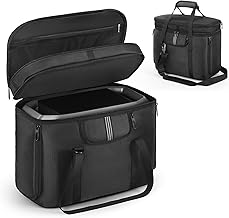
Rated at 3024Wh with 3000W continuous output, this unit handles heavy loads quietly (under 30dB per teardown reviews on YouTube). The LiFePO₄ battery is rated for 3000+ cycles. Per owner reports on r/camping and r/boondocking, users report 3–4 years of regular use before noticeable capacity fade. Dual AC outlets and 15 USB/USB-C ports mean you can charge a whole campsite. Solar charging accepts up to 1600W input, so pairing it with two 400W panels gets you a full recharge in 4–6 hours of direct sun. ~ MSRP.
Mid-Range Workhorse Models
For most car camping trips, 1000–1300Wh is the sweet spot: enough capacity for 3–5 days, light enough to move around camp, and affordable enough to buy without guilt.
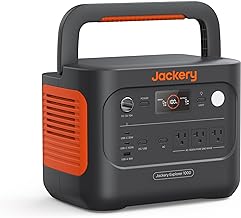
1024Wh capacity, 2000W continuous output, and expandable battery modules (add up to 2048Wh extra). Per the manufacturer spec sheet, it fully recharges from a wall outlet in 7 hours or via solar in 8–10 hours with a 400W panel. The digital display clearly shows remaining runtime for your current load. Multiple Amazon owner reviews praise the intuitive interface and fast charging. Dual AC outlets, USB-A, and USB-C ports cover most camping devices. ~ MSRP.
1229Wh LiFePO₄ battery, 2000W continuous output, and dual AC outlets. Per aggregated Amazon owner reviews, users report consistent 3–5 year lifespans with daily use. The unit recharges fully in 6 hours via wall outlet or 10–12 hours via a 400W solar panel. Weighs around 35 lbs—manageable for two people to carry to a car-camping site. The app shows real-time power draw and estimated runtime, helping you stay within budget. ~ MSRP.
Lightweight Models for Backpacking and Van Life
Under 10 lbs, these units are portable enough to strap to a pack or fit in a van’s tight spaces. Capacity is lower (300–768Wh), so they’re best for phones, lights, small cameras, and occasional laptop charging.
768Wh capacity, 1600W continuous output, and weighs just 17.6 lbs. The compact form factor (about the size of a shoebox) fits in a backpack or van corner. Per manufacturer specs, it recharges fully in 1 hour via wall outlet (fastest in its class) or 4–5 hours via solar. LiFePO₄ chemistry supports 3000+ cycles. Multiple r/vandwelling threads report owners using this as their primary power source for weeks at a time, running a small fridge, laptop, and phone simultaneously. ~ MSRP.
268Wh, 600W continuous output, and weighs 6.6 lbs—ideal for ultralight backpacking. Per the manufacturer spec sheet, it runs a phone for 10–15 full charges or a small LED lantern for 24+ hours. Recharges in 3.5 hours via wall outlet. Multiple owner reports on r/backpacking confirm this unit handles emergency power and daily phone charging for multi-week trips without adding noticeable pack weight. ~ MSRP.
Solar Panel Pairing: Extend Your Runtime
A power station without solar is on borrowed time. Once the battery drains, you’re stuck until you find a wall outlet or car charger. Pairing your unit with portable solar panels turns it into a renewable energy system.
How Much Solar Do You Need?
Per industry guidelines, a rough rule is to match your solar wattage to one-third of your power station’s capacity. So a 1000Wh unit pairs well with 300–400W of panels. In full sun (6+ hours), this charges the station in 8–12 hours. For faster recharge, double the solar: 600–800W panels charge a 1000Wh unit in 4–6 hours.
Budget-tier panels (100W) cost less but recharge slowly and degrade faster in UV. Mid-tier (200–400W) offer the best bang for weight and cost. Premium panels (500W+) are lighter and more efficient but cost significantly more.
See our Best Portable Solar Panels for Camping: Reviews & Buyer's Guide 2026 for specific wattage recommendations and brand comparisons to help you choose the right panels for your power station.
Common Camping Power Station Mistakes
Overestimating Runtime Manufacturers often list “ideal conditions” runtime. Real-world use with multiple devices running simultaneously cuts runtime by 20–40%. Always assume worse-case scenarios when planning a trip.
Ignoring Continuous vs. Peak Power Your camping heater or air pump might have a 3000W peak rating but only need 1500W continuous. Check the continuous rating on the power station, not just the peak. If specs only list peak, assume continuous is 60–70% of that figure.
Forgetting to Pre-Charge Arrive at camp with a fully charged station. Recharging via solar takes hours; a dead battery at sunset is a miserable night. Charge at home before you leave.
Buying Too Small to Avoid Cost A 300Wh unit sounds budget-friendly but dies after one evening of use. Aim for at least 500Wh for weekend trips, 1000Wh+ for week-long adventures. The extra cost pays for itself in convenience and peace of mind.
Maintenance and Longevity
All modern LiFePO₄ power stations are built to last 3000+ charge cycles. Assuming one full charge-discharge cycle per week, this translates to roughly 8–10 years of regular use. To maximize lifespan:
- Avoid deep discharges. Recharge when the battery hits 20% rather than waiting until it’s dead.
- Store in cool, dry conditions. Heat degrades batteries faster. A shaded storage area or insulated bag helps.
- Use the station monthly. Even if you’re not camping, a full charge-discharge cycle every 30 days keeps the battery healthy.
- Keep firmware updated. Many units receive software updates via USB or Bluetooth that improve efficiency and add features.
Per multiple owner reports on r/camping and r/boondocking, units maintained this way routinely reach 5+ years of heavy use before noticeable capacity fade.
FAQ
Can I use a camping power station to run an air conditioner? A small 5000–8000 BTU portable AC might work for 2–4 hours on a large unit (2000Wh+), based on typical AC power draw of 1200–1500W continuous. For longer cooling, pair the station with 800W+ of solar panels or accept that you’ll need to recharge frequently. Most campers opt for battery-powered fans instead.
How long does a power station last in cold weather? LiFePO₄ batteries lose 20–30% of their capacity in freezing conditions but regain it once they warm up. Keep the station inside your tent or sleeping bag on very cold nights. Avoid charging below 32°F; wait until it warms up to avoid damage.
Do I need a power station if I have a generator? Power stations and generators serve different needs. A generator is louder and needs fuel but runs indefinitely. A power station is silent and recharges via solar but has finite capacity. Many experienced campers use both: the power station for evening use and quiet hours, the generator for high-draw appliances during the day.
What’s the difference between a power station and a portable battery pack? A battery pack (like a large power bank) stores 20,000–100,000 mAh and charges phones and small devices. A power station stores 300Wh+ and has AC outlets, so it runs laptops, coolers, and small appliances. For camping, you want a power station.
Can I charge my power station while camping? Yes. Solar panels charge during the day. A car charger (12V outlet or USB-C to your vehicle’s battery) works while driving or parked. Wall outlets charge fastest but require a campground with hookups or a nearby building. Most campers use a combination: solar during the day, car charging while driving to the next site.
The Bottom Line
The best camping power station matches your trip length, device count, and weight tolerance. A weekend car camper with a laptop and phone needs 500–1000Wh. A week-long off-grid adventure with a fridge and multiple devices calls for 2000Wh+. Backpackers and van lifers prioritize weight and portability over raw capacity.
All the models above use modern LiFePO₄ chemistry, output enough power for typical camping loads, and recharge via solar—the key to true off-grid independence. Pair your chosen unit with portable solar panels, and you’ll never be without power again.


