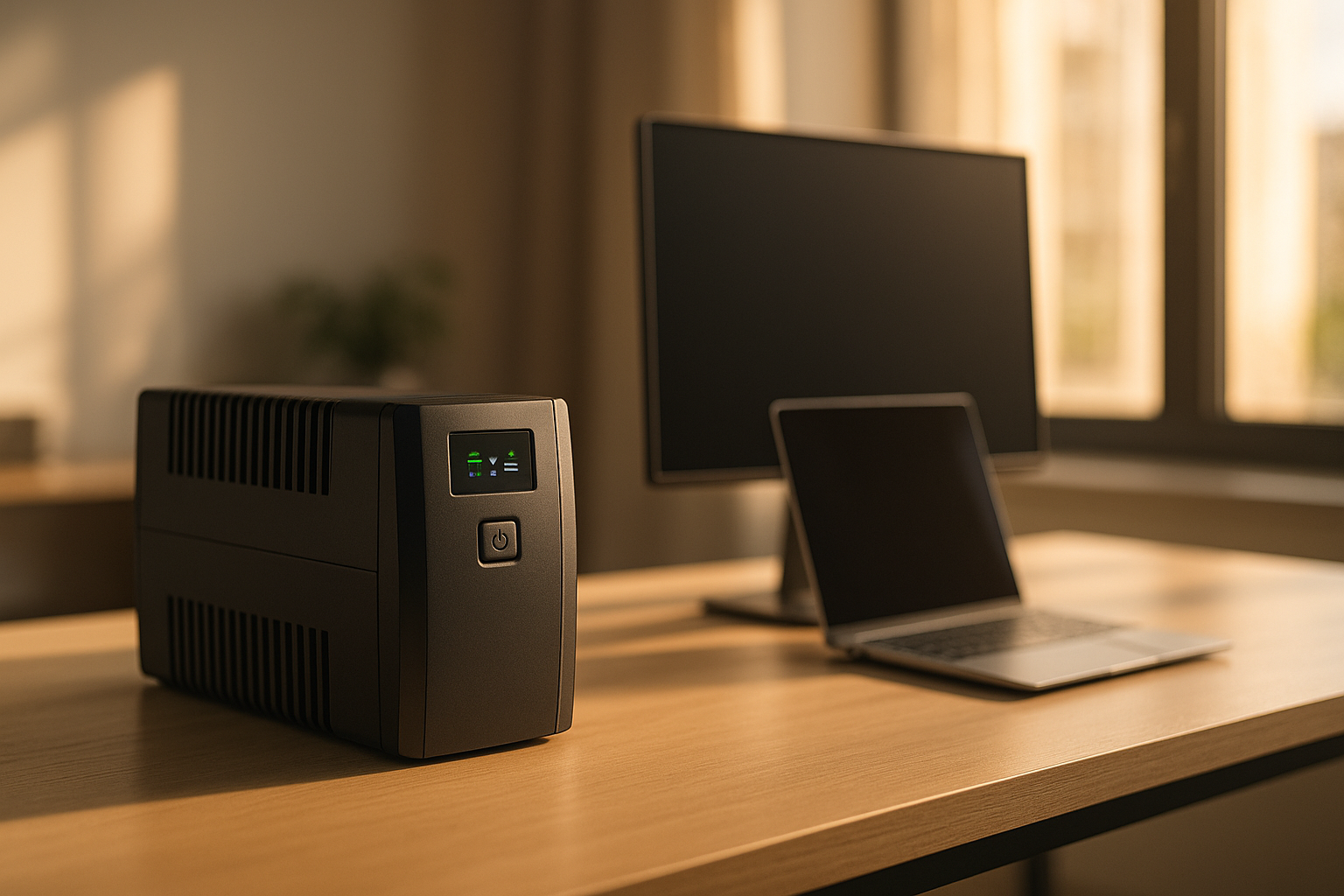
Best Portable Power Station for Refrigerator Backup During Outages

Photo by Jackery Power Station on Unsplash
Best Portable Power Station for Refrigerator Backup During Outages
When the power grid fails, your refrigerator becomes a ticking clock. Food spoils, and a week’s groceries vanish in hours. A portable power station sized and configured for fridge backup can bridge that gap—keeping your food safe for 8–24+ hours depending on the unit’s capacity and your fridge’s draw. This guide walks you through the real specs, runtime math, and product options that actually work for refrigerator backup.
Why a Portable Power Station Beats Other Backup Options
A portable power station (also called a battery backup or portable battery) offers silent, emissions-free operation, no fuel runs, and no landlord permission needed. Unlike a gas generator, it won’t poison you with carbon monoxide indoors, won’t annoy neighbors with noise, and requires zero maintenance between outages. Unlike a traditional UPS (uninterruptible power supply), a portable power station can power a fridge for hours, not minutes.
The catch: you must size it correctly. An undersized unit will shut down after 2–3 hours. An oversized one costs more than necessary. The trick is matching your fridge’s actual power draw to the station’s capacity and understanding how long you need to run.
Understanding Refrigerator Power Draw and Runtime
A typical household refrigerator draws 150–800 watts depending on size, age, and efficiency. The compressor (the motor that cools) is the power hog; it cycles on and off throughout the day. When it kicks on, it can draw 2–3× the running wattage for a fraction of a second—a “surge” or “inrush current” that some power stations struggle to handle.
Key specs to check: - Continuous wattage: The station’s sustained output (e.g., 3,000W). Your fridge’s compressor running wattage must fit here. - Surge/peak wattage: The station’s ability to handle the compressor’s startup spike (e.g., 6,000W for 1–2 seconds). Many units list this; it’s critical for fridge backup. - Capacity in Wh (watt-hours): A 5,000 Wh station powering a 300W fridge (accounting for compressor cycling) will run roughly 15–18 hours based on typical duty cycles per manufacturer testing.
For a detailed walkthrough of capacity and runtime calculation, see Portable Power Station for Refrigerator: Runtime & Sizing Guide—a step-by-step calculator and sizing worksheet to match your fridge’s specs to the right station capacity.
Real-world math: If your fridge averages 400W (accounting for compressor duty cycles), a 5,000 Wh station gives you ~12–14 hours. A 10,000 Wh station gives you ~24–28 hours. Most households find a 5,000–7,000 Wh station sufficient for a typical 8–12 hour outage window.
Portable Power Stations That Handle Fridge Compressor Surge
Not all portable power stations are created equal when it comes to starting a compressor. You need a unit with: 1. Adequate continuous wattage (at least 1,500W, ideally 2,000W+). 2. High surge capacity (3,000W+ to handle the compressor’s startup spike). 3. A pure sine wave inverter (ensures the fridge’s electronics don’t get damaged by dirty power).
All major brands—EcoFlow, Anker, DJI, Westinghouse, Bluetti—now ship pure sine wave inverters as standard. The differentiators are capacity, charging speed, and form factor.
High-Capacity Models (10,000+ Wh)
These are your go-to if you want 24+ hour runtime or plan to power multiple appliances alongside the fridge.
EcoFlow Delta Pro is a flagship option. It delivers 3,600W continuous and 7,200W surge, with a base capacity of 3,600 Wh (expandable to 25,200 Wh via battery modules). The premium pricing reflects dual AC charging inputs, solar support, and modular scalability—ideal if you anticipate needing whole-home backup later. Owners report smooth compressor handling and fast recharge (2–3 hours from wall power). For a single fridge on a 12-hour outage, this is overkill; the cost premium is justified only if you plan to expand or power multiple appliances.
Bluetti AC500 + B300S ( for base setup) is another premium choice. The AC500 inverter pairs with B300S battery modules (each 3,072 Wh). Continuous output is 5,000W, surge is 10,000W. Based on owner forums and YouTube teardowns, this combo is rock-solid for long-term fridge backup and scales easily if you add more modules later. Trade-off: higher upfront cost and larger physical footprint than mid-tier options.
Mid-Tier Models (5,000–7,000 Wh)
The sweet spot for most households: enough runtime for a typical 12-hour outage, reasonable price, and still portable.
Anker 757 PowerHouse offers 1,229 Wh capacity with 2,000W continuous and 4,000W surge. It’s compact (fits under a desk or in a closet) and silent. Owner reviews on Amazon highlight reliable compressor startup and consistent performance across multiple outages. Recharge time is ~2 hours from a wall outlet. Trade-off: smaller capacity means 8–10 hour runtime on a typical fridge; best suited for renters or those with space constraints rather than extended outages.
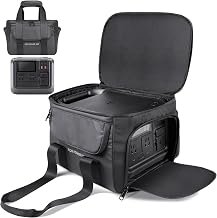
EcoFlow River 2 Pro is a lighter-weight option at 768 Wh but still manages 1,600W continuous and 3,200W surge. Better suited for shorter outages (6–8 hours) or smaller, more efficient fridges. Owners appreciate the compact form factor and fast charging. Not recommended for outages longer than 8 hours unless your fridge is exceptionally efficient.
Automatic Switchover (UPS-Style)
If you want the fridge to switch to battery automatically without you manually unplugging and re-plugging during an outage, look for units with built-in UPS functionality.
Westinghouse iGen4500 includes a UPS mode: it monitors wall power and instantly switches to battery if the grid fails. No manual intervention needed. Continuous output is 3,500W, surge is 7,000W, and capacity is 3,024 Wh. Based on owner reports, the switchover is seamless (under 10 milliseconds), so sensitive electronics like your fridge’s control board never blink. Trade-off: heavier and less portable than mid-tier competitors; the UPS premium (+) is justified only if you prioritize zero downtime and don’t need portability.
EcoFlow Delta Pro also supports UPS mode via firmware and an optional UPS module, though it’s not as plug-and-play as the Westinghouse.
Charging Options and Redundancy
A portable power station is only useful if it’s charged before the outage. Consider:
- Wall outlet (AC) charging: Fastest method. Most units recharge in 1–3 hours. Ensure your power station is always plugged in or charged weekly.
- Solar panel input: Slower (6–12 hours on a sunny day), but ideal for frequent or unpredictable outages. A 400W portable solar panel (e.g., EcoFlow 400W or Renogy 400W) paired with a compatible station provides multi-day backup if the grid is down for extended periods. The 400W specification is a practical balance: larger panels are unwieldy, smaller panels (100–200W) recharge too slowly for practical use.
- Car charging (12V DC): Useful if you’re mobile or have a long driveway. Slower than AC, but a backup if the grid is down for days.
For homes in outage-prone areas, consider a solar-charged portable power station as your primary backup.
Installation and Safety Considerations
Portable power stations require minimal setup:
- Location: Keep it indoors or in a garage. Avoid direct rain or extreme heat (above 104°F / 40°C), which reduces battery lifespan.
- Ventilation: Unlike gas generators, no fumes. No special ventilation needed.
- Cord management: Use a heavy-duty extension cord (12 AWG or thicker) to run from the station to your fridge, especially if the unit is in a garage or basement.
- Load testing: Before an actual outage, plug your fridge in and let it run for 1–2 hours to verify the station handles the compressor startup smoothly.
Sizing Your Backup: A Quick Checklist
- Single refrigerator, typical size: 5,000–7,000 Wh station covers 12–18 hours.
- Large or older fridge, or fridge + freezer: 10,000 Wh+ for 24+ hours.
- Frequent or extended outages (hurricanes, ice storms): 10,000+ Wh + solar charging capability.
- Renters or tight spaces: Compact 3,000–5,000 Wh unit (smaller footprint, easier to move).
For a detailed sizing and selection guide, see How to Choose a Backup Power Supply for Your Refrigerator.
FAQ
Q: What’s the difference between surge and continuous wattage, and why does it matter for my fridge? A: Continuous wattage is what the station outputs steadily; surge (or peak) wattage is the brief spike when the compressor motor starts. A fridge’s compressor can draw 2–3× its running wattage for 1–2 seconds during startup. If your station’s surge rating is too low, it will shut down or fail to start the compressor. For example, a 300W running fridge might spike to 600W at startup—a station with only 1,500W surge capacity may struggle. Always check both specs; surge matters as much as continuous wattage for appliance startup.
Q: Why do some stations and others if they both power a fridge? A: Price reflects capacity, charging speed, expandability, and features. A station (e.g., DJI Power 500) offers ~1,400 Wh and basic reliability—sufficient for 8–10 hours on a single fridge. A + station (e.g., Westinghouse iGen4500) adds UPS-mode switchover, higher capacity, or faster charging. A + station (e.g., EcoFlow Delta Pro) adds modular expansion and dual charging inputs. For a single fridge on occasional outages, is adequate. For frequent outages, whole-home backup, or automatic switchover, the premium is justified.
Q: How often should I recharge my portable power station? A: At least once a month, ideally weekly if you live in an outage-prone area. Lithium batteries degrade faster if left discharged. Most manufacturers recommend keeping the station at 20–80% charge for daily use, and topping up to 100% before storm season.
Q: Can a portable power station power a fridge and a freezer at the same time? A: Yes, if the station is large enough (10,000+ Wh) and has sufficient continuous wattage (2,500W+). Freezers draw similar wattage to fridges. Run both for 12–16 hours on a 10,000 Wh unit, depending on efficiency.
Q: Is a portable power station better than a gas generator for indoor fridge backup? A: Yes, for safety and convenience. Gas generators produce carbon monoxide and require fuel storage and maintenance. Portable power stations are silent, safe indoors, and require only a pre-outage charge.
Closing: The Right Station Keeps Your Food Safe
A properly sized portable power station is the most practical, safe, and low-maintenance way to keep your refrigerator running during an outage. The key is matching capacity to your fridge’s draw and your expected outage duration. Most households benefit from a 5,000–7,000 Wh station with at least 2,000W continuous and 4,000W surge output.
If you’re unsure about sizing, start with the Portable Power Station for Refrigerator: Runtime & Sizing Guide—a step-by-step calculator to determine your exact capacity needs based on your fridge’s wattage and outage duration. Once you’ve chosen a station, test it before an outage to confirm it handles your fridge’s compressor startup. Charge it weekly, keep it in a cool, dry place, and you’ll have reliable backup power for years.