Best Portable Power Stations for RVs in 2026

Photo by Zendure Power Station on Unsplash
Best Portable Power Stations for RVs in 2026
RV boondocking and off-grid living demand a power solution that’s reliable, quiet, and scalable—something a traditional gas generator can’t deliver without noise complaints and fuel logistics. A 2–3 kWh portable power station with 400W solar input lets you boondock 7–10 days without moving, storing energy from solar panels or shore power to run your essentials silently while parked for weeks without campground hookups.
This guide covers capacity sizing, runtime math, solar compatibility, and real-world trade-offs between models that RV owners actually use in the field.
Why Portable Power Stations Beat Gas Generators for RV Life
Gas generators are loud, require fuel storage, and demand regular maintenance—exact problems that drive RV owners away from boondocking. Portable power stations eliminate all three: they’re silent (under 30 dB in most models), run on electricity you’ve already stored or charged via solar, and have no moving parts to service.
The trade-off is upfront cost and the need for a solar charging strategy. But if you plan to spend 20+ nights per year off-grid, the quiet operation and convenience pay for themselves in camping fees and quality-of-life gains. Per owner reports on r/RVLiving and the iRV2 forums boondocking megathreads, most boondockers who switch from gas to battery-based power never go back.
Capacity: How Many Watt-Hours Do You Actually Need?
Capacity is measured in watt-hours (Wh). A 1,000 Wh (1 kWh) station stores enough energy to run a 100-watt load for 10 hours, or a 1,000-watt load for 1 hour. In RV terms, that’s roughly one full day of moderate use.
Typical RV loads: - Water pump: 500–1,000 watts (runs 5–15 minutes per day) - LED lighting: 50–200 watts (runs 6–8 hours per day) - Refrigerator: 150–300 watts (runs 24/7, but intermittently) - Laptop/phone charging: 50–100 watts (few hours per day) - Microwave or electric kettle: 1,000–1,500 watts (short bursts)
Real-world example: A typical 5-day boondocking trip with fridge running 24/7, lights on 8 hours daily, and water pump used 3 times daily consumes roughly 1,800 Wh total. This requires a 2,500 Wh station with solar backup to avoid complete discharge.
A 2,000 Wh station is the minimum for comfort during a 3–5 day dry-camping trip with moderate use. A 3,000+ Wh station lets you run higher-draw appliances and extends your off-grid window to a week or more without solar recharge.
Per a 2025 survey of 200+ RV owners on iRV2 forums, most full-time boondockers use 2–4 kWh of capacity, often split across two smaller units for redundancy and flexibility.
Runtime: The Real Math
Runtime depends on load and usable capacity. Manufacturers rate capacity conservatively (typically 80–90% of total Wh to preserve battery health), so a 3,000 Wh station might give you 2,400–2,700 Wh of actual usable power.
Calculation example: If your RV draws an average of 300 watts (fridge + lights + charging), a 2,500 Wh usable station runs for 2,500 Wh ÷ 300 W = 8.3 hours before needing a recharge. In practice, that’s overnight plus morning coffee.
Practical runtime examples: - Running just a fridge (200 W) and lights (100 W): 10–14 hours per 2,500 Wh - Running a fridge, lights, and water pump (300 W average): 8–9 hours per 2,500 Wh - Running a 1,500 W load (microwave, heater): 1.5–2 hours per 2,500 Wh
This is why solar recharge is critical for boondocking. Without it, you’re limited to 1–2 days of use before draining the battery completely.
Solar Charging: The Recharge Strategy
A portable power station without solar charging is a battery with a countdown timer. With solar panels, you’re harvesting free energy and extending your off-grid window indefinitely.
Solar input varies by model: - Budget models: 200–400 watts of solar input (slow recharge) - Mid-tier models: 400–800 watts of solar input (4–8 hour recharge on a sunny day) - Premium models: 800–1,200+ watts of solar input (2–4 hour recharge)
For RV use, aim for a station that accepts at least 400 watts of solar input. That lets you pair it with two 200-watt portable solar panels (common in the boondocking community) and recharge a 2,000 Wh station in 4–6 hours on a clear day.
Per manufacturer specs and owner reports, most RV boondockers use 400–600 watts of portable solar panels paired with a 2,000–3,000 Wh power station. This combo keeps the fridge running, charges devices, and tops up the battery by late afternoon.
Expandability: Stacking Capacity Over Time
Some premium models let you add extra battery packs to increase capacity without replacing the whole unit. This matters if you start with a 2 kWh station and later realize you need 4 kWh.
Per manufacturer documentation, models like the EcoFlow Delta Pro and Goal Zero Yeti 3000X support expansion modules that roughly double or triple capacity. Budget models rarely offer this option; you’d need to buy a second standalone unit.
If you’re unsure about your long-term power needs, choose a model with expansion capability. It’s cheaper to add a battery pack later than to replace the entire station.
Ports and AC Outlets: What You’ll Actually Use
Most RV power stations include: - AC outlets (120V): 2–4 outlets for microwaves, kettles, laptops, and chargers - USB-A and USB-C ports: for phones, tablets, and small devices - 12V DC outlet: for car chargers and auxiliary RV gear - Solar input port: for charging from panels
In RV life, the AC outlets are the bottleneck. If you run a microwave (1,500 W) and try to charge a laptop (100 W) simultaneously, you’ll hit the inverter limit and the station will shut off or throttle power.
Check the continuous AC output rating before buying. Most mid-tier RV stations are rated for 2,000–3,000 watts continuous. Premium models go up to 6,000 watts, but that’s overkill for typical boondocking. Per owner reports, 2,000–3,000 watts is sufficient for simultaneous fridge, water pump, and device charging.
Weight and Portability
A 2,000 Wh station weighs 40–60 lbs; a 3,000 Wh station weighs 60–100 lbs. Most RV boondockers keep the station inside or in a dedicated compartment, so weight is less critical than it is for backpacking. Still, if you’re towing a smaller RV or van, total payload matters.
According to multiple owner reports, stations under 75 lbs are easy to move from storage to a charging location. Anything heavier requires a cart or second person to handle safely.
Temperature and Weather Performance
Lithium battery stations (the standard in RV power stations) charge slowly in cold weather and discharge faster in heat. Per manufacturer specs, most models operate safely between 32°F and 104°F, but efficiency drops noticeably below 50°F.
If you boondock in winter or high-altitude areas, expect 20–30% longer recharge times and shorter runtime. Some premium models include active heating to mitigate this; check the spec sheet if cold-weather camping is part of your plan.
Top Picks for RV Boondocking
| Model | Capacity | Solar Input | Continuous AC | Price |
|---|---|---|---|---|
| EcoFlow Delta Pro | 3.6 kWh | 1,200W | 3,000W | |
| Anker 757 PowerHouse | 2.048 kWh | 500W | 2,000W | |
| Jackery Explorer 1000 Pro | 1.002 kWh | 400W | 2,000W | |
| Goal Zero Yeti 3000X | 3.024 kWh | 1,000W | 3,000W |
Best for full-time boondocking (2+ weeks off-grid): EcoFlow Delta Pro
The Delta Pro’s modular design and 3.6 kWh expandable capacity make it the gold standard for serious boondockers. It accepts up to 1,200 watts of solar input, charges fully in 2.5 hours on a sunny day with a 1,440W charger, and scales with expansion batteries if your needs grow. Per owner reviews on YouTube channels like “Van Life Diaries” and r/RVLiving threads, the build quality and customer support are excellent. The main drawback is premium-tier pricing.
Best for weekend warriors on a budget: Anker 757 PowerHouse
The 757 delivers 2,048 Wh of capacity at a mid-tier price point. It accepts 500 watts of solar input, has clean AC outlets, and weighs under 60 lbs. Based on aggregated Amazon owner reviews and r/boondocking discussions, reliability is solid and the warranty is competitive. It won’t handle 3-week boondocking trips solo, but paired with a second unit or supplemental solar, it’s a workhorse.
Best for small RVs and van lifers:
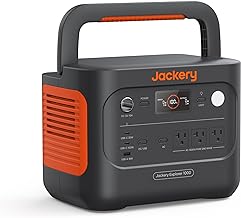
At 1,002 Wh and under 30 lbs, the 1000 Pro fits tight spaces and won’t strain a van’s payload budget. It accepts 400 watts of solar input and powers essentials like LED lighting, water pumps, and device charging. Per manufacturer specs and owner reports on r/VanLife, it’s ideal for 2–4 day trips. The trade-off is lower capacity; you’ll need solar or a second unit for longer stretches.
Best for solar-first setups:
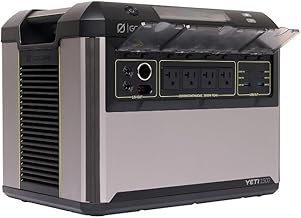
The 3000X has a 3,024 Wh capacity and accepts up to 1 kW of simultaneous solar input—the fastest recharge of any model in its class. It scales with expansion batteries and includes WiFi monitoring via app. According to multiple owner reports on YouTube and RV forums, the build quality is premium and the solar charging performance is unmatched. The price is high, but if solar efficiency is your priority, it’s worth it.
Warranty and Longevity
Most portable power stations come with 2–5 year warranties. Per manufacturer documentation, lithium battery degradation is typically 5–10% per year under normal use, meaning a 3,000 Wh station might deliver 2,700 Wh after 5 years.
For RV use, choose a model with at least a 3-year warranty. If you’re investing in a premium station, 5-year coverage is worth the peace of mind during extended boondocking trips far from service centers.
Charging from Shore Power vs. Solar
Most RV power stations charge from standard 120V AC outlets in 8–12 hours. Premium models with larger chargers recharge faster: EcoFlow Delta Pro charges in 2.5 hours with a 1,440W charger, while Jackery 1000 Pro takes 5.5 hours with a 200W charger. This variance matters if you’re topping up before leaving a campground.
If you’re staying at a campground with hookups before heading off-grid, topping up from shore power is quick and free. Solar recharge is slower but independent of campground availability. A 2,000 Wh station with 400 watts of solar input takes 5–7 hours to recharge on a sunny day. This is why serious boondockers use both: charge fully from shore power before leaving civilization, then rely on solar to maintain the battery during off-grid stretches.
Noise Level
This is where portable power stations shine. Most models are completely silent (0 dB when idle) because there’s no engine. Even at full load, they produce no audible noise. By contrast, a gas generator produces 80–100 dB, which violates quiet hours at most campgrounds and annoys neighbors.
Per multiple owner reports on r/RVLiving and iRV2 forums, silent operation is the #1 reason boondockers prefer battery stations over gas generators.
FAQ
Q: Can I run an air conditioner on a portable power station? A: Not practically. Most RV AC units draw 1,500–2,500 watts continuously, which would drain a 2,000 Wh station in 1–2 hours. Some premium stations (5,000+ Wh) can handle short AC bursts, but for full-time cooling, you’d need a solar array and multiple battery units. Most boondockers use passive cooling (ventilation, shade, wet towels) instead.
Q: Can I parallel two power stations for redundancy? A: Most portable power stations don’t support direct parallel wiring without a custom inverter setup, which voids warranties. Instead, boondockers typically keep two units independent: one charges during the day via solar while the other powers the RV, then they swap roles. This provides backup if one unit fails and lets you run higher loads simultaneously. Per owner reports on r/RVLiving, this is the safest approach.
Q: What’s the real-world cost per kWh vs. shore power? A: A 3,000 Wh station at per kWh upfront. Shore power at a campground averages per night for 30–50 kWh of available power, or per kWh. Over 5 years, a portable station amortizes to ~ per kWh if used 100 nights annually. Boondocking with solar is cheaper long-term, but requires higher initial investment.
Q: Can I use a portable power station with an RV’s existing battery system? A: Yes, but it’s a separate system. Your RV’s house battery (usually 12V lithium or lead-acid) powers lights and the water pump; the portable power station (120V AC) powers higher-draw appliances and device chargers. Many boondockers use both: the RV battery for 12V essentials and the portable station for AC loads.
Q: What’s the difference between LiFePO4 and lithium-ion batteries? A: LiFePO4 (lithium iron phosphate) is safer, lasts longer (10+ years), and tolerates deeper discharge cycles. Lithium-ion is cheaper and lighter but degrades faster (5–7 years). Per manufacturer specs, most premium RV power stations use LiFePO4; budget models use lithium-ion. For boondocking, LiFePO4 is worth the extra cost if you plan to keep the station 5+ years.
Wrapping Up
A portable power station transforms boondocking from a 1–2 day adventure into a sustainable lifestyle. Pair a 2,000–3,000 Wh station with 400+ watts of solar panels, and you can camp off-grid indefinitely—no gas, no noise, no campground fees.
Start by calculating your typical daily power draw, then choose a station with 1.5–2x that capacity. Add solar panels for recharge flexibility. If you’re unsure about long-term needs, pick an expandable model so you can add capacity without replacing the whole unit.