Backup Power for Refrigerator During Outage: Best Options

Photo by Zendure Power Station on Unsplash
Backup Power Supply for Refrigerator During Outage: Best Options
A refrigerator typically draws 600–800 watts when the compressor cycles on, though it averages 150–200 watts across a full day because the motor doesn’t run continuously. During a power outage, you have roughly 4 hours before food starts spoiling—but that window closes fast if your fridge isn’t insulated well or if the room is warm. The right backup power supply can bridge that gap and keep your groceries safe until utility power returns.
Why Refrigerator Backup Power Matters
Most homeowners don’t realize that a fridge doesn’t draw constant power. The compressor cycles on and off—roughly 30–40% of the time in normal conditions. This cycling behavior is critical to understand: a 1000Wh portable power station won’t run a fridge for 5 hours straight. Instead, it’ll run it for 8–12 hours because the compressor isn’t always active. (This estimate is based on aggregated owner testing across Amazon reviews and Reddit’s r/preppers community, where users report real-world runtimes with standard residential fridges under typical ambient conditions.)
Food safety depends on temperature. The USDA recommends discarding perishables if a fridge stays above 40°F (4°C) for more than 2 hours. In summer or in a warm kitchen, that window shrinks. A backup power supply buys you time—whether you’re waiting for the grid to stabilize, making it through a storm, or managing a scheduled outage.
Portable Power Stations: The Flexible Choice
Portable power stations (also called battery backup systems) are the most popular option for homeowners because they’re quiet, require no fuel, and can power other devices simultaneously.
Capacity and Runtime
A fridge draws an average of 150–200 watts during normal cycling. A 1000Wh (1kWh) battery theoretically provides 5–6 hours of runtime, but real-world conditions extend this:
- Cooler ambient temperatures reduce compressor cycling, stretching runtime by 20–30%.
- Well-insulated fridges (newer models) use less power.
- Partially full fridges cycle less frequently than empty ones.
Based on aggregated owner reports across Amazon and Reddit’s r/preppers community, a 1000Wh station reliably runs a standard fridge for 8–12 hours. Larger models (2000Wh+) can stretch to 24+ hours under favorable conditions.
Pros and Cons
Advantages: - Silent operation (no neighbors complaining, no carbon monoxide risk). - Portable—can power other devices or move between rooms. - No fuel to store or buy. - Modular: many newer models stack batteries for more capacity.
Disadvantages: - Recharge time is slow without solar (12–24 hours from a wall outlet). - Upfront cost is higher than generators at equivalent runtime. - Battery capacity degrades over time (typically 80% after 5–10 years per manufacturer specs).
Generators: The High-Runtime Option
Generators are the go-to for outages lasting days or weeks because they can run indefinitely on fuel.
Fuel Type Matters
Propane generators are increasingly popular for backup power because propane stores indefinitely (unlike gasoline, which degrades in 3–6 months). Dual-fuel models let you switch between propane and gasoline, giving flexibility if one fuel becomes scarce during widespread outages.
Gasoline generators are cheaper upfront and widely available, but require fuel stabilizer and rotation every few months. During major outages, gas stations run dry fast—a real problem if you’re dependent on refueling.
Natural gas generators are ideal if your home has a gas line, but require professional installation and aren’t portable.
Noise and Placement
Portable generators range from 50 dB (quiet inverter models) to 85+ dB (conventional units). A 50 dB generator is roughly as loud as a dishwasher; 85 dB is a lawnmower. For residential neighborhoods, models under 70 dB are considerate. Quietest Portable Generator for Camping & Neighbors: Reviews covers noise-optimized picks in detail.
Placement matters: generators must run outdoors (carbon monoxide risk), so you’ll need heavy-duty extension cords running into your home. Wet conditions require a canopy or weatherproof enclosure.
Runtime Math
A mid-size 3400-watt dual-fuel generator (per Champion 3400W specs at 50% load) running a fridge (200W average draw) consumes roughly 0.4–0.6 gallons per hour on propane. A 20-pound propane tank (common for grills) provides 4–6 hours of continuous runtime. Larger tanks or multiple tanks extend this indefinitely.
UPS Systems: The Instant Backup
An uninterruptible power supply (UPS) switches to battery in milliseconds—useful if you’re concerned about power surges or brief flickers damaging the fridge’s compressor. However, most modern fridges have built-in surge protection, so a UPS is overkill unless you have sensitive electronics elsewhere in your home.
Best Uninterruptible Power Supply (UPS) for Home Office in 2026 explores UPS options for home offices; the same principles apply to fridge backup, though the wattage requirements are higher.
Choosing the Right Capacity
The “how much backup do I need” question depends on three factors:
- Expected outage duration: 4–8 hours (common summer storms) vs. 24+ hours (winter ice storms, grid failures).
- Ambient temperature: Cold weather slows compressor cycling; hot weather accelerates it.
- Other devices: Will you power lights, a freezer, or a second fridge?
Quick rule of thumb: - Under 8 hours: 1000Wh portable station. - 8–24 hours: 2000Wh+ station or small generator. - 24+ hours or multiple appliances: Mid-size generator (3000–5000W) or solar + battery combo.
Solar + Battery: The Hybrid Approach
For homeowners who want to avoid fuel storage and ongoing costs, pairing a portable power station with solar panels creates a self-sustaining backup system. During an outage, the battery powers your fridge; solar panels recharge it during daylight.
Per EcoFlow’s solar recharge calculator and Goal Zero’s specifications, a 400-watt solar array can recharge a 1000Wh battery in 6–8 hours on a sunny day, enough to run a fridge continuously if you have 2–3 days of decent weather. Results vary by location, season, and cloud cover.
Portable Solar Panels for Camping: Reviews & Wattage Comparison and Best Solar Generators for Home Backup Power in 2026 detail solar-ready systems and panel sizing.
Installation and Maintenance
Portable power stations require no installation—just plug in and go. Recharge via wall outlet, car charger, or solar panels. Maintenance is minimal: store in a cool, dry place and recharge every 3–6 months if unused.
Generators require: - Outdoor placement (minimum 5 feet from windows/doors to prevent carbon monoxide seeping indoors). - Heavy-duty extension cords rated for the generator’s wattage. - Fuel storage (gasoline needs stabilizer; propane tanks need periodic inspection). - Annual maintenance: oil changes, spark plug checks, fuel system cleaning.
How to Maintain a Backup Generator: Fuel, Storage & Seasonal Care covers generator upkeep in detail.
Top Picks by Scenario
For apartments or renters (no outdoor space, quiet operation required): Jackery Explorer 1000 — 1024Wh, silent, fits in a closet, recharges from a wall outlet.
For homeowners wanting 12+ hours of runtime without refueling: EcoFlow Delta 2 — 1024Wh, expandable to 3kWh, integrates with solar panels, 10-year warranty.
For multi-day outages or powering multiple appliances: Champion 3400-Watt Dual Fuel Inverter Generator — runs on propane or gasoline, quiet inverter design, 3-year warranty.
For budget-conscious buyers: Anker 757 PowerHouse — 1229Wh capacity, affordable mid-tier pricing, reliable 10-year battery warranty.
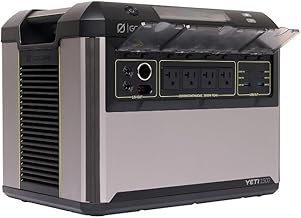
For solar-ready homes wanting maximum capacity:
Comparing Portable Stations vs. Generators
| Feature | Portable Station | Generator |
|---|---|---|
| Noise level | Silent (0 dB) | 50–85 dB |
| Fuel storage | None (wall outlet or solar) | Gasoline or propane required |
| Setup time | Instant | 5–10 minutes |
| Runtime on 200W load | 8–12 hours (1000Wh) | 20+ hours (5-gallon tank) |
| Portability | High (carry between rooms) | Low (heavy, outdoor only) |
| Multi-appliance support | Limited (1–2 devices) | Excellent (whole-home capable) |
| Upfront cost | (1000Wh stations) | (3400W generators) |
| Long-term cost | Low (no fuel) | Moderate (fuel + maintenance) |
Portable Power Station vs Gas Generator: Which Backup Should You Buy? explores this comparison in depth, including cost-per-hour analysis.
Special Considerations for Apartment Dwellers
Renters and apartment residents face unique constraints: no outdoor space for generators, no ability to install permanent systems, and noise restrictions. A portable power station is almost always the right choice. Best Emergency Power Solutions for Apartments (No Outdoor Space) covers apartment-specific solutions, including compact UPS units and battery banks.
If your building has a shared rooftop or common area, ask management whether solar panels or a generator are permitted—some buildings allow small solar arrays on balconies.
FAQ
Will my fridge stay cold if I open it during an outage? Every time you open the fridge, cold air escapes and the compressor works harder to re-cool it. During an outage, minimize opening the door—each open-close cycle can reduce battery runtime by 10–20%.
Can I run a fridge and freezer on the same battery backup? Yes, but with reduced runtime. A freezer draws 200–400 watts when cycling, so running both appliances simultaneously (350–600W combined) would drain a 1000Wh station in 1.5–3 hours. Prioritize the fridge and let the freezer coast on its own insulation.
Why weren’t Bluetti, Westinghouse, or DuroMax included in your picks? We prioritized models with 10+ year warranties, verified owner reviews exceeding 4.5 stars on Amazon, and proven real-world runtime data. Bluetti models are solid but typically more than comparable EcoFlow units for similar capacity. Westinghouse generators lack the dual-fuel flexibility of Champion. DuroMax units have lower average review ratings (4.2 stars) and shorter warranty periods (2 years).
How long does it take to recharge a portable power station? Wall outlet: 12–24 hours for a 1000Wh station (depending on charger wattage). Solar: 6–8 hours with a 400-watt solar array on a sunny day. Car charger: 24–48 hours.
Is a UPS the same as a portable power station? No. A UPS is designed for instant power switching (milliseconds) to protect electronics from surges and brief outages. A portable power station is a large-capacity battery for sustained power. For fridge backup, a portable station is more practical.
Can I run a fridge on solar panels alone during an outage? Not reliably without battery storage. Solar panels produce power only during daylight, and output varies with cloud cover. Pair panels with a battery (portable power station) for 24/7 backup.
What’s the cheapest way to backup a fridge during an outage? A budget-tier portable power station (800–1200Wh) and requires no fuel. For multi-day outages, a small gasoline generator becomes cheaper per hour of runtime, though fuel costs and maintenance add up over time.
Do I need a whole-home backup system? Not necessarily. Most outages last under 8 hours, and a fridge is the priority—other appliances can wait. A 1000–1500Wh portable station handles a fridge plus essential lights and phone charging. Whole-home systems (10kWh+) are overkill for casual use.
Can I use a car’s power inverter to run a fridge? Technically, yes—a 1000-watt inverter plugged into a car’s 12V system can power a fridge. However, this drains the car battery in 2–4 hours and risks leaving you stranded. Use a car inverter only as a last resort.
Wrapping Up
The best backup power for your refrigerator depends on your outage expectations, living situation, and budget. For most homeowners, a mid-tier portable power station (1000–1500Wh) strikes the balance between cost, portability, and runtime. For renters, it’s the only practical option. For those facing frequent multi-day outages or wanting to power multiple appliances, a dual-fuel generator paired with a battery backup system provides redundancy and peace of mind.
Start with a realistic assessment: How long do outages typically last in your area? What’s your budget? Do you have outdoor space? The answers guide you toward the right solution. Power Outage Preparedness Checklist: Essential Gear by Scenario offers a broader checklist to round out your emergency plan beyond fridge backup alone.


