Portable Solar Panels for Camping: Reviews & Wattage Comparison

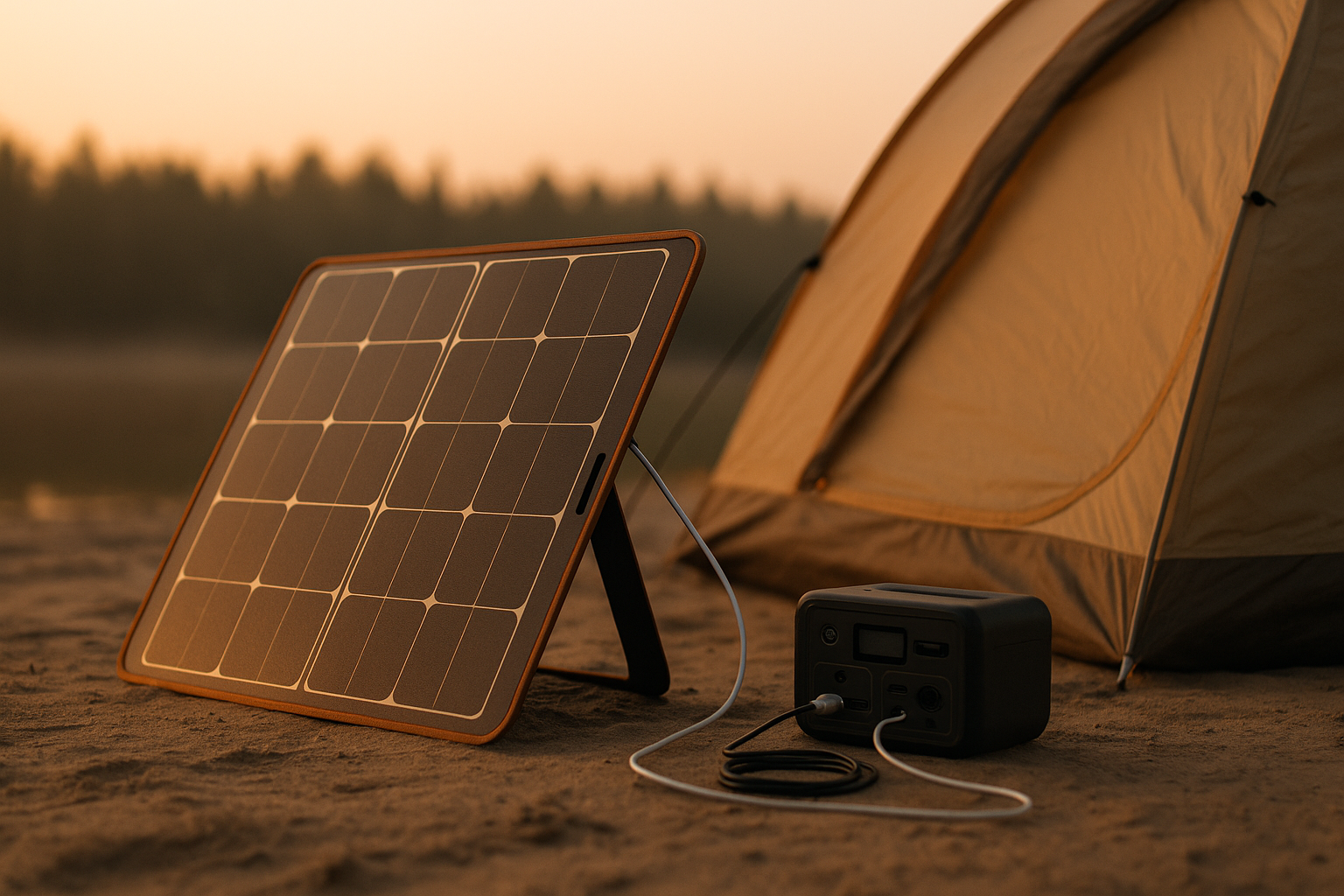
Photo by Jackery Power Station on Unsplash
Portable Solar Panels for Camping: Reviews & Wattage Comparison
Portable solar panels produce 75–100W in real-world conditions (accounting for cloud cover, angle, and time of day), enough to charge a phone 2–3 times per day or slowly replenish a power station during daylight hours. Whether you’re car camping, backpacking, or living in an RV, a portable panel paired with a power station eliminates the need for gas generators—no fuel costs, no noise, no maintenance. This guide compares real-world performance, wattage tiers, and durability to help you pick the panel that matches your camping style.
Why Portable Solar Panels Matter for Camping
Gas generators are loud, require fuel, and need maintenance. A portable solar panel sits quietly in the sun and produces power for free—as long as there’s daylight. Most campers pair a panel with a portable power station (like a Jackery or Bluetti unit) to store solar energy for use after sunset. Unlike fixed rooftop installations, portable panels fold up, weigh 3–20 pounds, and fit in a car or backpack.
The tradeoff: solar panels produce less power on cloudy days, and output drops sharply in early morning or late afternoon. But for multi-day trips where you have sunlight hours to spare, a portable panel can keep your devices charged without burning gas.
Understanding Wattage and Real-World Output
Solar panel wattage (measured in watts, or W) tells you the maximum power the panel can produce in ideal conditions—typically full sun, 77°F, and perpendicular angle to the sun. Real-world output is often 50–70% of rated wattage, depending on cloud cover, panel angle, and time of day, per EnergySage analysis and manufacturer testing protocols.
Common wattage tiers:
- 50–100W panels: Lightweight, good for phones and small power banks. A 50W panel takes 16+ hours to charge a 1000Wh power station; most campers regret not buying 100W+.
- 150–200W panels: The sweet spot for most campers. Charges a mid-size power station in 4–8 hours on a sunny day.
- 250W+: Heavy (15–25 lbs), best for RVs or semi-permanent camp setups. Overkill for backpacking.
According to multiple owner reports on Reddit’s r/CampingGear and r/Overlanding, a 100–150W panel paired with a 500–1000Wh power station covers the needs of most car campers and van dwellers. Backpackers often go smaller (50W) to stay under 5 lbs.
Foldable vs. Fixed-Frame Panels
Foldable panels are the standard for portable camping. They fold into a briefcase-like shape, weigh less, and pack into a car or large backpack. Most foldable panels ship with carrying handles and built-in kickstands. Foldable designs allow easier angle adjustment throughout the day compared to fixed frames, which boosts real-world output by adjusting for sun position.
Fixed-frame panels (rigid glass or aluminum frames) are heavier and bulkier but more durable for long-term RV mounting. They’re less common in the camping category because they’re harder to transport.
For camping—especially backpacking or car camping—foldable is the right choice.
Key Specs to Compare
When choosing a portable solar panel, check these details:
- Connector type: USB-A, USB-C, DC barrel jack, or MC4 (industry standard). Make sure it matches your power station or device. Some panels come with multiple connectors or adapters.
- Panel material: Monocrystalline silicon is most efficient (18–22% efficiency per manufacturer spec sheets). Polycrystalline is cheaper but less efficient (15–17%).
- Weatherproofing: Look for IP65 or IP67 ratings. Per teardown reviews on YouTube, sealed connectors and reinforced seams prevent water damage during rain or river crossings.
- Temperature range: Most panels operate safely from −4°F to 140°F. Check if your panel is rated for your climate.
- Warranty: Industry standard is 25 years for fixed installations, but portable panels often carry 1–2 year warranties. Some brands (Goal Zero, Jackery) back their panels for longer.
Top Portable Solar Panel Picks by Scenario
Best for Minimalist Backpackers
The Anker 625 weighs under 5 lbs and folds to the size of a large notebook. Per owner reports on r/CampingGear, it charges a phone or small power bank in 2–4 hours on a sunny day. The panel includes USB-A and USB-C connectors, so you can charge directly without a power station. Downside: at 25W, it’s slow for larger batteries. Best paired with a lightweight power bank like the Anker PowerCore series rather than a full power station. Price: ~.
Best for Vehicle-Based Camping
The SolarSaga 200W is the most popular panel among car campers and van dwellers, based on aggregated Amazon reviews and r/Overlanding threads. It folds into a compact size (roughly 24” × 26” when closed) and weighs 13 lbs. The dual-panel design and high efficiency mean it charges a 1000Wh power station in 4–6 hours on a sunny day. The panel includes MC4 connectors (standard for larger power stations) and weatherproof ports. Multiple owner reports cite 3+ years of reliable use without degradation. MSRP: ~.
Best for Budget-Conscious Campers
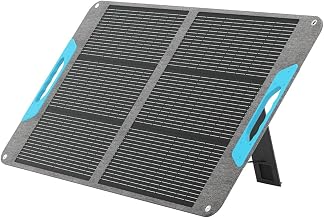
Renogy’s 100W panel hits the mid-range price tier and delivers solid performance. Per manufacturer spec sheets, it achieves 18% efficiency and includes MC4 connectors. Owner reviews on Amazon note it’s lighter than some competitors (9 lbs) and pairs well with budget power stations. Warranty is 1 year, which is standard for this price tier. Ideal if you want real charging speed without premium pricing. Price: ~.
Best for Extended Off-Grid Trips
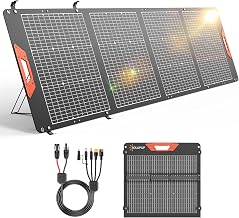
Goal Zero is known for rugged, long-lasting gear. The Nomad 200 is monocrystalline, weatherproof (IP67), and built with reinforced seams and rubberized edges. Per long-running threads on r/OffGrid and r/Overlanding, owners report 5+ years of heavy use with minimal output loss. It’s heavier (17 lbs) and pricier than mid-tier panels, but the durability justifies the cost if you camp frequently or live part-time off-grid. Comes with Goal Zero’s proprietary connector plus MC4 adapters. MSRP: ~.
Best for RV and Van Life
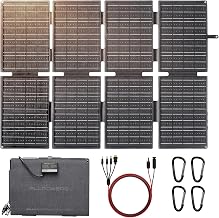
Zamp Solar panels are designed for RV and van mounting. The 160W model folds compactly (around 11 lbs) and includes an aluminum frame with adjustable mounting brackets. Per manufacturer specs, it achieves 20% efficiency and handles temperature swings well. Owner reports on RV forums note it’s one of the easiest portable panels to angle and secure on a van roof. MC4 connectors work with most modern power stations. Price: ~.
Pairing Your Panel with a Power Station
A portable solar panel alone won’t store energy—it produces power only when the sun is shining. Most campers pair a panel with a portable power station (like Best Solar Generators for Home Backup Power in 2026) to store solar energy for nighttime use.
Sizing rule of thumb: A 100–150W panel takes 4–8 hours to fully charge a 500–1000Wh power station on a sunny day. If you’re camping in partly cloudy conditions or only have 3–4 hours of peak sun, go bigger (150–200W) or plan to charge over two days.
For more on matching panel size to your power needs, see How Much Battery Backup Do You Need? Wattage Calculator & Guide.
Durability and Long-Term Performance
Solar panels degrade slowly over time. Per manufacturer spec sheets and long-term owner reports, most portable panels retain 85–90% of their rated output after 5 years of regular use. Factors that speed degradation:
- UV exposure: Panels left in direct sun year-round degrade faster. Store in shade between trips.
- Temperature extremes: Panels rated to −4°F handle most climates, but repeated freeze-thaw cycles can stress seals.
- Water intrusion: Sealed connectors (IP65+) prevent corrosion. Per teardown reviews, cheaper panels often have exposed solder points that fail after 1–2 years.
- Physical damage: Cracked glass or bent frames reduce output. Protective carrying cases are worth the investment.
For extended lifespan, store your panel in a dry place and inspect connectors annually.
Angle and Positioning for Maximum Output
Solar panel output varies dramatically with angle. Perpendicular to the sun (90°) produces maximum power; tilting 30° off-angle cuts output by 15–25%. Most portable panels include kickstands that let you adjust angle throughout the day. Spending 30 seconds to reposition your panel every 2–3 hours can boost daily charge by 20–30%.
For camping-specific guidance on setup and angle optimization, see Best Solar Panel Angle & Setup for Camping Power Generation, which covers seasonal adjustments and shade avoidance strategies.
Common Mistakes to Avoid
- Underestimating panel size: A 50W panel takes 16+ hours to charge a 1000Wh power station; most campers regret not buying 100W+. Budget for at least 100W if you plan to recharge a mid-size power station.
- Ignoring connector compatibility: Your panel’s connector must match your power station. Adapters add cost and complexity. Check before buying.
- Assuming cloudy-day output: On overcast days, expect 20–30% of rated wattage. Plan accordingly for multi-day trips.
- Leaving panels in the sun between trips: UV damage is cumulative. Store in a dark, dry place.
- Not angling the panel: Leaving a panel flat on the ground cuts output by 30–50%. Spend 30 seconds adjusting the kickstand.
FAQ
Q: Do portable solar panels work in snow? A: Snow reflects sunlight, which can boost output slightly. However, snow covering the panel surface blocks light entirely. Clear snow off the panel face to restore output. Panels rated to −4°F handle cold climates, but repeated freeze-thaw cycles can stress seals over time.
Q: Can I daisy-chain multiple portable solar panels? A: Yes, if your power station supports multiple solar inputs or you use a combiner box (a device that merges multiple panel outputs safely). Most portable power stations have one solar input port, so daisy-chaining requires either a combiner box or a second solar input. Check your power station’s manual before attempting this.
Q: Are portable solar panels waterproof? A: Most quality portable panels are water-resistant (IP65) or waterproof (IP67), meaning they handle rain and splashes. However, connectors can corrode if submerged. Don’t intentionally dunk them; store in a dry place.
Q: Can I use a portable solar panel to power an RV air conditioner? A: Not directly. An RV AC draws 1500–2000W, far more than any portable panel can produce. You’d need a massive array (5000W+) plus a large battery bank. For RV cooling, a gas generator or shore power is more practical.
Q: What’s the lifespan of a portable solar panel? A: Per aggregated owner reports, most portable panels stay functional for 5–10 years with proper care. Output degrades slowly (1–2% per year). After 10 years, expect 80–85% of original output.
Summary
Portable solar panels are the quiet, fuel-free way to keep your devices charged while camping. A 100–150W foldable panel paired with a mid-size power station covers the needs of most campers and van dwellers. Choose based on your camping style: lightweight backpackers go 50W (~), car campers pick 100–150W (~), and RV dwellers benefit from 150–200W or larger (~).
Durability matters—sealed connectors, monocrystalline panels, and reputable brands (Jackery, Goal Zero, Renogy, Zamp) hold their value and output over years of use. Pair your panel with a power station, angle it toward the sun, and you’ll have silent, renewable power for every camping trip.
For more on portable power for camping, explore Best Portable Power Bank for Camping: High-Capacity & Solar Options and Best Portable Power Stations for RVs: Boondocking & Off-Grid Living.