Portable Power Station for RV: Size, Wattage & Setup Guide

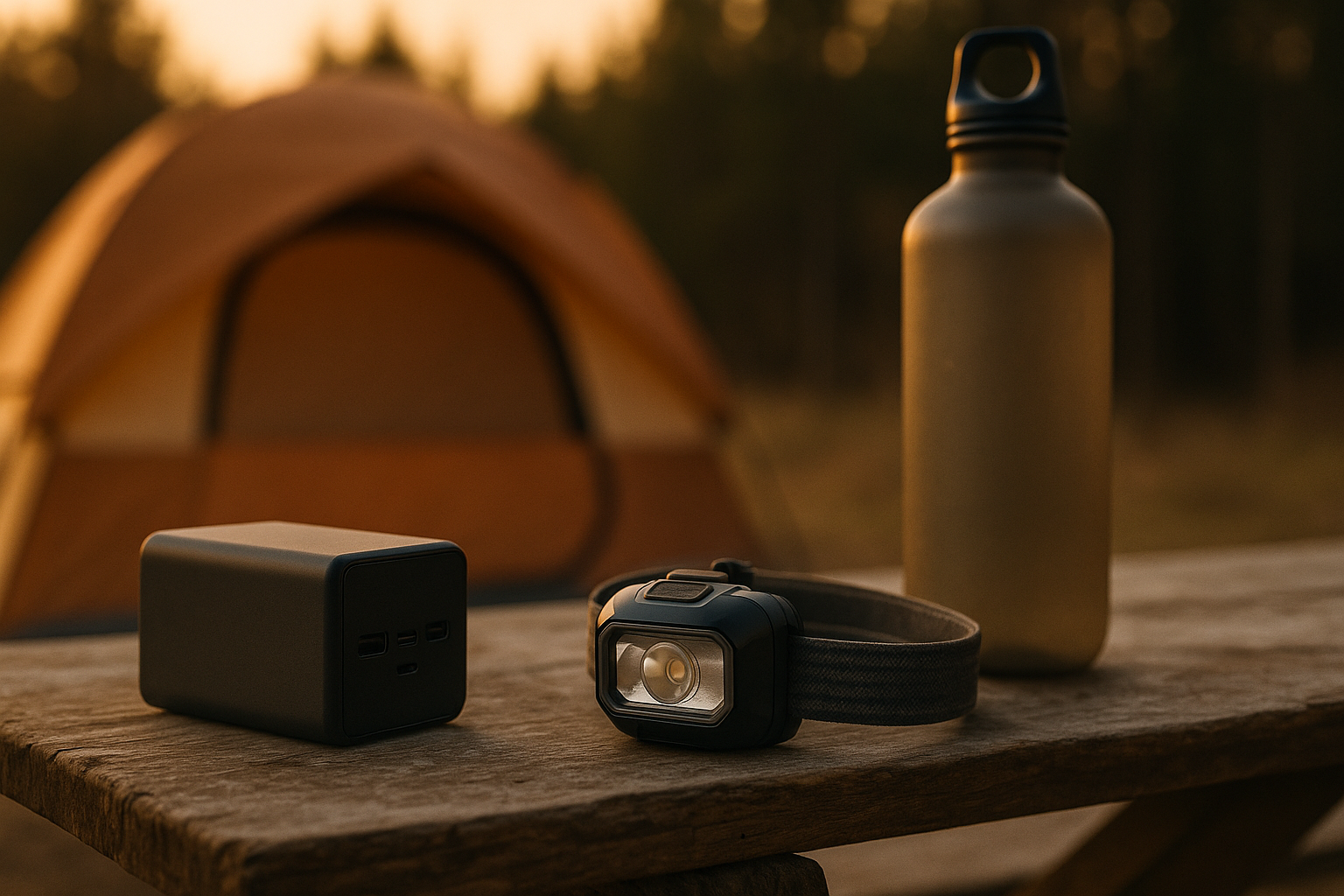
Photo by Zendure Power Station on Unsplash
Portable Power Station for RV: Size, Wattage & Setup
A portable power station is the backbone of off-grid RV living. Unlike a gas generator, it runs silently, requires no fuel storage, and won’t disturb campground neighbors. But choosing the right one means understanding your RV’s actual power needs, battery capacity in watt-hours, and how to match those to your trip length and appliance load.
This guide walks you through the core specs, sizing calculations, and real-world setup tips so you can pick a station that won’t leave you stranded or break your budget.
What Is a Portable Power Station?
A portable power station is a rechargeable battery pack with built-in inverter that converts DC battery power to AC household current. It stores energy in lithium-ion (LiFePO₄) cells and outputs that power through standard 120V outlets, USB ports, and sometimes DC terminals.
Why it matters for RVs: - Silent operation: No engine noise—ideal for campgrounds and boondocking. - No emissions: Safe to run inside or near your living space. - Reusable: Charge via solar panels, car alternator, or shore power. - Scalable: Many models support battery expansion for longer trips.
Unlike a built-in RV battery bank (which requires professional installation), a portable station is plug-and-play and moves between vehicles if you upgrade or downsize.
Understanding Wattage vs. Capacity
The two most important specs are continuous wattage and watt-hour capacity. Confusing these will lead you to buy the wrong unit.
Watt-hours (Wh) measure total energy storage—how long the station can run your gear. A 2000Wh station stores twice the energy of a 1000Wh unit.
Continuous wattage (or rated power) measures how much power the inverter can deliver at once. A station with 2000Wh but only 1000W continuous output cannot run a 1500W space heater, even if it has enough total energy. The inverter will shut off to protect itself.
Peak/surge wattage is higher than continuous wattage—it’s the brief spike when motors start. A microwave rated 1200W may surge to 2000W for 1–2 seconds on startup. The station’s peak rating must exceed that surge, or it won’t power the appliance at all.
Quick Reference Table
| Appliance | Continuous Wattage | Surge/Peak |
|---|---|---|
| Phone charger | 20W | 20W |
| Laptop | 60–100W | 100W |
| Mini-fridge (RV-style) | 150W | 300W |
| Microwave (small) | 600W | 1200W |
| Coffee maker | 800–1500W | 1500W |
| Space heater | 750–1500W | 1500W |
| Water heater (tankless, small) | 1200–3000W | 3000W+ |
| RV air conditioner | 1500–3000W | 3000W+ |
Based on typical RV appliance specifications.
Key takeaway: If you want to run a microwave and mini-fridge simultaneously, you need at least 800W continuous output. If you want an AC unit, you’re looking at 2000W+ continuous, with peak capacity of 3500W+.
Sizing Your Portable Power Station
To pick the right capacity, estimate your daily watt-hour consumption, then multiply by your trip length.
Step 1: List Your Appliances
Write down what you’ll actually run daily: - Phone/laptop charging (100–200Wh) - LED lights (50–100Wh) - Mini-fridge (400–600Wh) - Water pump (200–400Wh if you’re running off-grid) - Laptop work (200–400Wh) - TV/entertainment (100–200Wh) - Coffee maker or cooking (500–1000Wh)
Step 2: Calculate Daily Usage
Multiply appliance wattage by hours of use. Example: - 150W mini-fridge × 24 hours = 3600Wh (theoretical), but mini-fridges cycle on/off; actual daily draw is ~400–600Wh per typical RV appliance specs - 100W lights × 4 hours = 400Wh - 100W laptop × 6 hours = 600Wh - 50W phone/USB charging × 8 hours = 400Wh - Total: ~2400–2600Wh per day
Step 3: Account for Inefficiency & Reserve
Battery systems are not 100% efficient. Inverters lose ~10% energy as heat per manufacturer testing. Many RVers also avoid fully draining a lithium battery (leaving 10–20% reserve extends lifespan per manufacturer specs). So multiply your calculated usage by 1.25–1.5.
In the example above: 2500Wh × 1.3 = 3250Wh minimum capacity.
Step 4: Choose Your Trip Duration
- Weekend (1–2 days): 2000–3000Wh (if you’ll recharge via solar or shore power daily)
- Week-long boondocking: 5000–10000Wh
- Off-grid month: 10000Wh+ or expandable system with solar array
If you’re boondocking without solar, a single portable station won’t sustain you beyond 2–3 days. Plan to either add solar panels (see Portable Solar Panels for Camping: Reviews & Wattage Comparison) or combine a portable station with your RV’s built-in battery and alternator charging.
Continuous Wattage: What You Actually Need
Your continuous wattage requirement depends on what you’ll run simultaneously, not sequentially.
Light-duty RVers (phone, laptop, lights, mini-fridge): 1000W continuous is enough.
Medium-duty (above + microwave, coffee maker, water pump): 1500–2000W continuous.
Heavy-duty (above + space heater, tankless water heater, or AC unit): 2500W–3500W+ continuous.
Real-world note: Most RV air conditioners draw 1500–3000W continuous and 3000–5000W peak. A portable power station alone cannot reliably run a full-size RV AC unit for more than a few minutes. You’d need a 5000Wh+ station with 3500W+ continuous output, and it would drain in 1–2 hours. For AC, pair your station with solar input or a backup gas generator.
Battery Chemistry: LiFePO₄ vs. Ternary Lithium
Almost all modern portable power stations use one of two chemistries.
LiFePO₄ (Lithium Iron Phosphate): - Safer, more stable chemistry per independent battery testing. - Lasts 3000–5000 charge cycles per manufacturer specs (10–15 years typical use). - Slightly heavier and more expensive per watt-hour. - Better for frequent, deep cycling (boondocking lifestyle).
Ternary Lithium (NCA/NCM): - Higher energy density—lighter for the same capacity. - Shorter lifespan: 1000–2000 cycles per manufacturer specs (3–5 years). - Cheaper upfront. - Better for occasional use or shorter trips.
For RVs, LiFePO₄ is the standard choice because you’ll cycle it regularly and want it to last through years of boondocking. Most premium stations (EcoFlow, Bluetti, Goal Zero, Jackery’s higher-end models) use LiFePO₄.
Input & Recharging Options
A portable power station is only useful if you can recharge it. Know your input options before buying.
AC (wall outlet): Fastest recharge. A 2000Wh station typically charges in 2–4 hours on a 240V outlet, 4–8 hours on 120V. Useful at RV parks with shore power.
Solar input: Recharge while boondocking. Requires a dedicated solar panel array (see Portable Solar Panels for Camping: Reviews & Wattage Comparison). Charge speed depends on panel wattage and sunlight. A 400W solar array might add 1000–1500Wh on a clear day.
Car/RV alternator: Charge via 12V DC input while driving. Slow (adds 500–1000Wh per 2-hour drive), but useful for topping up between camps.
Multiple input: Premium stations support simultaneous AC + solar charging, cutting recharge time significantly.
Recommendation: For serious boondocking, pair a 5000Wh+ portable station with 400–600W of solar panels. This gives you energy independence without relying on generator fuel or campground hookups.
Portability vs. Capacity Trade-Off
Larger capacity = more weight. A 5000Wh station weighs 50–80 lbs; a 10000Wh unit can exceed 100 lbs. Consider:
- Solo travelers or small RVs: Stick to 2000–3000Wh (30–50 lbs) unless you have a dedicated spot in your vehicle.
- Couples or larger rigs: 5000–10000Wh is manageable and offers real autonomy.
- Permanent RV setup: Use a heavy, expandable system (Bluetti AC500, EcoFlow Delta Pro) that stays mounted; weight is less critical.
Common Setup Mistakes
Mistake 1: Buying wattage without capacity. You pick a station with 2000W continuous output but only 1000Wh capacity. You can run a microwave, but only for 30 minutes before the battery dies. Match both specs to your needs.
Mistake 2: Ignoring surge power. Your mini-fridge compressor surges to 300W on startup, but your station’s peak rating is only 250W. It won’t power the fridge reliably. Always check peak/surge specs, not just continuous.
Mistake 3: Overestimating solar recharge. A 200W solar panel in perfect sunlight generates ~200Wh per hour. Clouds, angle, and shade reduce that by 30–70%. Plan for 3–5 peak sun hours per day in most climates, not theoretical maximums.
Mistake 4: Draining to zero. Repeatedly fully discharging a lithium battery shortens its lifespan. Most manufacturers recommend keeping 10–20% reserve. If you have a 5000Wh station, treat 4000–4500Wh as your usable capacity.
Mistake 5: Forgetting temperature limits. Lithium batteries perform poorly in cold (below 32°F). Charging below freezing can permanently damage the cells. If you RV in winter, look for stations with built-in heating or insulated cases.
Integration with Your RV’s Built-In System
Most RVs have a 12V battery bank (usually 100–200Ah of lead-acid or lithium). A portable power station is not a replacement; it’s a supplement.
Why both? - Your RV battery powers lights, water pump, and furnace (via an inverter) when parked. - A portable station gives you extra AC capacity for high-draw appliances without draining the main bank. - If your RV battery fails, the portable station keeps you functional until repair.
Smart setup: Use your RV’s built-in battery for essential systems (lights, water pump, furnace). Use the portable station for luxury loads (microwave, coffee maker, laptop charging). This extends both systems’ lifespan.
See Van Life Power Setup: Portable Stations, Solar & Inverters Explained for step-by-step guidance on wiring portable stations to RV batteries and integrating them with your existing power infrastructure.
Top Picks by Use Case
Best for weekend getaways under 2 days:
Best for week-long boondocking: EcoFlow Delta Pro Massive 3600Wh capacity (expandable to 7200Wh with battery modules). 3000W continuous output runs microwaves and water heaters. Fast AC and solar recharge. Modular design grows with your needs.
Best for budget-conscious RVers: Anker 757 PowerHouse 1229Wh capacity, 1500W continuous output. Solid mid-range option with reliable performance, fast charging, and good value per watt-hour. Suitable for weekend trips and light daily use.
Best for solar expansion: Goal Zero Yeti 1500X 1516Wh capacity, 2000W continuous. Built-in solar input and modular design. Pairs well with Goal Zero’s solar panels. Good for RVers planning to add panels later.
Best for high-power appliances: Bluetti AC500 + B300S Highest continuous wattage available (5000W). 3072Wh base capacity, expandable to 12288Wh. Required for running AC units, tankless water heaters, or multiple high-draw appliances simultaneously. Premium pricing reflects capability.
FAQ
Q: Can a portable power station power my RV’s air conditioner? A: Not reliably as a sole power source. AC units surge to 5000W, and even a 10000Wh station would drain in 90 minutes at full load. You’d need a 10000Wh+ station with 3500W+ continuous output plus active solar recharge. For AC, consider a backup gas generator or invest in a large, expandable system like the Bluetti AC500.
Q: How long does a portable power station last? A: LiFePO₄ stations last 3000–5000 charge cycles, roughly 10–15 years of regular use. Ternary lithium lasts 1000–2000 cycles (3–5 years). Lifespan also depends on depth of discharge (avoiding full drain extends it) and temperature (cold storage degrades cells faster).
Q: Do I need a portable power station if my RV has a built-in battery? A: Not strictly, but a portable station adds flexibility. Your RV battery powers essential systems; a portable station supplements it for high-draw appliances, extends your boondocking time, and provides backup if the main battery fails. Many RVers use both.
Q: What’s the difference between a portable power station and a solar generator? A: A solar generator is a portable power station with integrated solar panels or a bundled panel kit. The core unit is identical. Buying them separately often offers better value and flexibility—you choose the panel wattage and angle independently.
Q: Can I use a portable power station indoors? A: Yes, safely. Unlike gas generators, portable stations produce no carbon monoxide or emissions, making them ideal for use inside your RV or tent. They run silently and generate minimal heat.