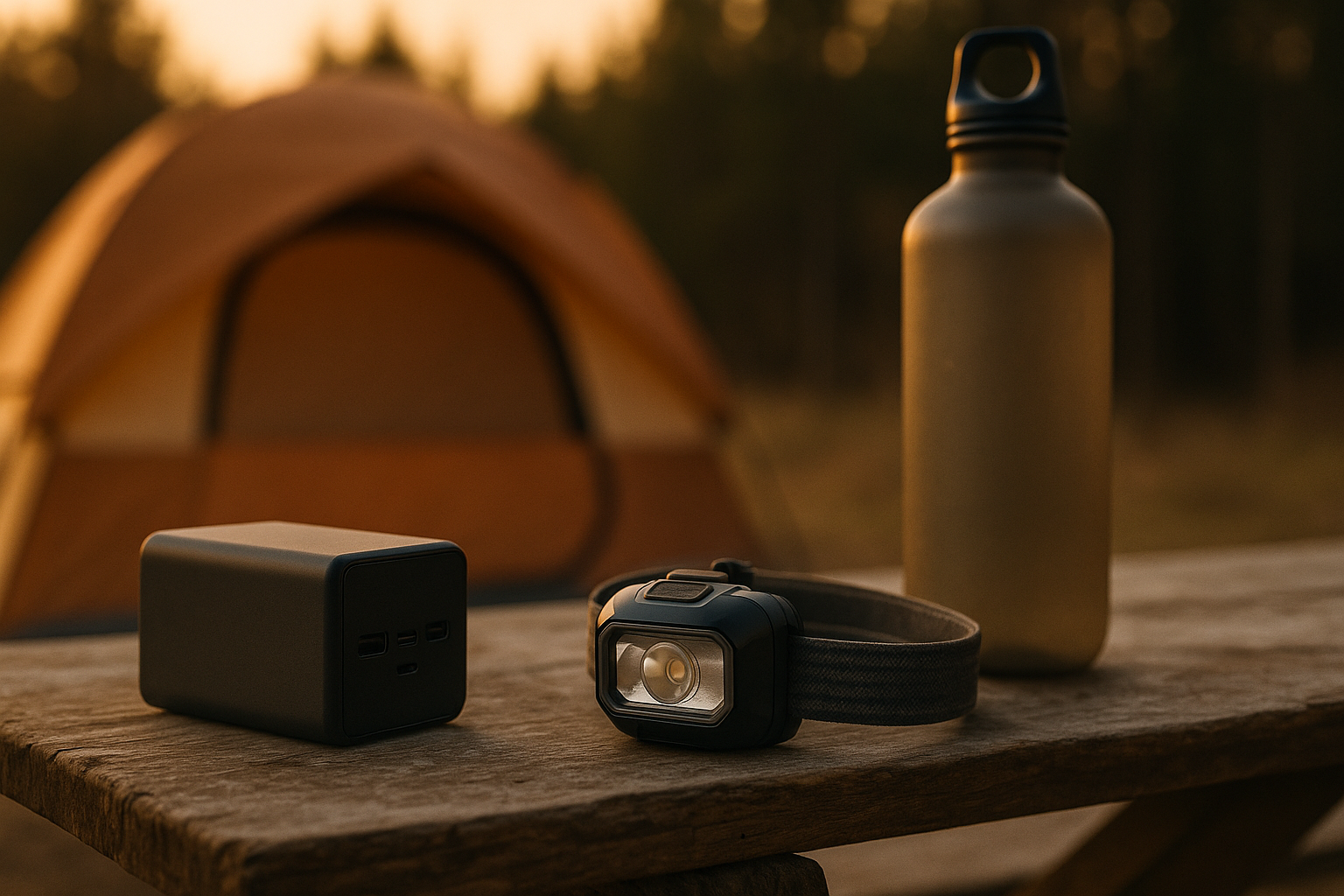
Lightweight Emergency Gear for Van Life: Compact & Essential

Photo by Mathurin NAPOLY / matnapo on Unsplash
Lightweight Emergency Gear for Van Life: Compact & Essential
Van life means living in a space where every pound counts and every cubic inch matters. A full-size emergency kit built for a house won’t work—you need gear that packs down, weighs almost nothing, and actually fits in a cabinet or under a bunk. This guide walks you through the core emergency systems that van dwellers genuinely rely on, organized by weight and use case so you can build a kit that travels with you.
The Van Life Emergency Reality
Most van emergencies fall into a few overlapping categories: power loss (dead battery, alternator failure, solar malfunction), water unavailability (tank freeze, contamination, pump failure), medical or injury response, mechanical breakdown, and severe weather shelter. Unlike RV owners with slide-outs and full basements, van lifers operate in tight quarters where redundancy and compactness are equally important.
The best van emergency kit isn’t one monolithic bag—it’s a layered system. You’ll have a grab-and-go medical pouch, a power backup strategy (usually portable battery + solar), a water contingency, and a tool kit. Together, these should weigh under 50 lbs and fit in a dedicated locker or under-bed storage.
Quick Picks: Scenario-Based Recommendations
Best for solo van dwellers under 30 lbs: Jackery Explorer 500 (500Wh, 11 lbs, ~) + Sawyer Squeeze water filter (3 oz, ~) + compact medical pouch (2 lbs). This combination covers power loss and water contamination without exceeding weight constraints.
Best for cold-climate emergencies: Bluetti AC500 + B300S (5,000Wh, 62 lbs total, ~) paired with a 400W solar panel array. The larger capacity handles extended cloudy periods and powers auxiliary heat during freezes.
Best budget option: Anker 555 PowerHouse (1024Wh, 22 lbs, ~) + Lifestraw Go 2-stage (5 oz, ~) + DIY medical kit assembled from drugstore supplies (~). Covers 24–48 hours of emergency power and water filtering.
Power: The Backbone of Van Emergency Prep
Power failure is the most common van emergency. Your house battery dies, your alternator fails mid-trip, or your solar panels get snowed in. You need a second power source that’s portable and doesn’t require fuel.
Portable power stations are the standard. A mid-tier unit in the 500–1000 Wh range (roughly 10–20 lbs) covers phone charging, laptop top-ups, small appliance runs, and emergency lighting for 24–48 hours depending on load. A 700Wh power station runs a 50W 12V fridge for approximately 14 hours (700Wh ÷ 50W = 14 hours) or a 60W laptop for roughly 11–12 hours under real-world conditions (accounting for inverter loss).
We recommend the Jackery Explorer 500 (500Wh, 11 lbs, ~) for most van lifers. It’s compact enough to fit under a bunk, charges phones 10+ times, and runs small appliances for extended periods. Best Portable Power Station for Camping Under $1000 in 2026
Pair the power station with a portable solar panel (100–200W) to recharge it passively. A 200W panel adds roughly 200 Wh per day in decent sun—enough to maintain your power station and trickle-charge devices even if you’re parked and waiting out weather. Foldable solar panels weigh 5–8 lbs and collapse to the size of a large book.
Portable Solar Panels for Camping: Reviews & Buyer's Guide 2026
For truly lightweight backup, add a portable power bank (20,000–30,000 mAh) in your vehicle’s glove box or cab. It weighs under 1 lb, charges phones 5–8 times, and costs budget-tier pricing.
Best Emergency Power Banks for Camping & Off-Grid Travel
Total power kit weight: 15–25 lbs (power station + solar) plus 1 lb (power bank).
Water: Redundancy Saves You
Van water systems are fragile. A frozen tank, contaminated supply, or failed pump can leave you without drinking or washing water in hours. Weight-conscious redundancy is your answer.
-
Portable water filter—Sawyer Squeeze (3 oz, ~ filters 100,000 gallons per manufacturer spec): Fits in a cup holder, removes bacteria, protozoa, and sediment. Use it to filter any natural water source—stream, lake, or sketchy tap water in remote areas.
-
Collapsible water containers (2–3 gallons): When empty, they weigh almost nothing and compress to the size of a cereal box. When your tank fails, you can hand-carry water from a town spigot or fill from a creek. Carrying two 3-gallon containers gives you 6 gallons of emergency backup (roughly 1 day for one person).
-
Water purification tablets (iodine or chlorine dioxide, e.g., Aquamira): ~0.5 oz, cost budget-tier, treat 100+ gallons. Slower than a filter but weigh almost nothing and don’t require electricity.
-
Backup drinking supply: Keep 1–2 gallons of bottled water sealed in a cool locker. Rotate it quarterly. Weight: 8–16 lbs, but it’s pure insurance.
Total water kit weight: ~2 lbs (filter + tablets + containers empty) plus 8–16 lbs (bottled reserve).
Medical & First Aid: Compact but Complete
Van injuries often happen far from urgent care. Road rash from a fall, a cut from a sharp edge, minor burns from the stove—these need immediate attention. Infection risk is higher when you’re living in a mobile space with limited sanitation.
Pre-assembled option: Adventure Medical Kits Ultralight & Watertight.5 (~ 5 oz) includes sterile gauze, antibiotic ointment, pain relief, and blister treatment in a waterproof pouch. Ideal for grab-and-go scenarios.
Build-from-scratch option: Assemble a medical pouch (small zippered bag, ~2 lbs when full) with:
- Sterile gauze pads and medical tape (for wounds)
- Antibiotic ointment and alcohol wipes (infection prevention)
- Elastic bandages and athletic tape (sprains, securing dressings)
- Tweezers and small scissors (splinter removal, tape cutting)
- Pain relief (ibuprofen, acetaminophen tablets)
- Antihistamine (allergic reactions, insect bites)
- Anti-diarrheal and antacid (stomach issues on the road)
- Blister treatment (moleskin, blister pads)
- CPR face shield or barrier (if trained in CPR)
- Thermometer (monitor fever)
- Prescription medications + 2-week backup supply
Total medical kit weight: ~2 lbs (pre-assembled) or ~2–3 lbs (custom built).
Tools & Repair Essentials: The Minimalist Approach
A full mechanics’ toolbox doesn’t fit in a van. Instead, carry a core repair kit (5–8 lbs) focused on the failures you’re most likely to encounter:
- Multi-tool or knife: Leatherman Signal (6.5 oz, ~ includes fire starter and whistle) or Victorinox Huntsman (3.3 oz, ~ classic blade and pliers). Both handle 80% of quick fixes.
- Adjustable wrench (8–10 inch): 5–8 oz, covers most bolt sizes.
- Pliers (slip-joint or locking): 3–5 oz, crimping, bending, gripping.
- Screwdriver set (compact, 4–6 bits): 3–4 oz.
- Duct tape and Gorilla tape (small rolls): 2–3 oz, temporary fixes for hoses, panels, seals.
- Zip ties and hose clamps (assorted): 1 oz, emergency plumbing and cable management.
- Spare fuses (automotive assortment): 0.5 oz, electrical safety.
- Jump-start cables or portable jump box (if you have room): 1–2 lbs, critical for battery failure.
- Spare serpentine belt (if you know your van’s size): 2–3 oz, prevents alternator failure stranding.
Most van breakdowns on the road are electrical (battery, alternator, fuses), hose/seal failures (water, coolant leaks), or minor mechanical (loose bolts, stuck latches). This kit handles all three categories.
Total tools weight: 8–12 lbs.
Shelter & Weather Protection
Van life means you’re already in shelter, but emergencies can force you outside (breakdown on the roadside, evacuation, breakdown recovery). Lightweight weather gear is non-negotiable.
- Emergency space blanket (reflective Mylar): 1–2 oz, retains 90% of body heat per manufacturer spec.
- Lightweight rain poncho or tarp (nylon, 5–8 ft): 4–6 oz, covers you and gear during roadside breakdown.
- Warm layer (fleece or wool base layer): 4–8 oz, stays in your van year-round.
- Hat and gloves (in a small stuff sack): 2–3 oz, critical in cold climates.
Total shelter weight: ~1 lb.
Emergency Documents & Communication
- Laminated copies of vehicle registration, insurance, emergency contacts: 0.5 oz.
- Backup phone charger (USB-C cable + wall adapter): 2–3 oz, redundancy if your main charger fails.
- Offline maps (printed or downloaded on your phone): 0.5 oz if printed, zero if digital.
- Two-way radio or satellite communicator (if traveling remote): 4–12 oz, insurance in dead-zone areas.
Total documents weight: 1–2 lbs.
Assembly: The Modular Approach
Rather than one big emergency kit, organize your gear into three tiers:
-
Grab-and-go bag (2–3 lbs): Medical pouch, power bank, water filter, space blanket, multi-tool. Lives under the passenger seat or in a bedside locker. Covers you if you break down and have to walk for help.
-
Van-resident kit (10–15 lbs): Solar panel, full water backup (containers + tablets), tool kit, documents, shelter gear. Stays in a dedicated locker under the bed or in a cabinet. Covers extended power loss, water failure, or mechanical breakdown.
-
Vehicle-specific kit (varies): Spare belts, hoses, fluids, fuses, and jump cables specific to your van model. Lives in the engine bay or a tool cabinet. Covers the exact failures your van is prone to.
This modular approach means you’re not carrying redundant weight—the grab-and-go covers immediate survival if stranded, and the van kit covers longer outages or repairs.
Storage & Rotation
Keep your emergency gear: - Accessible: Don’t bury it under 50 other items. A labeled bin or locker that you can reach in under 2 minutes. - Cool and dry: Extreme heat damages batteries, water, and medications. Avoid direct sunlight or the engine bay. - Rotated quarterly: Check expiration dates on medications, water, and food. Replace corroded batteries. Test your power station monthly. - Documented: Keep a photo of your kit on your phone, plus a checklist. When you use something, replace it immediately.
FAQ
Q: What’s the best power station for a 200 sq ft van? A: A 500–1000 Wh unit like the Jackery Explorer 500 or Anker 555 PowerHouse. These run essential loads (fridge, lights, phone charging) for 24–48 hours without taking up much space. Anything larger is overkill unless you’re running a heater or AC.
Q: How do I winterize my water kit? A: Add insulation around your main tank (pipe insulation or foam), carry collapsible containers so you can hand-haul water if the tank freezes, and keep water purification tablets as a backup if your filter clogs from sediment in winter sources. Store your Sawyer Squeeze filter indoors at night to prevent internal freeze damage.
Q: Should I carry a portable generator instead of a power station? A: For van life, no. Generators are loud, require fuel storage (safety and space issue), and their exhaust is a health risk in tight quarters. A power station is quieter, cleaner, and lighter. Portable Power Station vs Gas Generator: Which Backup Power Wins?
Q: What’s the weight limit before my kit becomes too heavy? A: Most van lifers aim for 40–50 lbs total. Beyond that, you’re sacrificing storage space, affecting fuel economy, and making the kit unwieldy to access. Prioritize items by frequency of use: power and water first, tools second, shelter and documents third.
Q: How often should I test my emergency kit? A: Monthly for power (charge the power station, test the solar panel), quarterly for everything else (check expiration dates, rotate water, verify tools work). Many van lifers do this on the first of the month as a routine.
Build Your Kit: Month-by-Month Checklist
Month 1: Add a 20,000 mAh power bank (~1 lb, ~) and Sawyer Squeeze water filter (3 oz, ~). Test both.
Month 2: Add a 500Wh power station (11 lbs, ~) and a 100W solar panel (5 lbs, ~). Charge the power station fully and run a 50W device for 2+ hours to verify runtime.
Month 3: Add a medical pouch (2 lbs, ~) and a compact multi-tool like the Victorinox Huntsman (3.3 oz, ~).
Month 4: Add collapsible water containers (2–3 gallons, ~), water purification tablets (~), and a tool kit with wrench, pliers, and screwdrivers (6 lbs, ~).
Month 5: Add shelter gear—space blanket, rain poncho, warm layer, hat, gloves (1 lb, ~).
Month 6 onward: Rotate and maintain. Replace expired items, test power systems monthly, and add vehicle-specific spares (belts, hoses, fuses) as you learn your van’s weak points.