Portable Power Station vs Gas Generator: Which Wins in 2026?

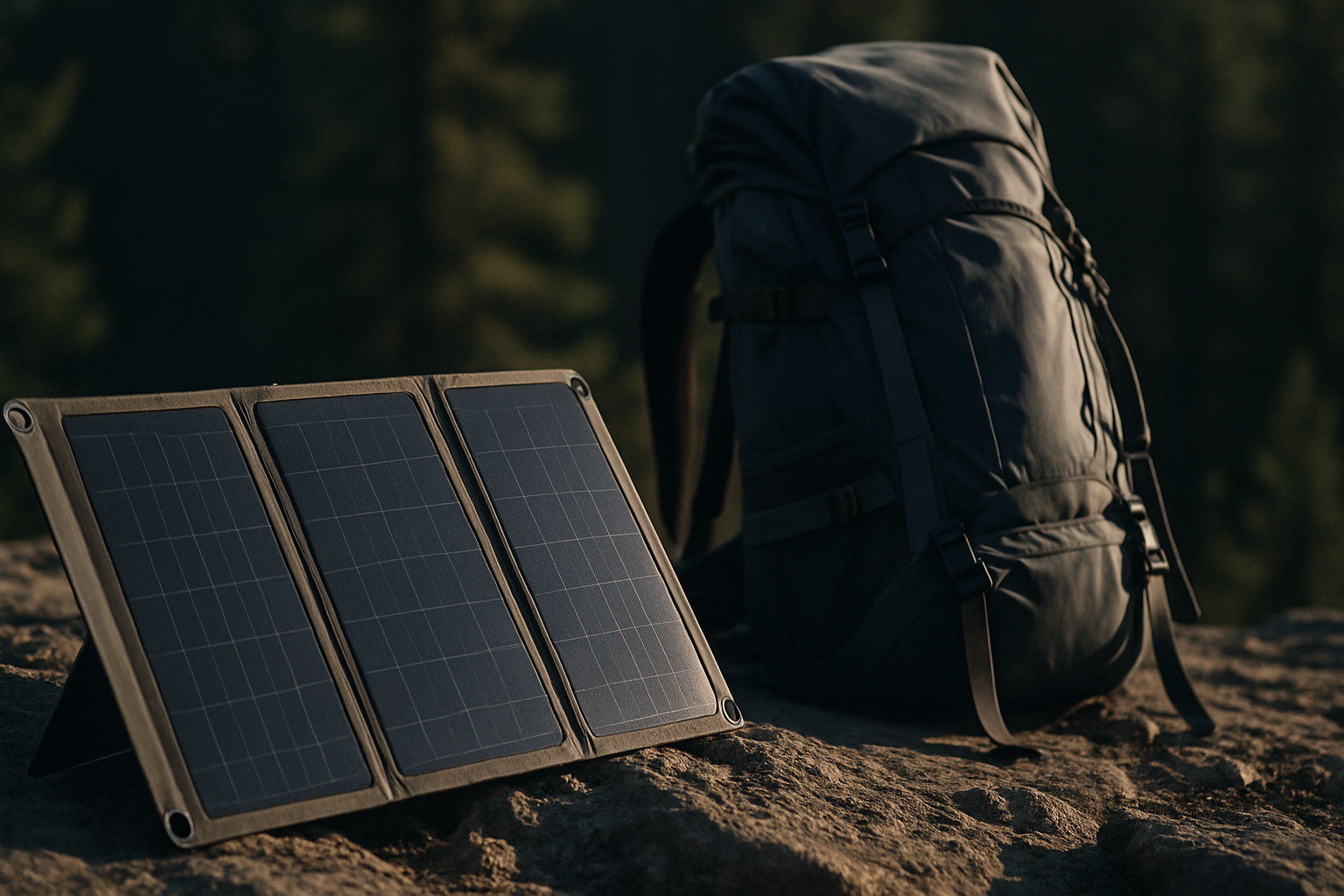
Photo by Jackery Power Station on Unsplash
Portable Power Station vs Gas Generator: Which Backup Power Wins?
When the power cuts out, you need to choose fast: a portable power station (battery-based) or a gas generator (fuel-burning). Both keep the lights on, but they solve the problem in fundamentally different ways. This guide cuts through the marketing to show you exactly what each technology delivers—and which one actually makes sense for your situation.
The Core Difference: Battery vs. Fuel
A portable power station is a rechargeable battery pack with built-in inverter and outlets. You charge it at home (or via solar panels), then deploy it anywhere. No fuel, no fumes, no moving parts that wear out.
A gas generator burns gasoline or propane to spin a motor and produce electricity on demand. You carry fuel with you, refill as needed, and it runs until you add more gas.
That one-sentence split explains almost everything that follows.
Runtime and Refueling: The Hidden Cost
Portable power stations have a fixed runtime based on battery capacity (measured in watt-hours, or Wh) and how much power you’re drawing. A 3,000 Wh unit running a constant 300-watt load lasts roughly 10 hours—but this assumes steady, uninterrupted draw. Real-world usage varies: a fridge cycles on and off, a laptop charges then sits idle, a light runs intermittently. Actual runtime is often 20–40% longer than the math suggests. When the battery empties, you either wait for a recharge (4–8 hours from wall power, or 1–3 days from solar panels) or swap in a second unit.
Gas generators run as long as you have fuel. A typical 5,000-watt generator burns through a 5-gallon tank in 8–12 hours at half load. You refuel in minutes. For extended trips, you simply carry extra fuel cans.
Winner for continuous runtime: gas generators, by a wide margin. If you need 48 hours of uninterrupted power and can’t recharge, fuel is the answer.
Winner for convenience at home or base camp: portable power stations. No fuel smell, no need to stock gasoline (which degrades over time), and you recharge while you sleep.
Noise: Why Your Neighbors Matter
Gas generators are loud. Most produce 80–95 decibels at operating distance—roughly the sound of a leaf blower or heavy traffic. At night or in a campground, that’s a real problem.
Portable power stations are silent. Zero decibels. You hear nothing. This is a massive advantage if you’re in an RV park, residential neighborhood, or anywhere people are trying to sleep.
Per long-running threads on r/camping and r/overlanding, noise is the #1 reason users ditch gas generators after one or two trips. Neighbors complain, campground staff ask you to leave, and you end up running the generator at odd hours just to keep peace.
Winner: portable power stations, decisively.
Emissions and Air Quality
Gas generators emit carbon monoxide (CO), nitrogen oxides, and particulates. In enclosed spaces—garages, basements, RVs—they’re genuinely dangerous. Never run a gas generator indoors.
Portable power stations produce zero emissions. You can charge devices in a tent, cabin, or apartment without any ventilation risk.
Winner: portable power stations. Not close.
Maintenance and Longevity
Gas generators require regular maintenance: - Oil changes every 50–100 hours of use - Fuel stabilizer added to prevent carburetor gum-up during storage - Spark plug replacement annually - Winterization if you live in a cold climate - General wear on pistons, rings, and bearings over time (typically 1,000–5,000 hours before major repairs)
Per manufacturer warranty data (Champion, Honda, Westinghouse all offer 2–3 year limited warranties covering defects), a well-maintained gas generator lasts 5–10 years of moderate use. Third-party testing by Consumer Reports and independent repair shops confirms this range.
Portable power stations have no oil, no spark plugs, no carburetor. Maintenance is almost zero. Lithium battery packs degrade over time (typically losing 5–10% capacity per year in heavy use), but most units come with 5–10 year warranties. Per manufacturer specifications and third-party durability testing, the failure rate on modern portable power stations is low when you avoid extreme temperatures.
Winner: portable power stations. Less hassle, more predictable lifespan.
Upfront Cost vs. Total Cost of Ownership
Here’s a concrete comparison over 10 years:
Portable Power Station (EcoFlow Delta Pro, ~) - Battery replacement at year 7: - Solar panels (optional, amortized): - Maintenance: - Total: ~
Gas Generator (Champion 5000W, ~) - Oil and filters (every 50 hours): - Spark plugs and carburetor cleaner: - Fuel (assume 100 hours/year at /gal, 0.6 gal/hr): - Replacement unit at year 8 (wear-out): - Total: ~
For occasional use (10–20 hours/year), gas generators are cheaper. For regular use (100+ hours/year) or if you add solar panels, portable power stations break even by year 5–6 and pull ahead significantly by year 10.
Winner: portable power stations for long-term ownership; gas generators for one-off emergencies on a tight budget.
Power Quality and Device Safety
Modern portable power stations use pure sine wave inverters, which output clean electricity identical to your home wall outlet. Sensitive electronics (laptops, medical equipment, modern appliances) run safely.
Gas generators vary. Roughly 60–70% of consumer gas generators on the market use modified sine wave inverters, which produce a “choppier” electrical signal that can damage or degrade sensitive devices over time. Models like Honda EU2200i, Champion 3100-Watt Inverter, and Westinghouse iGen2500 offer pure sine wave output, but they typically (vs. for modified sine wave models).
Per manufacturer spec sheets and owner reports, medical-grade devices (CPAP machines, insulin pumps, pacemaker chargers) almost always require pure sine wave power. Portable power stations are the safer choice here.
Winner: portable power stations, especially if you’re powering medical equipment or expensive electronics.
Weight, Portability, and Setup
Portable power stations are compact and light. A 3,000 Wh unit weighs 30–50 pounds and fits in a car trunk. Plug it in, turn it on, done.
Gas generators are heavier (50–150+ pounds depending on wattage) and bulkier. They also need a flat surface, proper ventilation, and time to warm up. Setup takes longer.
For backpacking, kayaking, or van life, portable power stations are far more practical. For stationary use (like a backup at your house or a construction site), weight matters less.
Winner: portable power stations for mobility; gas generators for stationary power needs.
Scalability and Expansion
Portable power stations are modular. Many modern units support battery stacking or modular expansion—you buy additional batteries and link them together to increase total capacity. Per manufacturer documentation, you can scale from 2,000 Wh to 10,000+ Wh without buying a whole new unit.
Gas generators are fixed-capacity. You buy a 5,000-watt model, and that’s what you have. To increase power, you buy a second generator.
Winner: portable power stations for flexibility.
When to Choose Each
Choose a Portable Power Station If:
- You’re in or near a residential area where noise matters
- You need silent, emission-free backup
- You’ll recharge it regularly (home use, base camp with solar)
- You want minimal maintenance
- You’re powering sensitive electronics or medical devices
- You value portability and ease of setup
- You plan to use backup power 50+ hours per year
Choose a Gas Generator If:
- You need 24+ hours of continuous runtime without refueling
- You’re in a remote location far from power outlets
- Upfront cost is your primary constraint and you’ll use it fewer than 20 hours per year
- You already have fuel storage and maintenance habits
- You’re running heavy construction equipment or tools that demand raw power
- You need pure sine wave output and want to avoid the premium cost of portable stations
FAQ
How long does a portable power station take to recharge, and why is solar so slow? Wall outlet recharge: 4–8 hours from empty on a standard 120V outlet. Solar recharge: 1–3 days depending on panel wattage and sunlight. Solar is slow because even a 400-watt solar panel produces only 1.6 kWh per day in ideal conditions (6 peak sun hours). A 5,000 Wh station needs 3+ days of full sun. On cloudy days, add 50–100% more time. Wall charging is faster because it delivers 500–2,000 watts directly.
Can I run a refrigerator on a portable power station? Yes, if the unit has sufficient capacity. A typical fridge draws 150–600 watts depending on size and compressor cycles. A 3,000 Wh unit can run a modest fridge for 5–10 hours. For longer runtime, pair your station with solar panels or choose a larger capacity unit.
Are portable power stations safe to use indoors? Yes, completely. They produce zero emissions and no heat. Gas generators must always be used outdoors and at least 20 feet from windows or doors due to carbon monoxide risk.
Which is cheaper to operate over time? Portable power stations, especially if you add solar panels. After the initial purchase, your fuel cost is zero. Gas generators require ongoing fuel purchases (which fluctuate with oil prices) plus maintenance supplies. See the “Upfront Cost vs. Total Cost of Ownership” section for a worked example.
Can I use both a portable power station and a gas generator together? Yes. Some users deploy a portable power station for daily/emergency use and keep a gas generator as a backup for extended outages. This hybrid approach covers both noise-sensitive and high-runtime scenarios.
Summary
Portable power stations and gas generators solve the same problem—keeping devices powered when the grid fails—but they make different trade-offs. Portable stations win on noise, emissions, maintenance, and safety. Gas generators win on raw runtime and upfront cost for one-time use.
For most modern users (especially in residential areas, RVs, or with renewable energy plans), a portable power station is the better choice. For remote work sites, construction, or situations demanding 48+ hours of uninterrupted fuel-based power, a gas generator still has its place.
Your choice depends on your location, usage pattern, and what you’re powering. If you’re torn, start with a mid-tier portable power station and add solar panels over time. You’ll gain silent, clean backup power with zero fuel trips—and you can always keep a small gas generator in the shed as a last-resort backup.