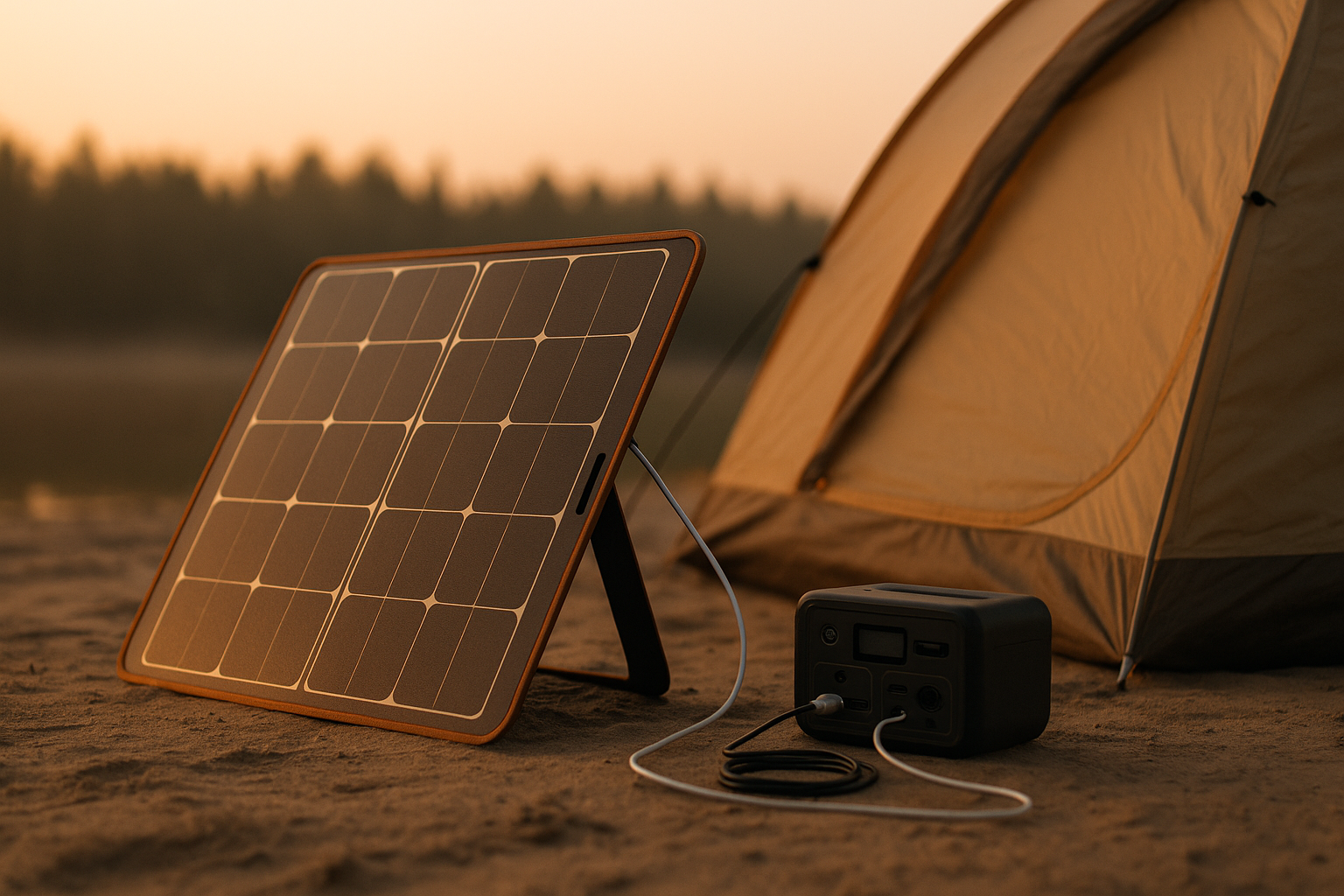
Best Solar Generators for Home Backup Power in 2026

Best Solar Generators for Home Backup Power in 2026
A solar generator—technically a battery storage system paired with a solar charge controller—is your best option for silent, fuel-free home backup during grid outages. Unlike gas generators, they produce zero emissions, require no fuel runs, and cost nothing to operate after the upfront purchase. The trade-off: they’re heavier, more expensive per watt-hour, and depend on sunlight to recharge. This guide compares the leading models and explains how to pick the right capacity for your home.
What Is a Solar Generator (and How It Differs from Gas)?
A solar generator is a rechargeable battery system (usually lithium-ion or LiFePO4) with an integrated inverter that converts DC power to AC household current. You charge it via solar panels, wall outlet, or a car charger—not by burning fuel.
Key differences from gas generators:
- Noise: Silent operation (0–5 dB) vs. gas generators at 80–100 dB
- Emissions: None vs. carbon monoxide and fumes
- Fuel cost: /year after purchase vs. ongoing propane or gasoline
- Maintenance: Battery checks and occasional software updates vs. oil changes, spark plugs, and winterization
- Lifespan: 10–15 years (LiFePO4) vs. 5–10 years (gas engine)
- Recharge speed: 6–48 hours with solar (depends on panel wattage) vs. instant (fuel) but slower to “refuel” the tank
Solar generators shine for predictable outages (storms, rolling blackouts) where you have a few hours to a day of sunlight. Gas generators are still faster for immediate, prolonged outages in winter or heavy cloud cover.
See Portable Power Station vs Gas Generator: Which Backup Should You Buy? for a detailed head-to-head.
How Much Capacity Do You Actually Need?
Capacity is measured in watt-hours (Wh). To pick the right size:
- List your critical loads (refrigerator, furnace, well pump, medical devices, lighting, internet router).
- Find their wattage (check the nameplate or manual; or estimate: LED bulbs ~10W, fridge ~600W, furnace blower ~1000W per typical HVAC specs).
- Multiply by hours you want to run them (e.g., fridge 600W × 24 hours = 14,400 Wh).
- Add 20–30% buffer for inverter losses and battery headroom.
A typical home backup covers: - Essentials only (fridge, lights, router): 5,000–10,000 Wh - Essentials + heating/cooling: 15,000–25,000 Wh - Whole-home comfort (AC, electric cooking, laundry): 30,000+ Wh
Use How Much Battery Backup Do You Need? Wattage Calculator & Guide to calculate your specific needs.
Top Solar Generators by Category
Premium: Modular & Expandable Systems
EcoFlow Delta Pro
The Delta Pro is purpose-built for home backup with expandability. It ships with a 5 kWh battery and integrated 3,600W inverter. You can chain up to three batteries (15 kWh total) and pair it with EcoFlow’s smart home hub for automatic load-shedding during outages. The system reliably powers a refrigerator, furnace blower, and lights for 24–48 hours depending on load.
Strengths: Modular design, fast AC charging (recharges from empty in ~2 hours at 240V), UPS-mode automatic switchover, 10-year warranty on battery. EcoFlow’s app alerts you to firmware updates automatically.
Weaknesses: Premium-tier pricing, requires professional installation for whole-home integration, heavier than portable alternatives.
Best for: Homeowners planning long-term backup who don’t mind a permanent install.
Mid-Tier: Portable + Practical
Bluetti AC500 + B300S Battery Module
The AC500 is a 5 kWh base system with a 6,000W inverter that can expand to 13.6 kWh by adding B300S battery modules. It supports both solar and grid charging, and per Bluetti’s spec sheet, the MPPT charge controller accepts up to 3,400W of solar input—meaning you can recharge a fully depleted battery in 2–3 sunny days with a large panel array. The system is UPS-capable and includes a 10-year battery warranty.
Strengths: Excellent solar input capacity, modular, lower entry price than EcoFlow, strong warranty. Bluetti requires manual firmware checks via the app; plan quarterly reviews.
Weaknesses: Heavier than portable models, not as sleek as Delta Pro, slower AC recharge than Delta Pro at 120V.
Best for: Budget-conscious homeowners who want expandability and don’t need premium aesthetics.
Anker Solix X1
A newer contender with a 5.12 kWh capacity and 6,000W inverter. It accepts up to 2,400W of solar input and includes a built-in MPPT charge controller. Per Anker’s specifications and early owner reports, it recharges fully from solar in 1–2 days in good sunlight, faster than comparable Bluetti systems. It also supports 240V AC charging for grid backup.
Strengths: Fast solar recharge, compact form factor for a 5 kWh unit, intuitive app, modular expansion available.
Weaknesses: Newer brand with less long-term user history than EcoFlow or Bluetti, premium-tier pricing.
Best for: Homes in sunny climates where fast recharge is a priority; users who value speed over brand history.
Budget-Friendly: Smaller Capacity
Jackery Explorer 1000 Plus
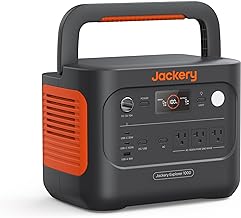
A 1.26 kWh portable unit with a 2,000W inverter. It’s not a whole-home solution, but it runs a refrigerator for 12–20 hours (depending on fridge efficiency) or a sump pump for 24+ hours. Recharges via 400W solar input, wall outlet, or car charger. Per aggregated Amazon owner reviews, it’s reliable for renters or temporary backup.
Strengths: Portable, affordable, fast wall-outlet recharge (~2 hours), decent solar input for its size.
Weaknesses: Small capacity limits it to essentials; not suitable for homes needing 24+ hour backup of multiple loads.
Best for: Renters, temporary backup, or supplementing a larger system for critical devices.
Best for Off-Grid: DIY LiFePO4 System
Battle Born 48V 100Ah LiFePO4
A modular approach: pair a 48V 100Ah LiFePO4 battery (5.12 kWh) with a 6,000W pure-sine inverter and a 60A MPPT solar charge controller. This gives you a scalable, long-lived system (15+ years per manufacturer specs) with no proprietary ecosystem lock-in. Battle Born batteries are widely used in off-grid installations and integrate with most third-party inverters.
Strengths: Lowest per-kWh cost at scale, longest lifespan, fully customizable, no brand ecosystem. Alternatives like RELiON RB100 offer similar specs with different warranty terms.
Weaknesses: Requires electrical knowledge or professional installation, no integrated app or UPS mode (unless you add a hybrid inverter), heavier than integrated units.
Best for: Off-grid homes, technical users, or anyone building a system that will last 20+ years.
Solar Panels: How Much Do You Need?
A solar generator is only as good as its ability to recharge. Here’s the math:
- 1 kWh depleted requires roughly 1.5–2 kW of solar panels in full sun (per industry rule of thumb, accounting for inefficiency and angle loss).
- For a 5 kWh system, plan for 7.5–10 kW of installed panels if you want to recharge in 1–2 sunny days.
- For essentials-only backup (5 kWh), 3–5 kW of panels is practical.
Most home backup systems ship with solar input capacity (not included panels). For example, the Delta Pro accepts 3,600W input, meaning you’d pair it with 3.6 kW of panels.
See Portable Solar Panels for Camping: Reviews & Wattage Comparison and Best Solar Panel Angle & Setup for Camping Power Generation for panel selection and installation details.
Installation & Integration Considerations
Portable models (Jackery, smaller Bluetti units) plug into a standard outlet and require no installation.
Whole-home systems (Delta Pro, AC500, LiFePO4 DIY) need: - Dedicated breaker in your electrical panel - Transfer switch (automatic or manual) to isolate your home from the grid during outages - Professional installation (recommended)
For apartments or rentals, see Best Emergency Power Solutions for Apartments (No Outdoor Space).
How Long Will the Battery Last?
Modern lithium-ion and LiFePO4 batteries degrade slowly. Per manufacturer specs and owner reports:
- LiFePO4: 80% capacity after 10 years; 70% after 15 years (3,000–5,000 charge cycles)
- Lithium-ion (NCA/NMC): 80% capacity after 5–7 years; 70% after 10 years (2,000–3,000 cycles)
Most brands warranty the battery for 10 years or 80% capacity, whichever comes first.
See Portable Power Station Lifespan: Battery Degradation & Warranty Comparison for detailed lifespan comparisons.
Maintenance & Seasonal Care
Solar generators are low-maintenance compared to gas models:
- Monthly: Check for dust on solar panels; clean if needed.
- Quarterly: Test the system with a small load (e.g., run a lamp for an hour).
- Yearly: Check battery voltage and inverter firmware updates.
- Winter storage: Keep the battery between 20–80% charge if storing for months; avoid freezing.
Product-specific notes: - EcoFlow Delta Pro: App alerts you to firmware updates automatically; enable notifications in settings. - Bluetti AC500: Requires manual firmware checks via the app; review updates quarterly. - Jackery Explorer 1000 Plus: Minimal maintenance; check app for firmware updates every 6 months. - Battle Born LiFePO4: Monitor battery voltage monthly using a multimeter; inverter firmware updates depend on your third-party inverter model.
See How to Maintain a Backup Generator: Fuel, Storage & Seasonal Care for gas generator maintenance by comparison.
Solar Generator vs. Alternatives
Solar + Battery vs. Dual-Fuel Generator: Dual-fuel (propane/gasoline) generators are cheaper upfront and faster for long outages, but noisier and require fuel storage. See Best Dual-Fuel Generators: Propane & Gasoline Backup Power Comparison.
Solar + Battery vs. Hybrid Inverter (Grid-Tied with Battery): A grid-tied hybrid system (solar panels + battery + grid connection) provides backup and offsets your electricity bill. It costs more upfront but is most cost-effective over 20+ years if you live in a high-electricity-cost area. A standalone solar generator is simpler and cheaper for backup-only use. See best whole home battery systems tesla powerwall generac comparison for whole-home battery alternatives.
FAQ
Q: What’s the difference between LiFePO4 and lithium-ion for home backup? A: LiFePO4 lasts 10–15 years and handles 3,000–5,000 charge cycles; lithium-ion lasts 5–7 years and handles 2,000–3,000 cycles. LiFePO4 is safer (less risk of thermal runaway) and better for long-term backup. Lithium-ion is lighter and cheaper upfront. For home backup, LiFePO4 is the better long-term investment.
Q: How fast does a solar generator recharge? A: With solar panels, 1–3 days in good sunlight (depending on panel wattage and battery size). With a wall outlet, 2–8 hours. Cloudy weather or winter sun slows solar recharge significantly.
Q: Do I need a transfer switch? A: Yes, if you’re integrating the system into your home’s main electrical panel. It prevents backfeeding power to the grid (a safety hazard) and isolates the solar generator during outages. Portable units don’t need one; they plug into standard outlets.
Q: Can I use a solar generator during a grid-tied solar install? A: Yes. A standalone solar generator (like the Delta Pro or Jackery) works independently of your grid-tied solar panels. During an outage, your grid-tied panels stop producing (for safety), but your solar generator battery continues to power essentials. If you want your solar panels to charge your battery during an outage, you need a hybrid inverter system instead.
Q: What’s the lifespan of a solar generator? A: 10–15 years for the battery (with 80% capacity remaining), and 20+ years for the inverter if not damaged. LiFePO4 systems last longer than lithium-ion.
Q: Is a solar generator worth it for occasional outages? A: Yes, if you live in an area with frequent storms or rolling blackouts. If outages are rare (once every 5+ years), a smaller portable unit or a gas generator may be more cost-effective. Use Power Outage Preparedness Checklist: Essential Gear by Scenario to assess your risk.
Q: Can I use a solar generator for camping or RVs? A: Absolutely. Portable models like the Jackery Explorer are popular for camping. Larger systems (Delta Pro, AC500) work for RV boondocking. See Best Portable Power Stations for RVs: Boondocking & Off-Grid Living.
Summary
A solar generator is the quietest, most sustainable way to back up your home. For whole-home backup with growth potential, the EcoFlow Delta Pro or Bluetti AC500 + B300S offer modular capacity and strong warranties. For renters or temporary backup, the Jackery Explorer 1000 Plus is affordable and portable. For off-grid or long-term use, a Battle Born 48V 100Ah LiFePO4 system provides the best value and lifespan.
The key is matching capacity to your loads (use a wattage calculator) and pairing the battery with enough solar panels to recharge in 1–3 days. Installation is simple for portable units but requires a transfer switch and professional help for whole-home integration.
Start by calculating your critical loads, then choose a system that covers them for 24–48 hours. You’ll sleep better during the next outage.