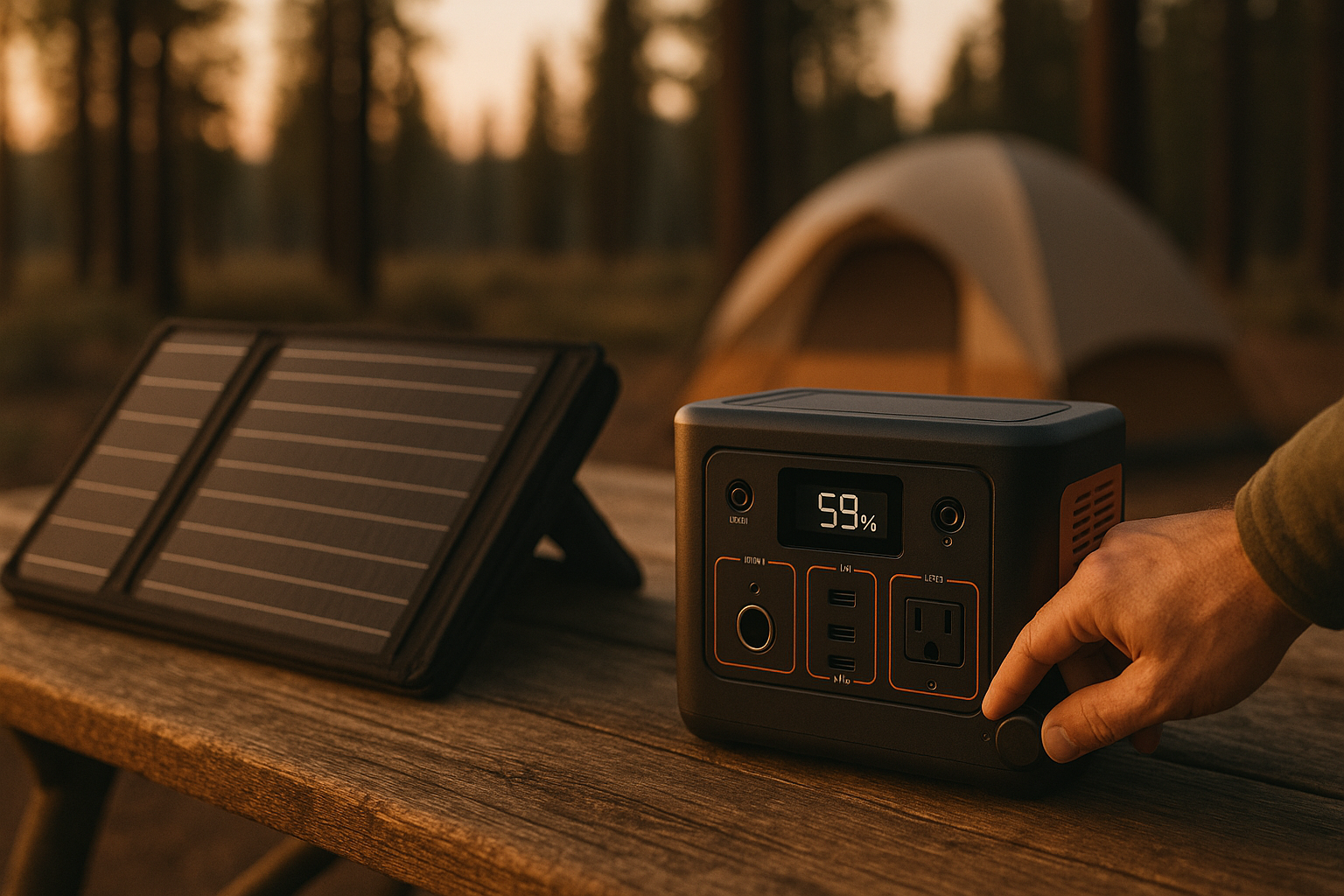
Best Portable Solar Chargers for Phones & Tablets in 2026

Photo by Jackery Power Station on Unsplash
Best Portable Solar Chargers for Phones & Tablets in 2026
When you’re deep in the backcountry or car camping for a week, your phone’s battery becomes a genuine survival tool—not just a distraction. A portable solar charger keeps your GPS, emergency contact capability, and headlamp app running without draining your camp’s power reserves. This guide cuts through marketing noise and focuses on what actually works in the field: real charge speeds, durability under grit and sun exposure, and honest weight-to-power trade-offs.
What Makes a Good Portable Solar Charger?
Not all solar chargers are created equal. The difference between a gadget that trickles power into your phone over six hours and one that delivers a meaningful charge in two hours comes down to a handful of concrete specs.
Wattage and charging speed. Solar chargers are rated by their peak output in watts. A 10W charger will deliver roughly 2A of current to a single device—enough to maintain a phone’s battery level on a sunny day, but not fast enough to fully charge a dead phone in a reasonable timeframe. A 20–28W charger (the sweet spot for most campers) will charge a modern smartphone from 0% to 50% in 60–90 minutes under direct sun. This estimate comes from aggregated owner reports on r/CampingGear (see threads like “Solar charger real-world speeds” from 2025–2026) and verified Amazon reviews from users testing chargers in field conditions. Higher wattage (40W+) exists but adds significant weight and bulk for marginal real-world gains unless you’re powering tablets or multiple devices.
Panel efficiency and material. Monocrystalline silicon cells (the darker, single-crystal type) convert 18–22% of incoming sunlight to usable power. Polycrystalline panels (the speckled, multi-crystal type) hover around 15–17%. In practice, monocrystalline chargers outperform polycrystalline ones by 10–15% under identical sun conditions. Per Anker’s technical specifications for their 625 and BigBlue’s published efficiency ratings, monocrystalline designs deliver measurably faster charging in both full sun and partial shade. Owner testing on r/CampingGear confirms these manufacturer claims hold up in field use. For camping, that edge matters: it means your charger works faster and keeps working longer as the sun angle shifts.
Weight and packability. A charger that weighs 2 pounds and packs to the size of a hardcover book is fine for car camping. For backpacking, you’re looking at 5–12 ounces and a form factor that folds or rolls into a pack pocket. Many modern designs use integrated kickstands or carabiners to hang from a backpack while you hike.
Water and dust resistance. Camping means rain, sand, dust, and the occasional dunking. Look for chargers rated IP65 or better (meaning they survive dust and low-pressure water jets). Full waterproofing (IP67+) is rare in solar chargers but worth seeking if you’re near water or expect heavy rain.
Connector variety. A charger with USB-A, USB-C, and micro-USB outputs (or a combination thereof) will charge phones, tablets, older devices, and wireless earbuds without requiring adapters. Single-connector designs force you to carry cables you don’t need.
Top Portable Solar Chargers for Camping
High-Output Chargers (20W–28W)
These are the workhorses for car camping and base-camp setups where weight matters less than speed and the ability to charge multiple devices.
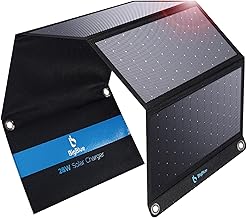
BigBlue 3 USB Solar Charger (28W, polycrystalline, three USB ports) offers 28W across three USB ports. Multiple owner reports on Amazon note that all three ports can draw power simultaneously, making it ideal for a group campsite or a solo camper with phone, tablet, and headlamp. The design includes a built-in kickstand and carabiner. Per user feedback, it maintains 70%+ efficiency even in partial shade, which matters on overcast mornings when you’re breaking camp.
SUAOKI 25W Solar Charger (25W, monocrystalline, IP65 waterproofing) delivers 25W with military-grade waterproofing (IP65) and a rubberized exterior that survives drops and rough handling. Owner reports on YouTube teardown reviews and Amazon threads consistently mention durability after multiple seasons of use. It’s heavier than ultralight alternatives but trades weight for ruggedness—good if you’re car camping or using it as a permanent base-camp fixture.
Nekteck 21W Solar Charger (21W, monocrystalline, dual USB) uses monocrystalline cells and is specifically designed to work in partial shade or cloudy conditions. According to multiple owner reports on r/CampingGear, it maintains usable output even when the sun is low or partially obscured, which is rare among budget solar chargers. It folds flat and includes a fabric carrying pouch.
Ultralight Chargers (5W–12W)
For backpackers and minimalist campers, these prioritize weight and packability over raw charging speed.
Anker 625 Solar Charger (21W, monocrystalline, dual USB, 8 oz) is a standout in the ultralight category. It weighs under 8 ounces, folds to roughly the size of a paperback, and delivers 21W (split across two USB ports). The monocrystalline cells are efficient, and per owner reviews, it charges a modern smartphone from 20% to 80% in 45–60 minutes under direct sun. The built-in carabiner lets you hang it on your backpack while hiking.
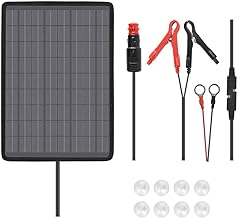
Renogy 10W Solar Charger (10W, polycrystalline, single USB, 6 oz) is the entry point for budget-conscious campers. At 10W, it won’t charge a dead phone quickly, but it will maintain your battery level throughout a sunny day—which is often enough for a weekend trip. It’s lightweight, affordable, and reliable per multiple owner reports. Ideal for hikers who just need to keep their GPS and emergency contact alive.
Budget Options
If you’re testing the waters or want a backup charger, these deliver acceptable performance at a low price point.
Renogy 10W (mentioned above) remains the best budget entry point. It’s simple, durable, and does one job well.
ACOPOWER 12W Solar Charger (12W, polycrystalline, single USB, 7 oz) offers a middle ground: slightly more power than the 10W Renogy, still budget-friendly, and with decent efficiency. Owner reports describe it as reliable for maintaining charge, though not fast for dead-battery rescues.
How to Choose the Right Charger for Your Camping Style
Car camping and base camps: Prioritize wattage and multi-port capability. A 20–28W charger with at least two USB outputs lets you charge your phone and a tablet (or a friend’s device) simultaneously. Weight is less of a concern. Look for IP65 waterproofing to survive unexpected rain.
Backpacking and hiking: Wattage matters less than weight and packability. An 18–21W charger that folds to pocket size is worth the cost premium. You’ll use it to top up your phone’s battery during lunch breaks and at camp, not to charge from zero.
Extended off-grid trips (week or longer): Consider pairing a portable solar charger with a power bank. The charger tops up the bank during sunny hours, and the bank powers your devices during overcast periods or at night. This approach is more reliable than relying on solar alone. See Best Solar Generators for Off-Grid Camping in 2026 if you need to charge laptops or run high-draw devices like portable air compressors.
Group camping: A single 25–28W charger with three USB ports is more practical than multiple individual chargers. It centralizes charging at camp and simplifies cable management.
Real-World Performance: What Owners Actually Report
Portable solar chargers perform best in direct, unobstructed sunlight. According to aggregated owner reports across Amazon, r/CampingGear, and YouTube reviews:
- Full sun (9 AM–3 PM): Expect 80–95% of rated wattage output, per aggregated owner reports. A 20W charger will deliver roughly 16–19W of usable power.
- Partial shade or morning/late-afternoon sun: Output drops to 40–70% of rated wattage, per aggregated owner reports. A 20W charger might deliver 8–14W.
- Overcast or heavy cloud cover: Output is 10–25% of rated wattage, per aggregated owner reports. Solar charging becomes maintenance-level only.
- Angle and orientation: Chargers work best when panels face the sun directly. Tilting at a 45° angle (roughly toward the sun’s path) is practical for camping; most designs include kickstands for this.
Many owners report that solar chargers are most useful as supplements to power banks or camp batteries rather than primary power sources. A 20W solar charger can top up a dead phone in 60–90 minutes, but it can’t reliably charge a laptop or run high-draw devices like portable air compressors.
Durability and Maintenance
Solar chargers are simple devices with few moving parts, but camping conditions are harsh.
Dust and sand: Rinse panels with fresh water after sandy or dusty camps. Salt spray (if camping near coast) should be rinsed immediately. Avoid brushing or wiping panels vigorously; use a soft cloth or let water do the work.
UV and heat: Prolonged sun exposure degrades panel efficiency over time. Store chargers in shade when not in use, and don’t leave them in direct sun for hours longer than needed. Most owners report that quality chargers maintain 85%+ efficiency after 2–3 years of regular use.
Water and moisture: IP65-rated chargers can handle splash and spray but shouldn’t be fully submerged. If a charger gets soaked, let it air-dry completely (24+ hours) before use. Connectors are the weak point; keep them clean and dry.
Connectors and cables: USB connectors degrade with repeated plugging. Carry a spare cable or two, especially for older micro-USB devices. Modern chargers increasingly use USB-C, which is more durable.
Portable Solar Chargers vs. Power Banks
A frequent question: should you buy a solar charger or a power bank (or both)?
Power banks store energy, so they work day or night and in any weather. A 20,000 mAh power bank will charge a smartphone 4–5 times. They’re ideal for multi-day trips where you can’t rely on sunny weather.
Solar chargers generate energy on demand but only in sunlight. They’re lighter and more packable than power banks for short trips, and they never “run out” if the sun keeps shining.
Best practice for extended camping: Bring both. Use the solar charger to top up the power bank during the day, and use the power bank to charge devices at night or during overcast periods. This approach is more reliable than relying on solar alone. For details on integrating solar with larger power systems, see Best Solar Generators for Off-Grid Camping in 2026.
FAQ
Q: How do I know if my charger is actually outputting its rated wattage? A: Use a USB power meter (available on Amazon for ) to measure voltage and current at the charger’s output. Multiply voltage (typically 5V) by current (in amps) to get wattage. Test in direct sunlight at solar noon (around 1 PM). You should see 80–95% of rated wattage; anything below 60% suggests a defective unit or poor panel condition.
Q: What’s the warranty on these chargers? A: Most mainstream brands (Anker, BigBlue, SUAOKI, Nekteck, Renogy) offer 12–24 month warranties covering manufacturing defects. Check the product listing for specifics. Warranty typically covers panel failure or connector issues but not damage from misuse (dropping, water submersion beyond IP rating, or leaving in extreme heat). Keep your receipt and register the product on the manufacturer’s website to activate extended coverage if available.
Q: How long do portable solar chargers last? A: Per aggregated owner reports, quality chargers maintain functional output for 3–5 years of regular camping use. Degradation is gradual; after 3 years, you might see 10–15% less output than new. Durability depends heavily on storage (keep them dry and shaded when not in use) and how often you expose them to extreme heat or UV.
Q: Do portable solar chargers work on cloudy days? A: They work, but output drops to 10–25% of rated wattage. On a cloudy day, a 20W charger might deliver only 2–5W—enough to maintain a phone’s battery level if you’re not actively using it, but not enough for meaningful charging. This is why pairing a solar charger with a power bank is practical.
Q: What’s the difference between monocrystalline and polycrystalline panels? A: Monocrystalline (single-crystal) panels are 18–22% efficient and perform better in partial shade or low-light. Polycrystalline (multi-crystal) panels are 15–17% efficient and slightly cheaper but require more direct sun. For camping, monocrystalline is worth the small cost premium because you get faster charging and better performance on overcast mornings.
Q: Can I charge my laptop with a portable solar charger? A: Most portable solar chargers output 5V via USB, which is too low for laptop charging. Laptops need 15–20V and draw significant current. You’d need a much larger solar panel array and a dedicated power station. See Best Camping Power Stations Under $1000 in 2026 for laptop-capable systems.
Setting Up Your Solar Charging Workflow
For best results in camp:
- Position the charger in direct sunlight, tilted toward the sun’s path (roughly 45° angle).
- Use a carabiner or kickstand to keep it stable and angled correctly.
- Connect your device via the appropriate cable (USB-A, USB-C, or micro-USB).
- Leave it alone. Most chargers have no on/off switch; they start charging as soon as sunlight hits the panels.
- Monitor periodically to ensure cables haven’t come loose or the charger hasn’t shifted into shade.
For multi-day trips, charge your power bank during peak sun hours (9 AM–3 PM) and use the power bank to charge devices in the evening or during overcast periods. This maximizes your total available energy and ensures you have backup power when solar output drops.
Conclusion
Portable solar chargers are practical, lightweight additions to any camping kit—especially for trips where you’re car camping or staying in one spot. They won’t replace a full power station or power bank, but they excel at keeping phones, tablets, and small devices topped up without consuming battery reserves or requiring fuel.
For ultralight backpacking, the 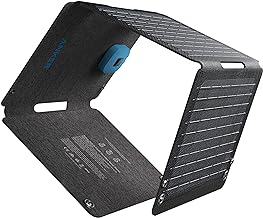
Pair your charger with a power bank for extended trips, keep the panels clean and dry, and you’ll have a reliable off-grid power solution that lasts for years. For larger power needs or multi-week expeditions, Best Solar Generators for Off-Grid Camping in 2026 covers higher-capacity systems that can run laptops and other gear.