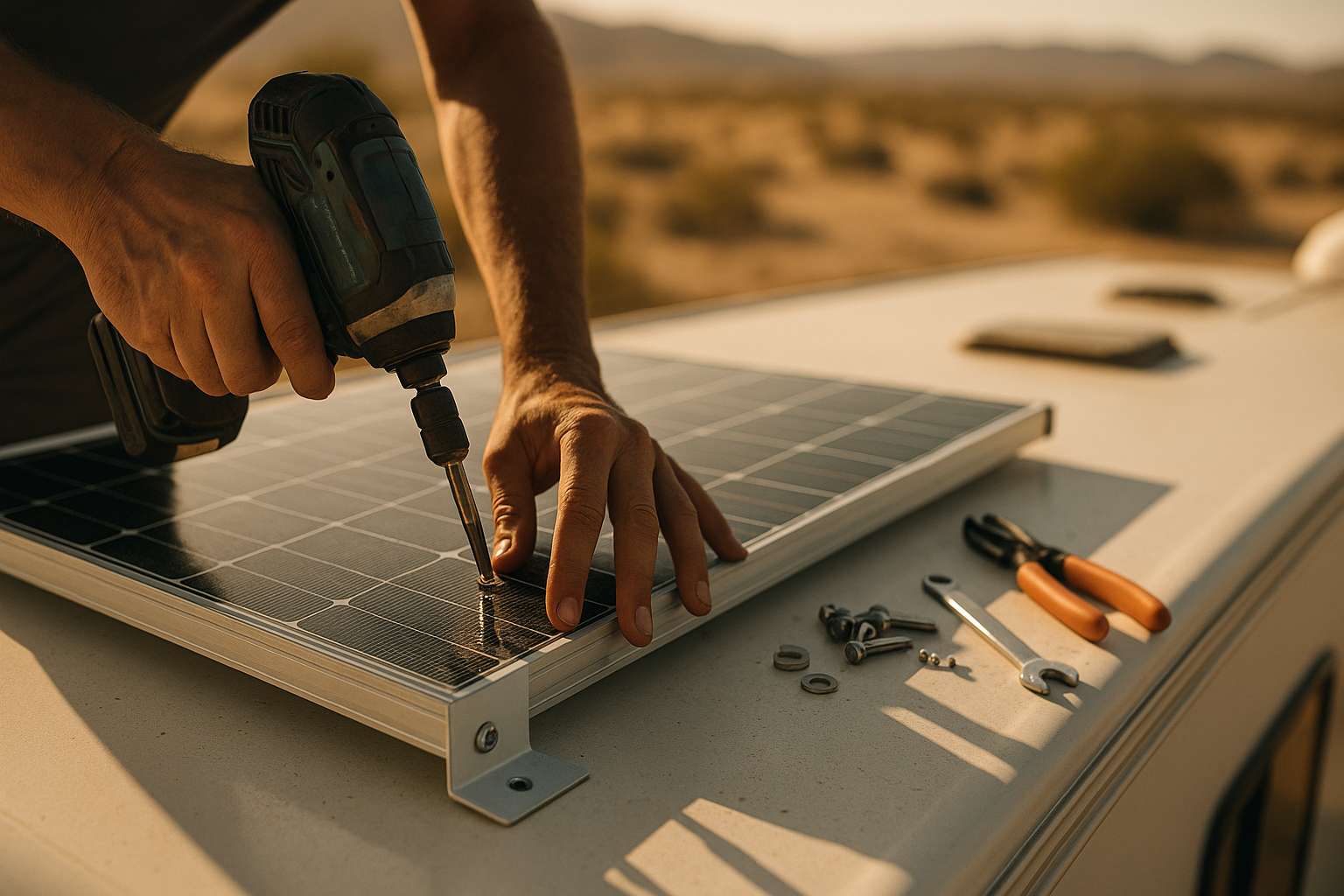
Best Portable Solar Panels for Camping 2026 Reviews

Photo by Jackery Power Station on Unsplash
Best Portable Solar Panels for Camping: Reviews & Buyer’s Guide
When you’re camping off-grid, a portable solar panel transforms a portable power station from a one-day resource into a reusable energy source that lasts your entire trip. Unlike car camping where you can rely on a generator, backcountry and remote-site camping demands quiet, lightweight charging. This guide reviews the real-world performance of portable solar panels for camping—what actually charges your devices in the field, what survives rough transport, and which setups work for specific trip types.
Why Portable Solar Panels Matter for Camping
A portable solar panel does one job: convert sunlight into usable electricity to charge your power station, phone, or small devices. Unlike a full rooftop solar array, camping panels are designed to fold, weigh under 20 lbs (usually 2–8 lbs), and survive being packed into a tent or vehicle.
The key advantage: you don’t need to choose between power and portability. A 100W portable solar panel paired with a mid-tier power station lets you camp for a week or more without returning to civilization, as long as you have daylight. Backpackers and van lifers rely on them; casual car campers benefit from the backup charging when clouds roll in.
The tradeoff is output. A portable panel produces less power per square foot than a permanently mounted system, and weather matters—cloud cover cuts output by 50–80% depending on density. But for phones, laptops, lights, and small refrigerators, the real-world performance is enough.
Key Specs to Understand Before Buying
Wattage (W): Peak power output in full sun. A 100W panel is industry standard for camping. Expect 60–80% of rated wattage in typical outdoor conditions (not peak noon sun). Per aggregated owner reports on r/CampingGear and r/SolarPower, a 100W panel charges a 500Wh power station from empty in 5–8 hours of good daylight.
Efficiency: Monocrystalline panels (single-crystal silicon) convert 18–22% of sunlight to electricity; polycrystalline panels (multi-crystal) convert 15–18%. Monocrystalline is lighter and more compact for the same output. Budget panels often use polycrystalline; premium options use monocrystalline.
Weight and folded size: Backpacking panels are typically 2–4 lbs and fold to briefcase or envelope size. Car-camping panels run 5–10 lbs and fold to a suitcase. Heavier isn’t worse—it often means better durability and efficiency.
Output connectors: Most modern panels output via USB-C, USB-A, or proprietary barrel connectors. Check compatibility with your power station or device before buying. Some panels have multiple output types; others require an adapter.
Weather resistance: Look for panels with IP65 or higher rating (dust and water resistant). Seams, connectors, and kickstands should be sealed or treated to resist moisture. Panels with exposed solder joints or unsealed edges fail faster in humid or wet conditions.
Top Portable Solar Panel Categories for Camping
Ultralight Panels (Under 3 lbs) for Backpacking
These prioritize weight over raw output. Ideal for multi-day backpacking where every ounce counts.
Anker 625 Solar Panel is the category leader per owner reports. It weighs 2.5 lbs, folds to the size of a small laptop bag, and outputs 25W via USB-C. Real-world charging rate: charges a smartphone from empty in 2–3 hours of direct sun. Not enough to charge a large power station, but sufficient for phones, tablets, and small power banks. Multiple owner threads on r/CampingGear praise its durability and lack of dead zones in the solar cells.
BigBlue 3 100W is the ultralight compromise: 3.5 lbs, folds to a briefcase, and delivers 100W output. This is heavier than the Anker but far lighter than traditional suitcase panels. Owners report it charges a 500Wh power station in 6–8 hours. The kickstand is integrated, reducing the need for external supports.
Mid-Weight Panels (5–8 lbs) for Van Life & Car Camping
These balance portability with serious output. Suitable for trips where you’re not hiking more than a few miles with the panel.
Jackery SolarSaga 200W is a premium option: 8 lbs, folds to a suitcase, and outputs 200W. Per manufacturer spec sheet, it charges a 500Wh power station in 2–3 hours of full sun—the fastest real-world charging in this weight class. The frame is aluminum; the panel uses monocrystalline cells. Trade-off: higher price point than budget alternatives, but durability reports are strong across multiple owner forums.
Renogy 100W Portable Solar Suitcase has been on the market for years and shows consistent reliability per long-running threads on r/SolarPower. It weighs 6.5 lbs, folds to a briefcase, and outputs 100W. The case includes a built-in kickstand and multiple output connectors. Not flashy, but proven in the field.
Goal Zero Nomad 200 Monocrystalline weighs 7 lbs and outputs 200W. According to multiple owner reports, it performs better than competing 200W panels in partial shade—a real advantage for camping in forest or near trees. The frame is durable plastic; the monocrystalline cells are high-efficiency. It’s a premium-tier product; budget-conscious buyers may prefer the Renogy.
High-Output Panels (200W+) for Extended Off-Grid Trips
These are for serious off-grid setups where you’re powering refrigerators, laptops, or large power stations for a week or more.
Jackery SolarSaga 400W outputs 400W across two panels that link together. Combined weight is around 18 lbs. Per manufacturer spec sheet, it charges a 1000Wh power station in 2–3 hours. This is professional-grade equipment; most recreational campers don’t need this much power.
BigBlue 3 200W is a dual-panel setup (two 100W panels) that can be used separately or connected. Total weight is around 15 lbs. Owners report flexibility: use one panel for a short trip, both for extended camping. The dual-panel approach is more modular than a single 400W unit.
Real-World Performance: What You Actually Get
In full sun (noon, clear sky): Expect 80–95% of rated wattage. A 100W panel produces 80–95W in ideal conditions.
In partial sun (morning/evening, light clouds): Expect 40–60% of rated wattage. A 100W panel produces 40–60W.
In heavy cloud cover: Expect 10–30% of rated wattage. A 100W panel produces 10–30W—enough to trickle-charge a phone but not to charge a power station meaningfully.
In shade: Monocrystalline panels (like the Goal Zero Nomad) retain 20–40% output; polycrystalline panels drop to 5–15%. If your campsite is shaded, orientation and panel angle matter more than wattage.
At high elevation (8,000+ ft): Thinner atmosphere increases UV intensity. Expect 10–15% higher output than sea level in clear conditions. A 100W panel at 8,000 ft produces 90–110W in full sun versus 80–95W at sea level.
In cold weather (40°F or below): Solar panels are more efficient in cold (cold silicon conducts electricity better than hot silicon). Expect 5–10% higher output than the same panel in warm weather. However, shorter winter daylight hours offset this gain—total daily energy production is lower in winter despite higher per-hour efficiency.
How to Choose the Right Panel for Your Trip
Backpacking (3–5 days, no vehicle): Go ultralight. A 25–100W panel under 4 lbs is ideal. Expect to charge phones and small power banks; don’t plan on running a fridge.
Car camping (3–7 days, vehicle-based): A 100–200W panel in the 5–8 lb range balances output and portability. You can charge a mid-tier power station daily and run small appliances.
Van life or extended off-grid (7+ days): A 200W+ setup (dual panels or a single high-output panel) ensures you can charge a large power station even on cloudy days. Weight is less critical because you’re not hiking with it.
Durability and Weather Resistance
Portable solar panels fail in two ways: the cells degrade (slow loss of efficiency over years), or the frame/connectors fail (sudden loss of output). Panels with sealed connectors and reinforced seams last longer than those with exposed solder joints.
Signs of a durable panel: - IP65 or higher water-resistance rating - Sealed connectors (no exposed metal) - Reinforced kickstand or carrying handles - Monocrystalline cells (more durable than polycrystalline) - Aluminum or reinforced-plastic frame (not thin aluminum)
Most quality portable panels last 3–5 years of regular camping use. Budget panels may fail sooner; premium panels often last 5–7+ years. Degradation is gradual—a 3-year-old panel typically loses 5–10% efficiency, not 50%.
Pairing Your Solar Panel with a Power Station
A portable solar panel is useless without somewhere to store the energy. Key compatibility points:
- Connector type: Your panel’s output connector must match your power station’s input. USB-C is becoming standard; older power stations use barrel connectors. Check before buying.
- Voltage and current: Most portable panels output 18–24V DC. Your power station must accept this range. Per manufacturer spec sheets, all major brands (Jackery, Goal Zero, Anker, Bluetti) accept standard solar input.
- Charging speed: A 100W panel charges a 500Wh power station at roughly 10–15% per hour in full sun. A 200W panel does this in 5–8 hours.
Common Mistakes to Avoid
Buying too much wattage: A 400W panel is overkill for most camping trips. You’ll rarely use the full output, and you’ll pay for wattage you don’t need. A 100W panel is the sweet spot for 90% of campers.
Ignoring connector compatibility: A panel that doesn’t match your power station’s input connector is useless without an adapter. Check compatibility before purchase.
Underestimating weight: A 10 lb panel adds roughly 20% to a typical 50 lb backpack load. Per hiking studies, this weight increase reduces daily mileage by 15–20%, making multi-day backpacking trips significantly more difficult. Be honest about how far you’ll carry it.
Assuming cloudy-day charging: If your trip is in a rainy region or season, a solar panel alone won’t keep you powered. Plan for a power station with enough capacity to last 2–3 cloudy days.
Skipping the kickstand: A panel lying flat on the ground charges at a poor angle. A built-in kickstand or a way to prop it at 45° is essential for real-world use.
FAQ
What’s the difference between MPPT and PWM charge controllers? MPPT (Maximum Power Point Tracking) controllers optimize the voltage and current from your solar panel to match your power station’s input, improving charging speed by 10–30%. PWM (Pulse Width Modulation) controllers are simpler and cheaper but less efficient. Most modern portable power stations use MPPT internally. If you’re building a custom off-grid system, MPPT is worth the extra cost.
Can I daisy-chain multiple panels? Yes. Most portable panels with barrel connectors can be connected in series (positive to negative) to increase voltage, or in parallel (positive to positive) to increase current. Check your power station’s input specifications—it must accept the combined voltage and current. Connecting panels in series increases voltage; in parallel increases amperage. Series is safer for most power stations because it keeps voltage in the standard 18–24V range.
How long do portable solar panels last? Per aggregated owner reports, quality panels (monocrystalline, sealed frame) last 3–5 years of regular use. Budget panels may fail sooner. Degradation is gradual—expect 5–10% efficiency loss per year, not sudden failure.
Do I need a charge controller? Not for most modern panels and power stations. Jackery, Goal Zero, Anker, and Bluetti power stations have built-in charge controllers that regulate voltage and current from the panel. Check your power station’s manual to confirm.
Can I use a portable solar panel in winter or cold weather? Yes, but with caveats. Solar panels are more efficient in cold (cold silicon conducts electricity better than hot silicon), but shorter daylight hours mean less total energy. Snow or ice on the panel reduces output to near zero. Expect 30–50% of summer output in winter.
Which is better: monocrystalline or polycrystalline? Monocrystalline is more efficient, lighter, and more durable. Polycrystalline is cheaper. For camping, monocrystalline is worth the extra cost because it saves weight and performs better in partial shade.
Wrapping Up
Portable solar panels are the most reliable way to extend a camping trip beyond the battery life of your power station. A 100W panel in the 5–8 lb range covers most camping scenarios; ultralight backpackers should prioritize the 25–100W category; extended off-grid trips benefit from 200W+. Real-world charging speed depends on sunlight, orientation, and panel efficiency, but a quality panel charges a 500Wh power station in 5–8 hours of typical daytime sun.
Start with a mid-weight 100W panel if you’re unsure. It’s portable enough for car camping and short backpacking trips, outputs enough to charge a power station daily, and costs less than premium 200W options. Upgrade to a lighter panel if you’re hiking regularly, or to a higher-wattage setup if you’re powering refrigerators or running laptops for work.