Best Quiet Generators Under $1000 for Apartments & Camping

Photo by Zendure Power Station on Unsplash
Best Quiet Generators Under $1000 for Apartments & Camping in 2026
A quiet generator is the practical sweet spot for renters, apartment dwellers, and weekend campers who can’t afford premium inverter models or the footprint of a whole-home unit. The market offers genuine quiet options that deliver both silence and sufficient power—but only if you match the right model to your actual use case.
This guide cuts through marketing noise (pun intended) to help you find a generator that won’t upset neighbors, won’t damage sensitive electronics, and won’t drain your budget.
What Makes a Generator “Quiet”?
Noise is measured in decibels (dB) at a standard distance, typically 23 feet from the unit at half or quarter load. A generator running at 70 dB is noticeably louder than one at 50 dB—the decibel scale is logarithmic, so every 10 dB increase represents roughly a tenfold increase in perceived loudness.
Inverter generators (which convert raw AC power through electronics) are inherently quieter than conventional open-frame units because they run at variable speed and produce cleaner, more stable power. A conventional generator at 7,000 RPM is loud; an inverter model that throttles down to 3,000 RPM under light load is dramatically quieter.
For apartments and campsites, aim for generators rated at 50–60 dB at quarter load. Anything above 65 dB will annoy neighbors or wake light sleepers in adjacent tents. Anything below 50 dB is genuinely quiet enough for daytime use without complaint.
Noise Levels vs. Wattage: The Trade-Off
Quiet generators tend to be smaller and less powerful than their louder counterparts. A budget-friendly 4,000-watt open-frame model runs around 80+ dB; a quiet inverter model in the same price range might deliver 2,000–3,500 watts at 50–55 dB.
Know your actual power needs before you buy:
- Laptop, phone chargers, LED lights, small fan: 500–1,000 watts
- Mini-fridge, portable heater, microwave: 1,500–2,500 watts
- Window AC unit, well pump, larger tools: 3,500–5,000 watts
- Whole-house backup (not realistic): 7,000+ watts
Most apartment dwellers and casual campers can run on 2,000–3,500 watts. If you need to power a full-size air conditioner or multiple large appliances simultaneously, you’ll either spend more or accept louder operation.
Top Picks Under $1,000
Best for Apartments: Honda EU2200i Companion
The Honda EU2200i Companion is the benchmark for apartment-safe generators. It runs at 49 dB at quarter load—quieter than most refrigerators. It delivers 2,200 watts (1,800 running watts for sensitive electronics via its inverter circuit), runs 8.3 hours on a tank of gasoline at half load, and weighs 47 pounds, making it portable enough for one person to carry.
The inverter design means it’s safe for laptops, phones, and other electronics that can be damaged by power fluctuations. Owners on r/camping and r/preppers report consistent reliability over years of use, though the unit sits at the upper end of the under- category depending on sales and retailer.
Best Value Dual-Fuel: Champion 3100-Watt Dual Fuel
The 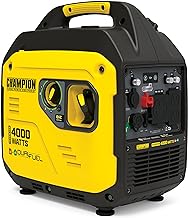
The trade-off: it’s louder than the Honda and heavier (about 85 pounds). But if you camp frequently and already use propane, the fuel flexibility justifies the noise compromise. Runtime on propane is typically 8–10 hours depending on load.
Budget Dual-Fuel Option: DuroMax XP4500 Dual Fuel
The 
Owners report 11–12 hour runtimes on gasoline at quarter load, making it one of the longest-running models in this price tier. The downside: at 120+ pounds, it’s not portable for one person, and the inverter isn’t as refined, so sensitive electronics should be plugged into a surge protector.
Best Inverter for RVs and Boondocking: Westinghouse iGen2500 Portable Inverter
The 
Runtime is shorter than the DuroMax (around 6–7 hours at half load), but for weekend trips and short boondocking stints, that’s adequate. Owners report good reliability, though some note the fuel tank is small (1.1 gallons), requiring refueling on longer camping trips.
Ultra-Compact Option: WEN 56203i Super Quiet Portable
The 
The catch: runtime is modest (around 5.5 hours at half load on a 0.95-gallon tank), and some owners note the fuel cap design is fiddly. But if you’re car camping or need emergency backup for a single night and prioritize portability, it’s hard to beat.
Fuel Type: Gasoline vs. Propane vs. Dual-Fuel
Gasoline is the default. It’s widely available, easy to store in small quantities, and generators are optimized for it. The downside: gasoline degrades after 30 days in a tank, requiring stabilizer or carburetor cleaning before winter storage.
Propane burns cleaner and stores indefinitely without degrading. If you already have propane at home or camp with a propane tank, dual-fuel models add flexibility. Propane generators require more fuel volume to produce the same wattage as gasoline models, and propane tanks are bulky.
Dual-fuel models let you choose. They’re heavier and cost more upfront, but the flexibility is worth it for RV owners and regular campers. For apartment emergency backup, stick with gasoline—simpler, lighter, and you won’t need to store a propane tank.
Runtime and Tank Size
A generator’s runtime depends on load and tank size. The same model running at quarter load will run twice as long as at half load.
- Small tanks (0.8–1.2 gallons): 4–8 hours at half load; ideal for portability, not overnight camping
- Medium tanks (1.5–2.5 gallons): 8–12 hours at half load; standard for camping and apartment backup
- Large tanks (5+ gallons): 16+ hours at half load; for RVs and extended use, but heavier
If you’re camping for a weekend, a medium tank is sufficient. If you’re using a generator for emergency apartment backup and want to avoid refueling during a power outage, aim for at least 8 hours of runtime at your expected load.
Inverter vs. Conventional: Why It Matters
Inverter generators produce stable, regulated power (clean sine wave) that’s safe for computers, phones, and modern electronics. They’re quieter, more fuel-efficient, and cost more. If you’re powering anything with a microprocessor, inverter is the right choice.
Conventional generators produce raw AC power with voltage fluctuations. They’re louder, less efficient, and cheaper. They’re fine for power tools, lights, and older appliances, but risky for electronics.
For apartments and camping, inverter is the standard. The price gap has shrunk, and the safety margin is worth it.
Noise Reduction Tips
Even a quiet generator can be made quieter with practical modifications:
- Use a generator enclosure or baffle box: A DIY baffle box can reduce noise by 5–10 dB. For example, the Honda EU2200i at quarter load (49 dB) plus a basic three-sided wooden enclosure with acoustic foam can approach 40 dB.
- Place it on rubber isolation pads: Absorbs vibration and reduces transmitted noise by 2–3 dB.
- Run it at quarter load when possible: Lower load = lower RPM = quieter operation. The WEN 56203i at quarter load runs noticeably quieter than at half load.
- Distance matters: Moving a generator 10 feet farther away reduces perceived loudness noticeably.
FAQ
Q: Can I use a quiet generator indoors or in a garage? A: No. All generators produce carbon monoxide (CO), a colorless, odorless gas that kills. Even “quiet” models must run outdoors, at least 20 feet from windows, doors, and vents. CO poisoning can occur in minutes.
Q: How does noise differ at quarter load vs. half load? A: Generators run quieter at lower loads because the engine throttles down to lower RPMs. A typical inverter generator at quarter load runs 5–8 dB quieter than at half load. The Honda EU2200i at quarter load (49 dB) is noticeably quieter than at half load (53 dB). This is why apartment use—which typically demands light loads—pairs well with quiet generators.
Q: Why do some generators have inverters and others don’t? A: Inverters regulate and stabilize electrical output, producing a clean sine wave safe for sensitive electronics. Conventional generators produce raw AC power with voltage spikes that can damage computers, phones, and modern appliances. Inverter models cost more but are essential for powering electronics. For tools and lights only, conventional is acceptable.
Q: How long do generators last? A: With proper maintenance, a quality generator (Honda, Champion, Westinghouse) lasts 10–20 years. Budget models may fail after 5–10 years. Inverter models are more reliable than conventional units because they run at lower RPMs.
Q: Is a portable power station better than a generator? A: For apartments, yes. A portable power station is silent, produces no emissions, and is ideal for emergency backup. But it runs out of power in hours and requires recharging. A generator runs indefinitely as long as you have fuel. For camping, both have roles: a power station for silent, clean operation; a generator for longer trips or higher power demands.
Q: Can I run a generator in the rain? A: Not directly. Rain can damage the engine and electrical components. Use a canopy or weatherproof enclosure, but ensure airflow to prevent CO buildup. Never cover the exhaust outlet.
Choosing the Right Quiet Generator for Your Situation
For apartment emergency backup: Prioritize inverter design, 50–55 dB noise, and 2,000–2,500 watts. The Honda EU2200i or WEN 56203i are your benchmarks.
For weekend camping: Dual-fuel flexibility and portability matter more than absolute silence. The Champion 3100 or DuroMax 4500 give you power and fuel options.
For RV boondocking: Inverter design, lightweight frame, and 6–8 hour runtime are key. The Westinghouse iGen2500 is purpose-built for this.
The best quiet generator is the one that matches your actual load, location, and use pattern. Oversizing adds cost and noise; undersizing leaves you stranded. Measure your real power needs, pick a noise ceiling you can live with, and test before you rely on it in an emergency.


