Best Battery Backup for Power Outages in 2026

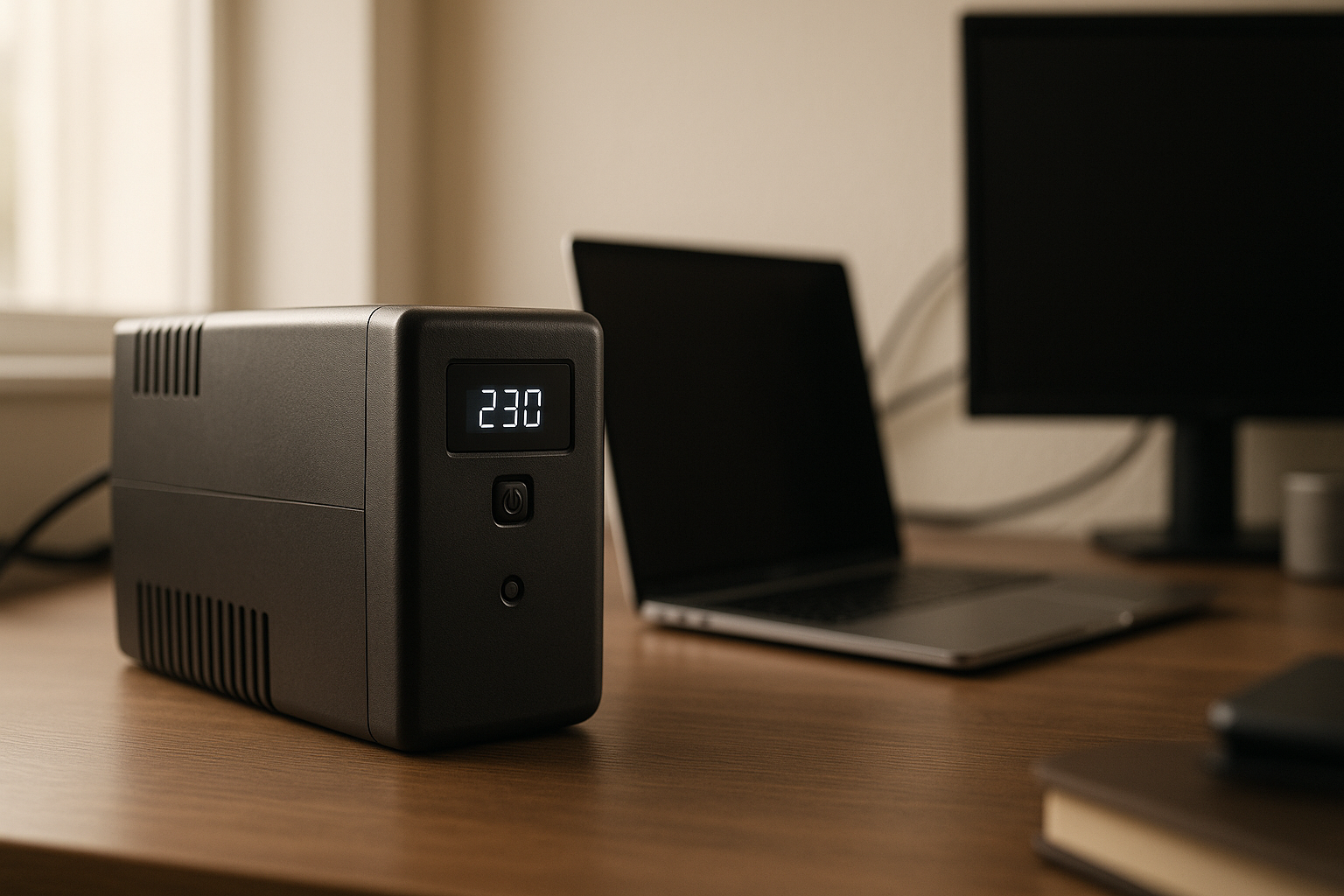
Photo by Carl Tronders on Unsplash
Best Battery Backup for Power Outages in 2026
Power outages hit without warning—whether from severe weather, grid failure, or equipment breakdown. A battery backup system keeps essential devices running when the grid goes dark, buying you time to act and protecting food, medical equipment, and data. This guide covers the main battery backup categories, how to size one for your home, and specific recommendations across budget and capacity tiers.
What Types of Battery Backup Exist?
Battery backup systems fall into three main categories, each suited to different outage scenarios and budgets.
Home Battery Systems (Whole-Home or Partial)
Fixed, permanently installed lithium or lead-acid batteries paired with an inverter and automatic transfer switch. These range from 5 kWh to 40+ kWh and can power multiple circuits or an entire home when paired with solar. Installation requires a licensed electrician; costs reflect both hardware and labor. Most modern home systems installed in 2025–2026 use LiFePO₄ (lithium iron phosphate) chemistry for safety and cycle life, based on installer feedback and product availability across major manufacturers.
Portable Power Stations
All-in-one units with built-in batteries (500 Wh to 5+ kWh), inverters, and AC outlets. No installation needed—plug in and use immediately. Ideal for renters, temporary backup, or mobile use. Capacities range from budget-tier (under 500 Wh) to mid-tier (1–3 kWh) to premium-tier (5+ kWh). Most portable power stations with LiFePO₄ chemistry deliver 3–5 years of regular use before noticeable capacity fade, per manufacturer warranty data (e.g., EcoFlow, Bluetti, Anker all warrant 80% capacity at 3–5 years).
Uninterruptible Power Supplies (UPS)
Designed for computers, servers, and sensitive electronics. Typically 500 VA to 3 kVA, with runtimes measured in minutes to an hour. Not meant for whole-home backup, but essential for protecting data and equipment during brief outages or while you boot a generator. See Best Uninterruptible Power Supply for Home Office: UPS Buying Guide for a deeper dive.
How to Size a Battery Backup System
Choosing the right capacity prevents you from undersizing (running out of power mid-outage) or overspending on excess capacity you won’t use.
Step 1: List Critical Loads
Identify what must stay powered during an outage: - Refrigerator/freezer - Medical equipment (CPAP, oxygen concentrator, insulin pump) - Internet router and modem - Phone chargers - Lighting (LED bulbs, not incandescent) - Heating/cooling (if essential in your climate)
Ignore nice-to-haves like TV, washer, or electric oven for now.
Step 2: Calculate Wattage
Check the nameplate wattage on each device or search the model number online. Air conditioners and refrigerators draw 2–3× their rated wattage on startup (inrush current), so add a 50% margin to those.
Example: - Refrigerator: 800W continuous (1200W startup) - Router + modem: 30W - Lighting (4 LED bulbs): 40W - Phone chargers: 20W - Total: 890W continuous, ~1300W at startup
Step 3: Estimate Outage Duration
How long do you expect to run on battery alone? - Brief outages (under 4 hours): 2–4 kWh system - Moderate outages (4–12 hours): 5–10 kWh system - Extended outages (24+ hours): 15+ kWh, or pair battery with a solar array or backup generator
For most households, a 5–10 kWh system covers typical outage scenarios based on historical utility outage data and homeowner reports.
Step 4: Account for Depth of Discharge (DoD)
Most lithium batteries are rated for 80–100% DoD, meaning you can safely use 80–100% of the rated capacity. Lead-acid batteries typically support only 50% DoD. Always check the spec sheet. A 10 kWh LiFePO₄ system with 100% DoD gives you 10 kWh usable; a 10 kWh lead-acid system with 50% DoD gives you only 5 kWh usable.
Fixed Home Battery Systems vs. Portable Stations
When to Choose a Fixed System
- Long outages expected (12+ hours, especially in wildfire or hurricane zones)
- You own the home and can justify installation cost
- Solar integration planned — fixed systems pair seamlessly with rooftop panels
- You want whole-home backup — power everything at once (with sufficient capacity)
- Aesthetics matter — hidden in garage or utility closet, not sitting on kitchen counter
Fixed systems cost 2–3× more upfront (hardware + labor) but offer better economics over 10+ years if you stay in the home, per installer feedback and long-running discussions on r/solar.
When to Choose a Portable Station
- You rent — no landlord approval needed, take it with you
- Outages are rare or brief — overkill to install a fixed system
- Budget is tight — entry-level portable stations
- You want flexibility — use it for camping, RVing, or as a backup to your backup
- Outage duration is unpredictable — portable stations are easier to recharge via solar panels or a generator mid-outage
For a deeper comparison of portable options, see Best Portable Power Stations Under $500 for 2026 and Best Home Battery Backup Systems Under $2000 for 2026.
Key Battery Chemistry: LiFePO₄ vs. Lead-Acid vs. Lithium-Ion
LiFePO₄ (Lithium Iron Phosphate)
Pros: - Longest cycle life (5000–15,000+ cycles, per manufacturer specs) - Safest lithium chemistry (thermal stability, no thermal runaway risk) - 100% depth of discharge supported - Lightweight relative to capacity - Works in cold climates (down to −10°C for most models)
Cons: - Higher upfront cost than lead-acid - Requires a compatible charger and battery management system (BMS)
Best for: Long-term, frequent-use backup; solar integration; cold climates.
Lead-Acid (AGM or Flooded)
Pros: - Cheapest option per kWh - Proven technology, widely available - Tolerates abuse better than lithium
Cons: - Only 50% depth of discharge (you lose half the rated capacity) - 300–500 cycle life (3–5 years typical) - Heavy (a 10 kWh lead-acid system weighs 1000+ lbs) - Temperature-sensitive (loses capacity in cold) - Requires ventilation if flooded type
Best for: Temporary backup, low budget, infrequent use.
Lithium-Ion (NCA/NCM)
Pros: - Lighter than LiFePO₄ - Higher energy density
Cons: - Less thermally stable than LiFePO₄ - Shorter cycle life than LiFePO₄ (2000–5000 cycles) - More expensive than lead-acid, not much cheaper than LiFePO₄
Best for: Rarely recommended for new home systems; more common in older portable stations. Most 2026 models have migrated to LiFePO₄.
Runtime: How Long Will a Battery Last?
Runtime depends on capacity (kWh), load (watts), and depth of discharge.
Simple formula: Runtime (hours) = (Capacity in kWh × Usable DoD) / Load in kW
Note: Inverter efficiency (90–95%) and battery management losses (1–2%) reduce runtime by 5–10%, so subtract this margin from theoretical runtime.
Example: - 10 kWh LiFePO₄ battery (100% DoD = 10 kWh usable) - 1000W continuous load - Theoretical runtime = (10 kWh) / (1 kW) = 10 hours - Real-world runtime = 9–9.5 hours (accounting for 5–10% efficiency loss)
For a more detailed breakdown, see How Long Does a Portable Power Station Last? Runtime & Capacity Guide.
Installation & Permits
Portable Power Stations
No installation required. Unbox, charge via AC wall outlet or solar panels, and use. Some owners add a small solar panel array for continuous recharge capability during extended outages.
Fixed Home Systems
Requires: 1. Electrical permit from your local authority 2. Licensed electrician to install the inverter, transfer switch, and battery enclosure 3. Utility interconnection approval if the system includes solar and you want to export power to the grid
Permitting and labor typically cost 40–60% of the total system price. Installation time ranges from 2–5 days depending on system complexity and existing electrical infrastructure.
Maintenance & Longevity
LiFePO₄ Systems
- Annual check: Verify inverter display, check for loose connections
- No active maintenance required (no water top-ups, no equalization)
- Expected lifespan: 10–15 years
- Degradation: Per manufacturer warranty data, most systems retain 80–90% capacity after 5 years of regular use
Lead-Acid Systems
- Monthly check: Flooded cells require water top-ups; AGM does not
- Equalization: Flooded cells need periodic equalization (every 3–6 months)
- Expected lifespan: 3–5 years
- Degradation: Faster than lithium; capacity fade becomes noticeable after year 2
Portable Stations
- Storage: Keep in cool, dry place; avoid full discharge for extended storage
- Charge cycles: Limit full discharge cycles if you expect multi-year use; partial cycles (20–80%) extend life
- Expected lifespan: 3–5 years for mid-tier models, 5–7 years for premium LiFePO₄ models
- See Portable Power Station Lifespan: Battery Degradation & Longevity Tips for detailed care tips
Backup Power for Specific Appliances
Refrigerator Backup
A refrigerator draws 800–1200W on startup and 150–400W running. A 3–5 kWh portable station or fixed system can run one for 6–12 hours. See Backup Power Supply for Refrigerator During Outage: What You Need for wattage by model and sizing guidance.
Medical Equipment
Oxygen concentrators (400–600W), CPAP machines (60–100W), and insulin pumps (under 5W) have very different power needs. A small UPS (1–3 kVA) is often sufficient for CPAP; oxygen concentrators benefit from a dedicated 5+ kWh portable station. Consult your equipment manual for exact wattage.
Whole-Home Backup
Requires 15–25+ kWh depending on home size and climate. Most feasible when paired with solar; battery alone (without recharge capability) becomes cost-prohibitive for 24+ hour outages. See Best Home Battery Backup Systems Under $2000 for 2026 for systems in the 5–15 kWh range.
Solar Recharging During Outages
If you want battery backup to last beyond its initial charge, pair it with solar panels.
- Portable stations: Add 100–400W solar panels (~ per 100W)
- Fixed systems: Rooftop solar array (5–10 kW typical, after incentives)
A 400W solar panel can recharge a 5 kWh battery in 10–15 hours in ideal conditions (clear skies, optimal panel angle, no shade). During a multi-day outage, this buys you continuous power for essential loads. Real-world recharge times vary with cloud cover, season, and panel orientation.
For a complete solar + battery setup, see Best Solar Generators for Off-Grid Living: Complete Setup Guide 2026.
Top Picks by Scenario
Best for Whole-Home Backup
Modular 10.2 kWh base capacity (5+ hours at 2000W load), expandable to 40+ kWh, LiFePO₄ chemistry, 10-year warranty. Integrates with most inverters; ideal for homes planning long-term solar integration.
Best for Essential Circuits Only
Scalable LiFePO₄ system, 5.6–22.4 kWh options (4–8 hours at 1500W load), 10-year warranty, integrates with solar inverters. Widely available and supported by Generac’s installer network.
Best for Portable Emergency Use
3.6 kWh base capacity (3–4 hours at 1000W load), expandable to 10.8 kWh, 3000W continuous AC output, dual charging (AC wall + solar), fast recharge (80% in ~1 hour on AC). Lightweight for its capacity; popular with RV owners and remote workers.
Best for Small Appliances & Devices
5 kWh total capacity (5 hours at 1000W load), 5000W inverter (handles startup surges), modular design, quiet operation. Premium build quality; fewer owner complaints about software issues than some competitors.
Best Budget Entry Point
1024 Wh capacity (1 hour at 1000W load), 1000W continuous output, LiFePO₄ chemistry, no installation required. Runs a small fridge or essential devices for 4–6 hours; accessible for renters or first-time backup buyers.
FAQ
Q: Can I use a car battery as a home backup? A: Car batteries (12V, 50–100 Ah) are designed for short, high-current bursts, not sustained discharge. A typical car battery stores 0.6–1.2 kWh and would deplete in under an hour powering a refrigerator. Use a dedicated home battery or portable power station instead.
Q: How often should I test my backup system? A: Test quarterly. Turn off the main breaker, confirm the battery activates, and run a critical load for 15–30 minutes. This catches inverter or connection issues before an actual outage.
Q: Can I stack multiple portable power stations? A: Not directly. Some models (EcoFlow Delta Pro, Bluetti AC500) allow modular expansion via additional battery modules, but you cannot simply connect two independent units in parallel. Check the manufacturer’s specifications for your model.
Q: Will my battery backup work during a grid-tied solar outage? A: Only if your system includes a battery and automatic transfer switch. Most grid-tied solar systems shut down during outages (per NEC code) to protect utility workers. A battery + inverter combo allows you to use stored solar energy when the grid is down.
Q: What’s the difference between “off-grid” and “backup” battery systems? A: Off-grid systems are designed to run indefinitely without grid power, typically paired with solar and a generator. Backup systems activate only during outages and return to grid power when it’s restored. Backup systems are simpler and cheaper; off-grid systems are more complex and expensive.