Backup Power for a Refrigerator During an Outage: Options

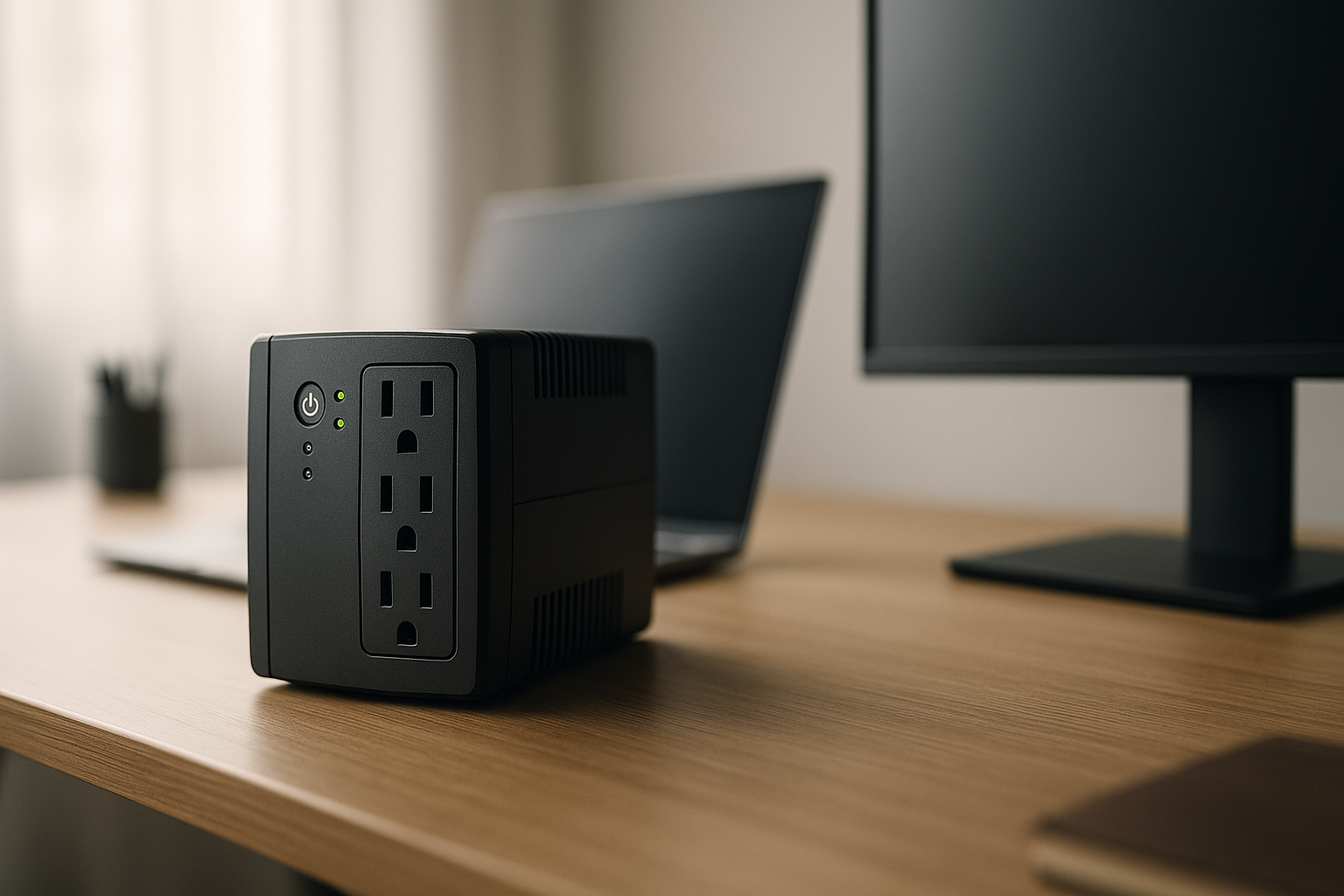
Photo by Zendure Power Station on Unsplash
Backup Power Supply for a Refrigerator During an Outage
A standard full-size refrigerator pulls roughly 100–200 watts running and spikes to 600–1,200 watts at compressor startup, per manufacturer EnergyGuide labels and aggregated owner measurements posted to r/solar. That’s the number that decides which backup option will actually work for you — and which will trip out the moment the compressor kicks on.
This guide walks through the four realistic options (portable power station, gas/inverter generator, whole-home battery, standby UPS), the math for sizing each one, and the situations where each makes sense.
How much power does a refrigerator actually need?
Two numbers matter, and they’re not the same:
- Running watts — what the fridge draws while the compressor is on. For a typical 18–22 cu ft top-freezer or French-door unit, this is around 100–200 W, per the yellow EnergyGuide sticker and confirmed by owner clamp-meter measurements posted across r/homeimprovement and r/preppers.
- Surge watts — the inrush when the compressor starts. This is typically 3–6× running watts and lasts a fraction of a second. Most full-size fridges surge in the 600–1,200 W range, per inverter-generator sizing guides published by Honda and Champion.
If your backup source can’t handle the surge, the fridge won’t start — even if the running wattage looks fine on paper. This is the single most common mistake people make when buying a backup unit, based on returns/complaint patterns visible in Amazon reviews of undersized power stations.
The short version of the sizing math: aim for a continuous output rating of at least 1,000 W, and confirm the surge rating is 1,500 W or higher. (The 1,500 W figure is a safety margin above the typical 600–1,200 W fridge surge, not a hard requirement — see the FAQ for why the extra headroom matters.)
Option 1: Portable power station (battery)
A portable power station is a lithium battery in a box with AC outlets. No fuel, no fumes, no noise — you can run it indoors. This is the right answer for most apartment dwellers and anyone whose outages are measured in hours rather than days.
Runtime math
Battery capacity is rated in watt-hours (Wh). Divide capacity by the fridge’s average draw to estimate runtime, but apply a duty-cycle factor — a fridge compressor only runs about 30–50% of the time once the box is cold, per the ENERGY STAR “Refrigerators Key Product Criteria” technical reference (https://www.energystar.gov/products/refrigerators/key_product_criteria), which documents typical compressor duty cycles used in the program’s annual-energy-use calculations.
Worked example for a 1,000 Wh station and a 150 W fridge running 40% of the time:
- Average load: 150 W × 0.4 = 60 W
- Runtime: 1,000 Wh ÷ 60 W ≈ 16 hours
That’s a useful rule of thumb. Real-world results posted by owners on r/EcoFlow and r/Jackery cluster slightly below this — call it 12–14 hours for a 1,000 Wh unit on a modern fridge — because the inverter itself draws standby power.
Good options in this category
A solid mid-tier pick. 1,024 Wh capacity, 1,800 W continuous output, and a surge rating well above what any residential fridge needs, per the manufacturer spec sheet. The X-Boost feature handles startup spikes gracefully — owner reports on r/EcoFlow consistently mention it starting fridges that smaller units can’t.
Similar capacity tier, slightly different feature mix. Jackery’s app is less full-featured than EcoFlow’s but the unit is lighter and quieter under load, per side-by-side YouTube teardown reviews.
1,152 Wh, 1,800 W continuous. The third major player in this segment. Owners on r/Bluetti report similar real-world fridge runtimes to the EcoFlow.
Option 2: Inverter generator (gas)
If your outages routinely run past 12 hours, a generator becomes more practical than batteries. The key word is inverter — conventional open-frame generators produce dirty power that can damage modern fridge electronics, per appliance manufacturer warnings (LG, Samsung, and GE all publish guidance on this).
What to look for
- Inverter (sine-wave) output, not “AVR-regulated”
- At least 2,000 W continuous, giving headroom above the fridge surge
- Fuel efficiency — look for runtime at 25% load, since a fridge averages well under the rated capacity
The reference point for this category. 2,200 W surge, 1,800 W continuous, runs ~8 hours at 25% load per the manufacturer spec sheet. Premium-tier pricing, but the durability is backed by Honda’s 3-year residential warranty — the longest in the inverter-generator segment, versus 2 years for most Champion and Westinghouse models and 3 years for Yamaha.
Champion 2500-Watt Dual Fuel Inverter
Mid-tier alternative. Dual fuel (gas or propane) is genuinely useful because propane stores indefinitely without going stale, which gasoline does not. Based on aggregated Amazon owner reviews, the Champion is noticeably louder than the Honda but starts reliably.
Both must run outdoors, away from windows. Carbon monoxide from generators kills people every year during outages — this isn’t a theoretical risk.
Option 3: Whole-home or expandable battery system
If you want the fridge plus a few other circuits (lights, internet, CPAP) covered for an extended outage without going outside to refuel, an expandable battery system is the answer. These are essentially scaled-up portable power stations with the option to bolt on extra battery modules.
3,600 Wh base capacity, expandable to 25 kWh with add-on batteries, per the manufacturer spec sheet. Can be hardwired into a transfer switch or used as a giant plug-in power station. On a single Delta Pro, a typical fridge will run 40–60 hours based on owner reports in r/EcoFlow.
Direct competitor. 3,840 Wh, 6,000 W continuous output, dual 120/240 V capability. Heavier but with more inverter headroom for households that also want to run a well pump or window AC.
These are premium-tier purchases.
Option 4: UPS (standby battery, instant cutover)
A true uninterruptible power supply is overkill for fridges in most cases — but it has one job nothing else does: zero-millisecond cutover during a flicker. Most fridges tolerate brief power blips fine, but if your area gets multi-second dropouts that cause the compressor to cycle, a small UPS prevents that wear.
UPS units in the consumer price tier (APC, CyberPower) typically only hold a fridge for 10–30 minutes. They are not a replacement for a power station — they are a bridge during very short outages.
Sizing decision tree
Quick way to pick your category:
- Outage usually under 30 minutes? A small UPS is enough.
- Outage usually 30 minutes to 12 hours, apartment or no outdoor space? Portable power station, 1,000+ Wh.
- Outage usually 12–48 hours, you have outdoor space? Inverter generator, 2,000+ W.
- Outage often 24+ hours and you want multiple circuits covered? Expandable battery system, optionally paired with solar.
- Mix of all of the above? Power station for the fridge + small generator to recharge the station every 12 hours. This combo is increasingly popular in storm-prone regions per discussion on r/preppers.
What I’d skip
- Cheap “1,500 W” power stations from no-name brands. The surge rating is often well below the marketed number. A concrete example: the Wirecutter 2024 portable-power-station roundup (https://www.nytimes.com/wirecutter/reviews/best-portable-power-stations/) explicitly recommends sticking with EcoFlow, Jackery, Bluetti, Anker, and Goal Zero after testing several budget brands whose surge handling failed to start refrigerators despite spec-sheet claims above 1,500 W.
- Open-frame contractor generators for indoor appliances. Dirty power risks the fridge’s control board. The repair will cost more than the generator saved you.
- Car inverters plugged into a running vehicle. Works briefly in a pinch, but you’ll burn gallons of gas for what a power station does silently.
How long can food stay safe without any power?
Per USDA Food Safety guidance: a closed refrigerator keeps food safe about 4 hours; a full freezer holds for about 48 hours (24 if half-full). Knowing this changes the math. If your outages are reliably under 4 hours and rare, the cheapest correct answer might be “don’t open the fridge” rather than buying anything. A backup supply earns its keep when outages exceed that 4-hour window or happen frequently enough to disrupt your food shopping.
FAQ
Will a 300 W power station run my fridge? Almost certainly not. The running watts might fit, but the compressor surge will exceed 300 W and the inverter will shut off. Aim for at least 1,000 W continuous with a surge rating around 1,500 W or higher. That 1,500 W figure is a safety margin, not a hard floor: typical fridge surges peak at 600–1,200 W, but the spike happens in milliseconds and individual units vary, so the extra ~300 W of headroom keeps the inverter from tripping on edge cases (older compressors, low battery state of charge, or a marginal spec). A unit rated exactly at 1,200 W surge will sometimes work and sometimes nuisance-trip.
Can I run a refrigerator on solar alone during an outage? Yes, with a power station that has solar input and adequate panels (typically 200 W+ of panels for daytime offset). Cloudy days will limit recharge.
Is it safe to plug a fridge into a portable power station long-term? Yes, as long as the station produces a pure sine wave (all the units recommended in this guide do). Modern fridges with inverter compressors and electronic control boards specifically require sine-wave AC; modified-sine-wave inverters can cause buzzing, overheating, or premature board failure. Beyond waveform, there’s no mechanical reason a fridge cares whether its power comes from the wall or a battery — many off-grid households run fridges on power stations indefinitely.