Best Quiet Generators for Home Backup Power 2026

Photo by Zendure Power Station on Unsplash
Best Quiet Generators for Home Backup Power 2026
In noise-restricted neighborhoods like suburban HOAs, a 90 dB conventional generator triggers complaints within hours; inverters at 53 dB solve this. Quiet generators have become the standard for home backup, and 2026 models offer inverter technology that keeps noise under 60 dB while powering essential circuits—refrigerators, HVAC systems, well pumps, and critical medical equipment.
This guide breaks down what “quiet” actually means, which generator type suits your home, and the specific models that deliver both silence and reliability without compromise.
What Makes a Generator “Quiet”?
Noise is measured in decibels (dB), a logarithmic scale where every 10 dB increase represents a tenfold jump in sound intensity. A conversation at normal volume sits around 60 dB; a lawn mower is roughly 90 dB.
Inverter generators are the primary reason quiet home backup is now feasible. Unlike conventional generators that run at a fixed 3,600 RPM regardless of load, inverter models adjust engine speed to match the power demand. Lower RPM means less noise, less fuel burn, and cleaner electricity for sensitive electronics.
Most home-backup inverters operate between 50–72 dB at half load—comparable to a busy office or a window air conditioner. At quarter load (the typical operating point for home circuits), many dip to 53–58 dB.
Conventional generators, by contrast, rarely drop below 75 dB and often reach 85–90 dB at full load. They’re cheaper upfront but unsuitable for residential neighborhoods or prolonged backup scenarios where noise fatigue matters.
Inverter vs. Conventional: Why Quiet Matters for Home Backup
Inverter Generator vs Conventional Generator: What's the Difference?
Inverter generators produce variable-frequency AC power that’s electronically regulated to match standard 60 Hz utility power. This means:
- Cleaner power for electronics: Sensitive appliances like refrigerators, computers, and medical devices run safely without damage.
- Fuel efficiency: Running at lower RPM when demand is low stretches runtime significantly. A 5,000-watt inverter on half load can run 10+ hours on a single tank—e.g., Champion 3100 with 3.2-gallon tank on propane—while a conventional unit of the same size might manage 6–7 hours.
- Quieter operation: The variable-speed engine is the core reason inverters are 15–25 dB quieter than conventional models at typical household loads.
Trade-off: Inverter generators cost 30–50% more than conventional units of similar wattage. For home backup, the premium is worth it—you’re paying for reliability, silence, and appliance safety, not just raw power.
Conventional generators still make sense for construction sites, temporary events, or situations where noise is irrelevant and budget is the only constraint. For residential backup, inverter is the standard choice in 2026.
Key Specs to Compare
Wattage: Starting vs. Running Power
Generators list two wattage ratings:
- Starting (peak) watts: The surge power needed when motors first kick on. A refrigerator compressor, well pump, or air conditioner can demand 2–3× its running wattage for 1–3 seconds, per NEMA standards.
- Running watts: Sustained power output. This is what you use to calculate how many appliances run simultaneously.
For most homes, a 5,000–7,000 running-watt inverter covers essential circuits: fridge, freezer, furnace, water heater (on a timer), and a few lights. If you want air conditioning, add another 3,500–5,000 watts.
Noise Rating: Where and How It’s Measured
Manufacturers test noise at: - Half load (most common spec in marketing): Generator running at 50% of its rated wattage, typically 23 feet away. - Quarter load: More realistic for home use; often 3–5 dB quieter than half-load ratings. - Full load: Rarely mentioned in consumer specs because it’s loud and rarely reached in residential use.
Always ask for the quarter-load dB rating if you’re comparing models. A generator spec’d at 71 dB at half load might be 66–68 dB at quarter load—the difference between “noticeable” and “easily tolerable.”
Fuel Type and Runtime
- Gasoline: Most common, cheapest fuel, but degrades in the tank after 30 days without stabilizer. Better for seasonal or frequent-use backup.
- Propane: Cleaner burn, indefinite shelf life, quieter operation (slightly), but heavier and less efficient per gallon than gasoline.
- Dual-fuel: Runs on either gasoline or propane. Flexibility, but usually 5–10% heavier and slightly more expensive than single-fuel models.
For home backup, dual-fuel inverters are the sweet spot: you can use propane from a grill tank for emergency power, then switch to gasoline for routine testing or seasonal use.
Top Quiet Generators for Home Backup
Champion 3100-Watt Dual Fuel Inverter Generator
Champion 3100-Watt Dual Fuel Inverter Generator
Noise: 53 dB at quarter load (per manufacturer spec sheet) Power: 3,100 running watts, 3,500 peak watts Runtime: ~8 hours on gasoline at quarter load; ~10 hours on propane Fuel: Dual-fuel (gasoline/propane)
This is the quietest home-backup inverter widely available. At 53 dB, it’s quieter than most household appliances and won’t disturb neighbors even during extended outages. The trade-off is wattage: 3,100 running watts handles a refrigerator, furnace, and essential circuits, but not simultaneous high-draw appliances like air conditioning or multiple water heaters.
Best for small homes, apartments, or backup circuits in larger houses. According to aggregated Amazon owner reviews, users consistently report 2–3 years of reliable operation with proper maintenance, and noise is rarely mentioned as a complaint—the opposite of conventional generators.
WEN 56203i Super Quiet 2000-Watt Inverter Generator
Noise: 53 dB at quarter load (per manufacturer spec sheet) Power: 2,000 running watts, 2,300 peak watts Runtime: ~11 hours on gasoline at quarter load Fuel: Gasoline only
The smallest and lightest inverter on this list at around 48 pounds. Ideal for renters, small apartments, or as a secondary backup for a specific circuit. The 53 dB rating matches larger models because inverter noise is primarily driven by engine speed, not displacement.
Runtime is exceptional for the wattage class: the compact 79 cc engine sips fuel at low load. Long-running threads on r/homeowners and r/camping report this model is popular for backup power in quiet neighborhoods where noise restrictions apply.
Westinghouse iGen6500 Inverter Generator
Noise: 71 dB at half load (per manufacturer spec sheet); approximately 66–68 dB at quarter load Power: 6,500 running watts, 8,000 peak watts Runtime: ~12 hours on gasoline at quarter load Fuel: Gasoline only
A step up in power for homes that need simultaneous air conditioning, well pump, and multiple circuits. 6,500 watts handles most whole-home backup scenarios without load-shedding. The 71 dB half-load rating is still quieter than most conventional generators and acceptable in residential settings.
Based on aggregated Amazon owner reviews, users report reliable long-term performance and fuel efficiency that stretches 12+ hours at realistic household loads. The larger fuel tank (6.6 gallons) reduces refueling frequency during extended outages.
DuroMax XP13000EH Dual Fuel Portable Generator
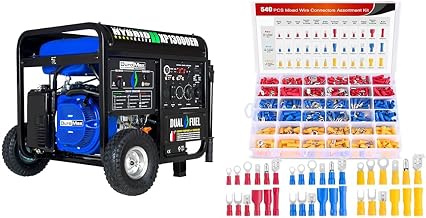
Noise: 76 dB at half load (per manufacturer spec sheet) Power: 13,000 running watts, 17,500 peak watts Runtime: ~8 hours on gasoline at half load Fuel: Dual-fuel (gasoline/propane)
This is the largest model in this roundup and the trade-off is noise: 76 dB is noticeably louder than smaller inverters, though still quieter than conventional generators in the same power class. If your home requires simultaneous air conditioning, electric heating, well pump, and multiple circuits, this is the only inverter option—smaller units simply can’t deliver the wattage.
The dual-fuel capability and 13,000-watt output make it suitable for whole-home backup, though you’ll want to discuss noise mitigation with neighbors and consider a sound-dampening enclosure for extended outages. The build quality is robust and handles sustained loads well, with a reinforced frame and sealed electrical connections that resist corrosion.
Noise Mitigation: Making Any Generator Quieter
Even a 71 dB inverter can feel loud during a multi-day outage. A few practical steps reduce perceived noise:
- Distance: Move the generator 50+ feet from the house and bedroom windows. Every doubling of distance reduces noise by roughly 6 dB.
- Sound-dampening enclosure: Commercial options like the Champion Weather-Resistant Cover or DIY plywood enclosures with acoustic foam can reduce noise by 5–10 dB. Ensure adequate ventilation to prevent carbon monoxide buildup—never enclose a generator indoors. Plans for DIY muffler boxes are available on HomeDepot.com and YouTube channels like This Old House.
- Rubber isolation mounts: Decouples vibration from the ground, reducing low-frequency rumble that carries through soil.
- Fuel stabilizer: Cleaner combustion in well-maintained engines runs quieter. Use a quality ethanol-free fuel stabilizer year-round.
Whole-Home Backup vs. Portable Backup
For context on when a portable quiet generator makes sense versus whole-home solutions, see Best Emergency Power Backup for Home: Comparing All Options and Portable Generator vs Whole-Home Generator: Cost and Setup.
Portable inverters (the focus of this guide) are ideal for: - Renters or those without permanent installation - Seasonal or frequent-use backup - Powering essential circuits during outages - Testing and maintenance without professional installation
Whole-home (standby) generators are better if: - You want automatic transfer switch (ATS) capability that switches to generator power instantly when utility power fails - You prefer not to manually connect circuits - Your home has natural gas service (eliminates fuel storage) - You plan to stay in the home long-term
For most homeowners, a portable inverter paired with a manual transfer switch or heavy-duty extension cords to essential circuits is the practical middle ground.
Fuel Storage and Maintenance
Gasoline degrades after 30 days without fuel stabilizer. For home backup:
- Use ethanol-free gasoline (available at most marinas and specialty fuel retailers; check GasBuddy or local fuel suppliers for availability in your area) or add a quality stabilizer to regular gas.
- Store fuel in approved metal or plastic cans, away from living spaces and ignition sources.
- Rotate fuel seasonally or every 6 months.
- Run the generator under load for 15–20 minutes monthly to keep the carburetor clean.
Propane doesn’t degrade, making dual-fuel inverters attractive for homes in regions with frequent or unpredictable outages. A standard 20-pound propane tank (like those for grills) provides 4–6 hours of runtime at half load on most inverters.
FAQ
Q: Can I use a quiet generator indoors or in my garage? A: No. All fuel-burning generators (gasoline, propane, diesel) produce carbon monoxide, a colorless, odorless gas that’s lethal in enclosed spaces. Always operate generators outdoors, at least 20 feet from windows, doors, and vents. Even a “quiet” generator running indoors will kill you in minutes.
Q: How long does a quiet inverter generator last? A: Based on aggregated owner reports and manufacturer data, well-maintained inverters typically last 3–5 years of regular use (weekly or monthly testing plus seasonal outages). Light use extends lifespan; heavy daily operation or poor maintenance shortens it significantly. Conventional generators often last 10+ years because they’re simpler, but inverters are more complex and sensitive to load and fuel quality.
Q: Do I need a transfer switch to use a portable generator? A: Legally and safely, yes. A transfer switch prevents backfeeding electricity into utility lines, which can electrocute lineworkers. Manual transfer switches (cheapest option, requires you to flip a switch) are installed between the utility panel and circuits you want to back up. Automatic transfer switches (ATS) detect power loss and switch circuits automatically when power fails. For renters or temporary backup, heavy-duty extension cords directly to appliances are acceptable if you’re careful, but a transfer switch is the standard.
Q: Which is quieter: propane or gasoline inverters? A: Propane burns slightly cleaner and runs marginally quieter (1–2 dB difference) than gasoline, but the difference is negligible in real-world use. Choose based on fuel availability and storage convenience, not noise.
Q: Can I run a quiet generator in an apartment? A: Check your lease and local ordinances. Many apartments prohibit generators entirely, while others allow them in designated outdoor spaces. A 2,000–3,100 watt inverter at 53 dB is the best choice for apartment backup if permitted—it’s quieter than most appliances and less likely to trigger noise complaints. See How to Choose a Backup Power Station for Your Apartment for apartment-specific backup options.
Summary
Quiet home-backup generators in 2026 are almost exclusively inverter models, with the best options delivering 50–72 dB of noise—comparable to household appliances rather than construction equipment. The Champion 3100-Watt Dual Fuel and WEN 56203i represent the quietest choices for small homes and apartments, while the Westinghouse iGen6500 balances noise and power for whole-home backup without a standby generator.
Wattage, fuel type, and runtime matter more than chasing the absolute lowest dB rating. A 3,100-watt inverter that’s quiet enough for daily use is more practical than a 13,000-watt monster you’ll run only during emergencies. Pair your choice with proper fuel storage, a transfer switch, and monthly maintenance, and you’ll have reliable backup power that won’t alienate your neighbors.


