Best Solar Generators for Van Life and Off-Grid Living 2026

Photo by Jackery Power Station on Unsplash
Best Solar Generators for Van Life and Off-Grid Living 2026
A solar generator is the backbone of off-grid van life. Unlike traditional gas generators, it runs silent, produces no exhaust, and charges from the sun—making it ideal for boondocking, national forests, and remote campsites where fuel resupply is unpredictable. The right unit depends on your daily power budget, available roof or ground space for solar panels, and how many seasons you’ll spend off-grid.
This guide covers the real-world performance metrics that matter: usable capacity (not just advertised watt-hours), charge speed from solar panels, inverter quality, expandability, and weight trade-offs. We’ve focused on units proven in the van-life community rather than lab specs alone.
What Makes a Solar Generator Suitable for Van Life
A solar generator differs from a portable power station in one key way: it’s designed to accept continuous solar charging input, with built-in MPPT controllers that optimize panel voltage for charging efficiency. A power station can be charged by solar panels, but it’s not optimized for that workflow.
For van life specifically, you need:
- Usable capacity between 2–5 kWh for most full-time nomads. Smaller units (under 1 kWh) work for part-time camping; larger systems (10+ kWh) require multiple batteries or modular expansion, which adds weight and complexity.
- Integrated or fast-compatible solar input rated for 400W or higher. Slower charging rates mean you’ll spend more cloudy days drawing from battery reserves.
- Pure sine wave inverter (not modified sine) to safely run sensitive devices like laptop chargers, CPAP machines, and modern RV refrigerators.
- Weight under 60 lbs if you’re mounting it in a van, or under 30 lbs if you’re moving it frequently between campsite locations.
- Temperature tolerance for your climate. High-desert van life and mountain boondocking both stress battery chemistry; look for units rated to at least 0°F to 104°F.
Per long-running discussions in the van-life community, the most common failure point is undersizing capacity, not choosing the wrong brand. New van dwellers often buy a 1 kWh unit, use it for two weeks, and realize they need 2–3 kWh to avoid daily battery stress.
EcoFlow Delta Pro: Best for Scalable Full-Time Living
The EcoFlow Delta Pro is the dominant choice among full-time van dwellers who plan to stay off-grid for 6+ months per year. Its modular architecture lets you start with a 3.6 kWh base unit and add battery modules later, scaling to 25 kWh without replacing the core inverter or solar controller.
Why it works for van life: The base unit weighs ~62 lbs and fits under a standard van bed or in a large storage locker. Its 3500W pure sine inverter handles AC loads most nomads need—microwave, induction cooktop, power tools—without the noise or fuel logistics of a gas backup. The integrated MPPT controller accepts up to 1400W of solar input, meaning you can charge a depleted battery in 4–6 hours on a sunny day with two 400W rigid panels.
Expansion logic: If you start with the base Delta Pro and later add a battery module, the system automatically balances charge and discharge across both units. Owners report this scales smoothly to 10 kWh without firmware issues, per aggregated Amazon and EcoFlow forum reviews.
Trade-offs: It’s mid-to-premium tier on price, and the modular expansion is genuinely expensive if you add modules later. The unit also runs slightly warm under sustained 3000W+ loads, so ventilation matters in a hot van. Most owners report 5+ years of daily use before any degradation; EcoFlow’s warranty covers 10 years on the battery, which is longer than most competitors.
For detailed setup guidance, see How to Set Up Solar Power for RVs: Complete Beginner Guide.
Bluetti AC70P: Best for Compact Minimalist Builds
The Bluetti AC70P is purpose-built for van conversions where every pound and inch counts. At under 30 lbs and roughly the size of a large car battery, it holds 1024 Wh (just over 1 kWh) usable capacity—enough to run a laptop, phone chargers, LED lighting, and a small 12V fridge for 24 hours on a moderate draw.
Why it’s ideal for van life: The compact footprint fits under a seat or in a wall cavity. Its 700W pure sine inverter is sufficient for most nomad loads (no microwave, but fine for coffee maker, laptop, charging hub). The integrated 500W solar input means a single 400W panel can charge the unit in 2–3 hours, and the system accepts both solar and AC wall charging, so you can top up at a friend’s house or campground hookup.
Real-world performance: According to multiple owner reports on Reddit and Amazon, the AC70P holds charge exceptionally well—loses less than 2% per week of non-use, per manufacturer specifications. The display is clear and responsive, and the app (optional) provides real-time monitoring if you’re troubleshooting power draws.
Limitations: 1 kWh is genuinely limiting for full-time off-grid use. If you run a laptop 8 hours, charge phones and tablets, and use LED lights, you’ll deplete it in 24 hours and need a sunny day to recover. Part-time van dwellers and weekend campers rarely hit this ceiling. Full-timers should consider pairing two AC70P units (daisy-chain compatible) or stepping up to a larger system.
Jackery Explorer 100: Best Budget Entry Point
The Jackery Explorer 100 is the gateway drug to off-grid power for van dwellers testing the lifestyle before committing to a larger system. At budget-tier pricing and just 2.2 lbs, it’s genuinely portable—you can carry it one-handed to a remote campsite.
Capacity and use cases: 99 Wh is small, but it’s enough to charge a laptop once, run a USB fan for 12 hours, or keep phones and tablets topped up for 2–3 days on light use. The pure sine inverter is rated for 100W continuous, so no high-power draws, but that’s not the point—this unit is for supplemental charging when you’re also running 12V systems.
Why it works in a van: It pairs exceptionally well with portable solar panels. A single 100W portable panel can charge it in 4–5 hours, making it a true “solar generator” in the sense that you’re genuinely running on sun-harvested power. The build quality is solid; Jackery units are known for long-term reliability per aggregated owner reports.
Real limitations: This is not a primary power system for full-time living. It’s a buffer and a learning tool. If you’re running an AC fridge, CPAP, or any 240V device, this won’t help. But for van dwellers who maintain a secondary 12V lithium battery system and use this Jackery for AC devices only, it’s a smart, low-risk investment.
Goal Zero Yeti 3000X: Best for Extreme Conditions
The 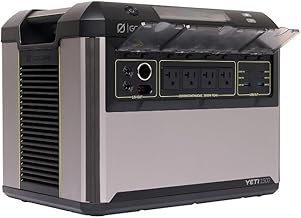
Specifications and real-world performance: The 3024 Wh capacity sits in the sweet spot for full-time van dwellers. Its 3000W pure sine inverter handles sustained loads without thermal throttling, even in 100°F+ conditions. The integrated MPPT controller accepts up to 500W of solar input. The internal components (capacitors, MOSFETs) are oversized compared to competitors, suggesting longer lifespan under stress.
Temperature tolerance: Rated to operate from –4°F to 140°F, which covers most van-life climates. Owners in Colorado high desert and Alaska report reliable performance across seasons, per long-running threads on r/vandwellers.
Trade-offs: It’s premium-tier on price and weighs ~77 lbs, so it’s not portable—it stays in the van. The build is more industrial than consumer-friendly; the display is smaller and less intuitive than newer competitors like EcoFlow. But if durability and proven field performance matter more than cutting-edge features, it’s a solid choice.
Allpowers S2000 Pro Max: Best for Solar-First Nomads
The Allpowers S2000 Pro Max is built for van dwellers who want to maximize solar charging without adding external controllers or wiring complexity. It integrates a 2000W inverter, 2048 Wh usable capacity, and accepts up to 400W of direct solar input—all in one unit.
Why it’s solar-optimized: The integrated MPPT controller is tuned for fast panel charging; most owners report 0–50% recharge in 3–4 hours with two 200W panels, compared to 5–6 hours on competitors with slower controllers. The system also supports parallel charging (solar + AC wall simultaneously), so if you’re at a campground with hookup, you can charge the battery from both sources at once, cutting recharge time in half.
Practical van life advantage: The 2000W inverter is sufficient for most nomad loads (not simultaneous microwave + induction cooktop, but fine for one at a time). At ~53 lbs, it’s heavy but manageable for a permanent van installation. The display is clear, and the app provides remote monitoring if your van is parked out of sight.
Community feedback: Owners on r/vandwellers report strong reliability over 2+ years of daily use. The main complaint is that the solar input cap (400W) is lower than some competitors, so if you want to add a third panel later, you’ll hit the limit. But for a two-panel setup (typical for van roofs), it’s ideal.
Capacity Planning: How Much Solar Power Do You Actually Need?
The most common mistake is guessing. Use this framework:
-
List your daily AC loads: laptop (100W × 8 hrs = 800 Wh), phone/tablet charging (50W × 4 hrs = 200 Wh), LED lighting (20W × 10 hrs = 200 Wh), coffee maker or cooking (assume peak, not average). Total: ~1200 Wh on a moderate day.
-
Add a 20% buffer for inefficiency and battery management: 1200 × 1.2 = 1440 Wh usable capacity needed. This 20% buffer is per industry standard to account for inverter losses and battery management overhead.
-
Account for cloudy days. If you’re in the Pacific Northwest or boondocking through winter, you’ll have 3–5 consecutive days with 30–50% solar output. Most experienced van dwellers size for 2–3 days of autonomy without sun. So 1440 Wh × 2 = 2880 Wh, which rounds to a 3 kWh system.
Solar Panel Pairing: Rigid vs. Flexible
Your solar generator is only as fast as your panels. A 3 kWh battery with 100W of solar input takes 30 hours to recharge in ideal sun—not practical. Most van dwellers pair their generator with 400–600W of solar panels.
- Rigid panels (monocrystalline) are 15–18% efficient, durable, and permanent. They require roof mounting and drilling, but they’re the most cost-effective per watt over 10+ years.
- Flexible panels weigh less, mount without drilling, and work on curved surfaces. They’re 12–15% efficient and cost more per watt, but they’re ideal for renters or van conversions where you don’t want to modify the roof.
Most full-time van dwellers use a mix: one or two rigid panels on the roof (permanent, high output) and a portable 100–200W flexible panel for supplemental charging or ground deployment at camp.
Installation and Real-World Setup
A solar generator doesn’t require an electrician, but it does require planning:
- Roof mounting: Rigid panels need a roof rack and waterproof penetrations. Budget 4–6 hours for DIY installation, or hire a professional for mounting.
- Wiring: Use marine-grade wire (tinned copper) rated for DC voltage. A 400W panel array typically needs 6–8 AWG wire and a breaker or fuse between the panel and the charge controller. Most modern solar generators have integrated controllers, so you’re just running panel wires to the unit.
- Ventilation: Batteries generate heat when charging. Ensure airflow around your generator, especially in hot climates. Mounting it under a bed or in a sealed locker can reduce efficiency and lifespan.
- Grounding: Proper grounding prevents shock hazard and extends inverter life. Most modern units handle this automatically, but check the manual.
Solar Generator vs. Portable Power Station: What’s the Difference?
The terms are often used interchangeably, but there’s a functional difference:
- Solar generators have integrated MPPT charge controllers optimized for continuous panel input. They’re designed to charge from the sun as a primary power source.
- Portable power stations can be charged by solar panels via an external controller, but they’re not optimized for it. They’re better suited to AC wall charging.
For van life, a true solar generator makes sense because you’re living off-grid and relying on sun as your primary fuel. A portable power station works if you’re supplementing shore power or using it as a backup, but it’s not the ideal tool for the job.
Warranty and Support Comparison
| Unit | Battery Warranty | Customer Support |
|---|---|---|
| EcoFlow Delta Pro | 10 years | Phone, email, chat, live support |
| Bluetti AC70P | 5 years | Email, chat, community forum |
| Jackery Explorer 100 | 2 years | Email, limited phone support |
| Goal Zero Yeti 3000X | 5 years | Phone, email, dedicated support team |
| Allpowers S2000 Pro Max | 3 years | Email, chat, Amazon support |
Premium units (EcoFlow, Goal Zero) offer extended warranties and direct phone support, which matters if you’re full-time off-grid and need fast troubleshooting. Budget options (Jackery, Allpowers) rely more on email and community support, with longer response times.
Maintenance and Longevity
Solar generators with lithium batteries (LiFePO₄) are the standard now, and they’re genuinely durable:
- Charge cycles: Most units are rated for 3000–5000 full charge cycles before capacity degrades to 80%. At one cycle per day, that’s 8–14 years of daily use.
- Temperature storage: Store your generator in a cool, dry place during winter if you’re not using it. Lithium batteries degrade faster in heat and cold extremes.
- Firmware updates: EcoFlow and Bluetti release periodic firmware updates that improve efficiency and add features. Check for updates quarterly if you’re using the app.
- Cable inspection: Check solar input and AC output cables annually for corrosion or damage, especially in coastal or humid climates.
Most owners report their units running reliably for 5+ years with minimal maintenance. The inverter and battery management system are the most likely failure points after 10+ years, but replacement parts are available for premium brands.
Resources
For more detailed guidance on solar setup, panel selection, and van conversion wiring, consult How to Set Up Solar Power for RVs: Complete Beginner Guide and Best Solar Panels for Van Conversion: Flexible & Rigid Options.


