Home Power Outage Kit: Essential Gear & Backup Power Checklist
Home Power Outage Kit: Essential Gear & Backup Power Checklist
A home power outage kit is the difference between a minor inconvenience and a genuine crisis. Whether you’re facing a few hours without electricity or a multi-day grid failure, having the right gear staged and ready prevents panic, keeps critical devices charged, and maintains basic comfort. This guide covers the essential layers of a functional outage kit—from backup power sources to lighting, water, and supplies—so you can build one that matches your household’s actual needs.
Why You Need a Home Power Outage Kit
Power outages are more frequent and longer-lasting than most people realize. Severe weather, aging grid infrastructure, and increased demand have made multi-hour and even multi-day outages routine in many regions. Grid reliability incidents are trending upward, with summer and winter peak seasons seeing the highest risk windows.
Beyond weather, outages happen during equipment failures, vehicle accidents into power lines, and planned maintenance windows. The average American household experiences 1–3 outages per year; many in vulnerable areas face 5 or more. Without a kit, you lose refrigeration, heating or cooling, device charging, lighting, and water pressure (if you have a well pump). A prepared kit keeps you safe, informed, and functional.
Core Backup Power: Choosing Your Primary Source
Your kit’s backbone is a reliable power source. You have three main options: portable power stations (battery), generators (fuel-based), or a hybrid approach.
Portable Power Stations (Battery-Based)
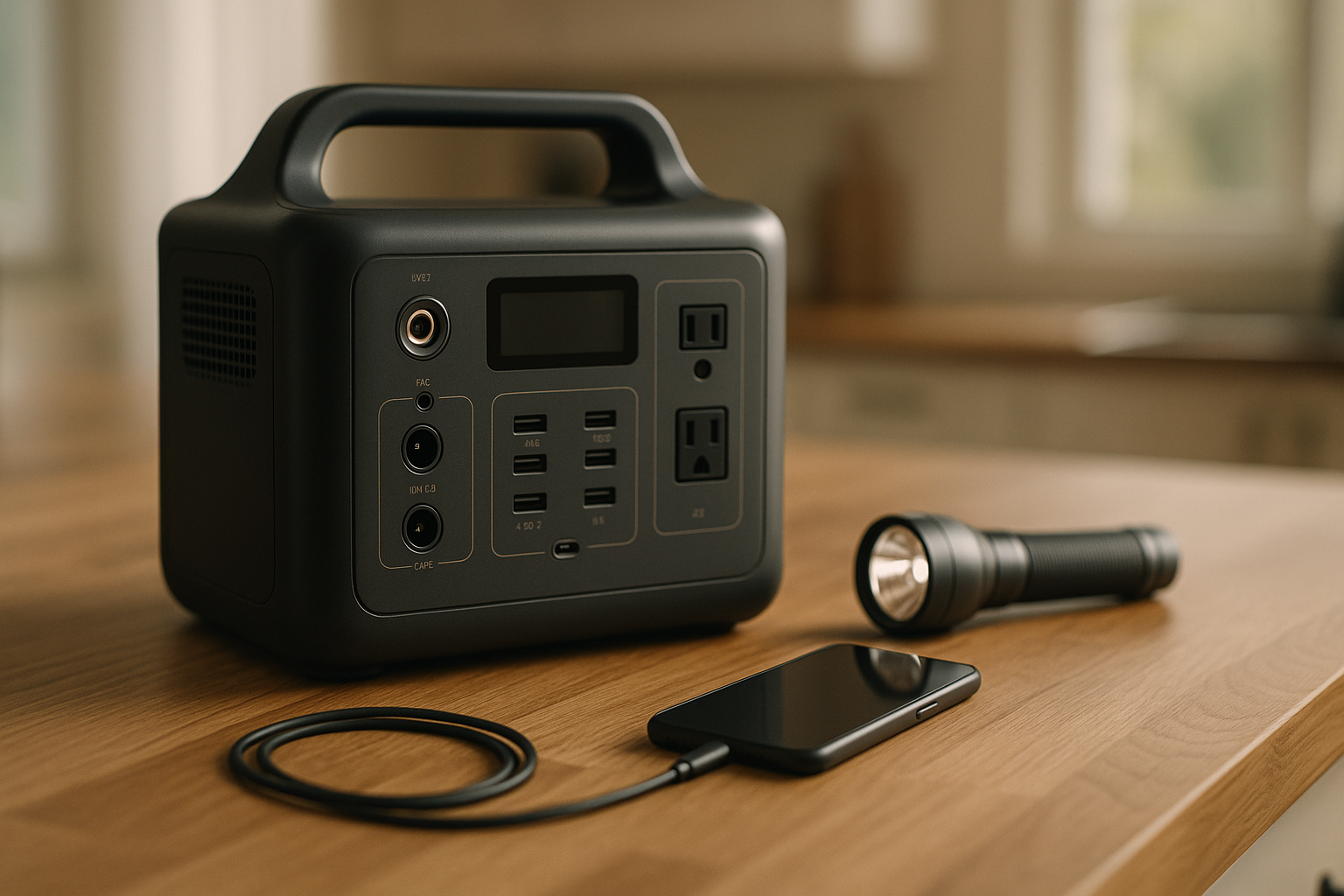
Portable power stations are silent, emit no fumes, require no fuel runs, and charge from wall outlets or solar panels. They’re ideal for apartments, noise-sensitive neighborhoods, and indoor use. Per manufacturer specs and owner reports, modern lithium-based stations deliver 500–5,000 watt-hours of capacity.
Capacity sizing: A 1,000–2,000 watt-hour station covers essentials (lights, phone charging, small refrigerator runs, medical devices) for 12–24 hours, assuming ~100W average draw. For longer outages or higher loads (space heaters, sump pumps), aim for 3,000+ watt-hours or plan to add solar charging during the outage.
Trade-offs: Battery stations cost more upfront, degrade over time (typically retaining 80% capacity after 500 charge cycles, per manufacturer testing), and take hours to recharge from wall power. They excel at short-to-medium outages and complement solar panels beautifully.
See Portable Power Station Capacity Guide: How Many Watt-Hours Do You Need? for detailed sizing math.
Fuel-Based Generators
Portable generators run on gasoline, propane, or natural gas and can deliver high wattage continuously. They’re cheaper per watt than batteries and don’t degrade. However, they’re loud (70–90 dB for mid-range models), produce carbon monoxide (must run outdoors), require fuel storage and rotation, and need regular maintenance.
Inverter vs. conventional: Inverter generators (per teardown reviews and owner feedback) regulate voltage more precisely, making them safer for sensitive electronics like laptops and medical equipment. They’re also quieter and more fuel-efficient. Conventional generators are louder but cheaper and more robust for heavy-duty loads.
Pair a generator with a transfer switch (installed by a licensed electrician) to safely route power into your home’s panel without backfeeding the grid—a serious safety hazard.
See Best Quiet Generators for Home Backup Power 2026 and Inverter Generator vs Conventional Generator: What's the Difference? for detailed comparisons.
Hybrid Approach
Many households benefit from both: a mid-sized power station for quiet, immediate backup (first 12–24 hours) and a generator for extended outages or high-load scenarios. This avoids noisy generator operation during night hours and gives you flexibility.
Lighting & Illumination
When the grid goes down, darkness follows within hours. A robust outage kit includes multiple lighting tiers:
- LED flashlights (2–3 per household, with extra batteries): Compact, long runtime, durable. Per manufacturer specs, quality LED flashlights deliver 20–100+ hours per battery set.
- Headlamps (one per person): Frees your hands for tasks. Invaluable for moving through dark spaces safely.
- Lanterns (2–3 mid-brightness models): Illuminate larger areas (kitchen, living room) without consuming excessive battery power. Solar-rechargeable lanterns are a bonus—they charge during the day and provide light at night without battery drain.
- Glow sticks: Emergency backup, safe around children and pets, no battery required.
- Candles & matches: Last resort; keep in a waterproof container. Fire risk if used carelessly around children or pets.
Avoid relying solely on phone flashlights—you need your phone battery for communication and charging other devices.
Water, Food & Sanitation
Outages often disrupt water supply (if you have a well pump) or sewage systems. Plan for both.
Water
- Stored drinking water: 1 gallon per person per day, minimum 3-day supply (more if you’re in a hot climate or have medical needs). Rotate annually.
- Water purification tablets or filters: Backup if stored water runs out. Per NSF certification standards, quality filters remove bacteria and some viruses; tablets are compact and shelf-stable.
- Manual water pump or gravity filter: For longer outages or if you have a well and can’t run the pump.
- Bathtub liners or large containers: Collect water for non-drinking use (flushing toilets, washing) if the grid fails mid-outage.
Food
- Non-perishable, no-cook items: Canned goods, protein bars, nuts, dried fruit, crackers, peanut butter. Avoid items requiring refrigeration or cooking.
- Manual can opener: Essential if you stock canned goods.
- Fuel for cooking (if needed): Camping stove + fuel canisters, or a portable grill (outdoor use only). Keep fuel in a safe, cool location.
Sanitation
- Toilet paper & paper towels: Stock extra; municipal water loss can prevent flushing.
- Wet wipes & hand sanitizer: Hygiene without running water.
- Plastic bags & ties: Contain waste if sewage systems fail.
- Feminine hygiene products, diapers, medications (if applicable): Don’t assume you can buy these during an outage.
See Emergency Power Outage Supplies: Complete Shopping List for 2026 for a comprehensive supply list.
Climate Control & Medical Needs
Depending on season and location, temperature control can be life-critical.
Heating
- Portable space heater (if you have backup power): Requires significant wattage (750–1,500W); ensure your power station or generator can handle it. Per manufacturer specs, a mid-tier power station can run a small space heater for 4–8 hours.
- Blankets, sleeping bags, insulated clothing: Low-tech backup.
- Insulation aids: Plastic sheeting, weatherstripping, or draft stoppers to seal windows and doors.
- Propane heater (outdoor or well-ventilated only): Portable option if fuel-based backup is your primary strategy.
Cooling
- Portable air conditioning unit or fan (if you have backup power): Similar wattage constraints as heaters.
- Ice or cooling packs: Rotate them in a cooler to preserve perishables or provide localized cooling.
- Light, breathable clothing & hydration: Essential in hot climates.
Medical Devices
If anyone in your household requires refrigerated medications, a CPAP machine, an oxygen concentrator, or dialysis equipment, your backup power capacity must accommodate those loads. Per device manufacturers, CPAP machines draw 60–100W, oxygen concentrators draw 300–500W, and similar devices often draw 50–500W continuously. Size your power station or generator accordingly, and keep a multi-day supply of backup batteries or fuel on hand.
See Best Backup Power for Home Office: Stay Productive During Outages for office-specific medical device backup strategies.
Communication & Information
When the grid fails, communication infrastructure often follows. Prepare for isolation.
- Battery-powered or hand-crank radio: Receives emergency broadcasts and weather alerts. Per product reviews, quality hand-crank models also charge phones and provide flashlight functions.
- Phone charging solution: Portable power bank (battery-based) or car charger if you have fuel. Aim for 10,000+ mAh capacity.
- Backup phone plan: Ensure at least one household member has a phone on a different carrier or service type (e.g., if your primary is cable-based, keep a cellular backup).
- Important documents & contact list: Printed copies of insurance policies, medical info, and phone numbers (in case cloud services are inaccessible).
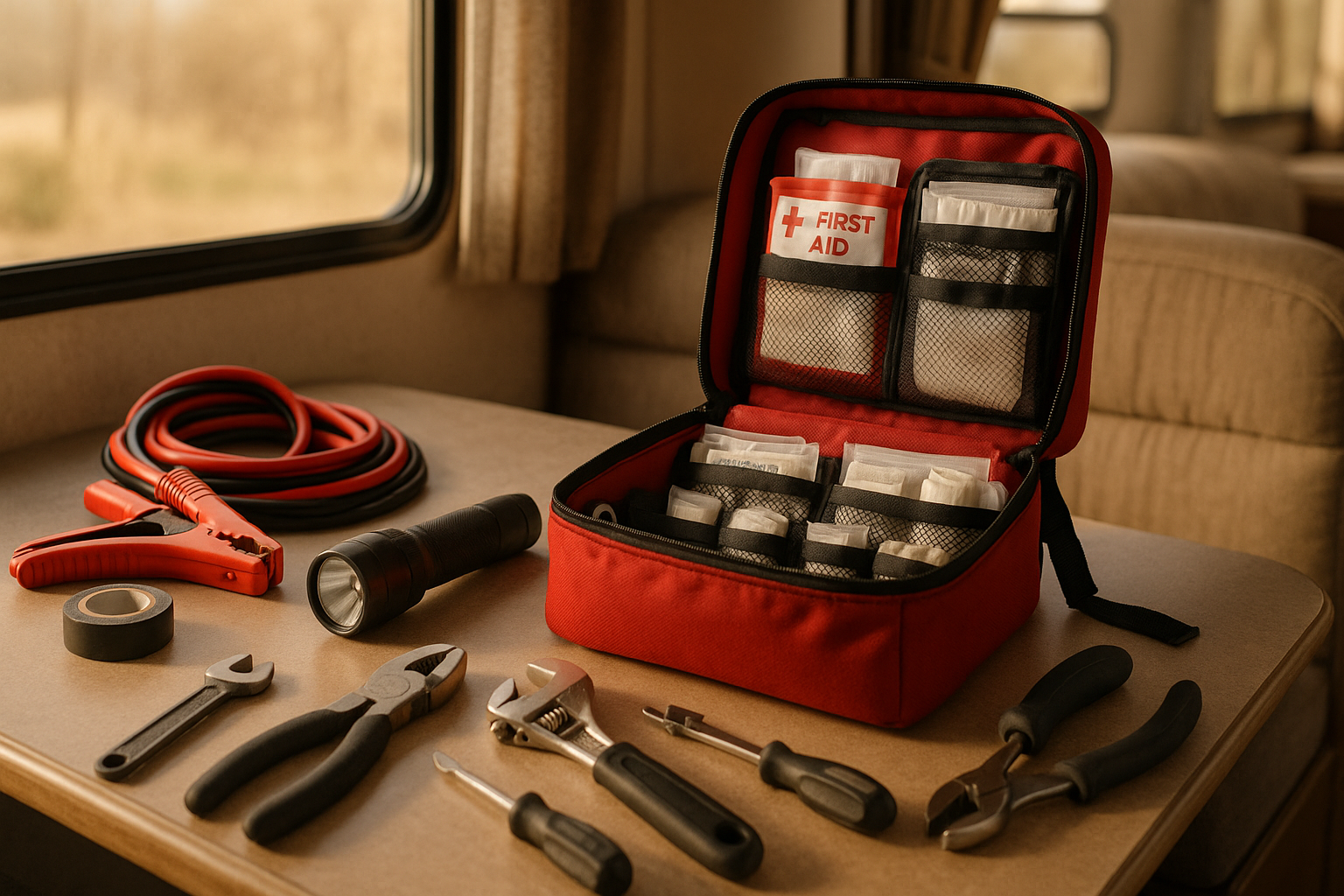
Tools & Repair Supplies
Basic tools and supplies help you respond to outage-related problems:
- Multi-tool or knife: Useful for countless tasks.
- Flashlight headlamp combo: Hands-free illumination during repairs.
- Duct tape, electrical tape, zip ties: Quick fixes.
- Plywood & nails/screws: Emergency window boarding if storms threaten.
- Jumper cables & portable jump starter: If your vehicle battery drains and you need to run a generator.
- Fire extinguisher: Essential if you’re using portable heaters, grills, or generators.
Organizing Your Kit
A scattered collection of supplies is useless during a crisis. Organize your kit for quick access:
- Central location: Garage, basement, or closet—somewhere cool, dry, and easily accessible.
- Labeled containers: Group by category (lighting, water, food, tools, medical).
- Waterproof bags: Protect documents and electronics from moisture.
- Inventory checklist: Tape a list to the outside of your main container; check and refresh annually.
- Family communication plan: Post a printed copy near your kit so everyone knows where to find supplies and how to contact each other if separated.
Maintenance & Rotation Schedule
A kit that hasn’t been checked in five years is unreliable. Establish a routine:
- Quarterly battery check: Test flashlights and power stations; replace dead batteries.
- Semi-annual fuel rotation: If you store gasoline or propane, rotate stock per local fire codes (typically 6–12 months for gasoline).
- Annual water refresh: Drain and refill stored water to prevent stagnation.
- Medication & food check: Replace expired items, especially medications and perishable foods.
- Power station charge cycle: Run your portable power station through a full charge-discharge cycle every 3–6 months to maintain battery health.
Integrating Solar Power
If you’re building a long-term outage strategy, solar panels paired with a power station create a self-sustaining system. During the day, panels recharge your battery; at night, you draw from storage. Under ideal conditions with clear skies and optimal panel angle, a 400W solar array can fully recharge a 2,000 watt-hour power station in 5–8 hours. Real-world results vary based on cloud cover, panel efficiency, and seasonal sun angle.
This requires upfront investment but pays dividends during extended outages. See How to Set Up a Solar Power System for Off-Grid Living for detailed guidance.
FAQ
Q: How much backup power do I actually need? A: Start by listing critical loads: refrigerator (150–800W), phone charger (5–15W), lights (5–15W each), medical devices (varies). Add them up; that’s your minimum hourly draw. Multiply by how many hours you expect an outage to last, then add 20% buffer. A power station’s watt-hour rating ÷ hourly draw = runtime. Examples: - Apartment with essentials only (lights, phone, minimal fridge use): 200–300W average draw; a 1,000 Wh station provides ~4–5 hours. - Family home with fridge, some lighting, and heating: 1,500–2,500W average draw; a 3,000 Wh station provides ~1–2 hours, requiring a generator for extended outages. - Home with medical devices (CPAP, oxygen): 500–1,000W average draw; a 2,000 Wh station provides ~2–4 hours.
Q: Can I run my whole house on a portable power station? A: Not simultaneously. Whole-house loads (central AC, electric heating, water heater) exceed 5,000–10,000W and drain batteries in minutes. Use a power station for essentials (fridge, lights, phones, medical devices). For whole-home backup, invest in a fuel generator or a larger modular battery system (5,000+ watt-hours).
Q: How long do portable power stations last before they degrade? A: Per manufacturer testing, quality lithium-based stations retain ~80% capacity after 500 full charge-discharge cycles, roughly 1–2 years of heavy use or 5–10 years of occasional use. They’re designed to outlast most outages but will eventually need replacement.
Q: Is it safe to run a generator indoors? A: No. Generators produce carbon monoxide, a colorless, odorless gas that kills within minutes in enclosed spaces. Always run generators outdoors, at least 20 feet from windows, doors, and vents. Never run one in a garage, basement, or attic.
Q: What’s the best fuel for long-term storage? A: Propane is safest and most stable (lasts 10+ years in sealed containers). Gasoline degrades within 6–12 months and requires stabilizer additives. If you choose gasoline, use a fuel stabilizer and rotate stock seasonally. Store all fuel in approved, labeled containers in a cool, well-ventilated area away from living spaces.
Final Checklist: Build Your Kit Today
A home power outage kit isn’t a luxury—it’s insurance against preventable suffering. Start with backup power (a portable power station or generator), add lighting, water, and food, then layer in tools, communication, and climate control. Test everything before an outage happens. Rotate supplies annually. Tailor your kit to your household’s specific needs (medical devices, climate, family size, pets).
The cost of a basic kit (power station, lights, water, food, tools) typically ranges from budget-tier to mid-tier for a household of four. That’s far cheaper than the cost of spoiled food, lost productivity, medical emergencies, or property damage from an unprepared outage.
Start today. Your future self will thank you when the lights go out.
Related reading: Power Outage Preparedness: 30-Day Emergency Supply Checklist How to Build a Home Emergency Kit on a Budget Best Quiet Generators for Home Backup Power 2026