Lightweight Emergency Gear for Van Life in 2026

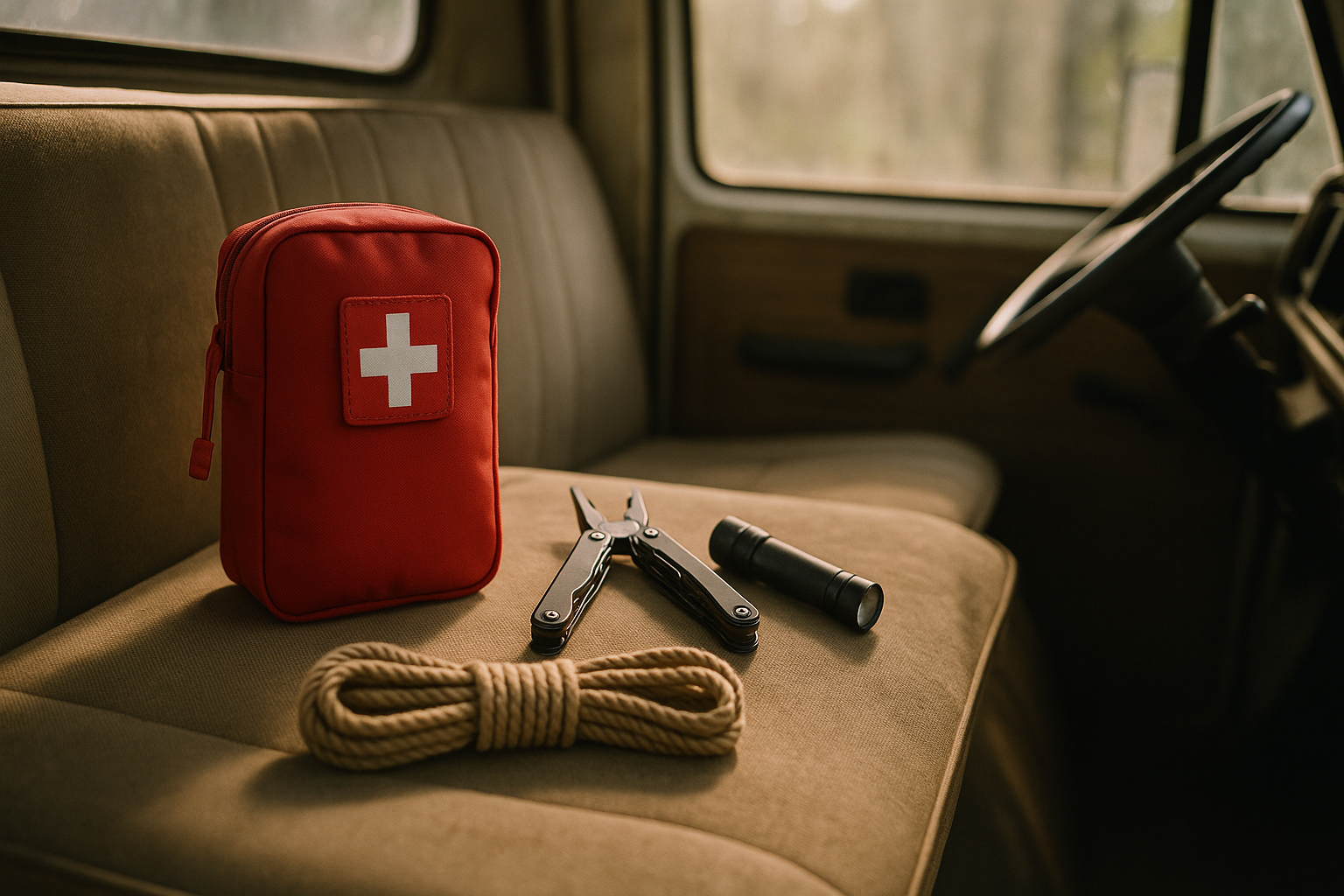
Photo by Leo_Visions on Unsplash
Lightweight Emergency Gear for Van Life: Essential Checklist
A transmission failure 60 miles from cell service. A water pump that dies mid-boondocking. A cut that gets infected while you’re remote. Van life means these scenarios aren’t hypothetical—they’re operational risks. Your emergency kit can’t be a 50-pound storage hog. This checklist focuses on gear that actually fits in a van, actually gets used, and doesn’t sacrifice safety for space.
Why Van Life Emergency Gear Is Different
A stationary home emergency kit can sprawl across a closet. A van has cubic inches, not cubic feet. You’re also mobile: a breakdown in the desert plays by different rules than a power outage in your living room. Van dwellers face unique hazards—isolation, limited cell service, temperature swings in an uninsulated box, fuel constraints—that demand a different approach to preparedness.
The goal isn’t to carry every tool ever made. It’s to carry the right tools for the scenarios you’ll actually face: getting stranded, running low on power, dealing with injury or illness far from town, and managing water and sanitation on the road.
Power: The Foundation of Van Emergency Readiness
Power is your lifeline in a van. It runs your water pump, charges your phone, powers a heater or fan, and keeps essential devices alive. But a full solar array or large generator defeats the purpose of lightweight gear.
Portable power stations in the 300–500Wh range hit the sweet spot. They’re heavy enough to handle critical loads (phone charging, small medical devices, laptop for navigation) without requiring a dedicated mounting system. Look for models with 100W+ solar input so you can top up during the day without running your engine.
According to owner reports on r/vandwellers and r/boondocking on Reddit, plus threads on the FarOutRide forums (faroutride.com/community), the most-used emergency power setup combines: - A compact power station like the Jackery Explorer 300 or EcoFlow River 2 Pro (300–500Wh) mounted under a seat or in a cabinet - A small solar panel (100W folding or rigid) for daytime charging - A 12V car charger for the power station (for charging while driving)
This three-tier approach means you’re never fully dependent on one source. If your alternator fails, solar keeps you trickle-charging. If clouds roll in, the car charger works while you drive to town.
For deeper context on sizing and runtime, see Portable Power Station Buying Guide: Capacity, Ports & Runtime Explained.
Water: Compact Storage and Purification
Dehydration in a van happens fast—especially in heat or at altitude. But hauling 50 gallons of water defeats lightweight principles.
Carry 10–15 gallons (38–57 liters) of potable water in food-grade containers like Reliance Aqua-Tainer jugs or collapsible Nomadik water carriers (collapsible versions save space). This covers: - Temperate climates (60–75°F): 2L per person per day = 10–15 gallons for two people for 5–7 days - Desert heat (85°F+): 4L per person per day = 20–25 gallons for two people for 5–7 days - High altitude (8,000+ ft): 3L per person per day due to increased respiration
Purification is mandatory because boondocking often means untreated water sources. Lightweight options: - Gravity filters (Sawyer or similar): slow but reliable, no batteries needed - Squeeze filters: fast and compact, fit in a backpack - Purification tablets: lightest backup, takes 30 minutes but weighs ounces
Carry at least two methods. If your primary filter clogs, you have a backup that actually works.
First Aid and Medical Supplies
Van injuries happen in isolation. A blister 40 miles from town can derail a week. A cut that gets infected while you’re remote becomes serious fast.
Your emergency first aid kit should fit in a waterproof container measuring 8 × 6 × 4 inches and include: - Wound care: 20 sterile gauze pads (2×2 inch), 10 antiseptic wipes, 3 antibiotic ointment packets, 1 roll medical tape (1 inch), 4 elastic bandages (various sizes) - Pain and fever: 20 ibuprofen tablets, 15 acetaminophen tablets, 10 aspirin tablets - Digestive: 6 antacid tablets, 4 anti-diarrheal packets, 2 laxative packets - Allergy and cold: 10 antihistamine tablets, 6 decongestant tablets, 8 cough drops - Topical: 1 hydrocortisone cream tube (0.5 oz), 1 antifungal cream tube (0.5 oz), 2 blister treatment patches - Prescription backups: if you take daily meds, carry a 30-day emergency supply separate from your regular stash - Tools: tweezers, small scissors, 10 non-latex gloves, CPR face shield
Check expiration dates every 6 months—van heat accelerates degradation.
Navigation and Communication
Cell service dies. GPS batteries drain. Paper maps don’t.
Essential navigation and comms gear: - Detailed paper maps of regions where you travel (mark your common routes) - Compass: a basic orienteering compass weighs nothing and never needs a battery - Backup phone charger: a small solar charger or hand-crank charger (hand-crank is heavier but works in any weather) - Two-way radio (GMRS or CB): lets you reach other travelers and roadside help when cell is dead - Whistle: signals distress in remote areas where your voice won’t carry
A satellite messenger device (like a personal locator beacon) is optional but valuable if you frequently boondock alone in truly remote areas. These weigh ounces and transmit your location to rescue services even with zero cell bars.
Tools and Mechanical Supplies
Van breakdowns often happen at 11 p.m. in the dark, 30 miles from a mechanic. A basic mechanical kit can mean the difference between a 20-minute fix and a tow.
Lightweight essentials: - Multi-tool or folding knife: one item that does 10 jobs - Screwdrivers: Phillips and flathead (a compact set is lighter than individual tools) - Adjustable wrench: one tool handles most bolt sizes - Pliers: needle-nose and slip-joint - Flashlight: rechargeable headlamp frees both hands - Spare fuses and relays: matches your van’s electrical system - Jumper cables or portable jump starter: a compact jump pack weighs a few pounds and starts a dead battery without needing another vehicle - Duct tape and electrical tape: wrapped around a card, not a full roll - Spare belts and hoses: consult your van’s service manual for part numbers specific to your make/model—for example, a Ford Transit requires different serpentine belt specifications than a Sprinter. Store the manual in your glove box or digitally on your phone - Basic fluids: oil, coolant, brake fluid (small bottles, not bulk)
Store tools in a single compact bag. You’re not aiming to rebuild an engine—you’re aiming to limp to town.
Shelter, Warmth, and Weather Protection
Your van is shelter, but emergencies can force you outside or immobilize your heating/cooling.
Lightweight additions: - Emergency blanket (mylar): weighs ounces, reflects 90% of body heat - Sleeping bag or bivvy: even if you sleep in your van, a backup insulation layer survives engine failure in winter - Tarp or emergency poncho: covers you and your gear in sudden rain - Headlamp with extra batteries: navigating in the dark, checking under the hood, signaling for help
Documents, Money, and Essentials
Emergencies often involve bureaucracy or unexpected expenses.
Keep in a waterproof pouch: - Vehicle registration and insurance cards (copies and originals) - Driver’s license and passport (copies and originals) - Emergency contact list: written, not just in your phone (which may die) - Cash: at least budget-tier emergency funds in small bills (ATMs fail, card readers fail) - Credit card: separate from your primary wallet - Medical information: allergies, blood type, current medications (if you’re unconscious, this saves lives)
Store this pouch where you can grab it in 30 seconds if you must evacuate.
Packing and Weight Strategy
A 50-pound emergency kit is worthless if it’s buried under storage and takes an hour to access. Aim for 15–25 pounds total.
Organization: - Use clear plastic bins so you can see contents without opening - Label everything - Store power and water near the driver (easiest to access) - Keep first aid and tools in a central cabinet - Rotate supplies every 6 months to catch expired items
Weight distribution matters in a van. Front-heavy setups affect handling and fuel economy. Mount heavier items (water, power station) over the rear axle or as low as possible.
Seasonal Updates
Your emergency kit isn’t static. Conditions change.
Summer priorities: add 5 additional gallons of water, cooling supplies (electrolyte packets), sun protection (SPF 30+ sunscreen, 2 bottles), insect repellent (8 oz spray)
Winter priorities: pack a second sleeping bag rated to 20°F, 4 hand warmers, ice melt (2 lbs), battery backup (cold drains batteries 30–50% faster)
Spring/fall: focus on respiratory health (antihistamines, decongestants for pollen/mold) and tire safety (temperature swings affect pressure 1–2 psi per 10°F change)
Review and refresh your kit before each season.
FAQ
Can I use pool water, rainwater, or stream water instead of carrying it? Not for drinking without purification. Pool water contains chlorine and algaecides. Rainwater and streams carry bacteria, parasites, and sediment. Always carry potable water as your primary supply and use purification methods (filters, tablets) only as backup for emergency situations. Boiling is an option if you have fuel and containers, but it’s slower than filtering.
What’s the actual weight penalty of carrying 25 gallons vs. 10? Water weighs 8.3 lbs per gallon. Carrying 25 gallons instead of 10 adds 125 lbs to your van—a significant impact on fuel economy (typically 1–2 mpg loss), handling, and tire wear. For most van dwellers, 10–15 gallons is the practical sweet spot. If you frequently visit waterless areas, upgrade to 20 gallons and accept the weight trade-off.
Do I really need paper maps if I have GPS? Yes. GPS batteries die. Cell service vanishes. Paper maps don’t. Carry detailed maps of regions where you spend time, and know how to use a compass. It’s lightweight insurance.
How often should I refresh my emergency kit? Check it every 6 months. Medications and first-aid supplies degrade in van heat. Rotate water annually. Test power stations and jump starters twice a year to ensure they hold charge.
What’s the lightest emergency communication option? A whistle and a hand-crank phone charger together weigh less than a pound. A two-way radio (GMRS) adds a couple pounds but reaches other travelers. For true remote work, a satellite messenger device (personal locator beacon) is heavier but transmits your location to rescue services without cell service.
Summary
Lightweight emergency gear for van life isn’t about carrying less—it’s about carrying smarter. Focus on power (a compact power station like the Jackery Explorer 300 and solar), water (10–15 gallons plus purification), first aid, navigation, basic tools, and shelter. Keep the total weight under 25 pounds and store it accessibly. Refresh it every 6 months and adjust for season.
The van itself is your primary shelter. Your emergency kit handles the scenarios where the van can’t: mechanical failure, extended boondocking, medical issues, or sudden weather. Build it around the places you actually travel and the conditions you’ll actually face. A kit designed for your life beats a generic checklist every time.