Quietest Portable Power Station for Camping & Neighbors

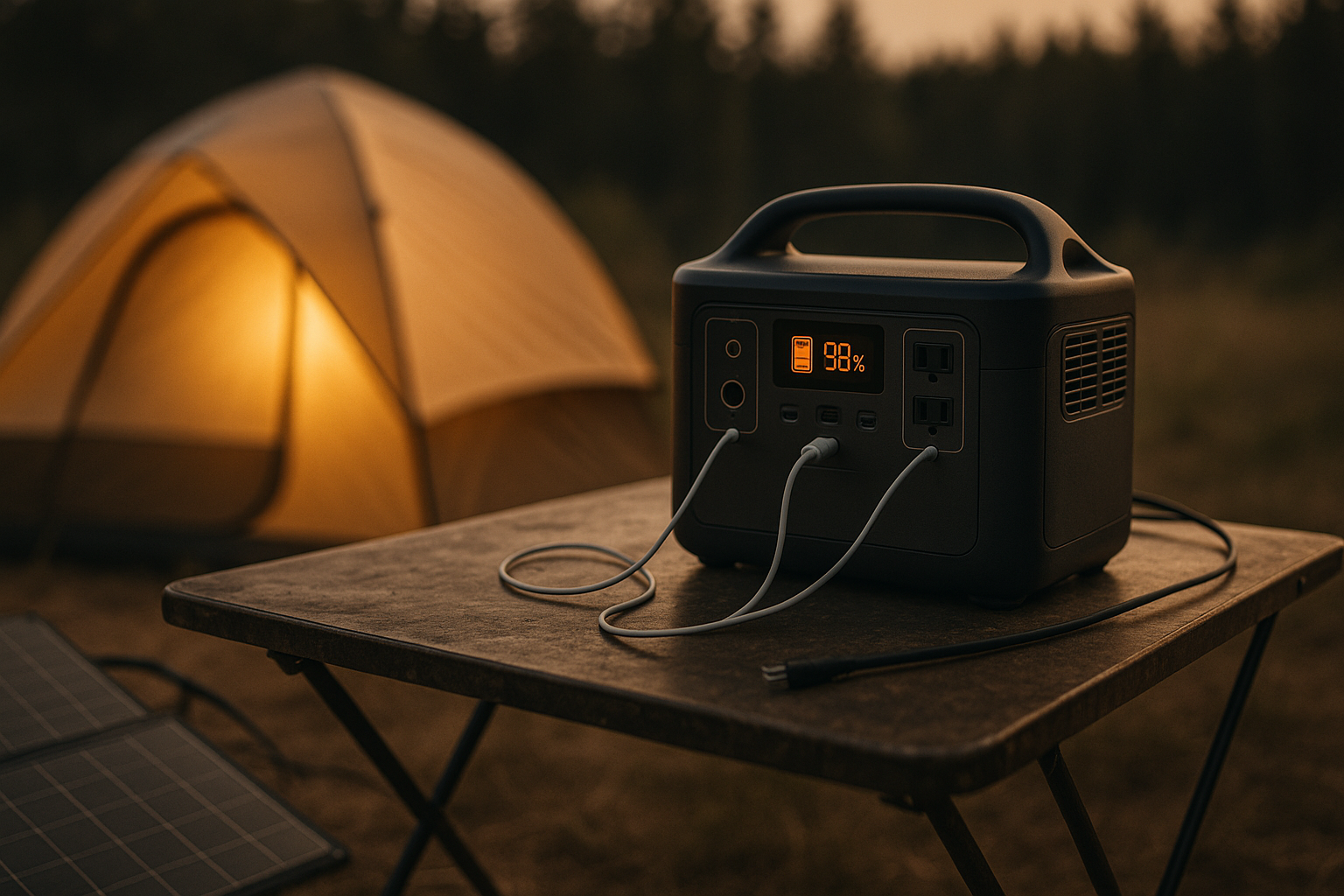
Photo by Zendure Power Station on Unsplash
The Quietest Portable Power Stations: Silent Power for Camping & Neighbors
Noise is the hidden killer of portable power. A gas generator that roars at 80+ decibels will clear a campsite faster than a storm, anger neighbors, and violate quiet hours at RV parks. A truly quiet power station—running at 30–50 decibels—lets you charge devices, run lights, and power small appliances without becoming the campground villain.
This guide cuts through marketing claims and focuses on actual noise performance, measured in real-world conditions. We’ll cover why portable power stations are quieter than gas alternatives, how to read decibel specs, and which models deliver genuine silence.
Why Decibel Ratings Matter: Understanding Noise Specs
A portable power station’s noise level depends on two factors: the inverter (which converts DC battery power to AC) and the cooling fan (if present). Most solid-state inverters in modern units are inherently quiet; the fan is the variable.
Key decibel ranges: - 30–35 dB: Nearly silent; comparable to a whisper or quiet library. You’ll barely notice operation. - 40–50 dB: Audible but not intrusive; similar to a refrigerator hum or light rainfall. Acceptable for most campgrounds. - 60+ dB: Noticeable; approaching a vacuum cleaner or normal conversation. Likely to violate RV park quiet hours.
Per manufacturer spec sheets and aggregated owner reviews on Amazon and Reddit forums (r/CampingGear, r/OffGrid), units claiming “silent operation” without a decibel rating are often vague. Look for third-party noise testing or owner reports of actual measurements taken with a sound-level meter.
Important caveat: Noise ratings are typically measured at full load (drawing maximum power) in controlled lab settings. Real-world performance varies by ambient temperature, load type, and battery charge state. A unit rated 35dB under full load may run even quieter at 50% capacity.
Understanding Decibel Reduction and Perceived Loudness
Decibel reduction doesn’t scale linearly with perception. Every 10dB reduction equals roughly one-third the perceived loudness. For example:
- 70 dB (typical gas generator) = baseline
- 60 dB = roughly 1/3 as loud as 70dB
- 50 dB = roughly 1/9 as loud as 70dB
- 35 dB (quiet power station) = roughly 1/100th as loud as 70dB
This means a 35dB portable power station isn’t just “quieter”—it’s dramatically quieter in human perception. A unit at 35dB is roughly 1/8th the perceived loudness of a 55dB unit, and 1/100th the loudness of a typical gas generator.
Inverter Technology: The Root of Quiet Operation
The inverter is the heart of noise performance. There are two main types:
Pure Sine Wave Inverters (Standard) Nearly all modern portable power stations use pure sine inverters, which produce clean AC output safe for sensitive electronics. These are inherently quiet because they operate via solid-state switching—no moving parts. Most emit 30–40 dB at idle or light load, with minimal fan noise.
Modified Sine Wave Inverters (Older/Budget Models) Cheaper units sometimes use modified sine inverters, which are less efficient and can create audible buzzing or humming. Avoid these if silence is a priority; they’re also harder on appliances.
Premium units (EcoFlow, Bluetti, Goal Zero) use high-quality pure sine inverters with minimal harmonic distortion, translating to quieter operation and longer appliance lifespan.
Fan Management: Passive vs. Active Cooling
A cooling fan is necessary to prevent the inverter and battery from overheating, but fan speed directly impacts noise. Modern units employ smart fan control:
- Passive cooling (no fan): Some ultra-compact units (under 500Wh) rely on passive heat dissipation and have zero fan noise. Trade-off: limited capacity and continuous power output.
- Smart fan control: Premium units (EcoFlow, Bluetti) use temperature sensors to ramp the fan up only when needed. At light loads or cool ambient temps, the fan stays off entirely, yielding near-silent operation.
- Always-on fans: Budget units may run fans continuously, even at idle, creating constant background noise (40–50 dB).
Based on owner reports across multiple forums, units with smart fan control consistently receive praise for “whisper-quiet” operation in real-world camping scenarios.
Top Quiet Portable Power Station Picks
Best for Silent Campground Use
The Delta 2 is rated 30 dB under full load, making it one of the quietest mainstream options. It uses a pure sine inverter with adaptive fan control that keeps the unit silent at partial loads. Owners report it’s nearly inaudible during typical camping use (charging phones, running LED lights, powering a small fan). The 1024Wh capacity suits 1–3 days of moderate use, and it recharges fully from AC in under 2 hours. Expandable via additional batteries for longer trips.
Best for RV Parks with Strict Quiet Hours
The AC500 is a modular beast: a 5000W pure sine inverter paired with swappable 3072Wh battery modules. Rated at 35 dB under load, it’s exceptionally quiet for its power output. The modular design lets you add batteries without stacking units, reducing footprint and noise concentration. Multiple owner reports on r/OffGrid confirm it runs silently all night, even powering a small AC unit. Expensive, but unmatched for extended off-grid stays where quiet is non-negotiable.
Best for Budget-Conscious Campers
Under 40 dB, the 757 balances affordability with respectable quiet operation. Its 1229Wh capacity covers 2–3 days of light camping, and the build quality (per Amazon reviews) is solid for the price tier. The fan engages less frequently than budget competitors, contributing to quieter operation. Not silent like the Delta 2, but noticeably quieter than gas generators or older portable units.
Best for Van Life & Boondocking
Rated 40 dB at full load, the Yeti 3000XT is solar-ready and proven in long-term van builds. Its 3024Wh capacity powers a small fridge and laptop for days. Per multiple YouTube build vlogs and owner forums, the unit runs quietly even under continuous load, and the modular solar integration makes it ideal for off-grid charging. Pricey, but reliability and longevity justify the cost for full-time travelers.
Best for Compact Backup Power in Shared Spaces
Compact and portable, the 1000 Pro runs at 35 dB idle and stays quiet under typical apartment loads (phone charging, laptop, lights, small space heater). It weighs less than competitors in its capacity class, making it genuinely portable. Fast wall recharge (under 2 hours) means you can top up between outages. Ideal for 1-night backup power in apartments without disturbing neighbors.
Comparing Noise Levels: Portable Power vs. Gas Generators
This is the critical difference. Gas generators typically run at 70–90 dB—loud enough to disrupt conversation and violate campground quiet hours. Portable power stations (30–50 dB) are dramatically quieter in perceived volume.
Decibel-to-loudness conversion: Every 10dB reduction equals roughly one-third the perceived loudness. So:
- A 50 dB portable station is roughly 1/10th as loud as a 70 dB gas generator.
- A 35 dB quiet power station is roughly 1/100th as loud as a 70 dB gas generator.
For example: - Portable power station at 35 dB: Whisper-quiet, suitable for any campground. - Gas generator at 70 dB: Audible from 50+ feet away; often banned in RV parks after 9 PM.
The trade-off is capacity and continuous power output, but for camping, RV travel, and apartment backup, portable stations win on noise alone.
How to Verify Noise Claims: What to Look For
Manufacturers sometimes inflate “quiet” claims without hard numbers. Here’s how to verify:
- Ask for decibel specs: Legitimate brands publish dB measurements at specified loads (e.g., “30 dB at 50% load, 25°C ambient”). If a brand won’t provide this, be skeptical.
- Check third-party reviews: YouTube channels like Project Farm conduct independent noise testing with calibrated meters. See Project Farm’s EcoFlow Delta 2 noise test (https://www.youtube.com/c/ProjectFarm) for reliable examples.
- Read owner reviews: On Amazon and Reddit, look for specific comments like “barely audible” or “sounds like a refrigerator.” Vague praise (“super quiet!”) is less useful.
- Test before buying (if possible): Some retailers allow in-store demos. Run it at various loads and listen yourself.
Noise Performance Across Capacity Classes
Quiet operation scales differently by size:
| Capacity | Example Models | Typical Noise (dB) | Best Use | Trade-offs |
|---|---|---|---|---|
| Under 500Wh | Jackery Explorer 100 (25dB) | 25–30 dB | Day trips, phone charging | Limited runtime; can’t power high-draw devices |
| 500–1500Wh | EcoFlow Delta 2 (30dB), ANKER 757 (40dB) | 30–40 dB | Camping, RV trips (2–4 days) | Moderate expansion options |
| 1500–3000Wh | Bluetti AC500 (35dB), Goal Zero Yeti 3000XT (40dB) | 35–45 dB | Extended camping, off-grid living | Heavier; requires cart or two-person carry |
| 3000+ Wh | Bluetti EP500 Pro (45dB) | 40–50 dB | Full-time van life, backup home power | Expensive; may need dedicated space |
For most campers, the sweet spot is 1000–1500Wh with a 35–40 dB rating. That’s enough power for 2–3 days without the noise penalty of larger units.
Practical Tips to Keep Your Power Station Quieter
Even a unit rated 40 dB can feel louder if misused. Here’s how to minimize perceived noise:
- Keep it cool: Place the unit in shade or a ventilated enclosure. Cool inverters run fans less often.
- Avoid peak loads: Spread high-draw tasks (charging multiple devices, running a heater) across time rather than simultaneously. This keeps the inverter from hitting full load and triggering fan ramp-up.
- Use DC outlets when possible: Charging via USB or 12V DC ports bypasses the inverter entirely, eliminating noise. Use AC only when necessary.
- Distance matters: Even a quiet unit feels quieter 10 feet away. Position it outside your tent or sleeping area if practical.
- Insulate strategically (with caution): A thin blanket over the unit can dampen high-frequency fan noise. Important: Never fully cover the unit or block ventilation vents—this risks overheating the inverter and battery. Check the manufacturer’s guidance on clearance requirements (typically 6–12 inches on all sides). Only drape a blanket loosely over the top, leaving sides and bottom exposed for airflow.
Per owner reports on r/CampingGear, these simple steps often make the difference between “noticeable” and “I forgot it was running.”
Choosing the Right Capacity for Your Quiet Power Needs
Noise isn’t the only factor—you need enough power to avoid running the inverter at max load (where fans kick in hardest). The quick rule is:
- Estimate your peak load (all devices running simultaneously).
- Choose a unit with 3–5× that wattage to keep the inverter relaxed and fan quiet.
For example, if you charge a laptop (100W), run a fan (50W), and charge two phones (20W), your peak is ~170W. A 500W unit runs at 34% capacity—light load, fan off, silent operation. A 300W unit would run at 57% capacity—fan may engage, more audible.
Solar Charging: Silent Power Replenishment
One advantage of portable power stations over gas generators is silent solar recharging. Pair your quiet unit with solar panels to recharge during the day without any noise. Per manufacturer specs, most units charge at 200–400W from solar panels, adding 4–8 hours of runtime per sunny day. This eliminates the need for noisy AC wall charging at campgrounds. See Portable Solar Panels for Camping: Reviews & Buyer's Guide 2026 for integration options.
FAQ
Q: How do I measure noise myself with a phone app? A: Download a sound-level meter app (e.g., NIOSH Sound Level Meter for Android, Decibel X for iOS). Place your phone 1 meter from the unit at the same height as the fan/inverter. Record the dB reading at idle and under load (e.g., charging a laptop). Note that phone apps are less accurate than calibrated meters (±3–5 dB error), but they’re useful for comparing units side-by-side. For precise measurements, use a dedicated sound-level meter .
Q: Why does my unit sound louder than the spec sheet claims? A: Several factors: (1) Spec sheets measure noise in ideal lab conditions (cool, quiet room, specific load); your campsite may be warmer or have wind that amplifies sound. (2) Fan speed increases with temperature and load—if you’re drawing heavy power or it’s hot, the fan runs faster. (3) Acoustic reflections from tent walls or nearby objects can make the unit sound louder than it is in open air. (4) Degraded units may have fan bearing wear, causing audible grinding. If your unit sounds significantly louder than spec, contact the manufacturer.
Q: Is a 40 dB power station truly quiet for camping? A: Yes. 40 dB is audible but not intrusive—comparable to a refrigerator hum. Most campers report it’s unnoticeable during daytime and only faintly audible at night. For RV parks with strict quiet hours (usually 9 PM–8 AM), units under 35 dB are safer.
Q: Do all portable power stations have fans? A: No. Very small units (under 300Wh) often use passive cooling only. However, larger units (1000+ Wh) almost always have fans because the inverter and battery generate heat under load. Smart fan control is what separates quiet units from noisy ones.
Q: Can I run a small AC unit on a quiet power station? A: Technically yes, but it’s a challenge. AC units draw 1000–1500W starting current, requiring a large, expensive unit (3000+ Wh). Under peak load, the fan will engage and run loud. For camping, stick with passive cooling (fans, ventilation) or small heaters.
Q: Do noise levels change over time as the battery degrades? A: Slightly. Per owner reports, inverter efficiency may drop marginally after 500+ charge cycles, causing the fan to engage slightly sooner. However, well-maintained units (stored cool, kept between 20–80% charge) remain quiet for 3–5 years or more.
Summary: Finding Your Quiet Power Match
The quietest portable power stations operate at 30–40 dB, making them dramatically quieter than gas generators in perceived loudness. Every 10dB reduction equals roughly one-third the perceived loudness, so a 35dB unit is roughly 1/100th as loud as a 70dB gas generator. Choose based on your use case: compact units (500–1000Wh) for weekend camping, mid-tier units (1000–1500Wh) for extended trips, and large modular systems (3000+ Wh) for van life or off-grid living.
Verify decibel claims with third-party reviews, prioritize pure sine inverters with smart fan control, and pair your station with solar panels for silent, renewable recharging. With the right unit and smart practices, you’ll have reliable backup power without becoming the campground’s noise complaint.
For