Portable Power Station Capacity Calculator for Camping
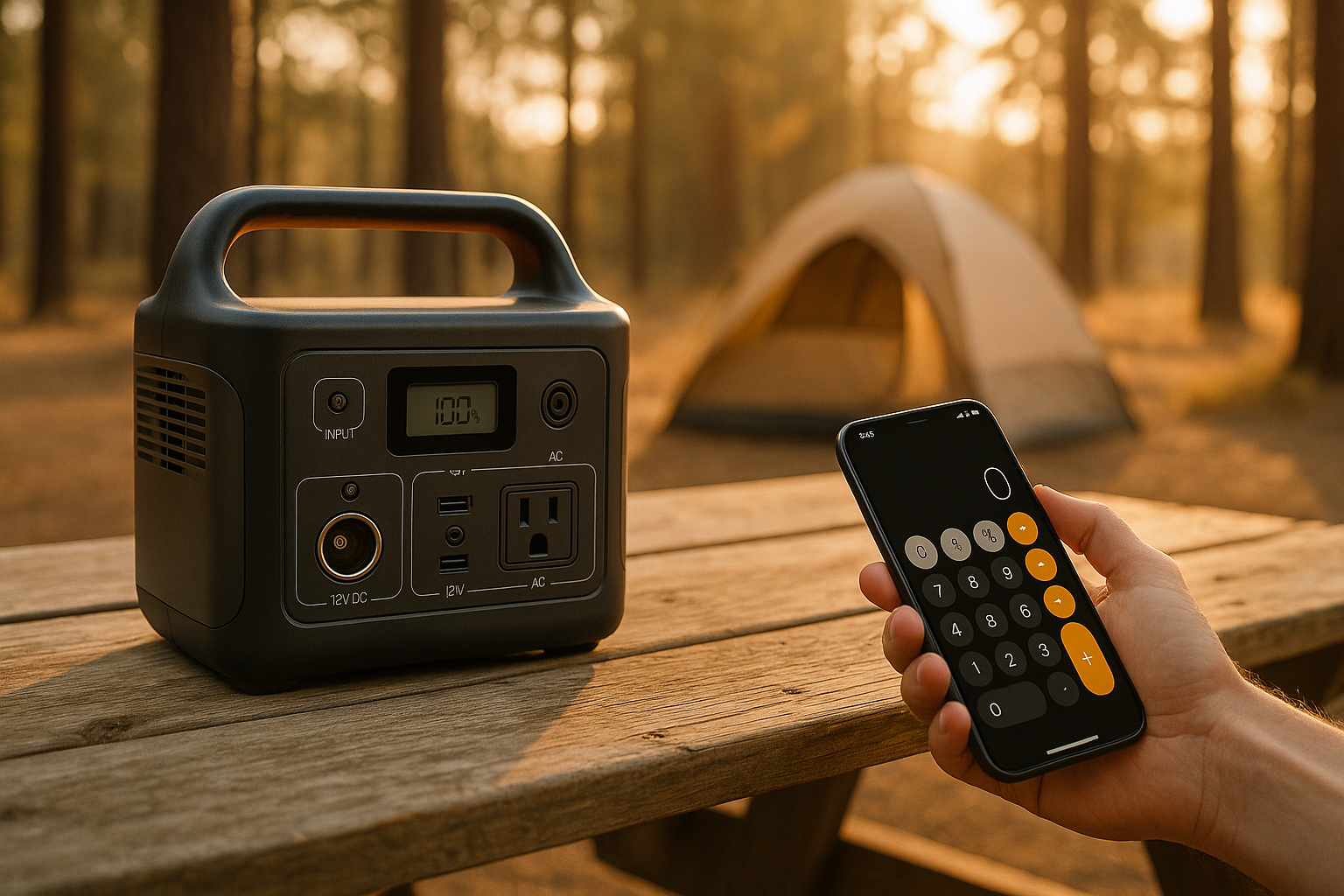
Portable Power Station Capacity Calculator for Camping
Choosing the right power station for camping isn’t about buying the biggest unit—it’s about matching capacity to your actual gear and trip length. Most campers overestimate how much power they need, then haul unnecessary weight. This guide walks you through calculating your real wattage demand, translating that into battery capacity, and picking a station that won’t leave you stranded or buried under your tent.
Why Capacity Matters More Than Brand
A 1000Wh power station sounds impressive until you realize it runs a 100-watt device for only 10 hours—or a 500-watt space heater for 2 hours. Capacity (measured in watt-hours, or Wh) is the total energy stored. Wattage is the rate of draw. Runtime is how long the station lasts under a specific load.
Most campers focus on the wrong metric. They see “1000W continuous output” and assume the unit is powerful, but that spec tells you nothing about how long it runs. A 1000W rating just means the station can deliver 1000 watts at that moment—it doesn’t say whether the battery empties in 1 hour or 10.
The real decision hinges on three numbers: 1. Total capacity in Wh (your energy budget) 2. Peak wattage (whether it can power your highest-draw device) 3. Runtime under your actual load (how many days you can camp)
Get these right, and you’ll have a station that works. Get them wrong, and you’ll either carry dead weight or run out of power on day two.
Step 1: List Every Device You’ll Run
Start by writing down everything electrical you plan to bring. Don’t guess—look at the device itself or its manual for the wattage rating.
Common camping devices and typical power draws:
- Phone charger: 5–20W
- Laptop charger: 45–100W
- Portable fan: 30–50W
- LED camping lantern: 5–15W
- Portable fridge/cooler (electric): 40–80W (continuous average; 100–150W peak on compressor startup)
- CPAP machine: 30–60W
- Inflatable mattress pump: 100–150W (brief, high draw)
- Headlamp or flashlight: 1–5W
- Bluetooth speaker: 10–30W
- Drone charging: 50–100W
- Camera battery charger: 20–50W
- Heated blanket: 50–100W
- Small space heater: 750–1500W (not recommended for battery power)
Pro tip: If a device says “DC 12V / 2A,” multiply volts by amps: 12 × 2 = 24W. If it says “100–240V AC,” look for the wattage label on the back or bottom.
Step 2: Calculate Your Daily Demand in Watt-Hours
Now multiply each device’s wattage by the hours you’ll use it per day.
Example trip (2-night car camping, no AC recharge): - Phone charging: 15W × 2 hours = 30Wh - Laptop: 60W × 4 hours = 240Wh - Portable fridge: 60W × 10 hours = 600Wh - LED lantern: 10W × 8 hours = 80Wh - Fan: 40W × 3 hours = 120Wh - Miscellaneous (speaker, headlamp): 20W × 6 hours = 120Wh
Total daily demand: 1190Wh
For a 2-night trip with zero AC recharge, you’ll need 2 days of power: 1190Wh × 2 nights = 2380Wh before accounting for inefficiency.
(If you plan to recharge via car charger or AC outlet at the campground during the day, you only need to cover one night’s usage plus daytime loads, reducing your required capacity significantly.)
Step 3: Account for Inefficiency and Safety Margin
Batteries aren’t 100% efficient. Inverters (which convert DC battery power to AC wall power) lose 5–15% of energy as heat. Most manufacturers spec 80% usable capacity for daily cycling to extend lifespan, and industry testing confirms 85% inverter efficiency as a realistic average.
Practical formula: - Daily demand ÷ 0.8 (per manufacturer specs for battery health) ÷ 0.85 (based on industry testing for inverter loss) = actual capacity you need
Using the example above for a 2-night trip: - 2380Wh ÷ 0.8 ÷ 0.85 = 3500Wh minimum
This is why campers often need larger stations than their raw wattage suggests. A 2000Wh station can technically store 2000Wh, but you’ll only reliably draw ~1360Wh of usable energy across a day without degrading the battery.
Step 4: Check Peak Wattage Requirements
A power station’s capacity is useless if it can’t handle your highest-draw device. Many units list two wattage specs: - Continuous output: sustained power (e.g., 1000W) - Surge/peak output: brief high draws, usually 2–3× continuous (e.g., 2000W for 10 seconds)
If you’re running an inflatable mattress pump (often 150W) and a fridge (60W) simultaneously, your peak draw is 210W. Most mid-tier power stations handle this easily. But if you’re charging a laptop (100W) while running a space heater (1000W), you need a station rated for at least 1100W continuous—and most portable units can’t do that.
Rule of thumb: Add up your three highest-draw devices that might run at the same time. That’s your minimum continuous-wattage requirement.
Step 5: Factor in Trip Length and Recharge Method
A 1000Wh station on a 1-night car-camping trip is plenty. On a 5-day backpacking trip with no solar panels, you’d need 5000Wh or more—impractical to carry.
Recharge options change the math:
- Car charger (AC outlet in vehicle): Adds 500–1000Wh per hour. Great for car camping. Useless once you’re off-grid.
- Solar panels: Adds 200–500Wh per day on a sunny day, depending on panel wattage and angle. Essential for trips longer than 2–3 days without AC access.
- AC wall outlet at campground: Similar to car charger. Works if your campground has hookups.
- No recharge: You’re limited by the station’s capacity alone. Plan for 1–2 nights maximum unless you’re willing to ration power heavily.
If you’re planning a 4-day trip with no AC access, you either need a 4000+Wh station (heavy and expensive) or a smaller station paired with solar panels. Most experienced campers choose the latter: a 1000–2000Wh station plus 100–200W of portable solar panels. See Best Portable Solar Panels for Camping: Reviews & Buyer's Guide 2026 for panel options.
Step 6: Match Capacity to Your Use Case
Once you know your daily demand and trip length, use this quick reference:
Weekend car camping (1–2 nights, AC recharge available):
- Daily demand: 1000–1500Wh
- Recommended capacity: 1000–1500Wh
- Examples: 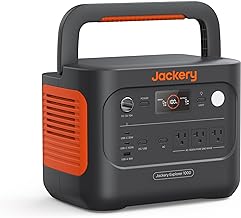
Extended car camping (3–4 nights, solar recharge): - Daily demand: 1000–1500Wh - Recommended capacity: 2000–3000Wh (+ 100W solar) - Examples: EcoFlow Delta 2, Bluetti AC200L
Backpacking or ultralight (1–2 nights, no recharge): - Daily demand: 300–600Wh - Recommended capacity: 300–600Wh - Examples: Anker 521 Portable Power Station, Jackery Explorer 100 Plus
Off-grid or remote (5+ days, solar recharge mandatory): - Daily demand: 1000–2000Wh - Recommended capacity: 3000–5000Wh (+ 200W+ solar) - Examples: EcoFlow Delta Pro, Bluetti AC500 + B300S
For more detailed guidance on choosing between specific models, see How to Choose a Portable Power Station: Wattage, Capacity & Runtime Explained.
Practical Calculator Worksheet
Print or save this simple table to estimate your own needs. Here’s a filled-in example row, followed by blank rows for your devices:
| Device | Wattage | Hours/Day | Wh/Day |
|---|---|---|---|
| Phone charger | 15 | 2 | 30 |
| Laptop | — | — | — |
| Fridge | — | — | — |
| Lights | — | — | — |
| Other | — | — | — |
| Total daily | Wh |
Usable capacity needed (1 night): - Total daily ÷ 0.8 ÷ 0.85 = Wh
For multi-night trips: - Multiply above by number of nights (if no recharge) - Or add 200–500Wh per day if using solar
Common Mistakes to Avoid
Overestimating fridge runtime: A 60W fridge doesn’t draw 60W continuously—it cycles on and off. Most draw 40–80W average, but the compressor startup spike reaches 100–150W for a few seconds. Always check the manual for your specific model.
Forgetting simultaneous loads: If you charge a laptop (80W) and run a fridge (60W) at the same time, you need 140W capacity, not 80W. List realistic concurrent use.
Ignoring inverter losses: Assume 10–15% loss when converting battery DC to AC power. A 1000Wh station with a 90% efficient inverter only delivers ~900Wh of usable AC power.
Buying for “future trips”: A 5000Wh station is overkill for your planned 2-night trips. Start with what you need now. You can always add solar panels or a second unit later.
Underestimating cold weather: Lithium batteries lose 20–30% of their capacity in freezing temperatures. If you camp in winter, size up or keep the station inside your tent.
FAQ
Q: How long does a power station take to recharge from empty? A: AC wall outlet typically takes 4–10 hours depending on capacity and charger wattage. Solar recharge depends on panel wattage, sunlight angle, and weather—expect 2–4 hours of useful charging per sunny day with 100W of panels. Car chargers add 500–1000Wh per hour. See How Long Does a Portable Power Station Last? Runtime & Capacity Guide for detailed runtime breakdowns.
Q: Can I run a space heater or air conditioner on a power station? A: Technically, yes—if your station has 1500W+ continuous output and 3000W+ surge capacity. But practically, no. A 1500W space heater drains a 2000Wh station in ~1.3 hours (calculation: 2000Wh ÷ 1500W = 1.33 hours). You’d need a 5000+Wh unit and solar panels, making it impractical. Stick to passive heating (warm clothes, sleeping bag) or a small fan for cooling.
Q: Do I need a power station if I’m only camping one night? A: Depends on your gear. If you’re bringing a CPAP, electric fridge, or laptop, yes. If you’re car camping with a cooler and headlamp, probably not. A small 500Wh station weighs ~5 lbs and costs mid-tier—worth it for peace of mind on longer trips.
Q: How do I know if my power station is actually 1000Wh or just marketing hype? A: Check the spec sheet for “nominal capacity” in watt-hours. Reputable brands (Jackery, EcoFlow, Bluetti, Anker) publish detailed specs. Avoid units that only list wattage without capacity. If a spec seems too good to be true (huge capacity, tiny weight, budget-tier price), it probably is.
Q: Should I pair my power station with solar panels? A: For trips longer than 2–3 days without AC recharge access, yes. A 100W solar panel adds 200–400Wh on a sunny day—enough to extend a 1000Wh station to 5+ days. See Best Portable Solar Panels for Camping: Reviews & Buyer's Guide 2026 for pairing recommendations.
Summary
Calculating the right power station capacity boils down to three steps: list your devices, multiply wattage by hours of use, and account for inefficiency. Most campers need 1000–2000Wh for 1–2 nights of car camping, or 2000–3000Wh if adding a day or two. For longer trips, add solar panels instead of buying a massive station.
Start with your actual demand—not your fears. A well-matched 1000Wh station beats an oversized 3000Wh unit gathering dust in your garage. Once you know your baseline, check Best Camping Power Stations: Portable Energy for Off-Grid Adventures for specific models that fit your wattage and trip profile.


