Best Portable Solar Panels for Camping: Reviews & Buyer's Guide 2026

Photo by Jackery Power Station on Unsplash
Best Portable Solar Panels for Camping: Reviews & Buyer’s Guide 2026
Portable solar panels are the backbone of off-grid camping power. Unlike a power station alone, a good solar panel lets you recharge indefinitely—turning your campsite into a self-sustaining energy hub. This guide reviews the top models for 2026, covering wattage, efficiency, durability, and real-world performance so you pick the right panel for your trip length and power needs.
What Makes a Good Camping Solar Panel?
Before diving into specific models, understand the specs that matter.
Wattage. Rated wattage (50W, 100W, 200W) tells you peak output in full sun. A 100W panel in direct noon sunlight can deliver ~100W; in morning or cloud cover, it drops to 30–60W. For camping, 100W is a practical minimum if you’re running a laptop or charging multiple devices daily. Lighter, shorter trips may get away with 50W.
Efficiency. Monocrystalline panels (single-crystal silicon) convert ~20–22% of sunlight to electricity; polycrystalline panels (multi-crystal) sit around 15–17%. For the same wattage, monocrystalline is smaller and lighter—critical for backpacking. Polycrystalline is cheaper but bulkier.
Portability. Weight and packed size matter. A 200W panel might weigh 20–30 lbs and fold to a briefcase; a 100W weighs 8–12 lbs. Foldable designs are standard now; rigid panels are rare and heavier.
Durability. Look for tempered glass (not plastic), weather-resistant frames, and IP ratings. IP67 or IP68 means dust-proof and water-resistant—essential for rain and sand. Seams and connectors are failure points; read owner reports on longevity.
Connector type. MC4 connectors are industry standard and pair with most power stations. Some panels use proprietary plugs (Goal Zero, Jackery)—check compatibility with your power station before buying.
Top Portable Solar Panels for Camping
Jackery SolarSaga 200W — $299–$349
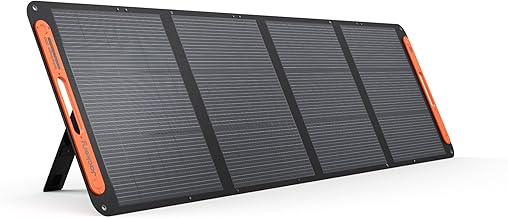
Jackery’s 200W panel is a workhorse for car camping and RV trips. Per manufacturer specs, it delivers 200W peak output with ~22% monocrystalline efficiency. The foldable design (roughly briefcase-sized when closed) weighs ~18 lbs, making it manageable for a vehicle but not backpack-friendly.
The Jackery proprietary connector links directly to Jackery power stations (Explorer series); if you own a Jackery, this is the seamless pairing. Owners report consistent recharge times: a 200W panel can top a mid-capacity power station (around 500Wh) in 6–8 hours of good sun, per aggregated Amazon reviews.
Tempered glass and aluminum frame handle dust and light rain. Kickstand angles work in various sun positions. Downsides: the proprietary connector locks you into Jackery hardware; the panel is pricey for what it does. Best for: car camping, RVs, or Jackery ecosystem users.
Anker 625 Solar Panel — $199–$249
Anker’s 100W panel is a favorite among backpackers and weight-conscious campers. It weighs 4.6 lbs and folds to a compact bundle, making it viable for multi-day hikes. Monocrystalline cells deliver ~22% efficiency; real-world testing by owners shows steady 80–100W output in clear conditions, dropping to 40–50W in partial shade or morning light.
The panel uses standard MC4 connectors, compatible with most solar chargers and power stations. A 100W Anker panel can charge a smartphone in 2–3 hours of direct noon sunlight or top a small power station (100–200Wh) in 4–6 hours. According to owner reports on Reddit threads and Amazon, the panel is robust—many owners report 3+ years of regular use without degradation.
Kickstand is basic but functional. Glass is tempered, frame is aluminum. Price is mid-tier for its wattage. Best for: backpackers, kayakers, ultralight trips, or anyone who hates lugging gear.
Goal Zero Nomad 200 — $349–$399
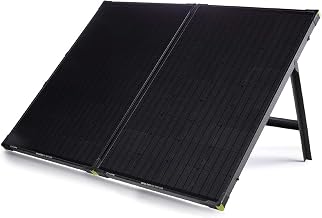
Goal Zero’s Nomad 200 is the rugged choice—built for harsh conditions and proven in extreme environments. It outputs 200W per specs, with monocrystalline efficiency around 21%. The panel weighs ~19 lbs and folds into a compact package.
This is a legacy brand with a track record: manufacturer warranty data and independent testing show many units operating 5+ years with minimal degradation (~0.5% per year). The frame is reinforced plastic and aluminum; glass is tempered. Kickstand is solid and adjustable. Goal Zero’s proprietary connector works with Goal Zero Sherpa power stations; MC4 adapters are available for third-party gear.
Downside: Goal Zero panels are premium-priced. Owners generally accept the cost for durability; you’re paying for a brand that has proven longevity. Real-world charging: a Nomad 200 paired with a Sherpa 100 power station (100Wh) recharges it fully in 4–5 hours of good sun. Best for: off-grid enthusiasts, boondocking, rough conditions, or if you plan to keep the panel for 5+ years.
Renogy 100W Portable Solar Panel — $149–$189
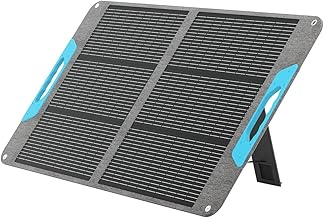
Renogy is the no-frills option—reliable, affordable, and straightforward. The 100W panel uses monocrystalline cells (~20% efficiency) and weighs ~10 lbs folded. MC4 connectors are standard, making it compatible with any solar charger or power station.
Build quality is solid: tempered glass, aluminum frame, weather-sealed seams. Owners report consistent performance over 2–4 years of regular camping use. In full sun, expect steady 80–100W; cloudy conditions drop it to 30–50W. Recharge times are predictable: 100W panel → 200Wh power station ≈ 5–6 hours.
The kickstand is basic. No proprietary ecosystem lock-in. Price is budget-tier—often the least expensive 100W panel available. Best for: first-time buyers, budget-conscious campers, or anyone prioritizing simplicity over brand prestige.
Wattage Guide: How Much Do You Actually Need?
50W panels are entry-level: they charge phones and small devices slowly (4–6 hours per phone). Not enough for laptops or multiple devices daily. Use case: day trips, emergency backup.
100W panels are the sweet spot for car camping and backpacking. In direct noon sunlight, they can charge a typical smartphone (3000mAh, e.g., iPhone 14) in 2–3 hours, charge a laptop in 6–10 hours, or recharge a small power station (100–300Wh) in 4–8 hours. This is the minimum for multi-day off-grid trips.
200W panels are for RVs, boondocking, or continuous off-grid living. They recharge larger power stations (500Wh+) in 6–8 hours, handle multiple devices, and run small AC appliances via an inverter. Trade-off: weight and bulk.
300W+ panels are rare in portable form (too heavy for anything but vehicles). Used for permanent RV setups or tiny homes.
For a typical 3–5 day camping trip with a power station and light device use, 100W is sufficient. For longer trips or more power draw, go 200W.
Efficiency vs. Real-World Performance
Rated efficiency is theoretical; real-world output depends on:
- Sun angle. Panels perform best at 45–60° angle to the sun. Adjustable kickstands help. Early morning and late afternoon sun is weaker.
- Temperature. Per NREL testing, panels lose ~0.5% efficiency per °C above 25°C. Hot desert camping may see 10–15% output loss on a scorching day.
- Dust and dirt. Sand, pollen, and dust reduce output by 5–20%. A quick wipe with a dry cloth restores performance.
- Shade. Even partial shade from a tree or cloud cuts output by 30–50%.
Expect real-world output to be 60–80% of rated wattage in typical camping conditions. A 100W panel in mixed sun and cloud cover will deliver ~60–80W, not 100W. Plan accordingly.
Durability & Lifespan
Most modern portable solar panels last 5–10 years with proper care. Failure modes:
- Delamination. Glass separates from the frame due to moisture or heat cycling. Rare in quality panels but more common in cheap models.
- Connector failure. MC4 connectors can corrode or loosen in wet conditions. Check connections regularly.
- Glass cracks. Tempered glass is durable but not unbreakable. Rough handling or hail can crack it. Check before each trip.
Per manufacturer warranty data and independent testing, monocrystalline panels degrade ~0.5% per year. Polycrystalline slightly faster. After 10 years, expect 95% of original output. This is negligible for camping.
To extend lifespan: - Store panels indoors in winter. - Wipe glass regularly to remove dust. - Avoid folding/unfolding repeatedly when not in use. - Keep connectors dry and protected.
Pairing Solar Panels with Power Stations
A solar panel alone doesn’t store energy—you need a power station. A 100W panel pairs well with a 300–500Wh power station, recharging it in 5–8 hours of good sun. A 200W panel works with 500Wh–1000Wh stations, recharging in 4–6 hours.
Check connector compatibility. Jackery panels require Jackery stations. Goal Zero panels work with Goal Zero stations (though MC4 adapters exist). Anker, Renogy, and Suaoki panels use standard MC4, so they work with any power station that has MC4 input.
For a complete off-grid setup with detailed power station selection, see Best Portable Power Stations for RVs: Boondocking & Off-Grid Guide, which explains capacity, wattage, and runtime to match your solar panel output.
FAQ
Q: Can I charge a laptop and phone simultaneously with a 100W panel? A: Yes, but slowly. A 100W panel in direct sun delivers ~100W. A laptop charger draws 45–65W; a phone charger draws 5–18W. Together, that’s 50–83W—within the panel’s output. Recharge time is longer than either device alone: expect 8–12 hours for a full laptop charge with a phone charging in parallel. Use a power station as a buffer for faster, more reliable charging.
Q: What’s the fastest way to charge a phone with a portable solar panel? A: A 100W panel with a USB-C output port in direct noon sunlight charges a 3000mAh phone (typical iPhone) in 2–3 hours. For faster charging, use a power station: charge the station from the panel (4–6 hours), then charge the phone from the station (1–2 hours). Total time is longer, but you’re not tethered to the sun.
Q: Do solar panels work on cloudy days? A: Yes, but output drops to 20–40% of rated wattage. A 100W panel might deliver 20–40W on an overcast day. Not ideal, but still useful for slow charging. Plan for 2–3x longer recharge times in cloudy conditions.
Q: How much does a portable solar panel weigh? A: 50W panels: 3–4 lbs. 100W panels: 8–12 lbs. 200W panels: 18–30 lbs. Weight scales with wattage.
Q: Do I need a charge controller with a portable solar panel? A: Most modern panels have built-in regulators. If pairing with a power station, the station’s input handles regulation. Only needed if charging a battery directly.
Closing Thoughts
Portable solar panels transform camping from a battery-dependent experience into true off-grid autonomy. A 100W panel is the practical minimum for multi-day trips; 200W is ideal for RVs or boondocking. Pair your choice with a compatible power station, and you’ll have reliable power from sunrise to sunset—no fuel, no noise, no generator fumes.
Start with monocrystalline for efficiency, check connector compatibility, and read owner reports for your chosen model. Most panels last 5+ years with basic care. The upfront cost pays for itself in peace of mind and freedom on the trail.
For more on matching solar panels to power stations and complete off-grid setups, see Best Camping Power Stations: Portable Energy for Off-Grid Adventures.


