RV Power Outage Prep: Backup Solutions for Full-Time Living
RV Power Outage Prep: Backup Solutions for Full-Time Living
When you live full-time in an RV, a power outage isn’t just an inconvenience—it’s a real threat to your comfort, food safety, and ability to stay put. Unlike a house where you can wait out an outage, an RV on shore power that goes down means no AC, no refrigeration, no water pump, and no way to charge devices. This guide walks you through the backup power options that actually work for mobile living, from onboard generators to battery banks to solar arrays.
Why RVs Need Dedicated Backup Power
RV electrical systems are fragile compared to a house. Most RVs run on either 30-amp or 50-amp shore power when plugged in at a campground or RV park. If that connection fails—due to a campground outage, a tripped breaker, or a loose connection—you’re suddenly running on your chassis battery (the small 12V battery that starts the engine), which can’t power air conditioning, the refrigerator, or most 120V outlets for more than a few minutes.
Full-time RV living means you can’t just “rough it” until power returns. You need food to stay cold, your rig to stay habitable in summer or winter, and a way to communicate. Unlike a stationary home where a utility outage might last hours, an RV parked at a campground could lose power for a day or more if the site’s pedestal fails. That’s why backup power isn’t optional—it’s essential infrastructure.
Generator Types for RVs: Gas, Propane, and Inverter
Portable Gas Generators
Traditional portable gas generators (2,000–5,000 watts) are the most common RV backup choice. They’re affordable, widely available, and produce enough power to run an AC unit, refrigerator, and microwave simultaneously if sized correctly.
Pros: - Fuel is available at nearly every gas station - High wattage for the cost (mid-tier models offer good value) - Proven reliability in RV communities
Cons: - Loud (typically 75–95 dB depending on model) - Require fuel storage, which takes space and has shelf-life limits - Produce exhaust that can annoy neighbors in close campground settings - Need regular maintenance (oil changes, spark plug checks)
Most RVers use a mid-tier gas generator (3,500–4,500 watts) during outages, cycling it on for 4–6 hours at a time to recharge the RV’s house battery bank and run AC or heat as needed.
Inverter Generators
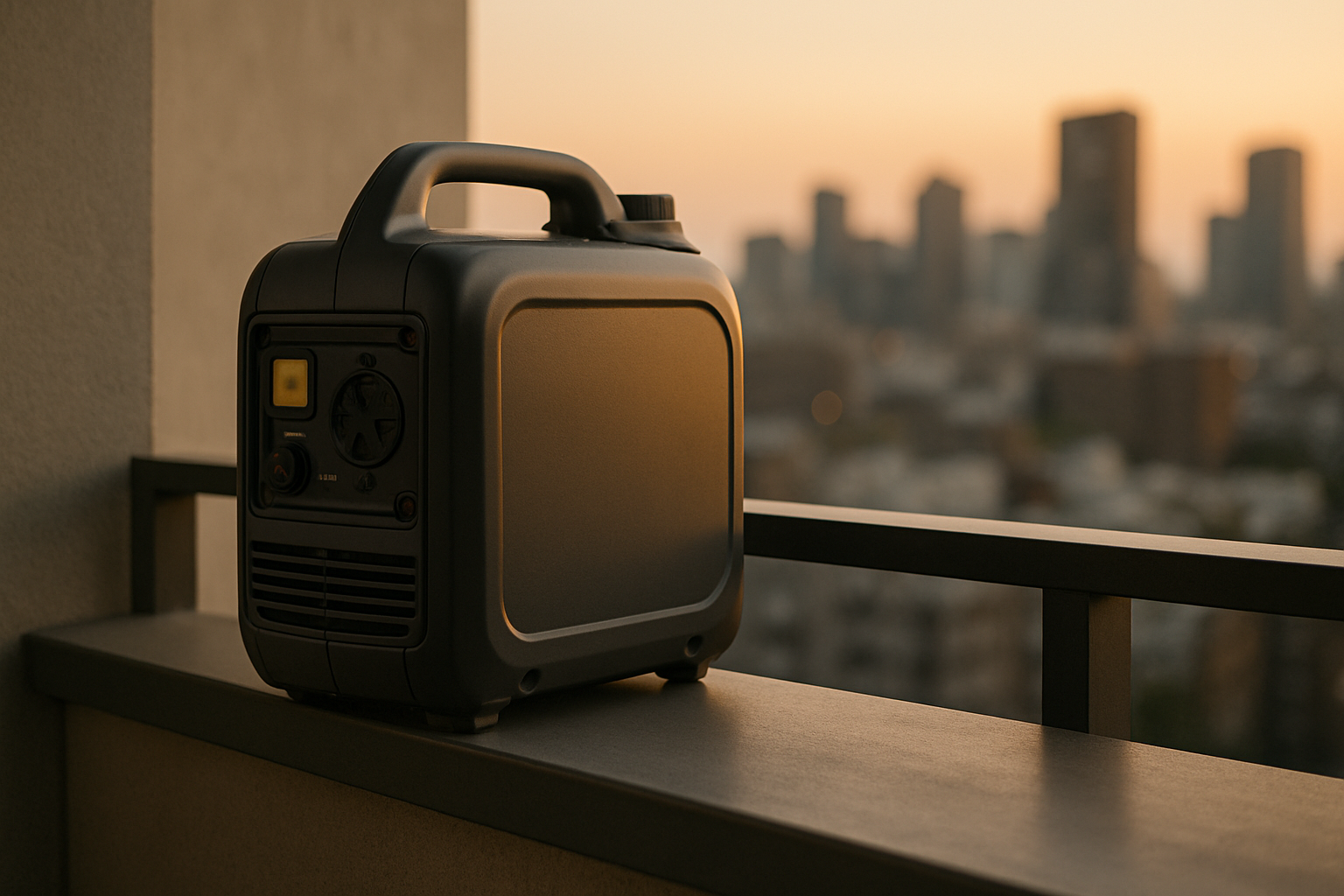
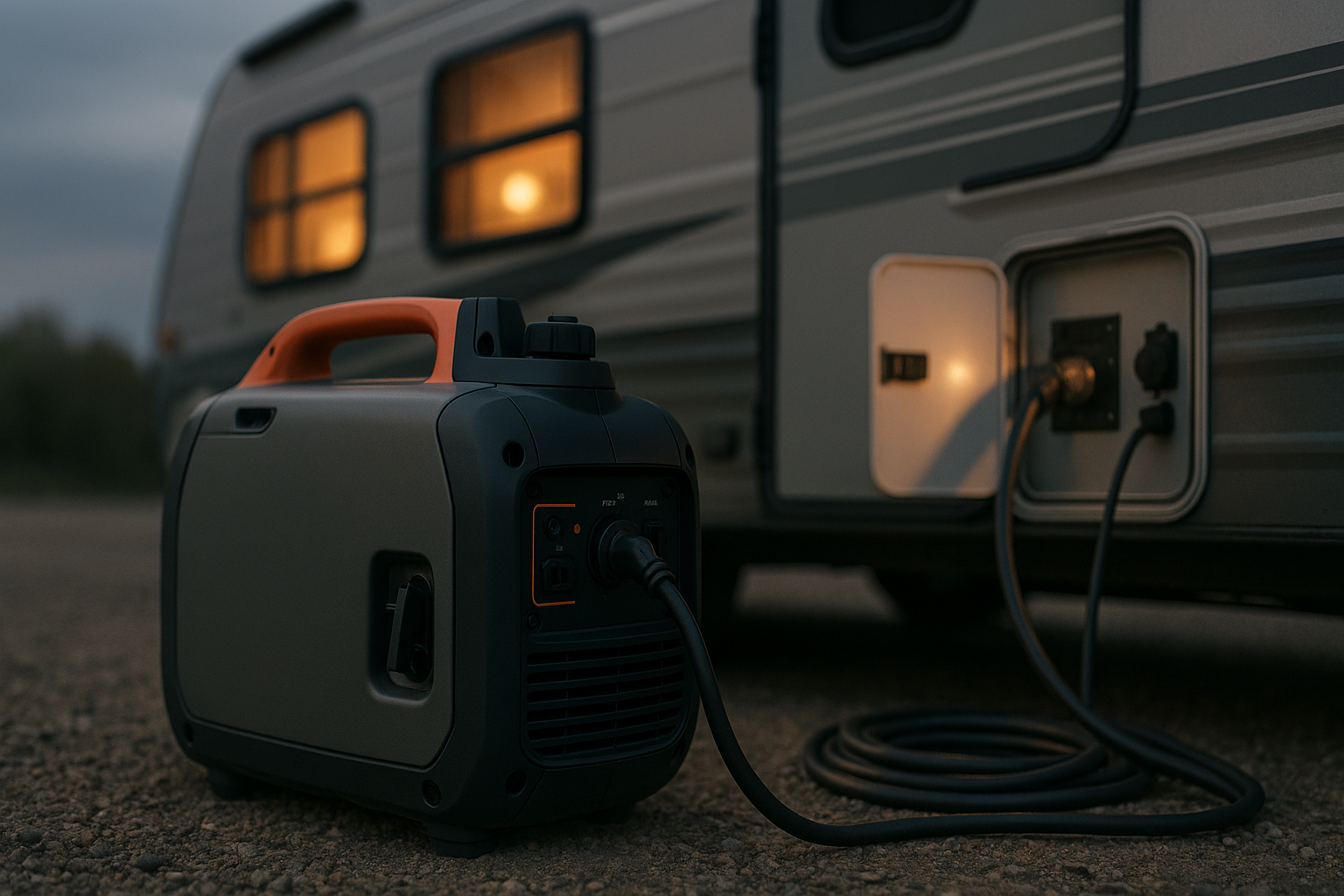
Inverter generators (1,500–4,000 watts) are quieter and more fuel-efficient than traditional portable models. They produce stable, clean power suitable for sensitive electronics like laptops and phones.
Pros: - Much quieter (60–75 dB range) - Better fuel economy (can run 8–12 hours on a tank) - Safer for electronics and RV appliances - Smaller and lighter than conventional models of similar wattage
Cons: - Higher upfront cost - Lower max wattage in the budget-tier range - Still require fuel storage and maintenance
Inverter models are popular among RVers who camp in quieter settings or stay longer at a single location, where noise becomes a social issue.
Propane Generators
Some RVers install propane-fueled generators that draw from their onboard propane tank. This eliminates the need for separate fuel storage and works well if your RV already has a large propane system.
Pros: - Fuel stored safely onboard - Propane doesn’t degrade like gasoline - Cleaner burning than gasoline
Cons: - Requires professional installation (often +) - Propane consumption is high; a 20-pound tank may last only 10–15 hours of runtime - Fewer portable propane generator models available - Upfront cost is steep
Battery-Based Backup: Portable Power Stations
Portable power stations (lithium or LiFePO₄ batteries with built-in inverters) have become a serious contender for RV backup power. Models like the Jackery Explorer and EcoFlow Delta series offer 1,000–5,000 watt-hours of capacity and can run essential loads for several hours without any fuel or noise.
Pros: - Silent operation—no generator noise - No emissions or exhaust - Low maintenance (just charge and use) - Can be paired with solar panels for indefinite runtime - Modular (some models stack together for more capacity)
Cons: - High upfront cost (premium-tier models +) - Slower recharge from shore power (8–12 hours to full) - Weight (50–150 lbs depending on capacity) - Capacity degrades over 3–5 years of daily use
Per manufacturer specs, a mid-tier portable power station (2,000–3,000 watt-hours) will run a 15 cubic-foot RV refrigerator for 12–18 hours, depending on ambient temperature and the fridge’s actual power draw. In hot weather, expect the lower end; in cool weather, the upper end.
Battery-based backup works best when paired with solar panels, which can recharge the battery during the day and extend your outage endurance indefinitely.
Solar Panels: The Long-Term Solution
If you’re full-timing in an RV, solar panels mounted on the roof are the closest thing to a “set it and forget it” backup power system. A small array (400–800 watts) can keep your battery bank topped up during the day, and during an outage, that stored energy becomes your lifeline.
Pros: - No fuel, no noise, no emissions - Pairs with any battery bank (portable or installed) - Can eliminate dependence on shore power entirely - Roof-mounted systems are permanent and don’t take interior space
Cons: - High upfront cost (+ for a complete system) - Requires a large battery bank to store daytime energy for nighttime use - Performance drops in cloudy weather and winter - Installation requires roof work and electrical integration
According to multiple owner reports on RV forums, a 400-watt solar array paired with a 10 kWh battery bank can sustain basic RV loads (fridge, lights, water pump, fans) indefinitely in good weather, but you’ll still need a generator or shore power for high-draw appliances like AC or heating during poor-weather stretches.
Sizing Your Backup Power System
The wattage you need depends on what you want to run during an outage and environmental conditions. Here’s a quick breakdown:
Essential loads only (fridge, lights, water pump, fans): - 2,000–3,000 watts of generator capacity, or - 3,000–5,000 watt-hours of battery capacity
Essential loads + microwave or small AC unit: - 4,000–6,000 watts of generator capacity, or - 8,000–12,000 watt-hours of battery capacity
Full comfort (AC, heat, multiple appliances): - 7,000+ watts of generator capacity, or - 15,000+ watt-hours of battery capacity + solar panels for recharge
The variance in wattage depends heavily on temperature. For example, in 95°F heat, an RV air conditioner draws 5,000 watts during startup and 3,500–4,000 watts while running continuously. In 70°F weather, the same AC unit draws only 3,000–3,500 watts because the compressor cycles less frequently. This is why RVers in hot climates need larger generators or battery banks than those in moderate climates.
Most RVs have a nameplate on the main breaker panel listing their amp rating (30A or 50A). A 30-amp RV at 120V draws up to 3,600 watts; a 50-amp RV can draw up to 12,000 watts. But you rarely need all of that simultaneously. For backup planning, assume you’ll run AC or heat (3,000–5,000 watts) plus fridge and lights (1,000–2,000 watts combined).
Hybrid Approaches: Generator + Battery
Many experienced RVers use a hybrid setup: a mid-sized portable generator paired with a battery bank. During an outage, they run the generator for 2–3 hours to recharge the battery, then switch to battery power for the rest of the day. This approach:
- Reduces generator runtime (less noise, less fuel consumption)
- Provides silent backup for several hours while the generator runs
- Costs less than a large generator or massive battery bank alone
- Works even if fuel runs out, as long as the battery has charge
This hybrid model is especially popular among RVers who camp in quiet communities or stay in one place for extended periods, where generator noise becomes a real issue.
Maintenance and Readiness
Whichever backup system you choose, it only works if it’s actually ready when you need it.
For generators: - Run them under load monthly (at least 30 minutes) - Change the oil every 50–100 hours of use, per manufacturer guidance - Drain and stabilize fuel before long storage - Check spark plugs and air filters seasonally - Keep fuel fresh (rotate stock, use fuel stabilizer)
For battery banks: - Keep batteries charged above 20% capacity when parked - Check connections monthly for corrosion - Monitor battery health (most modern units display capacity) - Avoid deep discharges below 10% (lithium batteries last longer if kept between 20–80%)
For solar panels: - Clean panels quarterly to maintain output - Check mounting hardware for looseness - Inspect wiring and connectors for damage
Common Mistakes RVers Make
Undersizing the generator. A 2,000-watt generator sounds good until you try to run AC and the fridge at the same time. Most RVers regret not going bigger; few regret having extra capacity.
Storing fuel improperly. Gasoline degrades in 3–6 months, especially in heat. Use stabilizer, rotate stock, and store in a cool, dry place away from the RV’s living area.
Not testing the system before an outage. Discover problems during a real outage, not when you need it most. Run your generator or discharge your battery bank quarterly under realistic loads.
Ignoring battery depth-of-discharge. Lithium batteries last longest when kept between 20–80% charge. Repeatedly draining them to 0% shortens lifespan significantly.
Pairing solar without enough battery. A small solar panel won’t help if you have nowhere to store the energy. Solar only works if you have a battery bank large enough to hold a day’s worth of charging.
Backup Power System Cost Comparison
Here’s a realistic cost breakdown to help you weigh trade-offs:
| System | Capacity | Cost Range | Best For |
|---|---|---|---|
| Portable gas generator (3,500W) | 3,500W continuous | Budget-conscious, occasional use | |
| Inverter generator (3,500W) | 3,500W continuous | Quiet operation, fuel efficiency | |
| Portable power station (2,000Wh) | 2,000Wh | Silent backup, no maintenance | |
| Portable power station (5,000Wh) | 5,000Wh | Extended runtime, modular expansion | |
| Solar array (400W) + battery (10kWh) | 400W generation, 10kWh storage | Long-term sustainability, off-grid living | |
| Complete hybrid system (4,500W gen + 5,000Wh battery + 400W solar) | Mixed | Balanced approach, maximum flexibility |
The best value for most full-time RVers is a mid-tier inverter generator paired with a 2,000–3,000 watt-hour portable power station . This hybrid approach and covers both silent and high-capacity backup needs.
FAQ
How long will a portable power station run my RV fridge? A 2,000 watt-hour station will run a typical 15 cu-ft RV refrigerator for 12–18 hours, depending on ambient temperature and the fridge’s actual power draw. In hot weather, expect the lower end; in cool weather, the upper end. Most modern RV fridges draw 400–600 watts when the compressor cycles.
Can I run an RV air conditioner on a generator alone? Yes, but you need enough capacity. A typical RV AC unit draws 3,000–5,000 watts when starting. A 5,000-watt generator can handle it, but you won’t have much headroom for other loads. A 7,000-watt generator is safer if you want to run AC plus other appliances simultaneously.
How often should I run my backup generator? Monthly, under load, for at least 30 minutes. This keeps the fuel system clean, the battery charged, and lets you catch problems early. Generators left sitting for 6+ months often fail to start when needed.
What’s the lifespan of a lithium battery bank in an RV? Most lithium (LiFePO₄) battery banks are rated for 3,000–5,000 full charge cycles, which translates to 8–15 years of typical RV use. Lifespan extends significantly if you keep the battery between 20–80% charge and avoid deep discharges. Capacity typically degrades to 80% of original after 5 years of daily use.
Is solar worth it for an RV? If you full-time and stay in sunny climates, yes. A 400-watt array can keep your battery topped up during the day and reduce generator dependence significantly. In northern climates or if you move frequently, the payoff takes longer. Pair it with at least 10 kWh of battery storage for overnight use.
What fuel should I store for my generator? Standard gasoline with fuel stabilizer is the most accessible. Propane is cleaner and stores longer, but requires a propane-compatible generator (not all models are). Diesel is more efficient but heavier and less convenient for portable generators. Most RVers stick with gasoline and rotate stock every 3–4 months.
Summary
RV power outages demand a different approach than home backup power. You can’t wait for the utility to restore service; your living space depends on immediate, reliable backup. Whether you choose a portable generator, a battery bank, solar panels, or a hybrid combination, the key is picking a system that matches your budget, space constraints, and noise tolerance—then maintaining it rigorously so it works when you need it.
The best backup power system is the one you’ll actually maintain and test regularly. Don’t let an outage catch you unprepared.