Best Battery Backup for Power Outages 2026
Best Battery Backup for Power Outages: Home Office & Appliances
A 4-hour summer outage can spoil + of groceries; a battery backup prevents that loss. For home offices, an unexpected blackout means lost work and disconnected calls—unless you have instant failover in place. This guide compares the battery backup systems that actually work: portable power stations for extended runtime, UPS systems for millisecond switchover, and the specs that determine which one solves your outage problem.
Why Battery Backup Matters More Than You Think
Power outages hit unpredictably. The average household experiences 1–3 outages per year lasting 1–4 hours each. When an outage lands during your workday—or in summer heat when the fridge is critical—minutes matter.
A battery backup system bridges that gap. Unlike a gas generator (which requires fuel storage, produces emissions, and takes time to start), a battery backup powers on instantly, runs silently indoors, and needs no ongoing maintenance. For home offices, the payoff is obvious: no lost work, no disconnected calls. For appliances, it’s survival: a refrigerator can hold food safely for about 4 hours without power, but a battery backup extends that window indefinitely if you’re selective about what you run.
Portable Power Stations vs. UPS Systems: Which Do You Need?
These two categories solve different problems.
Portable Power Stations are large-capacity batteries (typically 500 Wh to 10+ kWh) that can run multiple devices for hours. They’re mobile, can be recharged at home or via solar, and scale up by linking multiple units. Best for: whole-home backup, mixed appliance loads, camping, or extended outages.
Uninterruptible Power Supplies (UPS) are smaller, wall-mounted units designed for instant switchover—they detect a power loss in milliseconds and engage battery backup before your equipment even notices. They’re ideal for sensitive electronics like computers, servers, and networking gear that can’t tolerate even brief interruptions. Best for: home office computers, internet routers, NAS devices.
Reality check: You likely need both. A UPS keeps your work setup alive while you decide what to do next. A portable power station then covers longer outages or appliance loads. See our UPS buying guide for millisecond-switchover specs and home office recommendations.
Key Specs That Actually Matter
When comparing battery backups, focus on these numbers:
Capacity (Wh or kWh) Watt-hours measure total energy storage. A 1000 Wh (1 kWh) battery can run a 100 W device for 10 hours, or a 500 W device for 2 hours. For home office (laptop + router + monitor), 500–1500 Wh covers 8–12 hours of use. For refrigerator backup, you’ll want 2000+ Wh because fridges draw 600–800 W during compressor cycles.
Continuous Output (Watts) This is the maximum power the unit can deliver at once. A microwave or space heater might demand 1500 W; if your battery’s continuous output is only 1000 W, it won’t run. Check both continuous and peak (surge) ratings—the latter is what the unit can handle for a few seconds.
Recharge Speed Battery backup is only useful if you can top it up between outages. Portable power stations that recharge in 1–2 hours via wall outlet are much more practical than those needing 8–12 hours. Solar recharge is a bonus, but don’t rely on it as your primary fill method.
Pass-Through Charging Some units let you charge the battery while it’s powering devices. This matters during extended outages if you have intermittent solar or a generator running outside. Units without pass-through force you to choose: charge the battery or run the load, not both.
For a deeper dive, see our guide to portable power station capacity, ports, and runtime calculations.
Portable Power Stations: Capacity Tiers
500–1500 Wh (Lightweight Tier) Covers laptops, phones, routers, and small LED lighting for 6–12 hours. Weighs 5–15 lbs, fits in a closet. Good for renters or frequent travelers. Not suitable for refrigerators or high-draw appliances.
1500–3000 Wh (Mid-Tier) Handles home office setups plus some appliance loads (blender, small space heater, TV). Runtime on mixed loads: 4–8 hours. Weighs 30–50 lbs; needs a cart or two people to move. Sweet spot for most households.
3000–6000 Wh (High-Capacity Tier) Runs a refrigerator for 4–8 hours, or a whole-home office + lighting + some appliances for 8–12 hours. Weighs 60–100 lbs. Requires dedicated space but covers most residential outage scenarios.
6000+ Wh (Whole-Home Tier) Expandable systems like the EcoFlow Delta Pro (10 kWh standard, up to 20 kWh with batteries) that can keep a small house running for 12+ hours. Expensive, but future-proof if you plan to add solar or expand later.
Practical rule: Measure your essential loads in watts, estimate outage duration, and add 20% buffer. If you run 500 W for 8 hours, you need at least 4000 Wh (500 W × 8 hours). See our step-by-step guide to calculating your backup power needs for home office setups.
Top Picks by Scenario
Best for Home Office (8+ Hours)
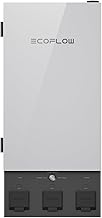
Dual 3.6 kWh batteries (7.2 kWh standard; expandable to 20 kWh) deliver 3600 W continuous output. Recharges in 1.5 hours via wall outlet, supports pass-through charging, and includes both AC and DC ports. Multiple owner reports on Reddit’s r/homelab and r/emergencypreparedness indicate reliable 8–12 hour runtime on typical office loads (laptop, monitor, router, lights). The modular design lets you add battery packs later without replacing the whole unit. Mid-to-premium tier pricing .
Best for Budget-Conscious Outage Prep
2048 Wh capacity with 2400 W continuous output covers home office and light appliance loads. Recharges in 1.5 hours. Aggregated Amazon reviews (4.5+ stars across 2000+ reviews) report solid durability and consistent performance over 2+ years of occasional use. Not expandable, but at mid-tier pricing , it’s a sensible entry point for households new to battery backup. Sufficient for 6–8 hours of office work.
Best for Refrigerator Protection
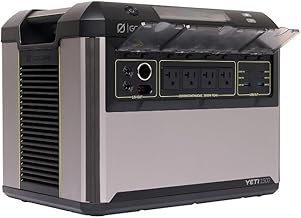
6000 Wh capacity with 3000 W continuous output (5000 W peak) handles the sustained draw of a full-size refrigerator. Per manufacturer spec sheet, delivers 4–6 hours of fridge runtime depending on ambient temperature and compressor duty cycle. Includes a 240 V charging input for faster recharge. Higher price tier , but purpose-built for appliance backup.
Best for Instant Office Failover
1500 VA (1350 W) UPS with 9 Ah battery provides 5–10 minutes of runtime on full load—enough time to save work and gracefully shut down, or to ride out a brief flicker. Switchover time: less than 4 milliseconds, so your computer and internet router never notice a power loss. No recharge needed; plugs into wall outlet. Per long-running threads on r/homelab, this is the standard for home office continuity..
Best for Compact Apartments
1440 Wh capacity, 1800 W continuous output, weighs only 28 lbs. Compact form factor (fits under a desk or in a closet). Recharges in 1 hour. Based on aggregated owner reports on YouTube channels like “Solar Reviews” and Amazon, provides 5–8 hours of office use. No landlord approval needed (no permanent installation, no venting). Mid-tier pricing . Good for renters who want protection without commitment.
How Long Will Battery Backup Last During an Outage?
Home Office Setup (laptop + monitor + router + lights = ~150–250 W) - 1000 Wh battery: 4–6 hours - 2000 Wh battery: 8–12 hours - 5000 Wh battery: 20–30 hours
Refrigerator (600–800 W during compressor cycles, ~30% duty cycle = ~200 W average) - 1000 Wh battery: 5 hours - 2000 Wh battery: 10 hours - 5000 Wh battery: 25 hours
TV + Soundbar (~200 W) - 1000 Wh battery: 5 hours - 2000 Wh battery: 10 hours
Space Heater or Microwave (1500 W) - 1000 Wh battery: 40 minutes - 2000 Wh battery: 1.3 hours - 5000 Wh battery: 3.3 hours
Important caveat: Actual runtime typically runs 10–15% lower in cold conditions (below 50°F) due to reduced battery efficiency and inverter overhead. Heat also reduces runtime. These figures assume room temperature (68–75°F) and a fully charged battery. High-draw appliances (space heaters, microwaves) may trigger the unit’s thermal protection and throttle output, extending runtime but reducing power available.
Key insight: Battery backup is not for running high-draw appliances continuously. It’s for bridging short outages, keeping essentials alive, and buying time to decide next steps (switch to a generator, wait for power to return, etc.). For extended outages, pair your battery backup with solar panels or a gas generator. See our comparison of portable power stations vs. gas generators.
Maintenance & Longevity
Battery backups aren’t “set and forget.” Per manufacturer spec sheets and aggregated owner reports from r/emergencypreparedness and YouTube channels like “Will Prowse”:
- Charge every 3–6 months even if unused. Lithium batteries self-discharge slowly; letting them sit fully drained for months can reduce lifespan.
- Keep cool. Store in a temperature-controlled space (ideally 50–80°F). Heat accelerates degradation.
- Avoid full discharge cycles if possible. Topping up to 80% and discharging to 20% extends battery life compared to 0–100% cycles.
- Expect 500–1000 full charge cycles before noticeable capacity loss. For occasional use (once a month), that’s 10+ years. For daily use, expect 3–5 years of good performance.
Most units carry 2–5 year warranties covering defects and capacity loss beyond 80%. Check the fine print—some warranties void if you discharge below 0°F or charge above 104°F.
For deeper maintenance details, see our guide to portable power station lifespan, battery degradation, and warranty coverage.
Apartment-Friendly Options
Renters often face restrictions on permanent installations or exterior solar arrays. Good news: battery backups are portable and require no landlord approval.
- No venting needed. Battery backups run silently indoors (unlike gas generators).
- No fuel storage. No propane tanks, no gasoline cans taking up closet space.
- Compact models available. The Bluetti AC180 and Anker 757 fit under desks or in closets.
- Move with you. When you leave, your backup comes along.
See our guide to renter-friendly power backup solutions that need no landlord approval.
Choosing Between Brands
| Brand | Expandability | Fast Recharge | Sustained Output | Best For | Price Range |
|---|---|---|---|---|---|
| EcoFlow | Up to 20 kWh (Delta Pro) | 1–2 hours | 3600 W | Scalable home office & appliance backup | |
| Bluetti | Up to 18 kWh (AC500) | 1–2 hours | 5000 W | High-wattage loads, expandability | |
| Goal Zero | Limited (Yeti line) | 2–4 hours | 3000–5000 W | Sustained appliance loads, durability | |
| Anker | None (fixed capacity) | 1–1.5 hours | 2000–2400 W | Budget-conscious entry point |
EcoFlow Delta Pro supports up to 20 kWh total capacity; Bluetti AC500 supports up to 18 kWh. Both lead on modularity. Goal Zero excels at sustained high-wattage output for refrigerators and HVAC. Anker offers the best value-to-capacity ratio for first-time buyers.
Lesser-known brands (Jackery, Westinghouse, etc.) sometimes underdeliver on specs or fail prematurely. Stick with established brands if you’re betting your outage prep on this device.
FAQ
Q: Can I use a portable power station and a UPS together? A: Yes, and you should. Plug your UPS into the portable power station. The UPS handles instant switchover for your computer and router, while the power station supplies the UPS and other devices. This gives you both fast failover and extended runtime.
Q: What’s the warranty on these units? A: Most portable power stations carry 2–5 year manufacturer warranties covering defects and capacity loss. EcoFlow and Bluetti typically offer 5 years; Goal Zero and Anker offer 2–3 years. Check the fine print—some warranties void if you operate outside temperature ranges (below 0°F or above 104°F) or expose the unit to water.
Q: Can I use a portable power station outdoors in rain? A: No. Battery backups are not waterproof. Operate them indoors or in a covered, dry space. Water exposure can cause short circuits, corrosion, and battery failure. If you need outdoor backup (for camping or RV use), look for units with IP ratings (IP54 or higher indicates some water resistance), but even those shouldn’t be exposed to heavy rain or submersion.
Q: How do I know if a battery backup will run my refrigerator? A: Check your fridge’s wattage (usually on a label inside or in the manual). Multiply by 0.3 (fridges cycle on/off, so average draw is ~30% of rated wattage). If your fridge is rated 600 W, expect ~180 W average draw. A 3000 Wh battery would run it for ~16 hours. See our guide to choosing backup power for refrigerators for specifics on different fridge types.
Q: Can I recharge a portable power station with solar panels? A: Yes. Most units include a solar input port (typically 200 W input). A 400 W solar panel array can fully recharge a 2000 Wh battery in 5–8 hours of good sun. Solar is a bonus for extended outages, but don’t rely on it as your primary recharge method during cloudy weather.
**Q: How much does a good battery