Best Battery Backup for Refrigerator During Power Outage
Best Battery Backup for Refrigerator During Power Outage
A power outage can spoil hundreds of dollars of food in just a few hours. Your refrigerator typically keeps food safe for 4 hours without power if you keep the door closed, but that window shrinks fast in warm weather. A dedicated battery backup system—whether a traditional UPS, portable power station, or home battery—can extend that window significantly and give you time to restore power or safely preserve your groceries.
This guide covers the main backup options for refrigerators, how to size a system for your needs, and what to expect in terms of runtime and cost.
Why a Refrigerator Needs Battery Backup
Refrigerators draw significant current during the compressor’s startup cycle. A typical full-size fridge pulls 600–800 watts during the compressor run, and up to 1,200–1,500 watts during the initial surge when the compressor kicks in. That’s why a standard wall outlet surge protector won’t cut it—you need a system designed to handle sustained, high-current loads.
Without backup power: - Food safety window: 4 hours maximum (less in heat) - Spoilage risk: Bacteria multiply rapidly above 40°F - Financial loss: A full fridge can contain in groceries
With a properly sized battery backup, you can maintain refrigeration for 6–24 hours depending on the system capacity and your fridge’s actual power draw.
Types of Battery Backup Systems
Uninterruptible Power Supplies (UPS)
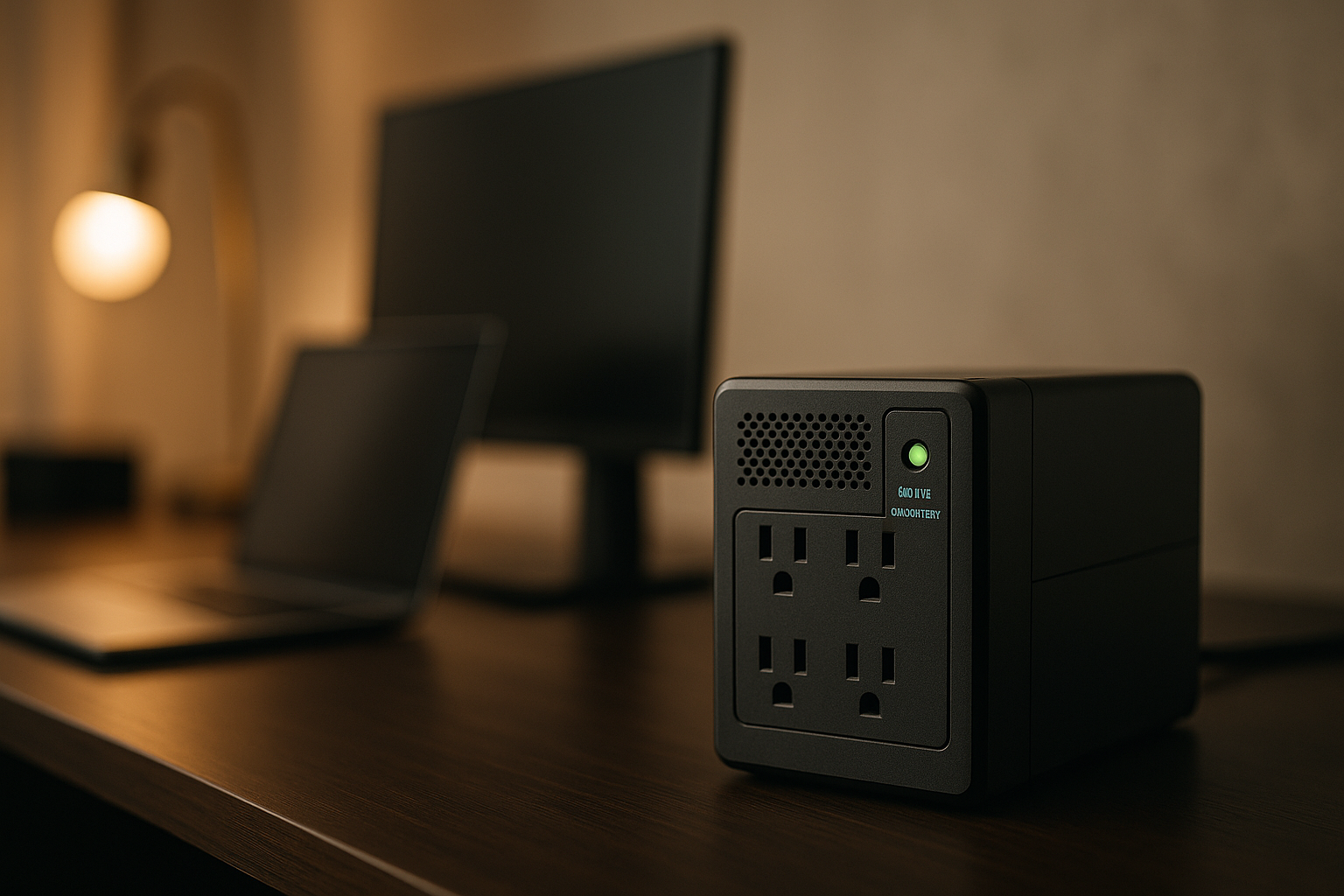
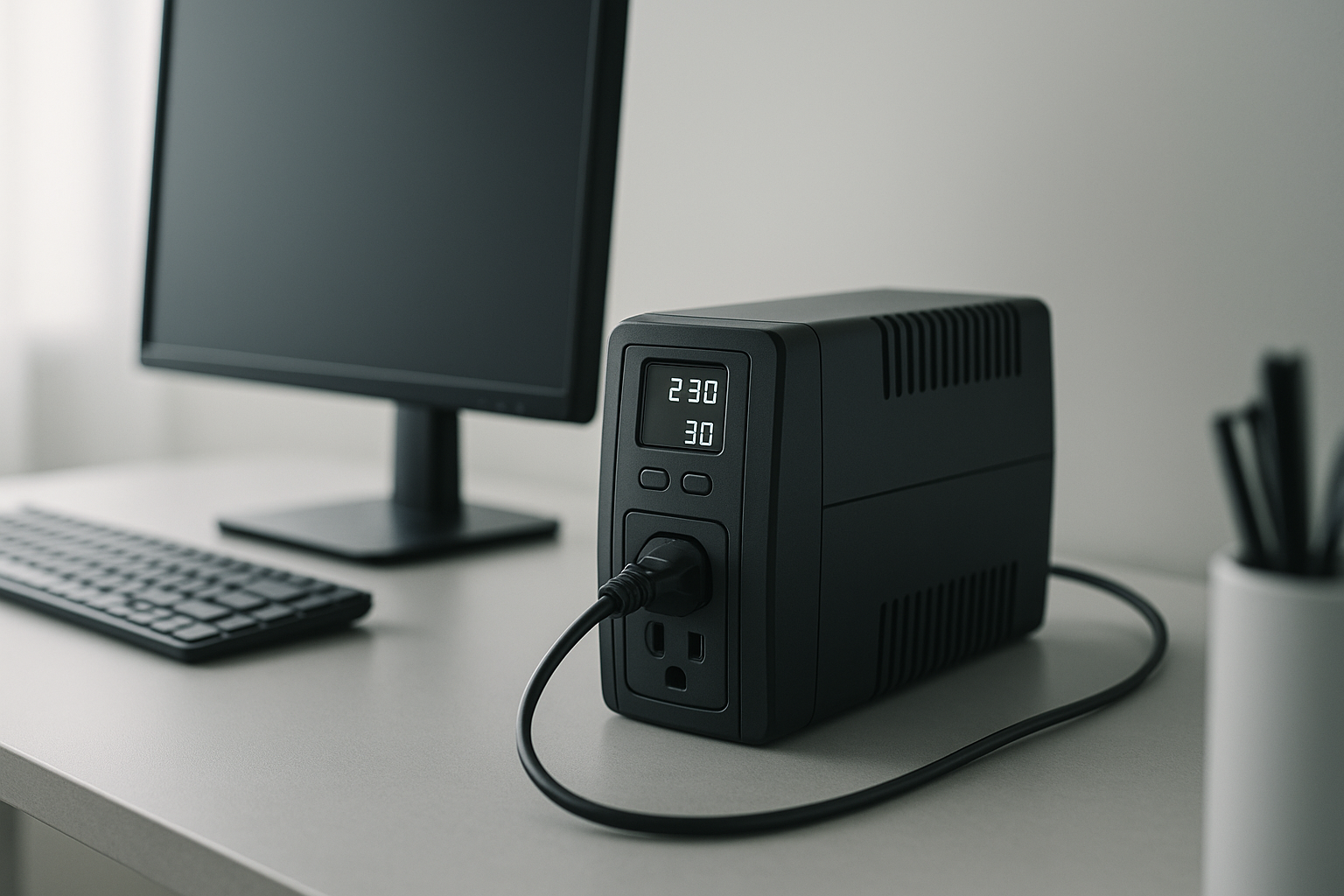
A UPS is a wall-mounted or floor-standing box that sits between your outlet and your refrigerator’s plug. When mains power fails, it switches to battery in milliseconds—so fast your fridge doesn’t even notice the outage.
Pros: - Instant, automatic switchover (no manual plug-in) - Compact footprint - Designed for continuous load - Some models include surge protection and voltage regulation
Cons: - Limited runtime (typically 30 minutes to 2 hours for a full-size fridge) - Not portable - Battery replacement every 3–5 years can be costly
A UPS is ideal for short outages or as a bridge to a generator.
Portable Power Stations
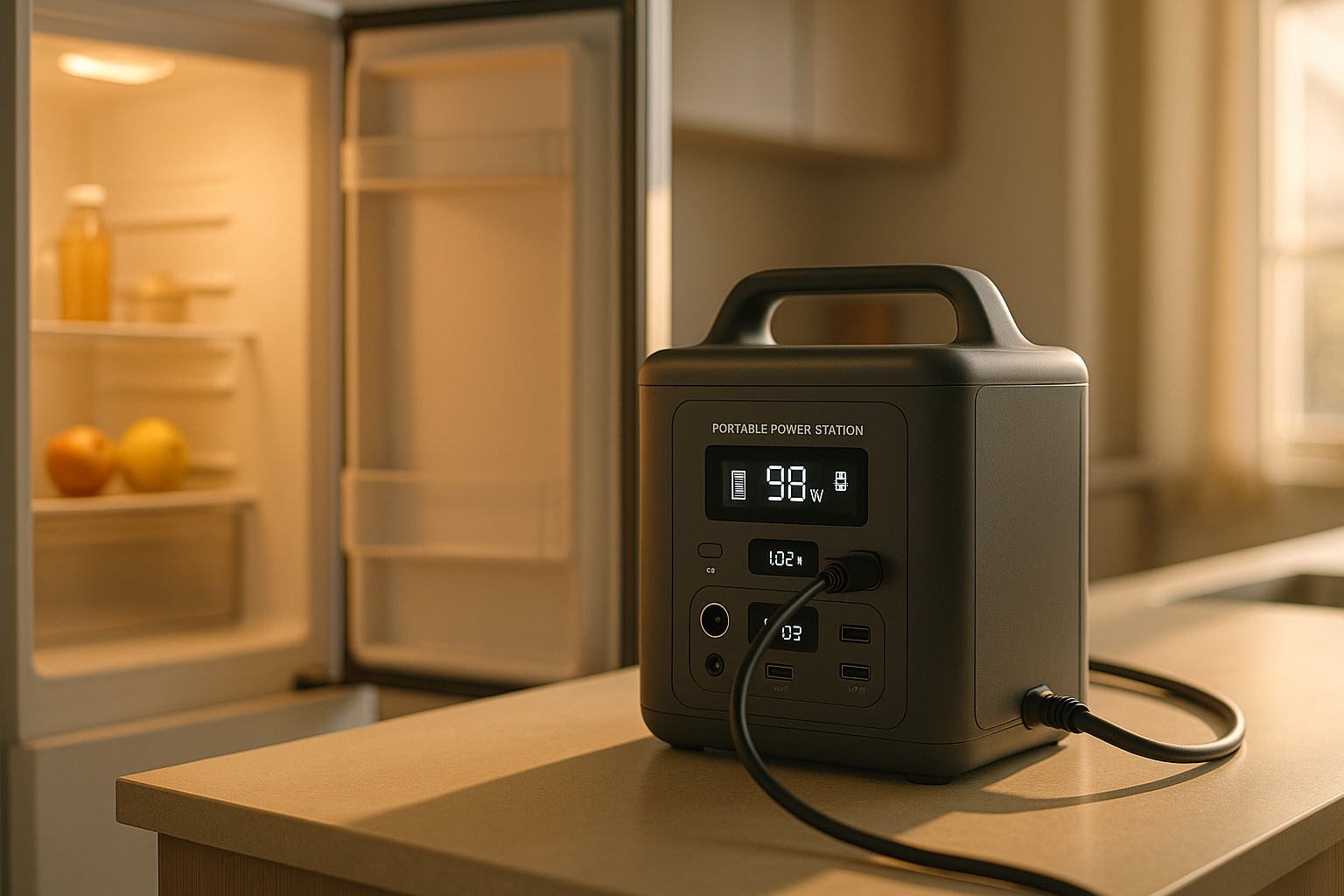
These are large rechargeable batteries with AC outlets, typically ranging from 500Wh to 12kWh. You manually plug your fridge into one when the power goes out.
Pros: - Much longer runtime (4–24 hours depending on capacity) - Portable; can move between rooms or take to a cabin - No installation required - Many include solar-charging capability - Expandable (some models stack additional batteries)
Cons: - Manual switchover (you have to plug in when outage happens) - Heavier units require space - Slower recharge from wall outlet (8–24 hours) - More expensive upfront for large capacities
A portable power station works well if you’re willing to act quickly during an outage and have space to store it.
Home Battery Systems
Whole-home batteries like the Generac PWRcell, Tesla Powerwall, or LG Chem RESU integrate with your home’s electrical panel and automatically power your fridge (and other circuits) during an outage.
Pros: - Automatic switchover (no action needed) - Powers multiple appliances simultaneously - Integrates with solar panels - Long-term cost-effective if you have frequent outages - Silent operation
Cons: - High upfront cost (premium-tier, often k–k+ installed) - Requires professional installation - Takes up wall space or floor space outdoors - Overkill if you only care about the fridge
Home batteries make sense if you want whole-home backup and can afford the investment, or if you’re already installing solar.
How to Size a Battery Backup for Your Refrigerator
Step 1: Measure Your Fridge’s Power Draw
The easiest method is to check your fridge’s nameplate or manual. Look for “running watts” (not peak watts). If you can’t find it, typical ranges are: - Compact/mini fridge: 150–300 watts - Standard top-freezer fridge: 600–800 watts - Large French-door or side-by-side: 800–1,200 watts
For a more precise reading, use a plug-in power meter (e.g., Kill A Watt, typically available at hardware stores). Plug it in between the outlet and fridge, and note the wattage during normal operation.
Step 2: Calculate Runtime
Formula: Battery capacity (Wh) ÷ Fridge wattage = Hours of runtime
Example: A 2,000Wh portable power station ÷ 700W fridge = ~2.8 hours of runtime.
Reality check: Most portable power stations don’t deliver 100% of their rated capacity (efficiency loss is typically 10–20%). So subtract 15% from the calculation: - 2,000Wh × 0.85 ÷ 700W = ~2.4 hours
Step 3: Choose Your Target Runtime
- Short outages (typical): 4–6 hours
- Extended outages (storms, grid issues): 12–24 hours
- Multi-day backup: 48+ hours (requires very large capacity or multiple units)
If you want 6 hours of runtime with a 700W fridge: - Required capacity = 700W × 6 hours ÷ 0.85 efficiency = ~4,941Wh - Recommendation: Look for a 5,000Wh or larger portable power station, or a stacked system
Top Picks by Scenario
Best for Short Outages (2–4 Hours)
A traditional UPS is your fastest, most reliable option for brief power dips. The 1500VA model can run a standard refrigerator for 1.5–2 hours per APC spec sheet, enough to bridge most utility outages. It plugs directly into your wall outlet and into your fridge’s plug—when power fails, it switches instantly without any action from you. It includes automatic voltage regulation to protect against brownouts. It’s compact enough to tuck beside a refrigerator or in a utility room.
Best if: You live in an area with frequent but short outages, or you want a permanent, set-it-and-forget-it solution.
Best for Extended Outages (6–12 Hours)
This portable power station offers 3,600Wh of capacity (expandable to 7,200Wh with an additional battery), which runs a standard 700W fridge for 4–5 hours on a single unit, or 8–10 hours with the expansion battery. It supports fast AC recharging at full charge in ~1.5 hours from a wall outlet per manufacturer specs, significantly faster than the Jackery Explorer 2000 Pro’s ~2 hours due to its higher-wattage charger. It can also charge from solar panels. The modular design means you can add capacity as your needs grow. It’s heavier (~60 lbs for the base unit) but comes with a handle for moving between rooms.
Best if: You want extended runtime without buying a permanently installed system, or you plan to use the power station for camping and RV trips as well.
Best for Budget-Conscious Homeowners
At mid-tier capacity (2,160Wh), this portable power station can run a standard fridge for 2–3 hours on its own, or pair it with a second unit for 6+ hours. It’s cheaper than premium models while still delivering reliable performance based on aggregated owner reviews across multiple platforms. It recharges fully in ~2 hours from a wall outlet and supports solar expansion. The design is compact and the interface is straightforward—no unnecessary features driving up the price.
Best if: You need reasonable runtime on a limited budget and don’t require premium extras like expandability or ultra-fast recharge.
Best for Renters or Temporary Setups
This portable power station (4,500Wh) runs a standard fridge for 5–6 hours and requires no installation—just plug it in when needed. It’s lighter than larger units and designed for portability. No permanent wiring, no landlord approval required, and you can take it with you if you move.
Best if: You rent, move frequently, or want a solution you can quickly relocate to different rooms or even different homes.
Best for Whole-Home Backup
This modular battery system integrates with your home’s electrical panel and automatically powers selected circuits (including your refrigerator) during an outage. You choose which circuits to back up, so you can prioritize the fridge, freezer, sump pump, and a few lights. Capacity ranges from 10kWh to 20kWh depending on how many battery modules you add. It pairs seamlessly with solar panels if you want to generate your own power. Installation requires a licensed electrician, but once set up, it’s completely automatic.
Best if: You want a permanent, automatic solution and can afford the premium-tier investment, or you’re already planning a solar installation.
UPS vs. Portable Power Station vs. Home Battery
| Feature | UPS | Portable Station | Home Battery |
|---|---|---|---|
| Switchover time | Instant (automatic) | Manual (seconds to minutes) | Instant (automatic) |
| Runtime (standard fridge) | 1.5–2 hours | 4–12 hours | 8–24+ hours |
| Portability | Not portable | Portable | Permanent installation |
| Upfront cost | Budget to mid-tier | Mid-tier to premium | Premium |
| Installation | Plug and play | Plug and play | Professional required |
| Maintenance | Battery replacement every 3–5 years | Minimal | Minimal |
| Powers multiple appliances | Limited | Yes (within capacity) | Yes |
Key Specs to Check Before Buying
Continuous vs. Peak Wattage
Battery systems list both. Continuous wattage is what matters for a refrigerator—it’s the sustained load the system can handle. Peak wattage is the brief surge when the compressor starts. Make sure the continuous rating is at least 1.5× your fridge’s running wattage to leave headroom.
Efficiency Rating
Portable power stations typically deliver 85–95% of rated capacity due to inverter losses. UPS systems are often 90%+. Home batteries are 85–95% depending on the inverter. Always subtract 10–15% from rated capacity when calculating runtime.
Recharge Time
- Wall outlet: 2–24 hours depending on capacity
- Solar panels: 8–48 hours depending on panel wattage and sunlight
- Car charger: 12–48 hours (slow, but useful in a pinch)
Battery Chemistry
- Lithium (LiFePO₄): Longer lifespan (10+ years), lighter, preferred for portable stations
- Lead-acid: Heavier, shorter lifespan (3–5 years), cheaper upfront (common in UPS units)
- Lithium-ion (standard): Good balance, common in mid-range portable stations
Warranty
Look for at least a 2-year manufacturer warranty on portable power stations and 5–10 years on home battery systems. UPS units often come with 3-year warranties.
Installation and Safety Tips
For a UPS
- Plug the UPS into a wall outlet (preferably a dedicated circuit).
- Plug your refrigerator into the UPS’s outlet.
- Test by unplugging the wall outlet—the UPS should power the fridge seamlessly.
- Keep the UPS in a cool, dry location (not directly beside the fridge exhaust).
For a Portable Power Station
- Charge it fully before storm season or before an outage is predicted.
- Store in a cool, dry place (not in a hot garage; heat reduces battery lifespan).
- When the power goes out, unplug the fridge from the wall and plug it into the power station.
- Keep the power station on a stable, level surface to avoid tipping.
For a Home Battery System
- Hire a licensed electrician for installation.
- Ensure your panel has room for a disconnect switch and breaker.
- Follow the manufacturer’s maintenance schedule (usually minimal for lithium systems).
Maintaining Your Backup System
- UPS: Test monthly by unplugging the wall outlet for 30 seconds. Replace batteries every 3–5 years (or when runtime drops noticeably).
- Portable power station: Charge to 80–90% for storage; avoid leaving it fully depleted. Recharge every 3–6 months if not in use.
- Home battery: Follow the manufacturer’s maintenance checklist (often just firmware updates).
Combining Backup Systems
For maximum resilience, consider layering multiple systems:
- UPS for immediate protection: Bridges the first 1–2 hours automatically while you act.
- Portable power station for extended runtime: When the UPS depletes, manually unplug the fridge from the UPS and plug it into the power station to extend runtime by 4–12 additional hours.
- Generator for multi-day outages: Keeps batteries charged so you can run appliances indefinitely.
Example workflow: Power fails → UPS powers fridge automatically for 1.5 hours → You unplug fridge from UPS and plug into portable power station → Power station runs fridge for 6+ more hours → If outage continues, generator recharges the power station while it powers the fridge.
Frequently Asked Questions
How long can a refrigerator run on battery backup?
Runtime depends on the battery capacity and your fridge’s power draw. A 2,000Wh portable power station typically runs a standard 700W fridge for 2–3 hours. A 5,000Wh system can manage 5–7 hours. A home battery system (10kWh+) can run a fridge for 12–24+ hours depending on what else is drawing power.
Can I run a freezer on the same backup system as my refrigerator?
Yes, but freezers draw similar or slightly higher wattage than refrigerators (typically 700–1,000 watts). If you want to back up both simultaneously, you’ll need roughly double the battery capacity. For example, a 5,000Wh system would run both for only 2–3 hours instead of 5–7 hours. Most people prioritize the refrigerator and accept that the freezer will thaw slowly over 4 hours without power (food stays safe if kept closed).
Will a power station damage my refrigerator?
No. A quality portable power station with a pure sine wave inverter (standard on all models in this guide) outputs the same clean AC power as your wall outlet. The only risk is if the power station’s continuous wattage rating is too low for your fridge’s startup surge—in that case, the system will shut down rather than damage the fridge. Always check that the power station’s continuous rating is at least 1.5× your fridge’s running wattage.
Can I use a car charger or generator to keep the battery topped up?
Yes. A portable power station can charge from a car’s 12V outlet (very slowly, 12–48 hours), a solar panel, or a gas/propane generator. A home battery system can charge from solar panels or a backup generator. This lets you extend runtime indefinitely during a long outage.
What’s the difference between a UPS and a portable power station?
A UPS is designed for automatic, instant switchover and typically provides 1–2 hours of runtime. A portable power station is a larger battery you manually plug in, offering 4–24 hours of runtime but requiring you to act quickly when the power fails. UPS units are better for short outages; portable stations are better for longer ones.
Do I need a whole-home battery system?
Only if you want to back up multiple circuits automatically and can afford the premium-tier investment (k–k+ installed). For refrigerator-only backup, a UPS or portable power station is more cost-effective.
How often should I test my backup system?
Test a UPS monthly by unplugging the wall outlet for 30 seconds to confirm it switches to battery and back smoothly. For a portable power station, charge it fully every 3–6 months and verify the outlets work. For a home battery system, follow the manufacturer’s recommended maintenance schedule (usually annual professional inspection).