UPS vs Portable Power Station: Which Is Better?
UPS vs Portable Power Station: Which Is Better?
Two scenarios demand different backup power solutions:
Scenario 1: Remote worker in a grid-unstable area. You’re mid-video call when the power cuts out. Your computer shuts down. Your internet router goes dark. You lose the client’s trust and the sale. You need power to return instantly—no lag, no manual switching.
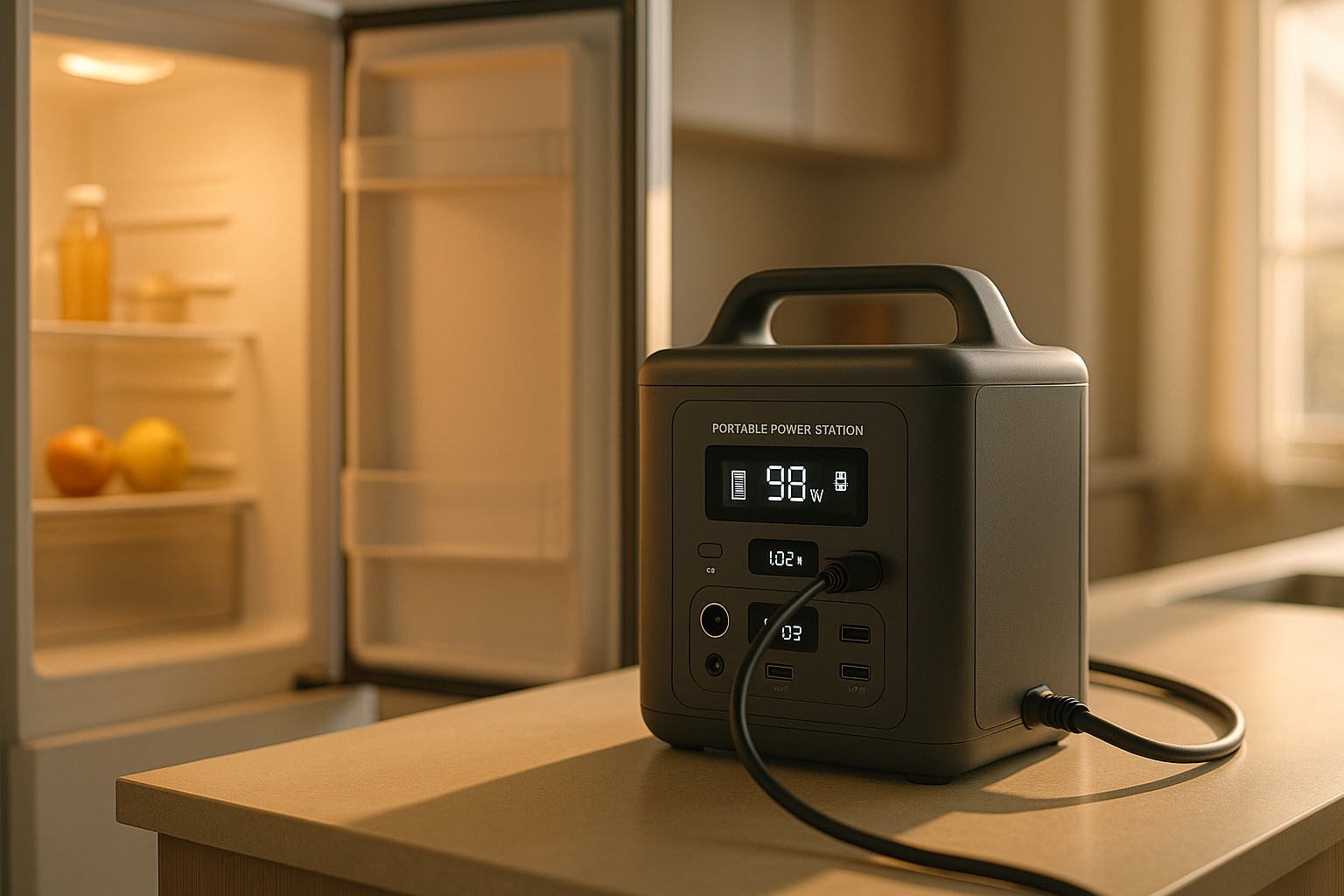
Scenario 2: RV owner preparing for a weekend trip. You’re heading off-grid for three days. You need to run a small refrigerator, charge devices, and power LED lights throughout the journey. You can manually plug devices in; you just need hours of silent, portable power.
These two people need completely different tools. The first needs an Uninterruptible Power Supply (UPS). The second needs a portable power station. This guide breaks down the real differences so you can pick the right one.
How a UPS Works
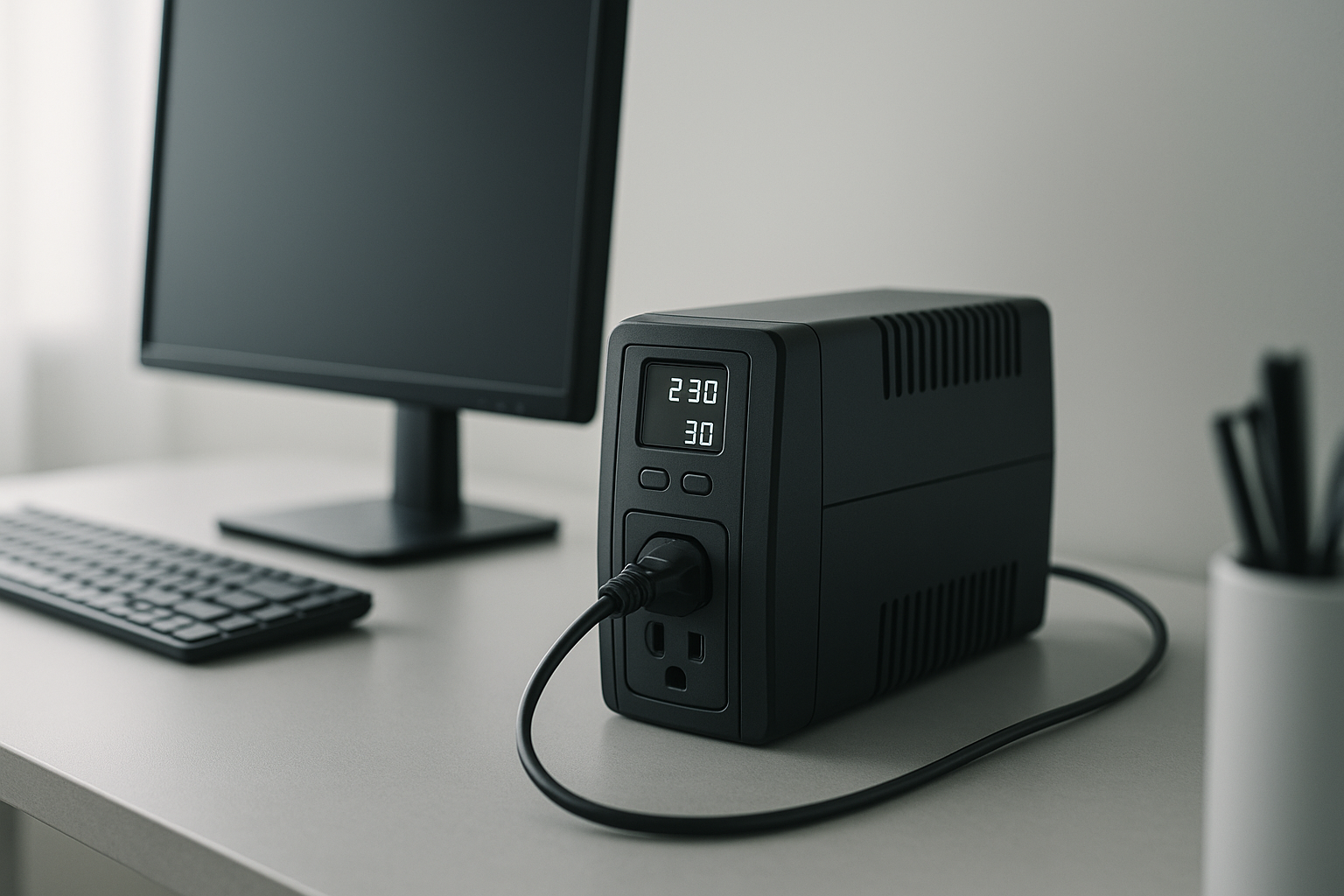
A UPS is a box that sits between your wall outlet and your devices. It contains a battery and a power inverter. When grid power is present, the UPS charges its internal battery and passes power straight through to your equipment. When the power cuts out, the battery instantly takes over—usually within milliseconds—so your devices never notice the interruption.
The key word is instantly. That speed is what makes a UPS valuable for computers, servers, and network equipment. Your PC doesn’t crash. Your router stays online. Your work doesn’t vanish.
Most UPS units are designed to run for 5–15 minutes on battery alone. That’s enough time to save your work, shut down gracefully, or wait out a brief flicker. They’re not meant to power your house for hours.
How a Portable Power Station Works
A portable power station is a large rechargeable battery with outlets built in. Think of it as a gas-free generator: you charge it from the wall (or from solar panels), then plug devices into it whenever you need power.
Unlike a UPS, a portable power station has no automatic switching. You have to manually plug devices in, and there’s a brief lag (a few seconds to minutes, depending on the model) before power flows. But in exchange, you get hours or even days of runtime depending on battery capacity and what you’re running.
Portable power stations are mobile—you can carry them to a campsite, move them between rooms, or load them into an RV. They’re also quieter and cleaner than gas generators.
Key Differences at a Glance
| Feature | UPS | Portable Power Station |
|---|---|---|
| Switching speed | Instant (milliseconds) | Manual + lag (seconds to minutes) |
| Runtime | 5–15 minutes typical | 1–48+ hours (varies by load & capacity) |
| Portability | Stationary | Mobile |
| Noise | Quiet (no moving parts) | Silent when running |
| Best for | Protecting computers, servers, network gear | Sustained power for homes, RVs, camping |
| Setup | Plug in and forget | Requires manual activation |
| Cost | UPS: | Portable station: |
When to Choose a UPS
You need a UPS if:
- You work from home and can’t afford downtime. A UPS keeps your computer, monitor, and router alive long enough to save work and shut down safely. No lost files, no data corruption.
- You have a home office with sensitive equipment. Servers, NAS drives, and networking gear benefit from clean power transitions.
- You want automatic, hands-free protection. Once plugged in, a UPS requires zero intervention. When power fails, it switches instantly.
- You have a tight budget. UPS units are generally cheaper than portable power stations with equivalent capacity.
A UPS is not meant to power your whole house or run appliances for hours. Its job is to bridge the gap between “power’s gone” and “I’ve safely shut down.”
When to Choose a Portable Power Station
You need a portable power station if:
- You need to power your home during an extended outage. A mid-to-large capacity unit can run essential appliances (lights, phone chargers) for 8–24 hours or more.
- You want mobile, flexible power. Portable stations work in your home, your RV, your campsite, or your car. You’re not locked into one location.
- You’re building a solar setup. Many portable power stations accept solar panel input, letting you recharge indefinitely off-grid.
- You need silent backup power. Unlike gas generators, portable power stations produce zero noise or fumes—ideal for apartments, RVs, or noise-sensitive environments.
- You’re willing to manually switch devices over. You’ll plug devices into the station when needed; there’s no automatic switching like a UPS provides.
- You want to power high-draw appliances. A portable power station can run a refrigerator, microwave, or space heater (within its watt rating). A UPS typically cannot.
Runtime & Capacity: The Real Difference
Here’s where the two diverge most sharply.
UPS runtime is measured in minutes. A typical office UPS with a 500 VA (Volt-Ampere) rating might run a computer and monitor for 10–15 minutes before the battery is depleted. Larger enterprise UPS units can stretch to 30–60 minutes, but that’s still measured in minutes, not hours.
Portable power station runtime is measured in hours or days. A mid-tier unit with 1000 Wh (Watt-hours) of capacity can run a laptop for 10–15 hours, a phone charger for 50+ hours, or a small refrigerator (assuming a 150W fridge) for 4–8 hours. Larger units with 5000+ Wh can sustain essential home loads for 24–48 hours or more.
If you need power for more than 20 minutes, a portable power station is the answer. If you need power for 5–15 minutes while you save files and shut down, a UPS is the right tool.
Can You Use Both?
Yes—and many people do. A smart setup might look like:
- UPS for your computer and router — instant protection, automatic switchover, keeps your work and connectivity alive.
- Portable power station for appliances and devices — sustained power for lights, fridge, phone chargers, and other essentials during a longer outage.
This combination covers both the “I need power right now without interruption” and “I need power for hours” scenarios.
Other Backup Power Options
If neither a UPS nor a portable power station fits your needs perfectly, consider these alternatives:
| Option | Cost per Watt | Runtime | Best for | Drawbacks |
|---|---|---|---|---|
| Gas/propane generator | /W | Unlimited (with fuel) | Extended outages, high-power loads | Noisy, requires fuel storage, maintenance |
| Whole-home backup generator | /W | Unlimited (with fuel) | Seamless home coverage | Expensive upfront, professional installation required |
| Portable power station + solar | /W | Unlimited (with sun) | Off-grid living, RVs, camping | Higher initial cost, weather-dependent |
Decision framework: Choose a gas generator if you need maximum power at lowest cost and don’t mind noise. Choose a whole-home generator if you want seamless automatic backup and can afford installed. Choose a portable station with solar if you prioritize silence, mobility, and sustainability.
FAQ
What’s the difference between VA and Wh ratings? VA (Volt-Ampere) measures apparent power and is commonly used for UPS units. Wh (Watt-hours) measures actual energy capacity and is used for portable power stations. For UPS comparisons, focus on VA; for runtime estimates, use Wh. As a rough conversion, 1 kVA UPS ≈ 500–1000 Wh capacity.
How do I calculate runtime for my specific appliances? Divide the battery capacity (in Wh) by your device’s power draw (in watts), then multiply by 0.85 to account for inverter losses. Example: A 1000 Wh station powering a 100W laptop = (1000 ÷ 100) × 0.85 = 8.5 hours runtime. Check your device’s wattage on its power adapter or manual.
How long does a UPS battery last? Most UPS batteries last 3–5 years with regular use, per manufacturer spec sheets. They degrade over time and should be replaced when they no longer hold a charge.
How long does a portable power station battery last? Portable power stations typically last 5–10 years depending on chemistry and use patterns, based on aggregated owner reports on Reddit forums like r/CampingGear and r/Vandwellers. Lithium-ion units last longer than lead-acid.
Can I charge a portable power station while using it? Yes—most modern portable power stations support pass-through charging. You can plug in solar panels or a wall charger while simultaneously powering devices. A UPS can also do this, though it’s designed primarily for emergency backup.
Which is better for camping? A portable power station wins for camping. It’s mobile, silent, and can run for hours on a single charge. Pair it with solar panels for unlimited off-grid power. A UPS stays plugged into a wall and is designed for brief emergency protection, not sustained outdoor use.
The Bottom Line
A UPS is your answer if you need instant, automatic protection for computers and sensitive electronics during brief outages. It’s affordable , reliable, and requires zero intervention.
A portable power station is your answer if you need sustained power for hours or days, or if you want mobile backup power for camping, RVs, or whole-home outage coverage. Expect to spend depending on capacity.
The best choice depends on what you’re protecting and how long you need it to run. Many people use both: a UPS for computers and a portable power station for everything else. Start by identifying your critical loads, estimate how long you need to run them, and pick the tool that matches that need.