Best Generators for RVs: Portable & Fuel-Efficient in 2026
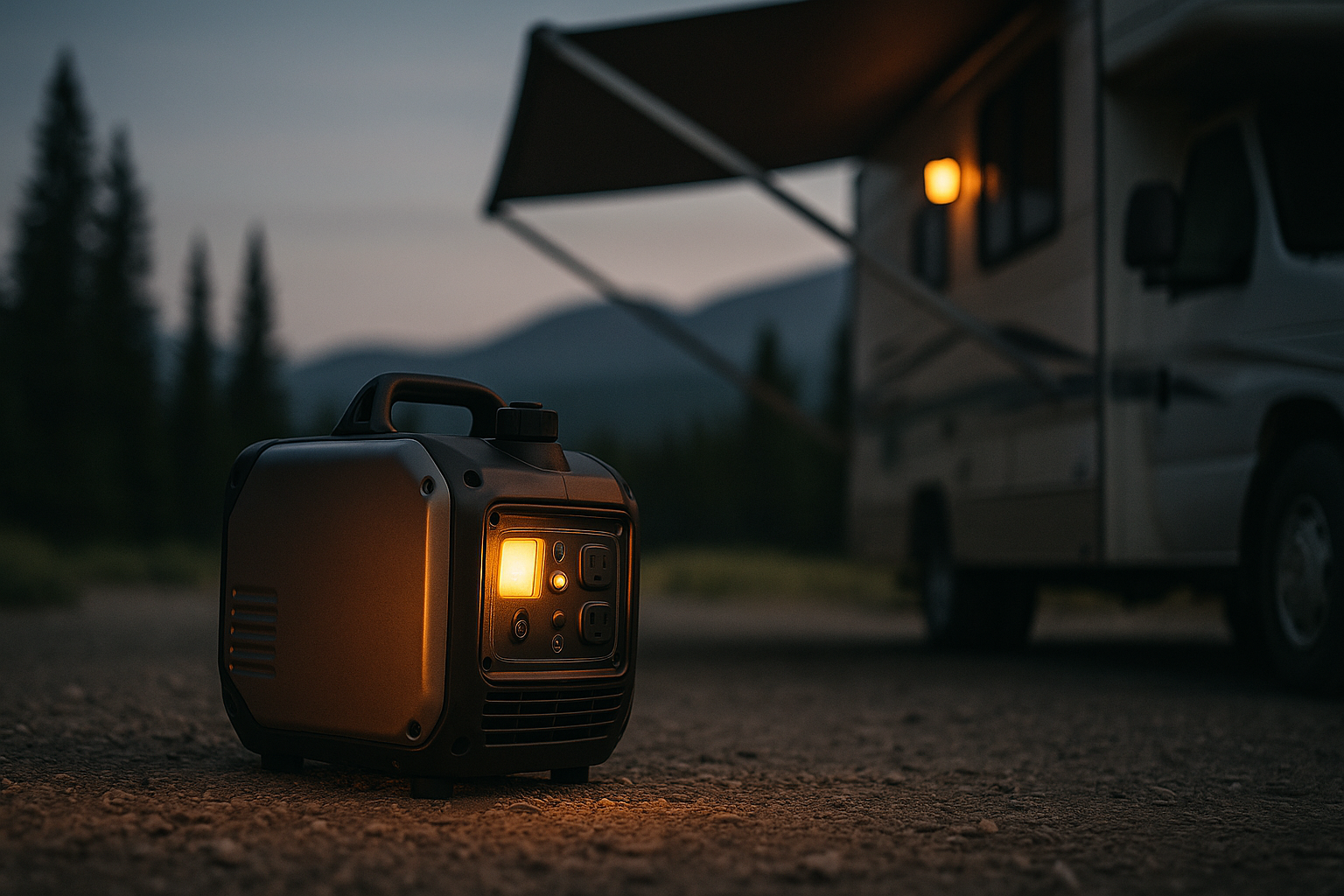
Best Generators for RVs: Portable, Quiet & Fuel-Efficient Options
Choosing the right generator for RV camping means balancing noise, fuel efficiency, power output, and portability. Most RV owners report that a mid-range inverter generator (2500–4500 watts) covers daily needs—coffee makers, refrigerators, laptops, and entertainment—without the weight and fuel consumption of larger units. This guide covers what matters when you’re living on wheels: runtime, decibel levels, and how well a unit handles the unique demands of RV electrical systems.
What Makes a Good RV Generator?
RV generators differ from home backup units in three key ways: they must be portable enough to fit in or behind your rig, quiet enough to use in campgrounds without angering neighbors, and efficient enough to run all night on one tank.
Power output is measured in watts. Most RVs need 2000–3000 watts for basic comfort (fridge, microwave, lights). If you want to run air conditioning or multiple high-draw appliances simultaneously, aim for 4000–5000 watts. Full-time RV dwellers often use two smaller generators (3000 watts each) instead of one large unit—easier to transport, more flexible, and one can run overnight while the other stays in reserve.
Inverter technology (available on mid-tier and premium units) produces cleaner power, protecting sensitive devices like laptops, phones, and modern RV electronics. Non-inverter units are cheaper but can damage equipment over time.
Noise is non-negotiable in campgrounds. Anything over 80 decibels will draw complaints; 70 dB or less is courteous. Inverter generators are inherently quieter because they adjust engine speed based on load rather than running at full throttle constantly.
Fuel type matters for logistics. Gasoline is widely available but volatile in storage; propane is cleaner and stores longer; dual-fuel units offer flexibility but cost more upfront.
Inverter Generators vs. Conventional Generators
Inverter generators cost 30–50% more than conventional units but deliver real benefits for RV use.
Inverter advantages: - Quieter operation (typically 53–75 dB at quarter load vs. 85–95 dB for conventional) - Cleaner power output (safe for phones, laptops, refrigerators) - Better fuel economy (up to 40% longer runtime per tank) - Lighter weight for equivalent wattage - Can parallel two units for flexible power scaling
Conventional advantages: - Lower upfront cost - Simpler mechanics (fewer parts to fail) - Acceptable for power tools and non-sensitive loads
For RV camping, inverter technology is worth the premium. You’re living in a confined space where noise carries, and your fridge and electronics depend on stable power. Per owner reviews on Amazon and r/rvlife, the noise reduction alone justifies the cost after your first season of campground living.
Top RV Generator Picks
Best for Boondocking Weekends: Champion 3100-Watt Inverter Generator
Champion 3100-Watt Inverter Generator
The Champion 3100 is the sweet spot for part-time RV users. It produces 3100 watts of starting power and 2800 watts continuous, enough to run a microwave (1200W), fridge (600W), and entertainment system (300W) together. The inverter keeps power clean for sensitive devices.
Why it works for RVs: Runtime on a single 5.3-gallon tank reaches 11 hours at quarter load—long enough for a full night of sleeping with the fridge running. At 57 dB under load, it’s quiet enough for established campgrounds. The unit weighs 59 pounds, manageable for two people and fits in most RV storage bays.
Trade-off: 3100 watts won’t run air conditioning (AC startup: 3500W). If AC is essential, step up to a 4500-watt unit.
Best for Full-Time RV Living: Westinghouse iGen4500 Portable Inverter Generator
Westinghouse iGen4500 Portable Inverter Generator
At 4500 watts continuous, the Westinghouse iGen4500 handles simultaneous loads—AC unit (3500W startup), microwave (1200W), and water heater (4000W)—without overload shutdowns. The inverter technology means you can charge multiple laptops and phones without voltage sag.
Why it works for RVs: Per owner reviews on Amazon, full-timers report it runs a 13,500 BTU RV air conditioner while powering other appliances. The 7.2-gallon tank delivers 13 hours at quarter load. At 64 dB, it’s louder than smaller units but still acceptable in most campgrounds.
Trade-off: At 195 pounds, it requires a dedicated storage solution (not hand-carried). Best for RVs with rear cargo racks or basement storage.
Best for Weight-Conscious Van Lifers: Honda EU2200i Companion Inverter Generator
Honda EU2200i Companion Inverter Generator
The Honda EU2200i is the gold standard for minimalist RV setups. At 2200 watts, it runs a fridge (600W), laptop (100W), and lights (300W) without breaking a sweat. The inverter is rock-solid, and per owner reports on r/vandwellers (2023–2025 threads), owners report 7–10 years of daily use before any service.
Why it works for van life: It weighs only 47 pounds and produces just 53 dB at quarter load—the quietest on this list. The 0.95-gallon tank is small, but fuel economy is exceptional (up to 10.5 hours at quarter load). You can buy a second unit for the same weight and cost as one large generator, giving you flexible power without compromise.
Trade-off: 2200 watts limits simultaneous high-draw appliances. Not suitable for AC or multiple heaters.
Best Budget Option: DuroMax XP4500 Dual Fuel Generator
DuroMax XP4500 Dual Fuel Generator
The DuroMax XP4500 runs on gasoline or propane, giving you fuel flexibility without premium inverter pricing. At 4500 watts, it covers most RV needs; dual-fuel means you can store propane long-term and use gasoline when traveling.
Why it works for RVs: Propane burns cleaner and stores indefinitely, ideal for seasonal RV storage. Per owner reports on Amazon, the unit runs 10–12 hours on a full propane tank. No inverter means it’s not ideal for sensitive electronics, but it’s solid for power tools and basic appliances.
Trade-off: Non-inverter design produces 80–90 dB under load and slightly noisier than inverter units. Not recommended for campgrounds with strict quiet hours.
Best for Silent Camping: Yamaha EF2800i Inverter Generator
Yamaha EF2800i Inverter Generator
Yamaha’s EF2800i is engineered for near-silent operation. At just 49 dB at quarter load, it’s barely louder than conversation. The 2800-watt inverter handles most RV appliances (fridge 600W, microwave 1200W, lights 300W) and charges devices without noise complaints.
Why it works for RVs: Established campgrounds and state parks often enforce quiet hours (usually 10 PM–8 AM). The Yamaha lets you run a fridge, lights, and entertainment during quiet hours without fear. Runtime is 10.6 hours at quarter load on a 3.7-gallon tank.
Trade-off: 2800 watts won’t run AC or multiple high-draw appliances simultaneously. Best for couples or solo travelers who don’t need simultaneous cooking and climate control.
Fuel Efficiency & Runtime Comparison
Inverter generators achieve better fuel economy than conventional units by adjusting engine speed to match load. A 3000-watt inverter at quarter load uses less fuel than the same wattage at full throttle.
Real-world runtime expectations (per manufacturer spec sheets and owner reports on r/rvlife): - 2200-watt inverter: 8–10.5 hours at quarter load - 3100-watt inverter: 10–11 hours at quarter load - 2800-watt inverter: 10–11 hours at quarter load - 4500-watt inverter: 12–13 hours at quarter load - 4500-watt conventional: 8–10 hours at half load (less efficient)
For boondocking (dry camping without hookups), plan for 8–10 hours of generator runtime per day. A 3000-watt inverter running overnight (fridge only, 500–700 watts) will easily last until morning, then you run it again for 2–3 hours during the day for cooking and charging.
Noise Levels & Campground Etiquette
Decibel levels matter more in RV camping than anywhere else. You’re 15 feet from your neighbor’s bedroom.
Noise by generator type: - Inverter generators: 53–75 dB (quietest option; acceptable for all campgrounds) - Conventional generators: 80–95 dB (loud; restricted hours in most parks) - Larger conventional units (7000+ watts): 90–100 dB (not suitable for RV camping)
Most established campgrounds enforce quiet hours 10 PM–8 AM and require generators under 75 dB. Boondocking (dispersed camping on BLM or National Forest land) has no restrictions, but neighbors still appreciate consideration.
Per owner reports on r/rvlife, a quiet inverter generator (under 70 dB) is the difference between pleasant campground relationships and complaints to park management.
Maintenance & Storage Tips
Generators require seasonal care to stay reliable. Here are RV-specific essentials:
- Fuel stabilizer: Use it if storing the generator for more than 30 days. Gasoline degrades in tanks, causing hard starts and carburetor gunk.
- Propane: Stores indefinitely and doesn’t require stabilizer. Ideal for seasonal RV storage.
- Oil changes: Check oil before every use. Most RV generators need oil changes every 50–100 hours (roughly every season for part-time users).
- Air filter: Inspect monthly during active use; replace if clogged.
- Battery (if equipped): Disconnect or remove before long storage to prevent discharge.
Store the generator in a dry, ventilated space (never indoors—exhaust is toxic). If you’re full-time RVing, run it under load at least once per week to keep seals and fuel systems active.
Parallel Capability & Scalability
Many mid-tier inverter generators can be paralleled—two units connected to share load and increase total capacity. This is popular with full-time RV dwellers because it offers flexibility without the weight of one large unit.
Parallel benefits: - Run one generator overnight (fridge only, ~700 watts), save the other for daytime loads - If one fails, you still have backup power - Two 3000-watt units (parallel = 6000 watts) weigh less and are easier to transport than one 7000-watt unit - Can stagger fuel consumption across two tanks
Not all generators support paralleling. Check the manual; inverter units from Honda, Champion, and Yamaha typically include parallel cables as optional accessories.
Dual-Fuel vs. Gasoline-Only: Which Is Better for RVs?
Gasoline-only generators are lighter, cheaper, and widely available. Downside: gasoline evaporates and gums up carburetors during storage. Seasonal RV users dislike this.
Dual-fuel generators (gasoline + propane) cost more upfront but offer long-term storage benefits. Propane doesn’t degrade, making it ideal for RVs that sit for months between trips.
Propane-only generators are rare and less practical for RVs because propane refill infrastructure is spotty in remote areas. Gasoline is everywhere.
Recommendation: If you camp 6+ months per year, gasoline-only is fine—you’ll use fuel regularly and avoid storage issues. If you camp seasonally (spring/summer only), dual-fuel is worth the extra cost for peace of mind.
Power Needs by RV Type
Class A motorhome (30–40 ft): 4500–6000 watts. You’ll likely run an AC unit (3500W startup, 1500W running), microwave (1200W), and water heater (4000W) simultaneously. Many Class A owners use two 3000-watt units.
Class B van conversion: 2000–3000 watts. Fridge (600W), lights (300W), laptop charging (100W), and occasional cooking (microwave 1200W). A single 3000-watt inverter handles all needs.
Travel trailer (20–30 ft): 3000–4500 watts. AC isn’t always necessary (many trailers have roof vents), but a 3500-watt unit covers cooking (microwave 1200W, stove 3000W) and appliances comfortably.
Truck camper (8–12 ft): 2000–2500 watts. Minimal load; a small Honda or Champion 2200-watt unit (fridge 600W, lights 300W) is perfect.
FAQ
Q: Can I run my RV air conditioner on a portable generator? A: Yes, but only with a 4500-watt unit or larger. RV AC units draw 2500–3500 watts on startup and 1500–2500 watts running. A 3100-watt generator will shut down when AC kicks on. If AC is essential, go 4500 watts minimum or use two smaller units in parallel.
Q: How long will a generator last if I use it daily? A: Per long-running owner reports on r/rvlife, a well-maintained inverter generator lasts 7–10 years with daily use. Conventional units often fail sooner (5–7 years) due to harder engine operation. Oil changes and fuel stabilizer are critical.
Q: Is a solar generator better than a gas generator for RV camping? A: Solar generators (portable power stations) are quieter and require no fuel, but they have low capacity (500–3000 watt-hours) and need sunny weather to recharge. A gas generator is more practical for full-time RV use because it runs 24/7 and handles heavy loads. Solar works best as a supplement for daytime charging and light loads.
Q: What’s the difference between starting watts and running watts? A: Starting watts (surge) are the peak power when the engine first fires up; running watts are continuous output. A 3100-watt generator might have 3500 starting watts. Always size based on running watts—that’s what matters for sustained operation.
Q: Can I use an inverter generator indoors or in my RV? A: No. All gas generators produce carbon monoxide, which is lethal in enclosed spaces. Always operate outside, at least 15 feet from windows and vents. Even “low-emission” units are unsafe indoors.
Closing
The best RV generator balances your camping style, budget, and power needs. Weekend boondockers thrive with a quiet 3000-watt inverter; full-timers benefit from 4500 watts or dual units; van lifers prioritize weight and fuel economy. Inverter technology costs more upfront but pays dividends in noise reduction, runtime, and equipment protection. Start with the quick picks above, cross-reference your RV’s electrical panel (usually labeled with max amperage), and you’ll have reliable power for years of camping.


