Best Quiet Generators for Apartments and Small Spaces

Photo by Zendure Power Station on Unsplash
Best Quiet Generators for Apartments and Small Spaces
Apartment dwellers and condo residents face a hard constraint: a generator that works for a suburban home—roaring at 80+ decibels—will earn you angry neighbors and possibly lease violations within minutes. A quiet generator is not a luxury for apartments; it’s a requirement.
This guide covers inverter-based and ultra-quiet conventional generators that operate at 60–70 decibels (roughly the volume of normal conversation), meet most apartment power needs, and won’t trigger noise complaints or lease enforcement. We’ll walk you through the real-world trade-offs: runtime, fuel type, wattage, and the acoustic engineering that actually makes them quieter.
Why Apartment Generators Need to Be Quiet
Standard portable generators—the kind designed for construction sites or RVs—typically run at 75–90 decibels. At that volume, they’re audible from across a building and will violate noise ordinances in most cities. Most U.S. municipalities cap residential noise at 55 dB during evening hours (6 PM–7 AM) and 70 dB during daytime, per EPA guidelines and local municipal codes like those in Los Angeles (LAMC 112.02) and New York City (NYC Administrative Code § 24-218).
Apartment and condo leases often explicitly forbid generators or cap noise levels. Even if your lease doesn’t mention them, HOAs and local ordinances can force you to shut down or pay fines. A quiet generator (60–70 dB) sits at the threshold of acceptability in most residential zones and is far less likely to provoke neighbor complaints or legal action.
Beyond compliance, quiet generators are usually smaller, lighter, and more fuel-efficient—all advantages in tight urban spaces where storage is already cramped.
How Generators Get Quiet: The Core Technologies
Inverter Technology
Inverter generators use electronic circuitry to regulate engine speed and power output in real time. Instead of running the engine at full throttle constantly, they throttle down when demand is low, cutting noise and fuel burn dramatically. Most inverter models land in the 53–70 dB range.
Conventional Generators
Standard generators run at a fixed RPM, always loud, but cheaper upfront. Some manufacturers add sound-dampening enclosures to reduce output; these can drop noise by 5–10 dB but are heavier and bulkier.
Fuel Type
Propane and natural gas generators tend to run slightly quieter than gasoline at the same wattage. They also produce zero spillage risk and store indefinitely (unlike gasoline, which degrades). Trade-off: propane generators cost more upfront and require a tank or line.
Enclosure Design
Manufacturers like Honda and Champion use rubberized, sound-absorbing enclosures and vibration-dampening mounts to contain engine noise. The best designs drop decibel output by 5–8 dB compared to an open-frame engine.
Key Specs to Compare for Apartment Use
Decibel Rating (dB)
Always check the manufacturer’s decibel spec at 1/4 load and full load. A generator rated “60 dB” is nearly silent; 70 dB is like a vacuum cleaner; 80+ dB is a loud power drill. For apartments, aim for 60–68 dB at 1/4 load (the most common operating point).
Wattage (Running and Starting)
Apartments rarely need more than 3,000–5,000 running watts. A 3,000-watt inverter can power a laptop, phone chargers, a small refrigerator, and some LED lighting simultaneously. Starting wattage (surge) is typically 20–30% higher; check that your target appliances don’t exceed it.
Runtime
A 1-gallon tank at 1/4 load might run 8–10 hours; at full load, 4–5 hours. For apartments, longer runtime means fewer refueling trips and less odor/noise disturbance.
Fuel Type
Gasoline is convenient but smelly and degrades in storage. Propane is cleaner and lasts indefinitely but requires a tank. Dual-fuel models cost more but offer flexibility.
Weight
Apartments mean stairs, elevators, and tight hallways. Generators under 50 lbs are portable; 50–100 lbs require two people or a dolly; over 100 lbs are impractical for most residents.
Top Quiet Generator Picks for Apartments
Honda EU2200i
The Honda EU2200i is the gold standard for apartment living. At 48 pounds and 60 dB at 1/4 load, it’s nearly silent during light use and small enough to stash in a closet or under a stairwell. The inverter technology keeps power clean (safe for phones and laptops), and the 2,200-watt output handles a laptop, phone chargers, and a small fan or lamp without strain. Runtime is about 8–10 hours at 1/4 load on a single gallon of gas, per manufacturer specs. The main trade-off: premium pricing and a smaller fuel tank than budget competitors.
WEN 56203i
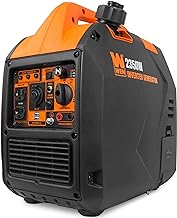
The WEN 56203i hits 53 dB at 1/4 load—genuinely quiet enough that you can talk over it. At 2,000 watts and under 50 pounds, it’s ideal for charging devices and running a single appliance (small fridge, laptop, fan). It’s a budget-tier inverter with solid owner reviews on Amazon reporting 3–5 years of reliable daily use. Fuel efficiency is good; owners report 10+ hours at 1/4 load. Downside: smaller wattage means you can’t run a microwave and refrigerator together.
Champion 3100-Watt Dual Fuel
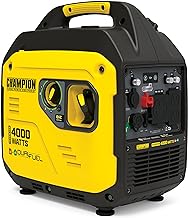
Champion’s dual-fuel inverter runs on gasoline or propane, giving you flexibility if your building bans gas cans. At 68 dB (1/4 load) and 3,100 watts, it handles a small fridge, microwave, and several chargers simultaneously. The enclosure design is solid, and propane runtime stretches to 8+ hours, meaning fewer refueling trips. Weight is around 100 pounds, so you’ll need help moving it. This is a mid-tier option for apartments where extended runtime matters.
Westinghouse iGen4500
At 4,500 watts and 64 dB (1/4 load), the Westinghouse iGen4500 is the largest quiet option before noise becomes a real issue. It’ll power a refrigerator, microwave, and several other devices at once—useful if your apartment has an older, power-hungry fridge. Propane models offer 12+ hours of runtime, and the inverter tech keeps electronics safe. At roughly 100 pounds, it’s a two-person move, and you’ll need outdoor storage or a balcony. This is a premium-tier choice for apartments where power demand is higher.
Noise Ordinances and Lease Considerations
Before buying, check your local noise ordinance (usually available on your city or county website) and your lease. Most cities cap residential noise at 55 dB during evening hours (6 PM–7 AM) and 70 dB during daytime, per EPA guidelines and municipal codes. A 60–65 dB generator at 1/4 load is borderline compliant during the day but likely violates evening limits.
Practical workaround: Run your generator during daytime hours only, or use it for short charging bursts (30–60 minutes) rather than continuous operation. Many apartments allow brief, low-noise appliance use that wouldn’t be acceptable for an all-night runtime.
Check your lease for explicit generator bans or restrictions. Some buildings prohibit them entirely; others allow them with written permission. A conversation with your landlord or building management before purchase can save you a return and frustration.
Apartment-Specific Setup Tips
Storage and Ventilation
Never run a generator indoors, in a garage, or in a basement—carbon monoxide kills quickly and silently. Store it outside on a balcony, patio, or in a utility closet with a door cracked open for ventilation. If you don’t have outdoor access, a window-mounted exhaust vent (DIY or commercial) can route fumes safely outside.
Fuel Management
Gasoline generators require stabilizer and regular fuel rotation (every 3–6 months) to prevent carburetor clogging. Propane generators avoid this hassle. If you choose gasoline, store fuel in an approved metal can in a well-ventilated area, away from living spaces.
Noise Insulation
A DIY sound box (plywood enclosure with acoustic foam) can reduce noise, though effectiveness varies by design. Ensure air intake and exhaust aren’t blocked, or the engine will overheat. Some manufacturers sell aftermarket sound enclosures; verify compatibility before buying.
Load Management
Run your generator at 1/4 to 1/2 load for quietest operation and longest runtime. A generator rated 3,000 watts running at 750 watts will be noticeably quieter than one running at 3,000 watts.
Quiet Generators vs. Alternative Backup Power
If a generator feels too risky or cumbersome for your apartment, consider alternatives. A portable power station (battery-based) is silent, odorless, and requires no fuel or ventilation—ideal for apartments. If your lease bans generators, see Best Backup Power for Apartments: No Generator Needed for a full comparison of silent battery backups and UPS systems.
For renters concerned about lease violations, Uninterruptible Power Supply for Home Office: 2026 Buying Guide covers UPS systems and battery backups that keep devices running without any generator noise.
If you’re planning longer off-grid stays or RV trips, Camping Power Solutions: Portable Batteries vs Generators breaks down when a generator makes sense versus a solar + battery setup.
Maintenance and Longevity
Quiet generators are still generators. They need seasonal maintenance to stay reliable:
- Monthly: Run the engine under load for 15–20 minutes to prevent fuel gumming and keep the carburetor clean.
- Seasonally: Change the oil, inspect the air filter, and test the spark plug.
- Annually: Drain old fuel, refill with fresh gas + stabilizer, or switch to propane to avoid this step.
Honda’s EU2200i carries a 3-year residential warranty and is rated for 5–10 years of intermittent use with proper maintenance. Champion and Westinghouse models similarly offer 3-year warranties and comparable longevity. Gasoline models may degrade faster if fuel is neglected.
For detailed guidance, see Portable Generator Maintenance: Keep Your Backup Power Ready.
FAQ
What’s the quietest generator available?
The WEN 56203i and Honda EU2200i both run at 53–60 dB at 1/4 load, making them among the quietest on the market. For comparison, normal conversation is 60 dB; a dishwasher is 65–75 dB.
How long will a quiet generator run on a single tank?
Runtime depends on load and tank size. A 1-gallon tank at 1/4 load typically runs 8–12 hours; at full load, 4–6 hours. Propane models often have larger tank options and can run 12+ hours. Check the manufacturer’s runtime chart for your specific model and load.
Can I use a quiet generator to power my apartment during a blackout?
Yes, but only if your lease allows it and you follow local ordinances. Never run it indoors. A 2,000–4,500 watt generator can power essential devices (fridge, lights, chargers, laptop) but not everything simultaneously. Plan for what you actually need to keep running.
Do inverter generators really produce cleaner power?
Yes. Inverter generators regulate voltage and frequency electronically, producing “clean” power safe for sensitive electronics (phones, laptops, gaming consoles). Conventional generators can cause voltage spikes that damage devices. For apartments where you’re charging expensive gear, an inverter is worth the premium.
What’s the difference between decibels at 1/4 load and full load?
A generator at 1/4 load (throttled down) is quieter and more fuel-efficient than at full load. Most manufacturers list both specs. For apartments, focus on the 1/4 load figure—that’s how you’ll typically run it during light use.
Will my neighbors hear a 60 dB generator through an apartment wall?
Yes, likely. Standard apartment walls attenuate sound by 30–50 dB depending on construction. A 60 dB generator would transmit as 10–30 dB inside an adjacent unit—audible but quieter than normal conversation. Daytime operation is more tolerable than evening use; check your lease and local ordinances before running one continuously.
Final Takeaway
A quiet generator for an apartment is a compromise between power, portability, and neighbor relations. The Honda EU2200i and WEN 56203i lead the market for sub-65 dB operation and are light enough to store in a closet. If you need more wattage, the Westinghouse iGen4500 or Champion dual-fuel models push into the 3,000–4,500 watt range while staying under 70 dB at 1/4 load.
Before you buy, verify your lease and local noise ordinances. Many apartments prohibit generators entirely, and a quiet one won’t change that legal reality. If generators are banned, a portable power station or UPS system may be a safer bet.
For maintenance and long-term reliability, follow the manufacturer’s seasonal checklist and run the engine monthly under load. A well-maintained quiet generator will serve you through multiple blackouts and provide peace of mind without the noise complaints.


