Portable Power Station vs Gas Generator: Which Wins?

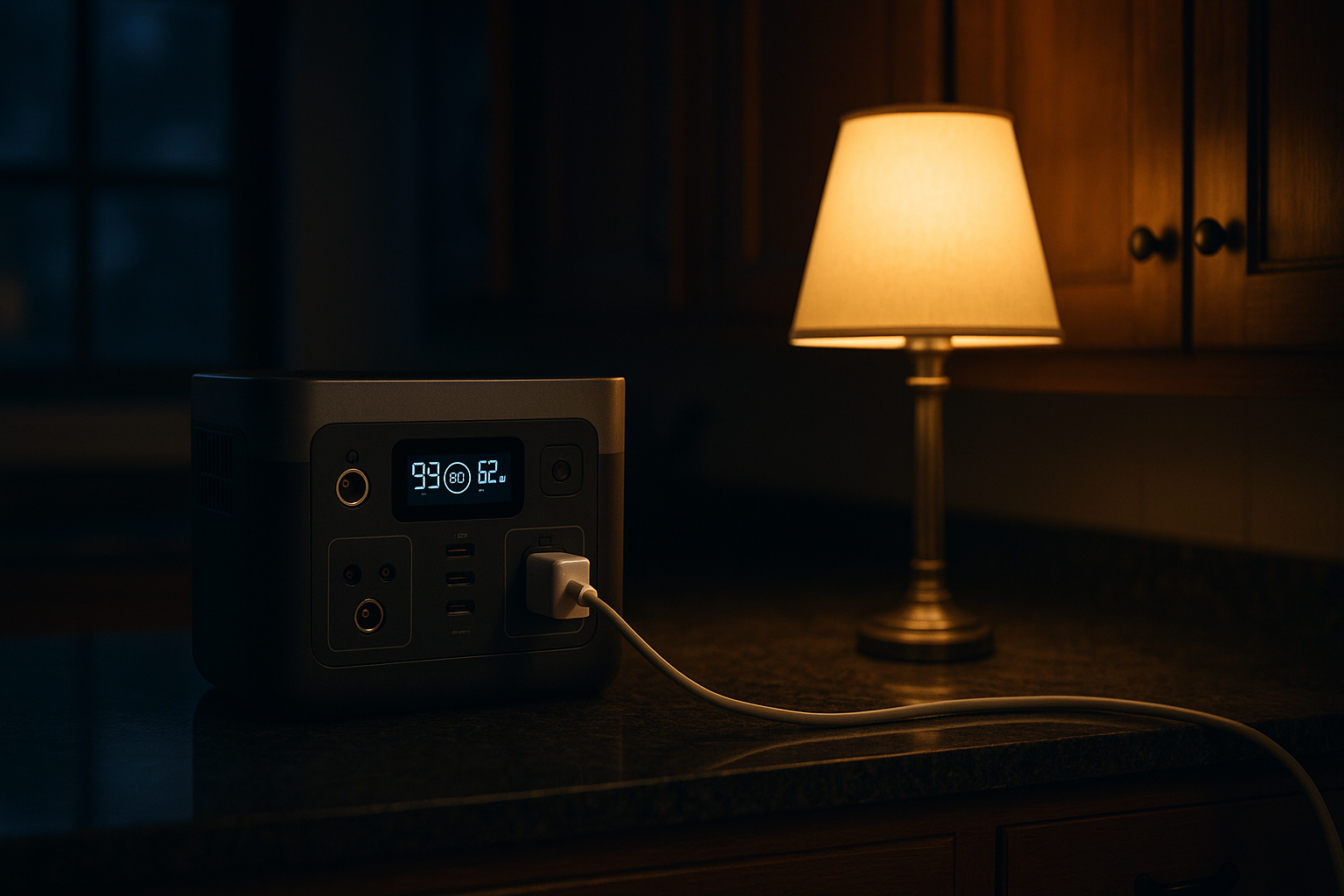
Photo by Zendure Power Station on Unsplash
Portable Power Station vs Gas Generator: Which Wins for Home Backup?
When the grid goes down, you have two main contenders: a portable power station (battery-based) or a gas generator. Both deliver backup power, but they work in fundamentally different ways—and that difference shapes everything from noise levels to refueling logistics to what you can actually power during an outage. This guide cuts through the marketing to show you how each performs in real scenarios.
How They Work: Battery vs. Combustion
A portable power station is a rechargeable battery pack with an inverter built in. You charge it from a wall outlet, solar panels, or a car charger, and it stores that energy. When you need power, the inverter converts DC battery power into AC current for your devices. There’s no fuel, no combustion, no moving parts during discharge.
A gas generator, by contrast, runs a small internal-combustion engine that spins an alternator. The engine burns gasoline (or propane, in some models) to create electricity on demand. As long as you have fuel, it keeps running.
This fundamental difference ripples through every practical consideration below.
Runtime and Fuel Independence
Portable power stations run until their battery depletes. A mid-capacity unit (around 1000 Wh) might power a laptop for 10–15 hours (assuming a 100W laptop), or a mini-fridge for 4–6 hours, depending on the appliance’s draw. Once empty, you need a power source to recharge—a wall outlet (8–12 hours), solar panels (1–3 days depending on sun), or a car charger (several hours).
Gas generators run as long as you have fuel. A 5-gallon jerry can of gasoline will keep a typical mid-sized generator (5–7 kW) running for 8–12 hours at half load, per manufacturer specs. You can refuel and keep going indefinitely. For extended outages, this is a decisive advantage: no waiting for a battery to recharge.
The trade-off: gas generators consume fuel continuously (even at idle, fuel is burning), while a portable power station sits silent and uses zero power when not actively powering a device.
Winner for runtime: Gas generator, if fuel is accessible. Portable power station, if you can recharge via solar or grid.
Noise and Neighborhood Relations
Gas generators are loud. A typical 5–7 kW unit produces 75–85 decibels at 25 feet, per EPA ratings. That’s roughly the volume of a vacuum cleaner or heavy traffic. Quieter inverter models exist (60–70 dB), but they cost more and sacrifice some power output.
Portable power stations produce zero operational noise. The inverter may emit a faint hum when under heavy load, but most users report it’s barely audible indoors. There’s no engine, no exhaust, no vibration.
For suburban or apartment living, or if you want to run backup power without announcing it to neighbors, a portable power station is dramatically quieter.
Winner for noise: Portable power station, decisively.
Maintenance and Reliability
Gas generators require seasonal maintenance. You should: - Drain or stabilize fuel before storage (gas breaks down and gums up the carburetor). - Change the oil periodically (every 50–100 hours of use). - Clean or replace the air filter. - Run the engine monthly under load to keep it in working order.
Neglect these tasks and your generator may not start when you need it most. Failed startup during an actual outage is a common complaint among owners who stored units without proper preparation.
Portable power stations have no fuel, no oil, no carburetor. You charge them and they sit. The main wear item is the battery itself, which gradually loses capacity over years. Most units are warrantied for 2–5 years, and based on manufacturer specs and owner reports, many retain 80%+ capacity after 5 years of regular use.
Winner for maintenance: Portable power station. Charge and forget.
Operating Costs Over Time
Gas generators have recurring fuel costs. Gasoline currently per gallon as of 2026, though prices vary by region and fluctuate seasonally. A generator running 4 hours a day for a week of outages will consume 20–30 gallons. Over years, fuel stockpiling and replacement (fuel degrades) adds up.
Oil changes, spark plugs, and air filters are minor expenses but add to the total cost of ownership.
Portable power stations have no fuel costs. Your only expense is electricity to recharge them. Charging a 1000 Wh unit from empty on a typical residential grid costs roughly the equivalent of a few pennies per charge. If you use solar, the recharge cost is zero.
Battery replacement (after 5–10 years) can be expensive—potentially hundreds of dollars—but it’s not a recurring annual cost like fuel.
Winner for operating cost: Portable power station, especially over 5+ years.
Power Quality and Device Safety
Gas generators produce electricity with harmonic distortion. Non-inverter models output “dirty” AC power that can damage sensitive electronics like computers, medical devices, or modern appliances with microcontrollers.
Quality inverter generators reduce this distortion, but they cost more and are heavier.
Portable power stations use electronic inverters designed to output clean, stable AC power. Most modern units produce sine-wave output suitable for laptops, phones, and medical equipment. Per manufacturer specs and owner reports, users routinely power computers and IoT devices without concern.
Winner for power quality: Portable power station.
What You Can Power: Capacity vs. Continuous Load
A portable power station’s capacity is measured in watt-hours (Wh). A 1000 Wh unit can theoretically power a 1000-watt device for one hour, or a 500-watt device for two hours. But real-world runtime depends heavily on the load.
- A laptop (100 W): ~10 hours
- A mini-fridge (150 W): ~6–7 hours
- A space heater (1500 W): ~40 minutes
- A sump pump (800 W): ~1–2 hours
Gas generators are rated by continuous output (in watts or kilowatts). A 5 kW generator can continuously power any load up to 5000 watts, as long as fuel lasts. You can run a full-sized fridge, an air compressor, and a power tool simultaneously without draining anything.
For whole-home backup (fridge, freezer, HVAC, well pump), a gas generator is more practical because it delivers sustained power without depletion.
For targeted backup (laptop, phone, mini-fridge, lights), a portable power station is sufficient and far quieter.
Winner for high continuous loads: Gas generator. Winner for convenience and flexibility: Portable power station.
Portability and Storage
A portable power station weighs 20–80 pounds (depending on capacity) and fits in a closet, garage shelf, or car trunk. You can move it between rooms or take it camping.
Gas generators weigh 50–200+ pounds and require a dedicated outdoor space. Fuel storage adds complexity and safety concerns (fuel is flammable and has a shelf life).
Winner for portability: Portable power station.
Weather and Environmental Factors
Gas generators need outdoor ventilation to prevent carbon-monoxide buildup. You cannot run them indoors, in basements, or in enclosed garages. They also perform poorly in cold weather—fuel thickens, engines struggle to start, and output drops.
Portable power stations work indoors, in any weather. Cold temperatures reduce battery efficiency slightly, but they’ll still function. No exhaust, no fumes, no ventilation required.
Winner for flexibility: Portable power station.
Upfront Cost Comparison
A decent portable power station (1000 Wh, mid-tier) costs mid-range to premium-tier pricing. A quality gas generator (5 kW) also costs mid-range to premium-tier. Both represent a meaningful investment.
The cost equation shifts based on your needs: - For light backup (phones, laptop, lights): A portable power station is cheaper and sufficient. - For whole-home backup: A gas generator is more cost-effective per watt delivered.
Hybrid Approach: Why Some People Use Both
Many prepared homeowners keep both. The gas generator handles extended outages and high-load appliances (fridge, well pump, HVAC). The portable power station covers quick blackouts, provides quiet backup for sensitive electronics, and serves double duty for camping or RV trips.
This redundancy costs more upfront but eliminates single points of failure.
Charging Methods for Portable Power Stations
If you choose a portable power station, understand your recharge options.
- AC outlet: 8–12 hours from empty (requires grid power).
- Solar panels: 1–3 days depending on sun exposure and panel wattage (e.g., a 400W solar panel array).
- Car charger: 6–10 hours depending on the vehicle’s output.
- Solar + AC combo: Recharge during the day via sun, top up at night via grid.
For true independence during extended outages, pair your portable power station with solar panels.
Choosing Based on Your Scenario
Choose a portable power station if: - You live in an apartment or noise-sensitive area. - You want silent, zero-maintenance backup. - Your outages are typically short (under 12 hours). - You can recharge via solar or grid. - You want a device that doubles as camping gear.
Choose a gas generator if: - You need to power high-load appliances (central AC, well pump, large fridge). - You expect extended outages (multiple days). - You have outdoor space and fuel storage. - You’re willing to perform seasonal maintenance. - You live in a remote area where fuel is available.
FAQ
Can I run a 20 cu. ft. chest freezer on a Bluetti AC500 during a 3-day outage? A 20 cu. ft. chest freezer draws roughly 400–600 watts when the compressor cycles. The Bluetti AC500 (5120 Wh) would power it for approximately 8–12 hours per charge cycle. For a 3-day outage, you’d need either a gas generator (for continuous runtime) or multiple battery units with solar recharging during daylight hours. A gas generator is the more practical choice for extended freezer backup.
How often do gas generators fail to start? Failure rates spike dramatically among units stored without proper fuel stabilization or seasonal maintenance. A well-maintained generator should start reliably; a neglected one may not. Portable power stations have no startup issues—they’re always ready.
Can I use a portable power station outdoors in winter? Yes, but expect reduced runtime. Cold temperatures lower battery efficiency by 20–40%, per manufacturer specs. The unit will still function, but you’ll get fewer hours of runtime. Gas generators also struggle in cold (fuel thickens, engine harder to start), so neither has a clear advantage in extreme cold.
Is a portable power station worth it if I already have a generator? Often yes. A portable power station provides quiet backup for short outages, eliminates the need to run the generator for minor loads, and doubles as camping gear. Many owners view it as a low-cost insurance policy for quick blackouts.
How long does a portable power station battery last before replacement? Most modern units retain 80%+ capacity after 5 years of regular use, per manufacturer specs and aggregated owner reports. Full replacement (if needed) typically occurs after 10+ years. This is significantly longer than older lithium-ion devices, thanks to improved battery chemistry (LiFePO4).
Final Verdict
Portable power stations win on noise, convenience, maintenance, and versatility. They’re ideal for apartments, short outages, and dual-purpose backup and recreation.
Gas generators win on runtime, high-load capacity, and sustained power delivery. They’re essential for whole-home backup during extended outages.
The best choice depends on your outage profile, living situation, and budget. Many homeowners find that a mid-capacity portable power station (1000–2000 Wh) handles 80% of real-world blackouts, while a gas generator serves as a fallback for rare, extended events.
Start with your most critical load during an outage—fridge? laptop? lights?—and size your backup accordingly. If you’re uncertain, a portable power station is the lower-risk first purchase: quieter, easier to maintain, and useful year-round.