RV Power Outage Prep: Backup Systems & Emergency Checklist
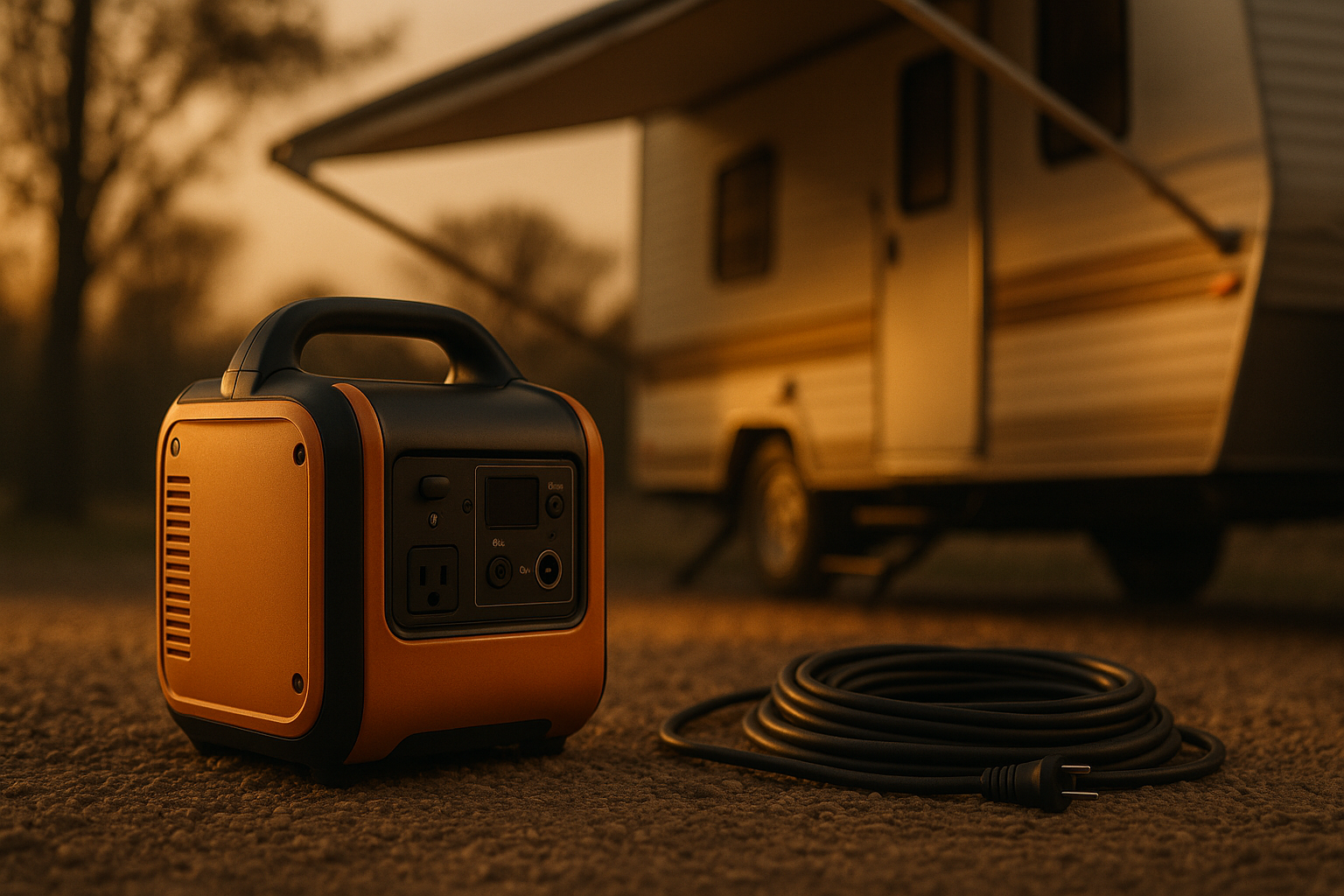
RV Power Outage Prep: Backup Systems & Emergency Checklist
A power outage in your RV isn’t just an inconvenience—it’s a threat to food safety, water systems, heating, and your ability to reach help. Unlike a stationary home, an RV’s electrical resilience depends entirely on the backup systems you choose before the grid fails. This guide walks you through the three-layer approach: primary backup power (generators, batteries, solar), secondary redundancy, and the supplies that keep you safe during extended outages.
Why RV Power Outage Prep Is Different From Home Backup
Your RV’s 12V house battery and converter are designed for camping, not emergencies. A typical RV house battery (100–200Ah lithium or lead-acid) runs essential loads—fridge, water pump, lights—for 12–24 hours at moderate draw. But a full outage scenario demands more power, faster, and often in parallel with other systems.
Unlike a home with a 200-amp service panel and a whole-house generator, an RV has:
- Limited onboard storage – you can’t stack batteries indefinitely without weight/space penalties
- Mobile constraints – your backup system must be portable or semi-permanent, not hardwired into foundation
- Multiple power sources – shore power, generator, solar, and batteries all compete for charging circuits
- Dual voltage systems – 12V lights and water pump, 120V AC fridge and microwave, 240V air conditioning on larger rigs
Preparation means layering independent systems so a single failure (dead generator, cloudy week, shore power loss) doesn’t cascade into a full blackout.
Layer 1: Primary Backup Power—Generators, Batteries, and Solar
Portable Generators: Fuel-Based Reliability
A generator is the fastest way to restore full AC power to your RV. Gasoline or propane gensets produce 120V (and sometimes 240V on larger models) instantly, independent of weather or daylight.
Pros: - Unlimited runtime if you have fuel stockpiled - Can charge multiple battery banks simultaneously - Handles high-draw loads (AC unit, water heater) without voltage sag
Cons: - Noise (typically 60–90 dB) limits where you can run it - Requires regular maintenance and fuel rotation - Exhaust and fumes—must run outside or in a well-ventilated bay - Propane models depend on tank pressure; gasoline stales quickly
For RV use, a mid-tier dual-fuel generator like the Champion 3100W dual-fuel (3100W, ) is standard. Per long-running threads on r/GoRVing and r/Boondocking, owners report 8–12 hours of daily runtime per gallon of fuel on half load, depending on model and altitude. See Portable Generator Maintenance: Keep Your Backup Power Ready for seasonal prep.
Portable Power Stations: Silent, Scalable Battery Backup
A portable power station (or “battery generator”) is a large lithium or LiFePO₄ battery pack with a built-in inverter. It stores energy from solar, shore power, or a genset, then releases it as 120V AC on demand—with zero noise and zero emissions.
Pros: - Silent operation; run 24/7 without disturbing neighbors - No fuel to stockpile or rotate - Modular expansion—stack multiple units or add external batteries - Fast DC charging via solar panels or RV charger
Cons: - Finite energy per charge (typically 1–5 kWh per unit) - Slower recharge than genset-powered charging - Higher upfront cost per watt-hour vs. fuel gensets - Battery degradation over 10+ years (though LiFePO₄ lasts longer than lead-acid)
Per manufacturer spec sheets and owner reviews, mid-tier units (2–3 kWh) handle a 12-hour night of refrigeration, lighting, and water pump. Larger rigs or high-draw loads (AC, electric heater) need 5+ kWh or a hybrid setup. Best Portable Power Stations for RVs: Boondocking & Off-Grid Guide compares specific models.
Solar Panels: Renewable Recharge Layer
Solar panels mounted on your RV roof (or portable panels for van conversions) generate DC current during daylight. A charge controller converts this to 12V or 48V battery charging, or to 120V AC via an inverter.
Pros: - Free, renewable energy; no fuel cost - Minimal maintenance; panels last 25+ years - Pairs perfectly with battery banks for daytime recharge - Reduces genset fuel burn on sunny days
Cons: - Weather-dependent; useless on cloudy days or at night - Requires battery storage to use the power (can’t run AC directly from panels) - Installation is permanent; not portable - Output degrades in winter or at high latitudes
For RV outage prep, a 400–800W solar array paired with a 100A MPPT charge controller is typical on full-time rigs. Per owner reports, this generates 1.5–3 kWh on a sunny day, enough to top off a 5kWh battery bank or reduce genset runtime by 50%. Best Solar Setup for RV Camping: Panels, Controllers & Batteries details sizing and controller selection.
Layer 2: Hybrid Setups—Combining Systems for Resilience
The most reliable RV power outage prep uses all three layers:
- Solar + Battery: Handles 60–80% of routine camping power needs; no fuel, silent operation.
- Generator: Fills gaps on cloudy days or high-demand periods; recharges batteries fast.
- Portable Power Station: Acts as a buffer during genset maintenance or as emergency backup if the house battery fails.
A real-world example from boondocking forums: an RV with 600W solar, a 5kWh battery bank, and a 3000W genset can run for weeks without shore power. Solar tops up the battery during the day; the genset runs 2–3 hours at dawn to handle AC loads; the battery handles evening and night. If the genset fails, the solar + battery combo keeps essential systems alive for 3–5 days before fuel reserves matter.
RV Power Systems: Generator vs Solar vs Hybrid Setup breaks down the financial and practical tradeoffs.
Layer 3: Emergency Supplies Checklist for Power Outages
Even with backup power, a prolonged outage (days or weeks) requires supplies beyond electricity. Use this checklist:
Critical Supplies (First 24 Hours)
- Water – 1 gallon per person per day for drinking and hygiene; RV tanks may be compromised or contaminated
- Non-perishable food – canned goods, dried fruit, nuts, protein bars; avoid items requiring cooking if gas is also out
- Medications – 7-day supply for all prescriptions; keep in cool storage (battery-powered cooler if fridge fails)
- First aid kit – bandages, antiseptic, pain relief, tweezers, scissors
- Flashlights and batteries – LED flashlights (lower drain than incandescent); extra AA/AAA batteries
- Portable radio – battery-powered or hand-crank; tuned to local emergency broadcasts
- Phone chargers – USB power bank (at least 10,000 mAh) and 12V car charger as backup
Extended Outage Supplies (Days 2–7)
- Propane or butane camp stove – for cooking if electric cooktop is offline; use outside or in well-ventilated areas only
- Bottled propane – extra canisters for heater, stove, or genset (if propane model)
- Fuel for generator – store 1–2 weeks of genset fuel in approved cans; rotate every 6 months
- Ice or ice packs – for coolers if RV fridge is offline; keep several frozen before outage season
- Toilet paper and hygiene supplies – outages often disrupt water treatment; hand sanitizer, wet wipes, trash bags
- Medications and supplements – full-month supply if possible
- Pet food and supplies – if you travel with animals; outages stress pets; keep familiar food on hand
Communication & Documentation
- List of emergency contacts – printed, not just in phone; include RV park management, local hospital, roadside assistance
- Insurance and vehicle documents – copies stored in waterproof pouch; photo backups on cloud storage
- Prescription copies – if meds are lost or damaged
- Cash – ATMs may be offline; keep small bills for fuel or supplies
How to Build an Emergency Kit for Your RV: Complete Checklist provides a full downloadable checklist.
Before Outage Season: Maintenance and Testing
Generator Prep
- Test run – start your genset monthly, even if you don’t use it; run under load (AC or heater) for 15–20 minutes (for gasoline and propane models)
- Oil change – follow manufacturer schedule; old oil causes hard starts and corrosion (for gasoline gensets)
- Fuel stabilizer – add to gasoline tanks if storing >30 days; rotate fuel every 6 months (gasoline models only; propane models skip this step)
- Battery check – if your genset has an electric starter, test the battery and replace if >3 years old (for gasoline models with electric start)
- Load test – plug in your RV’s shore power inlet and verify the genset can handle your AC unit + fridge simultaneously (for all models)
Battery Bank Prep
- Voltage test – check 12V house battery voltage (should read 12.6V or higher at rest); replace if below 12V
- Load test – run fridge, lights, and water pump for 4 hours; battery should drop no more than 20% on a sunny day with solar charging
- Terminal corrosion – clean battery posts and cables with baking soda and water if white/blue corrosion is visible
- Lithium-specific – if you have a lithium battery, verify the BMS (battery management system) is functioning; check app or LED indicators
Solar Panel Prep
- Clean panels – dust, bird droppings, and tree debris reduce output by 10–30%; rinse with distilled water
- Check connections – wiggle MC4 connectors and verify no corrosion; loose connections cause voltage drop
- Test output – on a sunny day, measure DC voltage at the charge controller; should match panel spec (e.g., 48V panels at ~60V open-circuit)
- Inspect wiring – look for cracked insulation or rodent damage; re-tape if needed
During an Outage: Power Management Strategy
When shore power fails:
- Switch to battery mode immediately – most RVs have a manual transfer switch; flip it away from shore power
- Reduce non-essential loads – turn off water heater, space heater, and AC; prioritize fridge, lights, water pump
- Start genset if battery drops below 50% – don’t wait until it’s dead; a partially charged battery recharges faster
- Monitor fuel – if you’re running a genset, check tank level daily; don’t let it drop below 25%
- Use solar during the day – if sunny, let solar charge the battery; only run the genset if cloudy or battery is critically low
- Ration water – if the water pump is offline, use bottled water; don’t flush toilets unnecessarily
Emergency Power Outage Checklist: Before, During, and After covers the full timeline.
FAQ
Q: Can I run my RV air conditioner on battery backup alone? A: Not for extended periods. An RV AC unit draws 10–15 amps at 120V (1200–1800W). A 5kWh battery can run it for 2–3 hours before depletion. For longer AC runtime, you need a genset, solar recharge, or a much larger battery bank (10+ kWh).
Q: What’s the difference between a portable power station and a portable generator? A: A power station is a battery with an inverter; it’s silent, has finite energy per charge, and needs recharging. A generator burns fuel and produces power continuously as long as fuel is available, but it’s loud and produces exhaust. Many RVers carry both: battery for overnight and quiet hours, genset for daytime and high-demand periods.
Q: Should I use propane or gasoline for my RV generator? A: Propane is cleaner, stores longer (years vs. months), and is often cheaper. Gasoline gensets are lighter and cheaper upfront. For outage prep, propane is better because you can stockpile it indefinitely in your RV’s tank or external canisters without degradation.
Q: How do I know if my solar panels are working during an outage? A: A charge controller (MPPT or PWM) displays real-time output in amps and watts. On a sunny day, a 400W panel array should show 20–30 amps at 48V (or equivalent at 12V). If output is zero or very low on a clear day, check for shade, dirt, or loose connections.
Q: What’s the cheapest way to add backup power to an existing RV? A: Start with a portable power station (2–3 kWh, ) paired with 200–400W of portable solar panels . This covers fridge, lights, and water pump for 1–2 days and recharges during daylight. Add a small genset later if you need faster recharge or longer runtime.
Summary: Your Three-Layer Outage Defense
RV power outage prep isn’t about choosing one solution—it’s about layering them for resilience:
- Layer 1: A generator (fuel-based, unlimited runtime) + a portable power station (silent, scalable) + solar panels (renewable, low-cost).
- Layer 2: Test and maintain each system before outage season; don’t wait until you need it.
- Layer 3: Stock emergency supplies (water, food, meds, fuel, communication gear) for at least 7 days.
The RVers who survive extended outages without stress are those who invested in backup power before the grid failed. Start with the system that matches your camping style—boondockers prioritize solar + battery; frequent-mover RVers lean on generators; full-timers use all three. Then add supplies, test monthly, and rotate fuel seasonally.
Your RV’s independence is its greatest asset. Prepare it accordingly.


